Practical Functional Assessment: A Plain Guide
A plain guide to practical functional assessment (PFA). See how BCBAs find why behavior happens, keep kids safe, and build better treatment.
Key takeaway
A practical functional assessment is a way to find out why a behavior happens. Behavior analysts call it PFA for short. It starts with a talk with caregivers.
12 days of PFA & SBT
Experts who cover this
3 recordings on openceu cover practical functional assessment.
- Featured talk3 CEUs
12 days of PFA & SBT
Matt HarringtonThe Behaviorist Bookclub
The through-line of the entire 12-day course: Hanley's ISCA replaces isolated-contingency functional analysis with an open interview plus synthesized test…
- 2.50 CEUs
Confessions of a New Behavior Analyst in Functional Analysis
Matt HarringtonThe Behaviorist Bookclub
Frames the PFA (Hanley's model) as a powerful format choice among several, whose selection should still be driven by the client's indirect and descriptive…
- 1 CEU
PDA: Collaborating for Success
B. Kuereine GrayThe Behaviorist Bookclub
Referenced as validating clinicians' long-standing hunch that 'control' is its own separate function distinct from access, giving PDA-presenting behavior a…
On this page · 8 sections▾
A practical functional assessment is a way to find out why a behavior happens. Behavior analysts call it PFA for short. It starts with a talk with caregivers. Then the team runs a short test to check their best guess.
This matters because good treatment starts with the right reason. If you guess wrong about why a child hits or runs, your plan can miss. PFA gives BCBAs, RBTs, and parents a faster path to that reason. It was built to be quick and kind, not just correct on paper.
What a practical functional assessment is#
The idea grew out of the work of Dr. Greg Hanley. His team wanted a test that clinicians could actually use. Older methods took a long time and felt clinical. PFA trims that down while keeping the science.
The heart of PFA is a small shift in what you test. Instead of only changing what happens after a behavior, you change the setup before it. You also let real-life reasons blend together. Matt Harrington explains why the names overlap in his course.
So, I'm going to use the term ISCA. That's similar to PFA, which is similar to synthesized contingency analysis, just like I'm going to use the term traditional FA or trad FA. From the talk — Matt Harrington
"Synthesized" just means blended. Real behavior often serves more than one need at once. A child may want a toy and want to escape a task. PFA lets you test that mix instead of splitting it apart.
The three simple steps#
Dr. Joshua Jessel helped build the PFA with Dr. Hanley. He breaks the whole process into a clear shape. It is meant to be friendly for busy clinicians.
The process of the practical functional assessment has three steps. From the talk — Dr. Joshua Jessel
The first step is an open talk with caregivers. You ask what the behavior looks like and when it shows up. The second step is watching the child in a loose, natural way. The third step is a short test that checks your best guess.
The PFA begins with an open-ended interview that asks caregivers about their experiences with problem behavior and the context in which it occurs. From the talk — Dr. Joshua Jessel
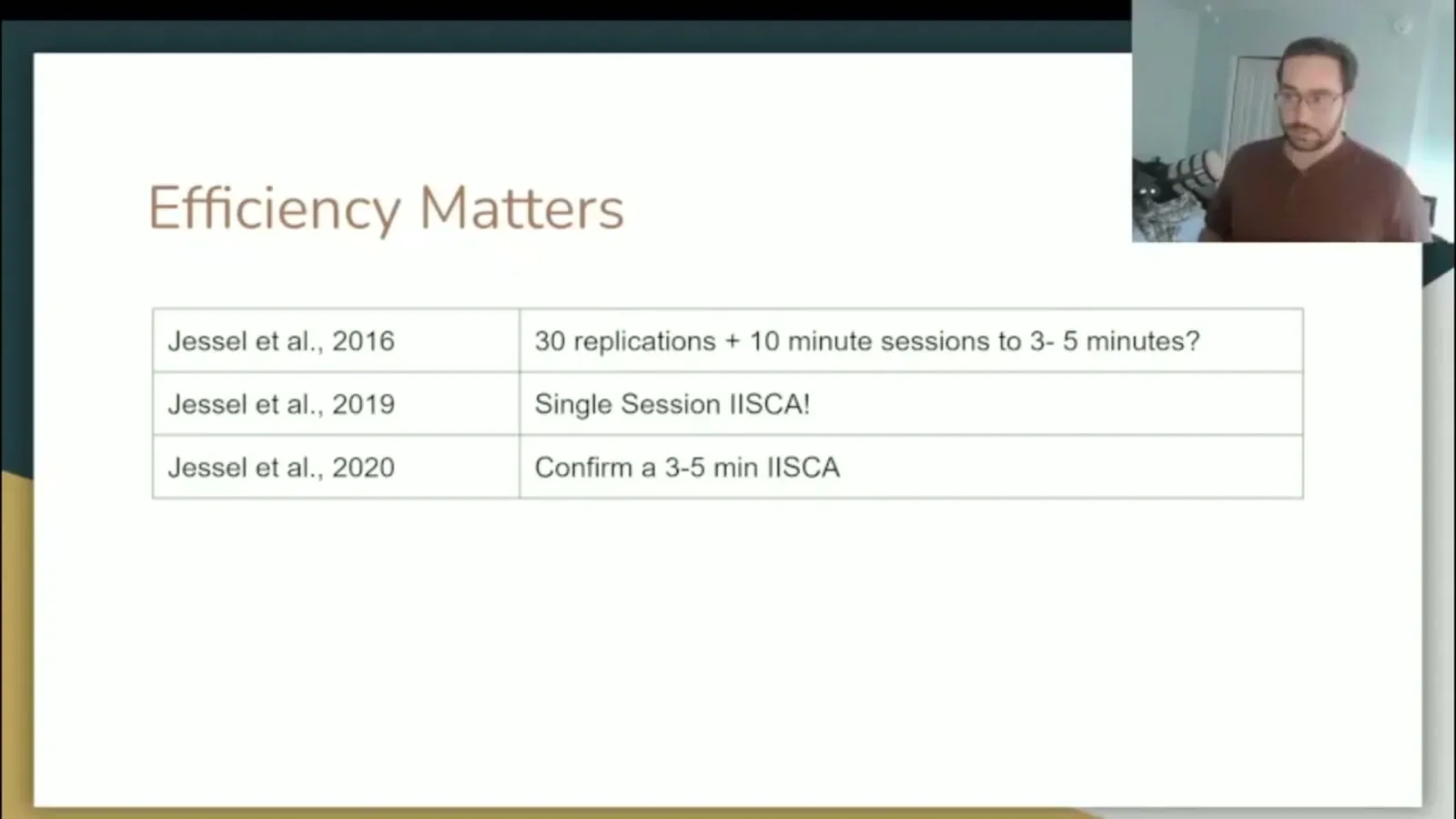
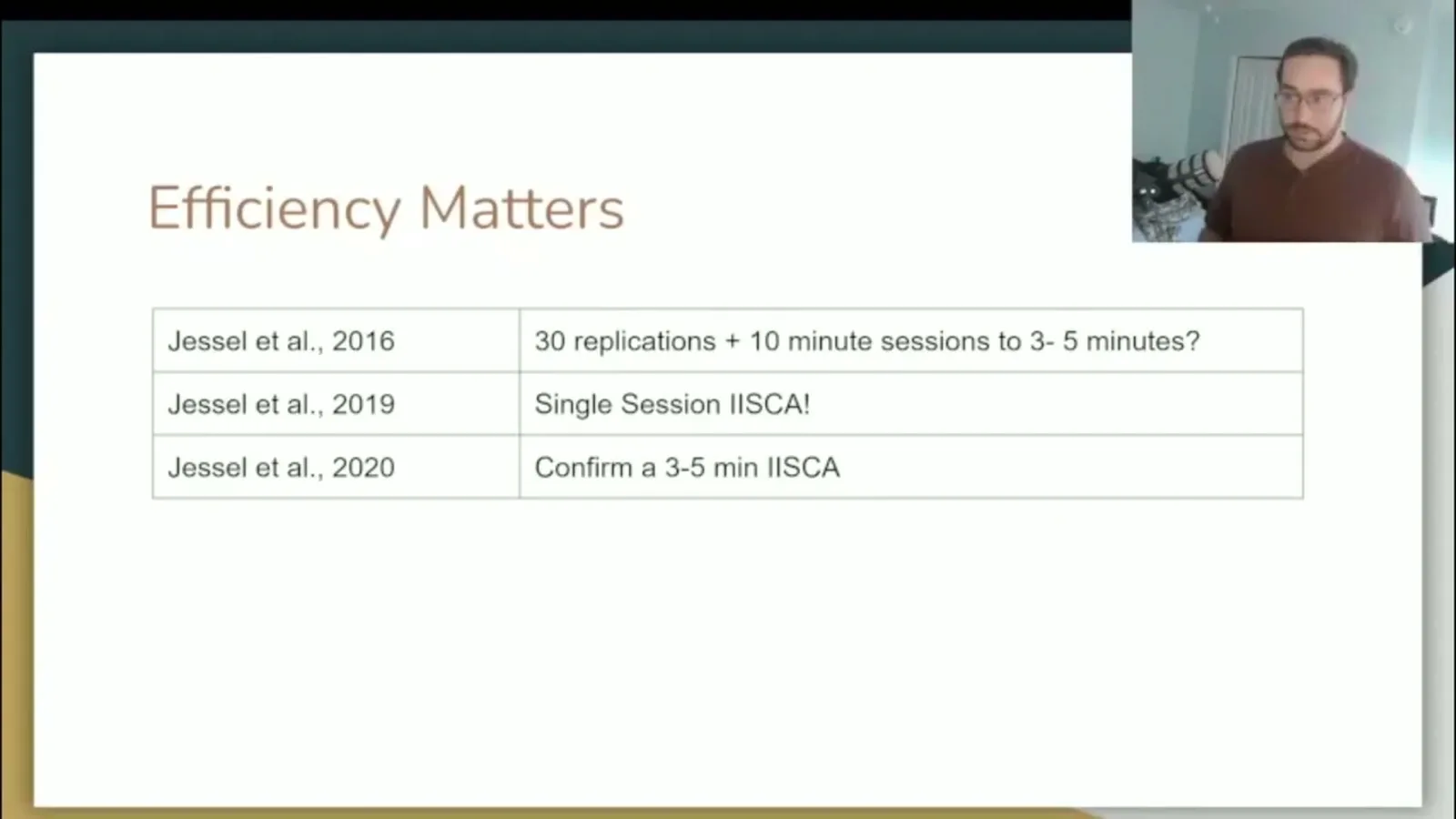
That interview does real work. It turns a parent's story into a testable idea. Jessel shows how efficiency and precision can live together in his session on functional analysis, Redefining the Boundaries of Efficiency during a Functional Analysis of Problem Behavior - Applied 2022.
Why "control" finally had a home#
For years, clinicians felt some behavior did not fit the usual labels. The old buckets were attention, escape, and access to items. But some kids seemed driven by something else. They wanted to steer the moment itself.
B. Kuereine Gray describes that gap well. Many providers had the same hunch for a long time.
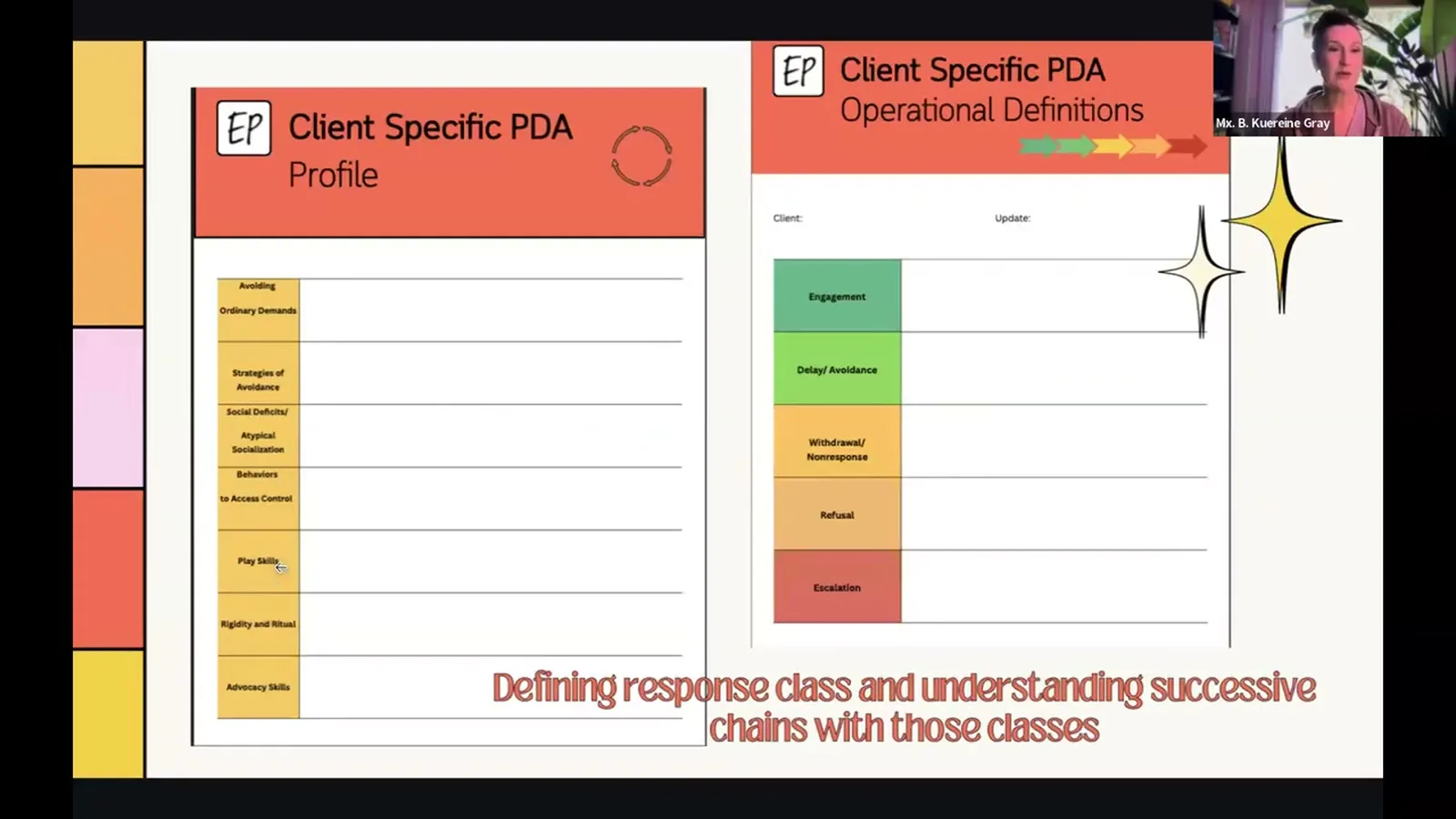
For many years, I heard many clinicians who were like, oh, there's got to be another function. It's for control. And I was like, well, that's an access function. But we do have some individuals that we work with that control is a huge part of their behavior repertoire. From the talk — B. Kuereine Gray
PFA gave that hunch a real framework. Because it blends reasons and honors the child's story, it can catch a need for control. That helps with kids who resist demands hard, such as some autistic children with a strong drive for autonomy.
Safety and the happy state come first#
 Advertisement
PFA does not just ask why behavior happens. It also sets up a calm, safe start. Practitioners aim for a state they call HRE. That stands for happy, relaxed, and engaged.
Nicky Schneider uses this idea in schools every day. The goal is to make hard behavior stop fast and kindly.
HRE is part of the skill based treatment framework. Within the practical functional assessment, we're looking to establish HRE so that we can turn the behavior off immediately. From the talk — Nicky Schneider
This is a big deal for parents and staff. The child gets what they want first, so they feel safe. Then skills are taught from that calm place. You avoid long, upsetting testing that pushes a child to melt down.
Where PFA shines and where it gets tricky#
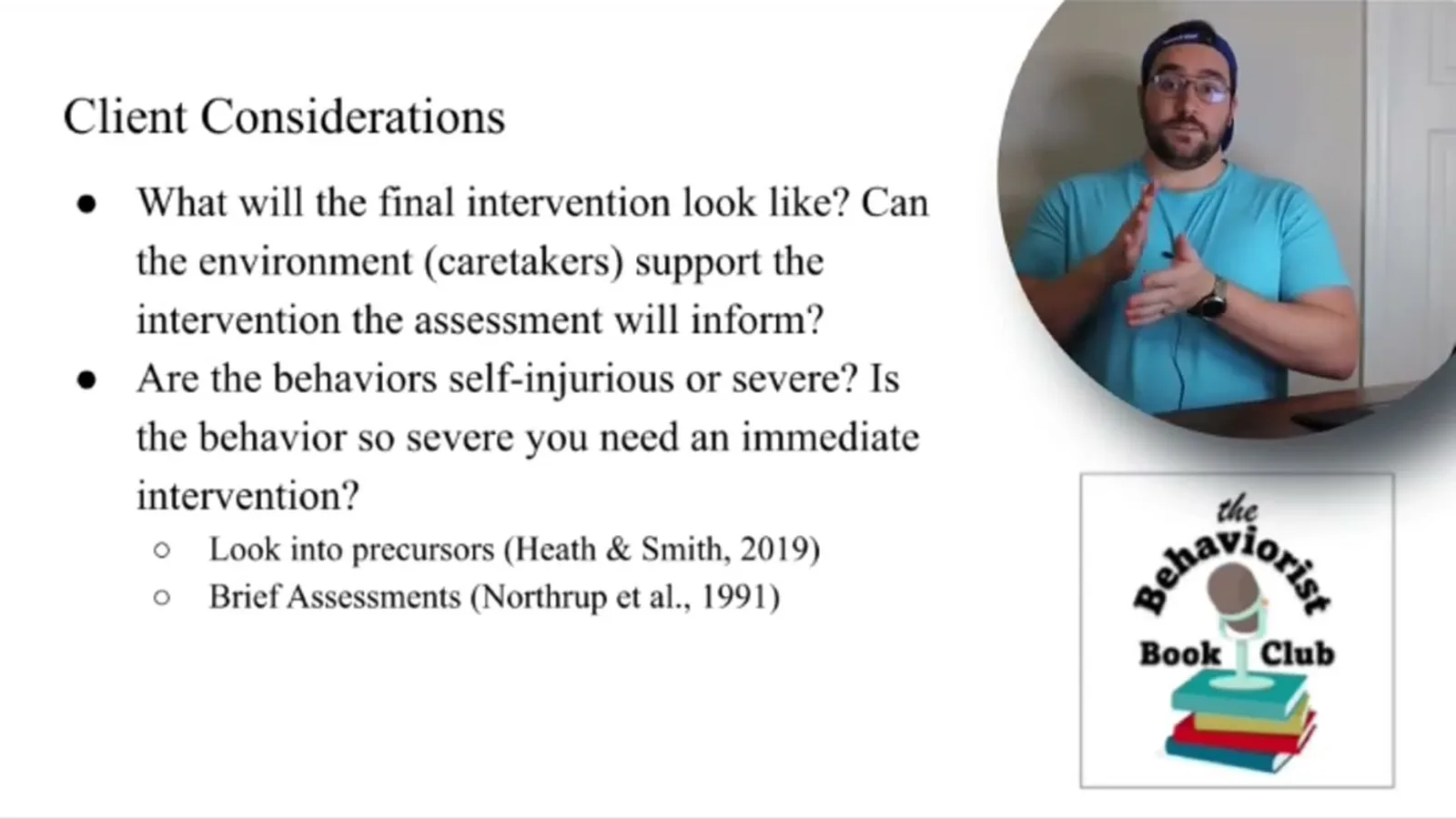
PFA works well, but it is not one-size-fits-all. The child's own skills change how it plays out. Matt Harrington saw this while studying PFA with teens and adults.
When you went to apply PFA and SBT all the way up to teens and adults who did have more functional living skills, things got a little weird. We had more problem behavior. We had more precursors. From the talk — Matthew Harrington
Younger kids with fewer language skills often did smoothly. Older clients with more skills sometimes pushed back more. So the method may need tweaks for each person. Skill and age both shape the plan.
Rapport can bend the process too. Valerie Weber once had to run her treatment steps out of order. A student liked her so much he tried to turn demands into a chase game. That warm bond was good, but it changed how she taught.
PFA is one tool, not the only tool#
Even fans of PFA say it should be a choice, not a default. Your assessment data should point the way. Matt Harrington frames it as one strong option in a bigger kit.
The choice should follow the caregiver interview and the child's needs. If the story points to a blended reason, PFA fits. If it does not, another format may serve better. Smart clinicians match the tool to the case.
There is also honest debate in the field. Dr. Tom Szabo notes that blending reasons raises a fair question. When you combine controlling variables, does your test still predict well? Good practice means asking that question, not skipping it.
What the research says#
The evidence base for PFA is real and growing. Rajaraman and colleagues studied how reliable and useful the process is. They found reliability varied by how strictly it was judged. Still, treatments built from the PFA worked and helped problem behavior and social skills (Rajaraman, A., Hanley, G. P., Gover, H. C., Ruppel, K. W., & Landa, R. K. (2022). On the Reliability and Treatment Utility of the Practical Functional Assessment Process. Behavior Analysis in Practice, 15(3), 815-837.).
Training in PFA seems to work as well. In a randomized trial, practitioners who took a seminar showed far more skills than those who only got the materials. Their mean scores were 87% versus 36%, and the skills carried into real client work (Whelan, C. J., Hanley, G. P., Landa, R., Sullivan, E., LaCroix, K., & Metras, R. (2021). Randomized controlled trial of seminar-based training on accurate and general implementation of practical functional assessments. Journal of Applied Behavior Analysis, 54(4), 1437-1455.).
The effects can also last. One study followed six autistic children in a school setting. Challenging behavior dropped to near zero across many staff and rooms. Effects were still there one year later, and physical restraint was ended for every child (Slaton, J. D., Davis, M., DePetris, D. A., Raftery, K. J., Daniele, S., & Caruso, C. M. (2024). Long-term effectiveness and generality of practical functional assessment and skill-based treatment. Journal of Applied Behavior Analysis, 57(3), 635-656.).
Some scholars ask for balance. Kranak and Briggs point out that most write-ups praise PFA and skip its limits. They urge clinicians to know both the strengths and the drawbacks (Kranak, M. P. & Briggs, A. M. (2025). Efficiency, Safety, and Dissemination: Considerations for Research and Practice Related to the Practical Functional Assessment. Behavioral Interventions, 40(1).).
FAQ#
What is the difference between PFA and a traditional functional analysis? A traditional functional analysis tests one reason at a time. PFA blends likely reasons and tests them together. PFA also leans on a caregiver interview to shape that test. It is often faster and gentler for the child.
What does IISCA mean, and how is it related to PFA? IISCA stands for interview-informed synthesized contingency analysis. It is the formal name for the test at the core of PFA. People use IISCA, PFA, and synthesized contingency analysis to mean nearly the same thing. The interview informs it, and the reasons are blended.
Is a practical functional assessment safe for my child? Safety is built into the design. The team first creates a happy, relaxed, and engaged state. The child gets what they want, so hard behavior stops fast. Testing is short, and the plan can be shaped to fit your child's age and skills.
 Advertisement
Turn this topic into a CEU
You just studied this. Now get credit for it.
Watch 12 days of PFA & SBT with Matt Harrington and earn 3 free BCBA CEUs. Detailed certificate, delivered the moment you finish.