Trial-Based Functional Analysis in ABA: A Guide
A trial-based functional analysis finds why a behavior happens using short trials you can start and stop. See how it works in schools.
Key takeaway
A trial-based functional analysis is a way to find why a behavior happens. It uses many short trials instead of one long session. You can start and stop the trials across the day.
Confessions of a New Behavior Analyst in Functional Analysis
Free learning path on this topic
Child Development for Behavior Analysts
Typical development for behavior analysts. Kristen Byra's overview, then Kelly Brzak's deep dives on ages 2 to 5, 6 to 8, and 9 to 11, with milestones, common problem behaviors, and programming tips for each band.
Experts who cover this
2 recordings on openceu cover trial-based functional analysis.
- Featured talk2.50 CEUs
Confessions of a New Behavior Analyst in Functional Analysis
Matt HarringtonThe Behaviorist Bookclub
Describes a two-minute control/two-minute test trial-based format used (and botched) via telehealth, but favored for school settings due to its flexibility…
- 3 CEUs
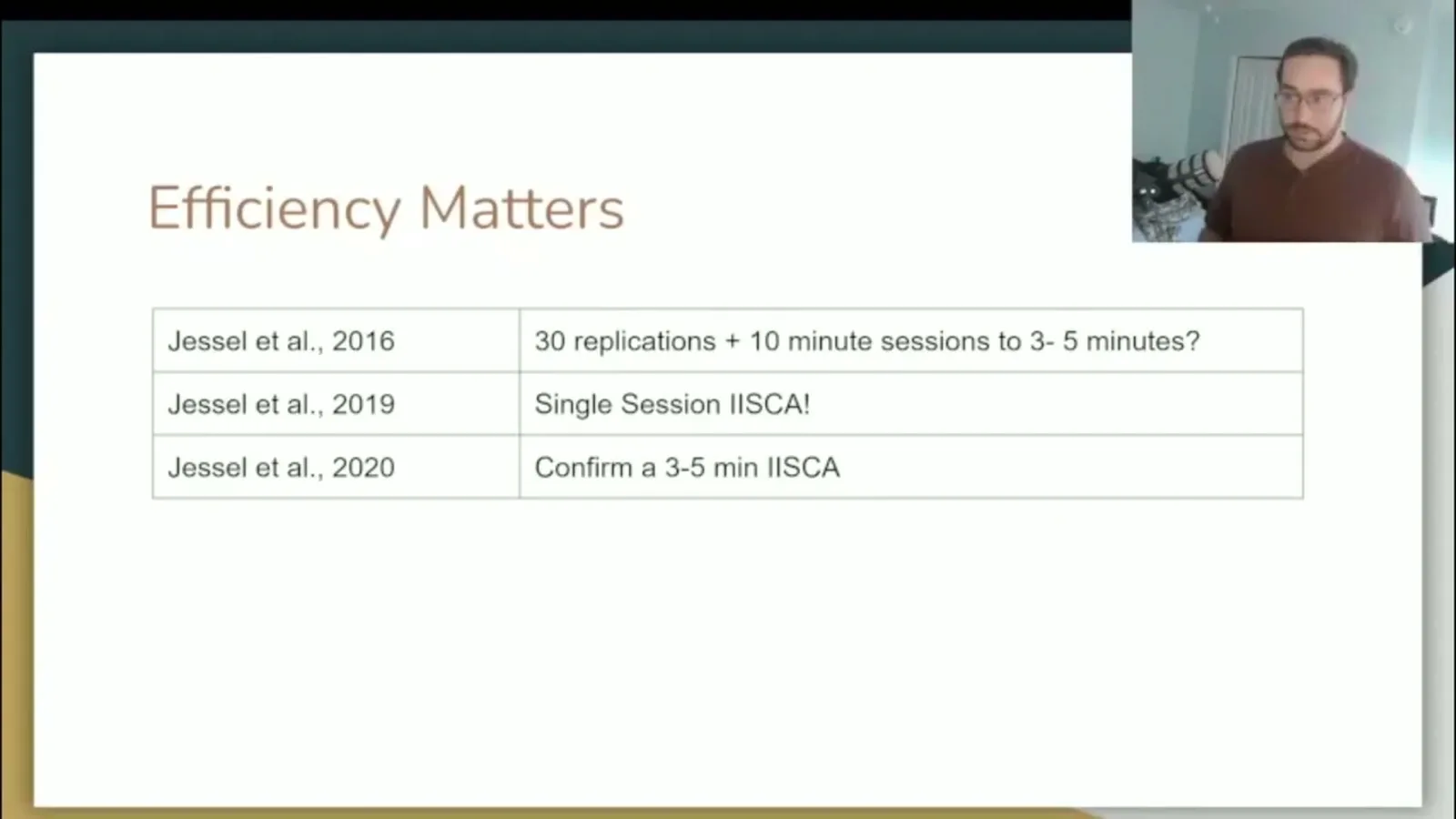
12 days of PFA & SBT
Matt HarringtonThe Behaviorist Bookclub
Noted (Curtis 2020) as a school-friendly format that lets an assessment be started and stopped across the day instead of requiring an uninterrupted hour block.
On this page · 7 sections▾
A trial-based functional analysis is a way to find why a behavior happens. It uses many short trials instead of one long session. You can start and stop the trials across the day. That makes it a good fit for busy classrooms.
A regular functional analysis often needs a quiet room and a full hour. Schools rarely have that kind of time or space. BCBAs, RBTs, and teachers need something they can run between lessons. This method lets them test a behavior in short, safe pieces.
What a trial-based functional analysis is#
A functional analysis tests what keeps a behavior going. It sets up small situations to see what the behavior earns. The trial-based version breaks that test into brief trials. Each trial checks one possible reason for the behavior.
The idea grew out of the need for a school-friendly tool. Matt Harrington points to an early study that shaped the method.
there was also a trial based isca and this was a Curtis and colleagues 2020... I personally love the trial based functional analysis because it's a very practical approach to the functional analysis especially in the school setting. From the talk — Matt Harrington
The method is practical because it bends to real life. You do not have to clear a whole hour. You run trials when the moment is right and pause when it is not.
How the trials are set up#
Each trial has two short parts. First comes a control part, where the behavior has no reason to show up. Then comes a test part, where you create a reason for the behavior. That reason is called an establishing operation, or the moment that makes something feel worth having.
Matt describes the exact format he used in his own work.
Essentially, the trial-based functional analysis, the way I was doing it was a two-minute control followed by a two-minute test condition where we repeatedly present the EO and then a two-minute control. From the talk — Matt Harrington
The test part presents that trigger again and again. You watch to see if the behavior happens. Then you return to a calm control part. You repeat these short trials across different possible reasons.
Common reasons include getting attention, escaping a task, or reaching an item. Each reason gets its own set of trials. You compare how often the behavior shows up in each one. The reason with the most behavior points you toward the function.
Why it fits schools so well#
 Advertisement
The big draw is flexibility. A normal session locks you into one long block of time. Trials do not work that way. You can fit them around lessons, recess, and lunch.
Matt keeps coming back to this school-friendly point.
Personally, I really like the trial-based functional analyses for the school setting because it has a little bit of flexibility with when you start and stop session and trials. From the talk — Matt Harrington
This method also uses the triggers that already show up in class. A child may struggle when work gets hard. You can test that moment right when it naturally appears. That makes the results feel true to the real setting.
Reading your data as you go#
You do not have to run every planned trial. Watch your data while the trials happen. A clear pattern may show up early. When it does, you can stop and move on to treatment.
Matt makes this point about speed.
as long as you're analyzing your data as you go you can potentially get out of a trial based functional analysis very fast. From the talk — Matt Harrington
Live data checking saves time and effort. It also protects the child from extra trials they do not need. You collect just enough to make a good choice. Then you build a plan around the reason you found.
Who can run it#
One strong point is that many people can learn this method. It does not have to be run only by a BCBA. Trained staff and even parents can carry out the trials. That spreads the work and helps more children get assessed.
This matters most in schools and homes where BCBA time is limited. A well-trained aide can run trials during the school day. A parent can run them at home with coaching. The BCBA still reviews the data and builds the plan.
Sharing the work does not mean lowering the bar. Clear steps and simple data sheets keep the trials correct. Short feedback sessions catch mistakes before they spread. The result is a team that can assess more children well.
What the research says#
Research supports training everyday staff to run these trials. One study taught undergraduate students using a self-instruction package. The package used a data sheet and written steps, with no heavy jargon. A small-group feedback session was needed to reach full mastery (Griffith, Price, & Penrod, 2019).
Another study used a train-the-trainer setup called a pyramidal model. Behavioral consultants learned the method first. Each one then trained a behavior technician to run the trials. The training helped staff carry out the analysis correctly in practice (Alnemary et al., 2016).
Parents can learn the method too, even from a distance. One study coached three mothers of children with autism over telehealth. The trials found the reason behind each child's behavior. That reason then guided a communication plan that lowered the behavior (Davis et al., 2022).
The method can also flex to hard cases. One case study used a shortened, blended version for a young child with self-injury. It found a likely reason in less than 42 minutes, with little harm to the child (LA, G, & G, 2024). This shows the format can be both fast and safe.
FAQ#
What is the difference between a functional analysis and a trial-based functional analysis?
A standard functional analysis often runs in long sessions in one setting. A trial-based version breaks the test into many short trials. You can start and stop those trials across the day. This makes it easier to run in schools and homes.
How long does a trial-based functional analysis take?
It depends on how clear the data is. Each trial is short, often a few minutes long. If a pattern shows up early, you can stop sooner. Checking your data as you go can make the whole process fast.
Can teachers or parents conduct a trial-based functional analysis?
Yes, with the right training and support. Studies show staff, aides, and parents can run valid trials. Some learn through written guides and short feedback sessions. Others learn through coaching, even over telehealth. You can see this method in action in 12 days of PFA & SBT.
 Advertisement
Turn this topic into a CEU
You just studied this. Now get credit for it.
Watch Confessions of a New Behavior Analyst in Functional Analysis with Matt Harrington and earn 2.5 free BCBA CEUs. Detailed certificate, delivered the moment you finish.
Keep going with a free learning path
Child Development for Behavior Analysts
Typical development for behavior analysts. Kristen Byra's overview, then Kelly Brzak's deep dives on ages 2 to 5, 6 to 8, and 9 to 11, with milestones, common problem behaviors, and programming tips for each band.
Want the primary literature? Read the Trial-Based Functional Analysis in ABA research roundup on our sister site, Behaviorist Book Club.