Believability in ABA: Trusting Your FA Data
Believability is how confident you are that your data tells the true story. Learn how BCBAs use it to decide when to move to treatment.
Key takeaway
Believability is how much you trust that your data tells the true story. It is a judgment about your own results. Are the patterns clear?
Confessions of a New Behavior Analyst in Functional Analysis
Free learning path on this topic
Child Development for Behavior Analysts
Typical development for behavior analysts. Kristen Byra's overview, then Kelly Brzak's deep dives on ages 2 to 5, 6 to 8, and 9 to 11, with milestones, common problem behaviors, and programming tips for each band.
Experts who cover this
The recording behind this guide covers believability aba.
- Featured talk2.50 CEUs
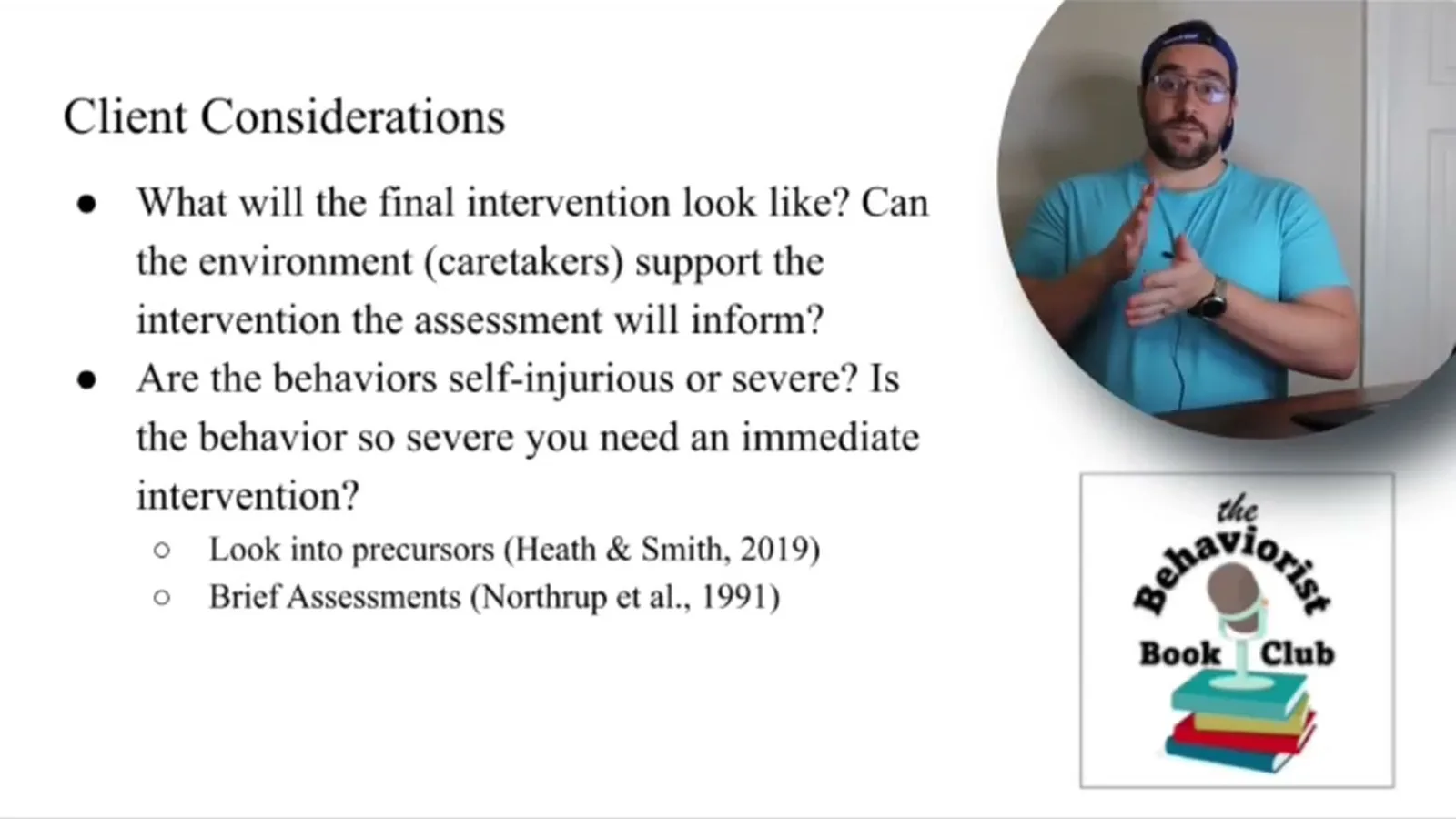
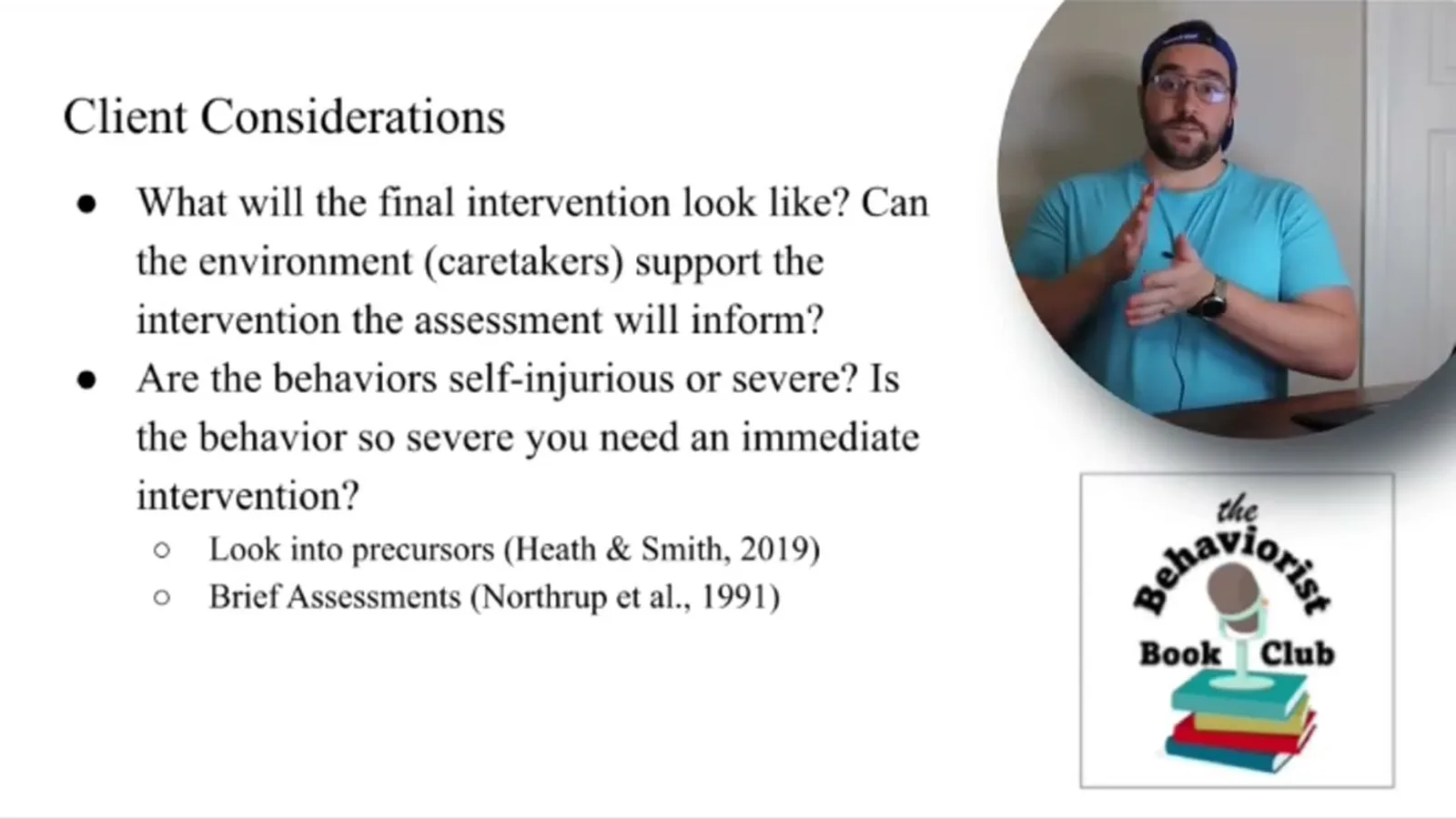
Confessions of a New Behavior Analyst in Functional Analysis
Matt HarringtonThe Behaviorist Bookclub
Introduces believability as a practical, spectrum-based alternative to formal statistical significance for deciding when FA data is clean enough to move to…
On this page · 8 sections▾
Believability is how much you trust that your data tells the true story. It is a judgment about your own results. Are the patterns clear? Are you confident enough to act on them? That confidence is believability.
For BCBAs and RBTs, this idea shows up most in a functional analysis. A functional analysis, or FA, is a test to find why a behavior happens. At some point you must decide the data is good enough. Believability is how you make that call.
What believability means in behavior analysis#
The word can feel loose at first. It is not a formula. Matt Harrington admits this openly, then makes the case for using it anyway.
Believability is a very fuzzy term for us behavior analysts, but I encourage you to sit with it and maybe give it a try because it actually has a lot of objective uses for our field. From the talk — Matt Harrington
So believability feels soft, but it does real work. It is the honest question behind every data review. Do I buy what these numbers are telling me? That question guides your next step.
The core question: do you have enough?#
At its heart, believability comes down to one plain check. Harrington boils it into two linked questions.
At the end of the day, it comes down to this simple question. Do you have enough data to inform your treatment? And how confident are you in that data? From the talk — Matt Harrington
Notice the two parts. First, is there enough data. Second, how sure are you about it. Both must feel solid before you build a plan. If either is weak, you may need more sessions.
This keeps you honest. It stops you from rushing to treatment on thin results. It also stops you from testing forever when the answer is already clear.
A spectrum, not a yes or no#
Believability is not on or off. It sits on a scale. Some data sets are very believable. Some are shaky. Most fall somewhere in between.
Thinking in shades helps you make better calls. You do not need perfect data to act. You need data believable enough for this decision. A clear, strong pattern earns more trust than a messy one.
That scale also guides how bold you get. High believability supports a firm treatment plan. Lower believability calls for caution and closer tracking. You match your confidence to your evidence.
Why not just use statistical significance#
 Advertisement
In many sciences, people lean on statistical significance. That is a math test that asks if a result is likely real. Behavior analysts usually work a different way.
We often study one person at a time. We look at patterns in a graph, not group averages. So a single p-value does not fit our work well. Believability gives us a practical stand-in. It asks the same basic thing in a way that suits our data.
This does not mean we get sloppy. It means we judge the graph with care and clear rules. We look for patterns strong enough to trust and act on.
What makes data more believable#
A few things push believability up. The first is a clear pattern. If the behavior spikes in one test condition and stays low in the others, that stands out. Sharp separation is convincing.
The second is repetition. If the pattern holds across several sessions, you trust it more. One odd session could be a fluke. The same result three times is not.
The third is a clean setup. If sessions ran the way they should, with few slip-ups, the data earns more faith. Sloppy sessions add doubt. Careful ones remove it.
Together these signs raise your confidence. The clearer and steadier the pattern, the more believable the story.
Believability and honest practice#
Believability is also an ethics tool. It keeps you honest with yourself. It is easy to see what you hope to see in a graph. A tired clinician may read a fuzzy pattern as clear.
Naming believability slows that rush. You have to ask if you truly trust the data. That pause guards against wishful reading. It pushes you to act on evidence, not hope.
This protects clients too. A weak plan built on shaky data can waste months. It can even make a behavior worse. Strong believability lowers that risk. You act when the story is clear, not before.
So treat the question as a habit. Before every treatment call, ask how much you trust the data. Let your honest answer set your next step.
Believability is not just a solo call. It is a great word to use with your team. When you review data together, ask the group how much they trust it. That opens an honest talk.
A supervisor can use it to coach. Instead of saying "wrong," they can ask what makes the data believable. This teaches new clinicians to weigh their own results. It builds judgment, not just rule-following.
The word also helps with families. You can explain, in plain terms, why you need more sessions. You are not stalling. You are making sure the data is solid before you act. Most families respect that care.
So make believability part of how your team talks. Use it in meetings, in notes, and in supervision. Shared language leads to better, more careful calls.
When to keep testing#
Sometimes the data does not add up. The pattern may be muddy. Two conditions may look almost the same. That low believability is a signal, not a failure.
When trust is low, run more sessions. Tighten your setup. Check that each condition is truly different. More clean data often turns a fuzzy picture into a clear one.
The goal is not endless testing. The goal is enough clarity to act with care. Once the pattern is believable, you move to treatment with confidence.
FAQ#
What does believability mean in a functional analysis?
It means how confident you are that your FA data shows the real reason for a behavior. You weigh whether the patterns are clear and whether you have enough sessions. High believability tells you it is safe to plan treatment.
How is believability different from statistical significance?
Statistical significance is a math test built for group data. Believability is a practical judgment that fits single-person work. Behavior analysts read patterns in a graph, so they ask if the data is trustworthy enough to act on.
How do you increase the believability of your data?
Run clean sessions, look for clear separation between conditions, and repeat until the pattern holds. Strong, steady, well-run results earn more trust. Messy or one-off results earn less, so you gather more data before deciding.
The talk Confessions of a New Behavior Analyst in Functional Analysis shows these calls with real FA data.
 Advertisement
Turn this topic into a CEU
You just studied this. Now get credit for it.
Watch Confessions of a New Behavior Analyst in Functional Analysis with Matt Harrington and earn 2.5 free BCBA CEUs. Detailed certificate, delivered the moment you finish.
Keep going with a free learning path
Child Development for Behavior Analysts
Typical development for behavior analysts. Kristen Byra's overview, then Kelly Brzak's deep dives on ages 2 to 5, 6 to 8, and 9 to 11, with milestones, common problem behaviors, and programming tips for each band.