Synthesized Contingencies in ABA: Why Combining Reinforcers Works
What synthesized contingencies are, why isolated FAs miss them, and how to test one without a kitchen-sink mess from a BCBA-led CEU.
Key takeaway
A synthesized contingency analysis is a Practical Functional Assessment (PFA) test condition that combines several suspected reinforcers into one event, and it uses reverse-component logic from Ghaemmaghami 2015 to figure out which pieces actually matter once treatment starts. That is the honest answer.
12 days of PFA & SBT
On this page · 8 sections▾
A synthesized contingency analysis is a Practical Functional Assessment (PFA) test condition that combines several suspected reinforcers into one event, and it uses reverse-component logic from Ghaemmaghami 2015 to figure out which pieces actually matter once treatment starts. That is the honest answer. It is also the answer that takes the air out of the most common objection, which is that synthesizing reinforcers is just throwing everything at the kid and hoping something sticks. It is not. It is a test condition that is built to match the messy reality of a home or a classroom, and then it is taken apart on the back end by watching what treatment removes and what it does not.
If you have ever run an isolated attention condition on a child whose problem behavior happens during transitions away from a preferred activity while a sibling is yelling and a parent is asking a question, you already know why this matters. The function is not one thing in that moment. It is a stack of things, and the stack is the function.
What "Synthesized" Actually Means (Without the Jargon)#
Synthesized just means combined. In a Practical Functional Assessment, also called a PFA, you take the reinforcers that the interview and observation tell you are in play, and you put them into one test condition at the same time. So instead of running an attention-only condition, then an escape-only condition, then a tangibles-only condition, you run a condition where the kid is asked to stop a preferred activity, transition to a less preferred one, and lose adult attention all at once. When the problem behavior shows up, all of those reinforcers come back together. That is the test condition. The control is the opposite. Free play, free attention, no demands, all the preferred items.
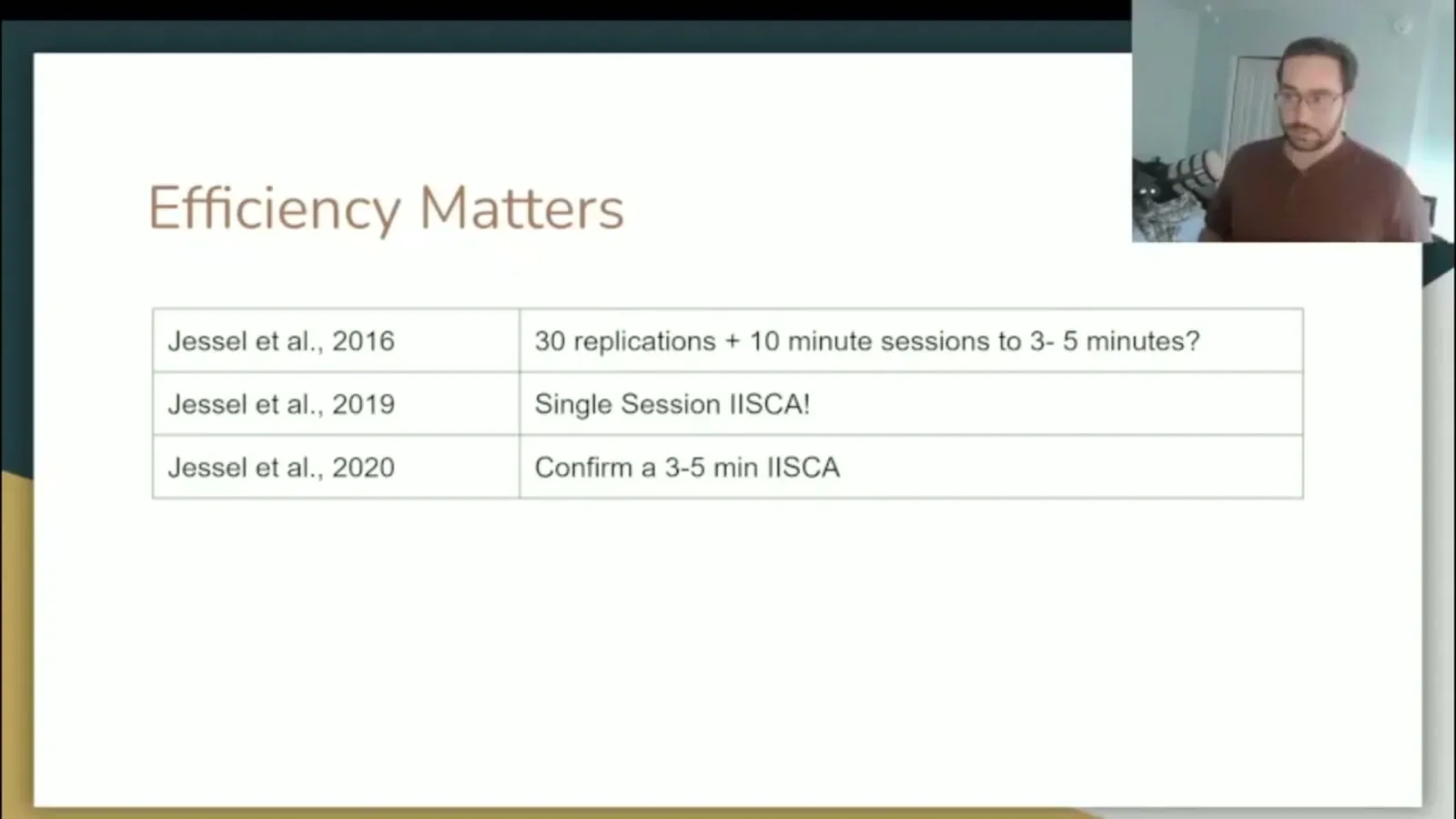
The interview-informed synthesized contingency analysis, or IISCA, is the version Hanley and Jessel walked through in the 2014 paper and that has been refined in Jessel 2019 and 2020, Rajaraman 2021, and Ward 2021. The point is not to be clever. The point is to test conditions that actually look like the conditions where the behavior happens.
Why Isolated FAs Miss the Function at Home#
The classic objection to a traditional functional analysis run in clinic is that it is too clean. The kid does not melt down in a room with one therapist and a chair. The kid melts down on the kitchen floor at 4:47 PM when grandma is over and the iPad just died. Isolated conditions can miss that entire picture because the conditions in real life are stacked.
Having isolated attention, isolated escape, isolated tangibles didn't really mimic this convoluted synthesized reinforcement feeling that we get in the home setting. So, I think the authors in this case really tried to zone in on not just creating an intervention that led to easy differentiation, but creating an intervention that led to effective treatment. From the talk — Matt Harrington
That last part is the part most write-ups skip. The goal of the analysis is not to win an argument about what the function is. The goal is to set up a treatment that works. If you ran four isolated conditions and got a clean attention finding, but your treatment based on attention does not reduce behavior at home, you have a clean answer to the wrong question.
Is This Just the Kitchen Sink? The Component-Analysis Answer#
The honest pushback is that synthesizing three or four reinforcers at once feels like throwing the kitchen sink at the kid. That is a fair thing to say out loud. The answer is that the analysis lives in two places. The first place is the test condition itself. The second place is what happens during treatment.
I'd always lean on synthesized because at least I know I'm capturing all my bases. It's kind of like a little bit like the kitchen sink approach. The difference of course is that the is an analysis versus just throwing everything you can at the kid. From the talk — Matt Harrington
The reverse-component move is the piece that separates this from a real kitchen sink. Ghaemmaghami 2015 walked through it. You teach a functional communication response, or FCR, for one component of the synthesis, and you watch what happens. If you teach escape-only FCR and behavior drops to zero, then the other reinforcers were probably not pulling much weight in that synthesis. You did not have to test that ahead of time. You let the treatment tell you.
Here is what the reverse-component move looks like in practice. Say you ran a synthesized condition that combined escape, tangible, and attention, and behavior was high in test and low in control. Differentiated. Good. Now you start treatment by teaching an FCR that only delivers escape. You watch the data. If behavior drops to zero, then the tangible and attention pieces were not really pulling weight in that synthesis. They came along for the ride. You did not have to test that ahead of time. You let the treatment data tell you which components were doing the work and which were dead weight.
So you start broad to make sure you catch the contingency. Then you narrow as treatment data comes in. That is the analysis part. That is not the kitchen sink.
What a Real Synthesized Test Condition Looks Like (Five Examples from the Literature)#
This is where the jargon falls apart. People hear "synthesized contingency" and picture a table with three columns labeled escape, tangible, and attention. The actual test conditions from the published cases are way more specific than that.
Here are five actual conditions from the published cases, paraphrased from the talk. Escape from a teacher-directed task to child-directed play with dinosaurs. Escape from a teacher-directed task to a child-directed drawing activity. Escape from social interaction with access to daily snacks. Escape from an adult-directed activity to a child-directed activity plus preferred conversation. Escape from transitions to a preferred activity plus preferred conversation.
Read those again. None of them are "escape and tangible." Each one names the exact escape (teacher-directed to dinosaur play) and the exact reinforcer that follows (preferred conversation, daily snacks, a specific drawing activity). That level of specificity is the difference between a test condition that triggers behavior and a test condition that the kid shrugs at. If your synthesized condition looks like a textbook category label, it is probably not specific enough yet. Go back to the interview.
The Boundary Condition Nobody Talks About: Your Interview Has to Be Good#
Here is the part that gets left out of the conference talks. The synthesized analysis is only as good as the interview that feeds it. If the parent or teacher tells you "he just gets mad sometimes," your synthesis is going to be a guess, and a guess that combines three reinforcers will not differentiate any better than a guess that picks one.
If you don't have a really strong interview and a really strong observation your ISCA probably isn't going to look differentiated simply because you have no good information to program off of so that may be one of the boundary conditions that we have to think about when using an ISCA versus a traditional FA. From the talk — Matt Harrington
So before you run the condition, ask yourself two things. Did the interview give you a specific story about what was happening five minutes before the behavior, in the moment, and right after. And did you actually go observe in the setting, not just take the caregiver's word for it. If both answers are yes, you are ready. If either one is shaky, the synthesis is going to be muddy and you will not know whether the problem is the method or the inputs.
When to Pick Synthesized Over Isolated (and When to Pick the Other Way)#
You pick synthesized when the behavior happens in stacked conditions and the caregiver report is detailed. Home, school, community, transitions, denials, sibling stuff. You pick synthesized when the goal of the assessment is to set up a treatment that the family or teacher can actually run, not to publish a clean A-B reversal.
You pick isolated when you have time, you have a controlled space, you have a single condition that the team disagrees about, or you are a researcher who needs to make a specific functional claim. Both methods are still valid. The Cooper textbook traditional functional analysis is not wrong. It is just often the wrong shape for a Tuesday afternoon in a kitchen.
Frequently asked questions#
Does a synthesized contingency count as a functional analysis for insurance authorization? In most cases, yes. Insurance reviewers are looking for a functional analysis that informs treatment, and the IISCA family is a published, peer-reviewed FA methodology. Document the interview, the observation, the test and control conditions, and the differentiation data the same way you would for a traditional FA. Some payers ask for specific language, so check the local clinical criteria for your state.
Can I synthesize three reinforcers, or do I have to keep it to two? You can synthesize as many as the interview and observation tell you are in play. The published cases include conditions that combine escape, access, and attention all at once. The constraint is not a number. The constraint is whether each component is actually present in the natural condition that triggers behavior. If you cannot justify a fourth reinforcer from the interview, do not add it.
What if my synthesized test condition does not differentiate from control? Go back to the interview and the observation before you change methods. Most of the time, a non-differentiated synthesis means the test condition is not specific enough, or the control condition is not actually rich enough to make the contrast clear. If the interview was solid and the observation was solid and the conditions still do not differentiate, that is when you bring in isolated conditions or a more traditional FA to pull the variables apart.
Watch the full talk#
If you want the full walk-through of synthesized contingencies, the component analysis logic, and the case examples, the recording is the source for everything on this page. It is BACB ACE eligible and free.
Turn this topic into a CEU
You just studied this. Now get credit for it.
Watch 12 days of PFA & SBT with Matt Harrington and earn 3 free BCBA CEUs. Detailed certificate, delivered the moment you finish.