AAC in ABA: Giving Every Learner a Voice
Augmentative and alternative communication gives nonspeaking learners a voice through devices and boards. Learn how BCBAs and SLPs make AAC work together.
Key takeaway
Augmentative and alternative communication gives a voice to people who cannot rely on speech. Most people call it AAC for short. It includes picture boards, letter boards, and speech-generating devices.
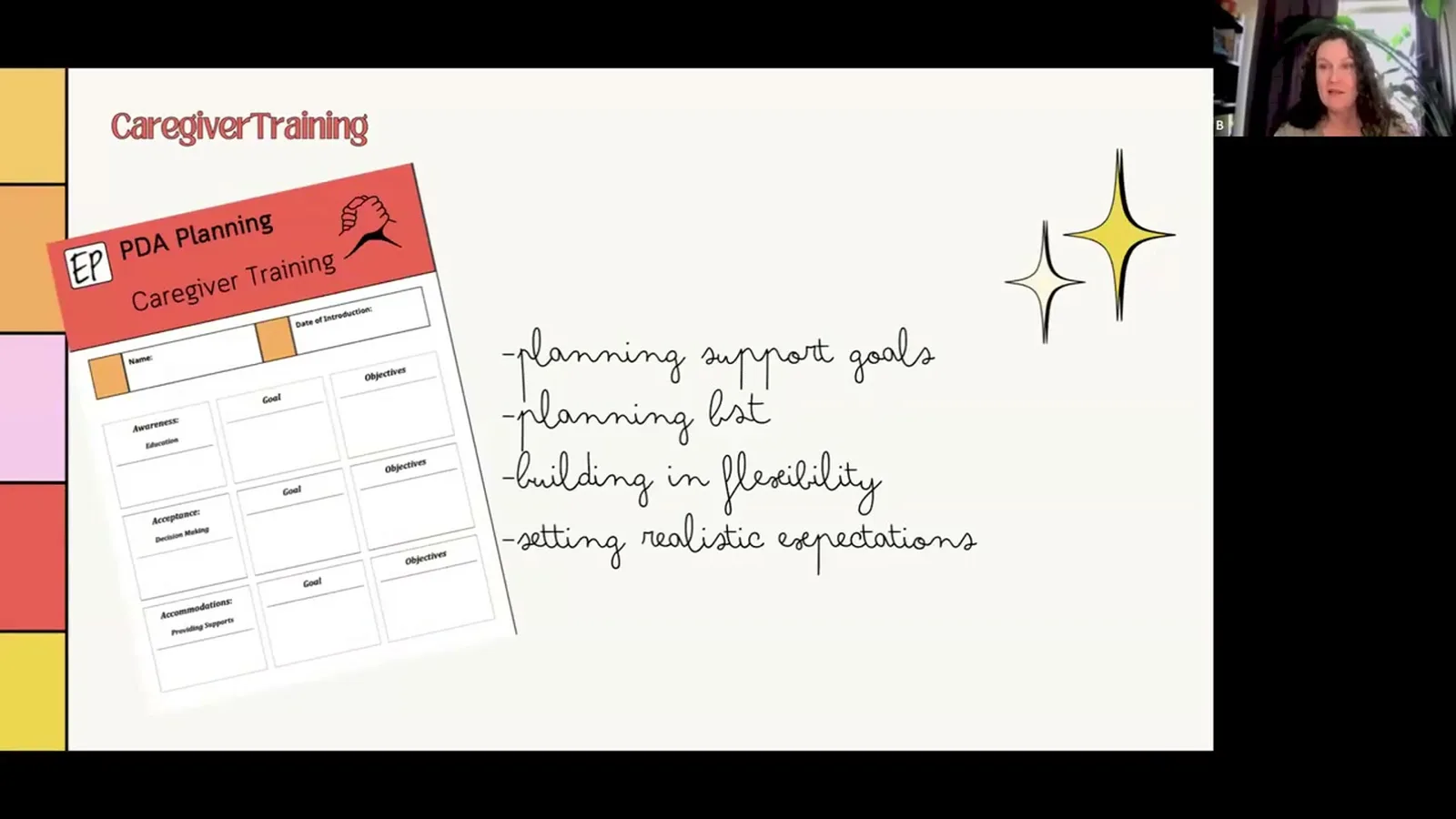
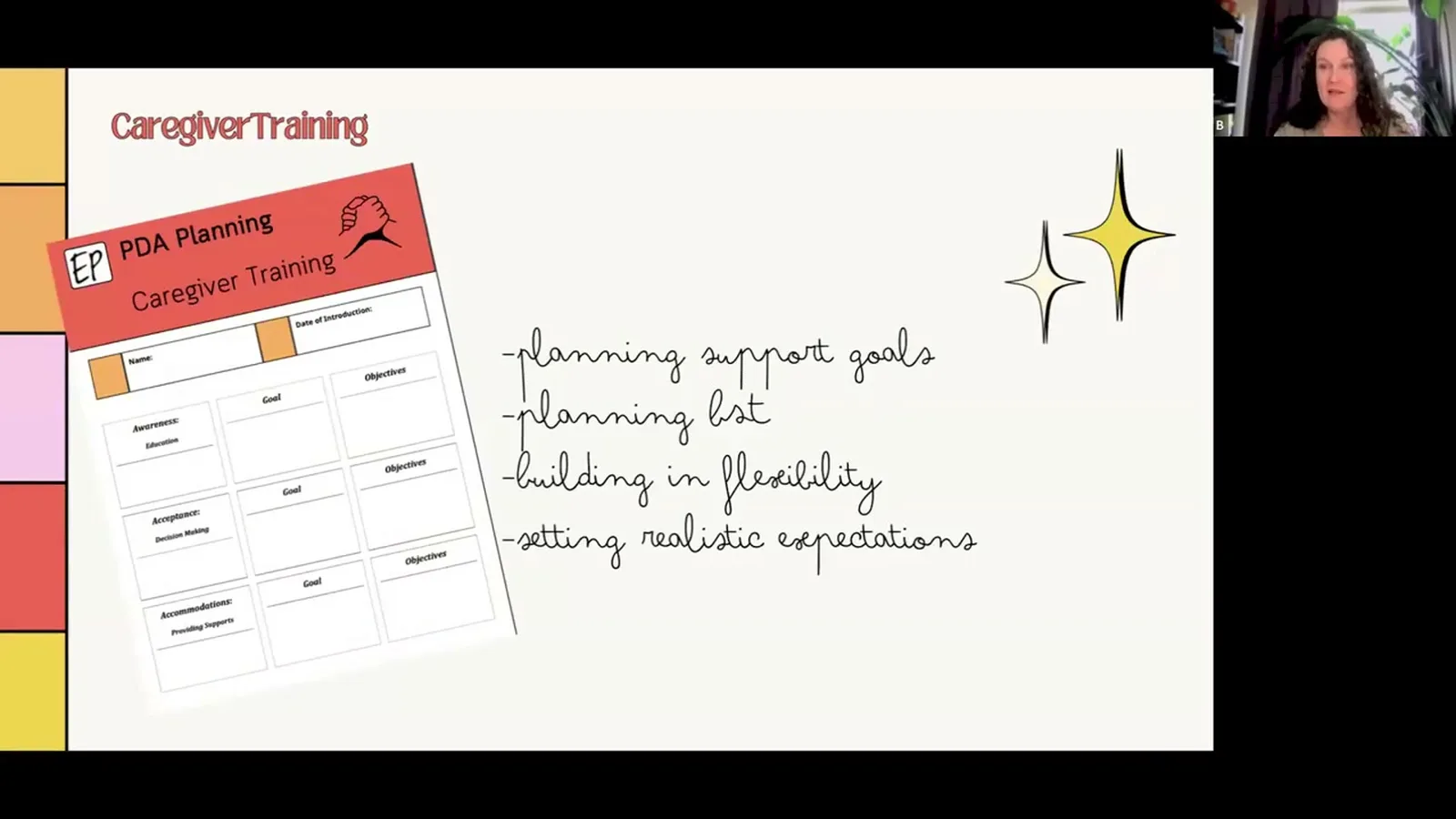
PDA Caregivers, Complex Profiles, Replacement Behaviors, and Being Trauma Informed
Experts who cover this
3 recordings on openceu cover augmentative and alternative communication.
- Featured talk1.50 CEUs
PDA Caregivers, Complex Profiles, Replacement Behaviors, and Being Trauma Informed
B. Kuerine GrayThe Behaviorist Bookclub
Used as the communication modality for two of the complex cases (O and F), including case F who was taught to decline appropriately via their AAC device across…
- 1 CEU
The Use of Matrix Training to Teach Multi-Component Tacting Through Telehealth
Dr. Jessica OsosCopper Consulting Group
In response to an audience question, Osos notes that matrix training has been applied with AAC/PECS users and points to a recent systematic review covering its…
- 1 CEU
New Year, New Care Collab Goals
Matt HarringtonThe Behaviorist Bookclub
Used as the go-to example of fragmented, uncoordinated intervention when an SLP works on a 70-icon AAC device while the BCBA independently uses a 2-icon board…

On this page · 6 sections▾
Augmentative and alternative communication gives a voice to people who cannot rely on speech. Most people call it AAC for short. It includes picture boards, letter boards, and speech-generating devices.
This tool matters because everyone deserves a way to communicate. BCBAs, RBTs, teachers, and speech therapists all use AAC. It helps a nonspeaking learner ask, refuse, and share ideas. When AAC works, behavior often improves along with it.
What AAC is#
AAC is a broad group of communication tools. Some are simple, like a board with a few pictures. Others are high-tech, like a tablet that speaks aloud.
The word "augmentative" means it adds to any speech a person has. The word "alternative" means it can replace speech fully. Both aim at the same goal, which is real communication.
AAC is not only for people with no speech at all. Some learners speak a little but need backup. Others speak clearly at home but freeze in public. AAC can support any of these learners as needed.
AAC is not one single product. It ranges from low-tech picture cards to advanced devices. The right choice depends on the learner and their needs.
A device is only a tool, not a cure by itself. The learner still needs teaching to use it well. Picking a device is just the first step. The real work is building skills with that device every day.
AAC for declining and self-advocacy#
AAC does more than help a learner ask for snacks. It also lets them say no in a safe way. B. Kuerine Gray shares a case where this changed everything.
they have not begun SBT, but they are using their augmentative communication device and they have started to decline appropriately, and having more success and engaging in using their device across multiple settings From the talk — B. Kuerine Gray
Learning to decline is a form of self-advocacy. The learner can refuse without a meltdown or an escape attempt. That skill spread across many settings, which is the real win.
Gray built this through mand training, which means teaching requests. The device gave the learner a clear way to communicate choices. Shaping helped that response grow stronger over time.
intervention focus was on advocacy and communicating choices with man training using augmentative communication and shaping that response From the talk — B. Kuerine Gray
Why coordination matters#
 Advertisement
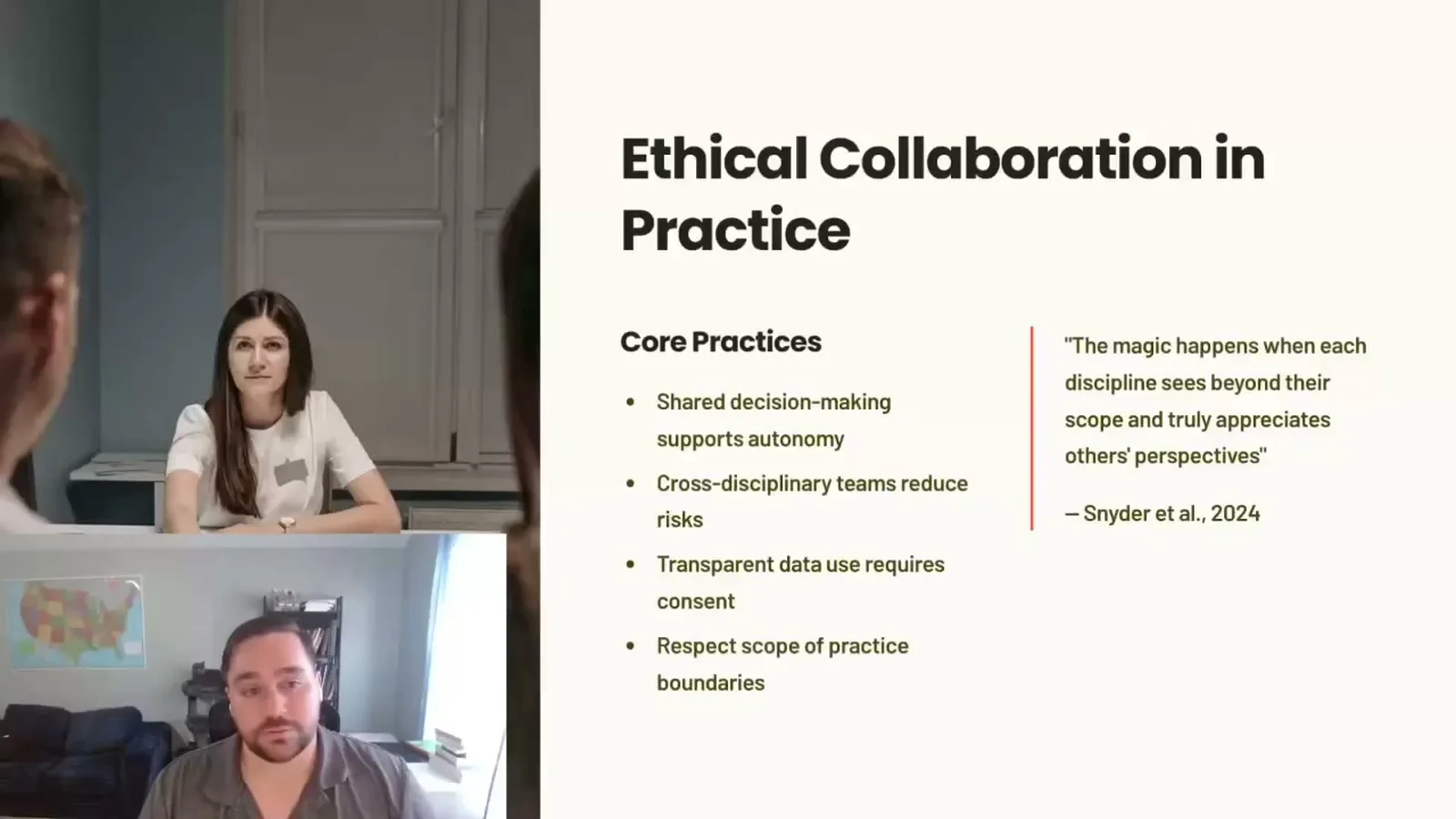
AAC often involves more than one professional. A speech therapist and a behavior analyst may both be involved. Matt Harrington warns about what happens when they do not talk.
the SLP is working on AAC, you're working on PEX, but the SLP has 70 different icons on their iPad and you're doing two on your PEX board. Ultimately, it's a fragmented intervention and whatever progress is made separately would be way better made together. From the talk — Matt Harrington
This picture is easy to imagine and hard to fix. One provider uses a rich device with many icons. The other uses a tiny board with two pictures. The learner is caught between two systems.
Fragmented work slows a learner down. Progress made apart could be much bigger made together. The fix is real coordination between the team members.
When the team lines up, the learner sees one clear system. The device, the icons, and the goals all match. That match speeds up learning and cuts confusion.
Coordination takes real effort, but it pays off. A short shared meeting can align two providers fast. They can agree on which icons to use first. They can also agree on how to prompt and reward. That small step prevents months of split, wasted work.
Joint goals across settings#
Good AAC plans set shared goals from the start. Harrington lists the areas where teams should join forces. Communication is at the top of that list.
Communication targets in AAC, feeding, joint goals such as language goals in the home, school, or clinic, and obviously generalization across settings From the talk — Matt Harrington
The phrase "across settings" is the heart of it. A learner should use the same system at home and at school. That match helps the skill generalize, which means it shows up everywhere.
Joint goals also prevent mixed messages. The family, the school, and the clinic all pull the same way. The learner practices one voice in every place they go.
Notice how the two speakers cover different angles. Gray shows what AAC can do for one learner's self-advocacy. Harrington shows how teams must coordinate to make AAC stick. One view is about the learner, the other about the team. Both are needed for AAC to truly work.
What the research says#
AAC use is common among autistic youth, but not universal. One study looked at over 500 autistic youth in inpatient care. About 42.5% of caregivers reported at least one form of AAC. Younger children were more likely to use it.
Teacher and parent attitudes shape whether AAC gets used. One study surveyed teachers on what helps or blocks AAC adoption. It found that seeing AAC as useful and easy to use drove their intention to use it. Support and training matter as much as the device itself.
Some families fear AAC will slow down speech. One study of parents found this worry was a key theme. Some feared the device would replace talking or mark their child as disabled. Clinicians should address these fears with care and facts.
AAC can also grow with the learner over time. One case study followed a teen from a letter board to an iPad. His ability to share ideas expanded, especially in school subjects he loved (Mavritsakis, 2024). AAC can open doors that once seemed closed.
FAQ#
What are examples of AAC?
AAC includes picture exchange boards and letter boards. It also includes speech-generating devices and communication apps on tablets. Any tool that supports or replaces speech counts as AAC.
Does AAC stop a child from learning to talk?
No, research does not support that fear. AAC often supports speech rather than blocking it. Many learners gain more words after starting AAC.
Who should be on an AAC team?
An AAC team often includes a speech therapist and a behavior analyst. Teachers and caregivers are also key members. Coordination among them helps the learner use one clear system everywhere.
Coordinating AAC across a full team is the focus of New Year, New Care Collab Goals.
 Advertisement
Turn this topic into a CEU
You just studied this. Now get credit for it.
Watch PDA Caregivers, Complex Profiles, Replacement Behaviors, and Being Trauma Informed with B. Kuerine Gray and earn 1.5 free BCBA CEUs. Detailed certificate, delivered the moment you finish.
Parent or caregiver? Find a vetted ABA provider near you on ProviderSpark.