The Escalation Cycle: Spot It Early, Prevent Crisis
The escalation cycle is the chain from calm to crisis. Learn its stages, why pushing demands backfires, and how to step in before a blowup.
Key takeaway
The escalation cycle is the path from calm to crisis. A learner does not jump straight to a blowup. They move through steps, one after another.
PDA: Collaborating for Success
Experts who cover this
The recording behind this guide covers escalation cycle.
- Featured talk1 CEU
PDA: Collaborating for Success
B. Kuereine GrayThe Behaviorist Bookclub
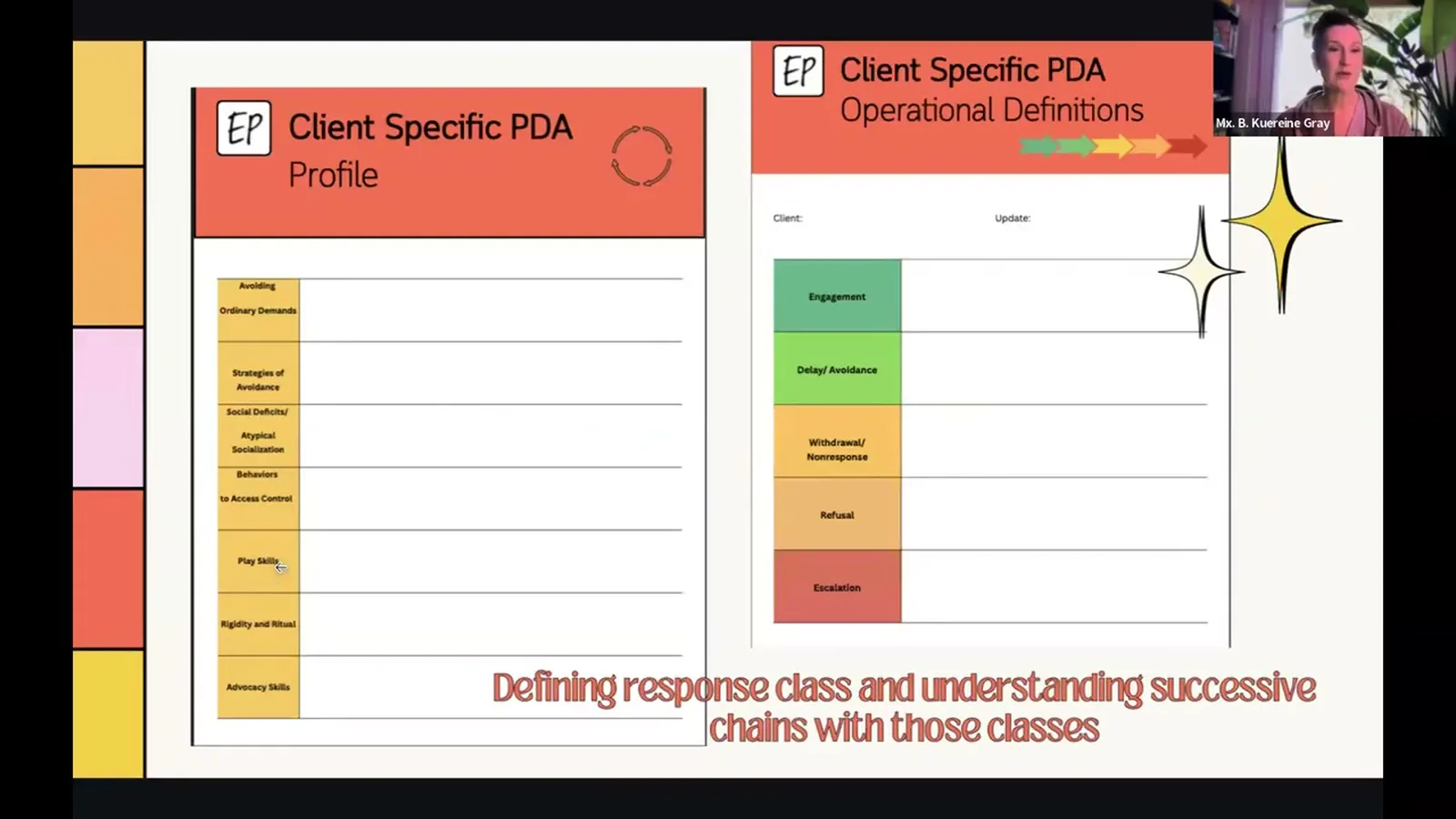
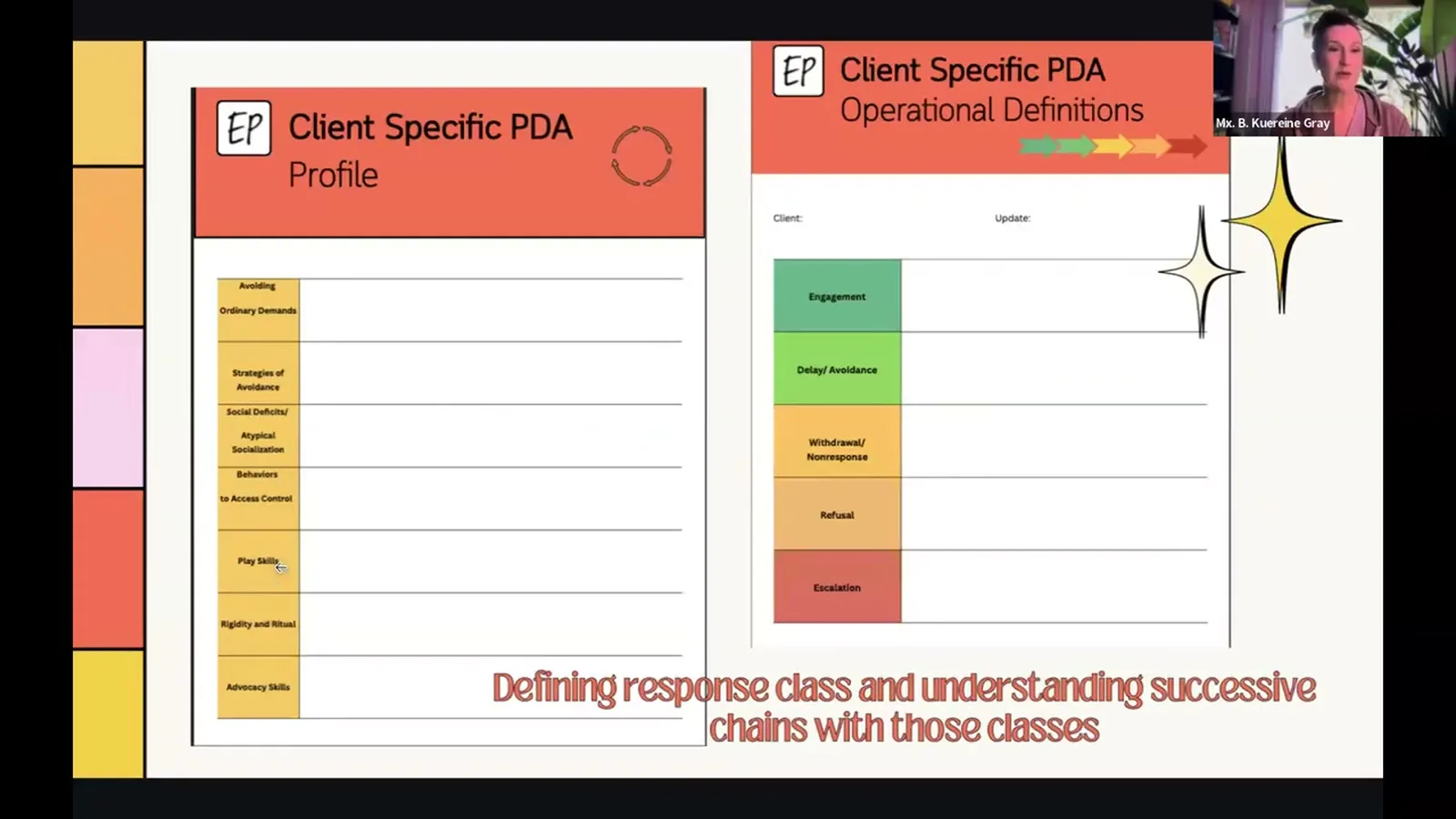
The talk lays out a sequence for PDA responses (engaged to delay/avoidance to withdrawal/non-response to refusal to escalation) and stresses that outbursts are…
On this page · 5 sections▾
The escalation cycle is the path from calm to crisis. A learner does not jump straight to a blowup. They move through steps, one after another.
This matters because the steps can be seen. BCBAs, RBTs, teachers, and parents can learn to spot them. If you catch the early signs, you can help sooner. That can prevent a scary and unsafe moment.
The goal is to work earlier in the chain. The earlier you step in, the safer things stay. Waiting until the peak leaves you few good options. Reading the cycle gives you time to act well.
The stages of the cycle#
Escalation follows a chain, not a random jump. A learner starts out engaged and calm. Then small signs of stress begin to show.
B. Kuereine Gray lays out an early stage many people miss. Before big behavior, there is often quiet refusal.
When we get into delay and avoidance, first we have non-response, which is I'm not looking up, I'm not engaging, I have ignored you. From the talk — B. Kuereine Gray
This quiet stage is easy to overlook. The learner is not loud or unsafe yet. But they are already moving up the cycle.
If the pressure keeps building, the behavior grows. The quiet refusal can turn into open, unsafe acts.
And then once that expectation has gotten to the point where it's no longer avoidable, then you can see aggression, property destruction, self-injury, and much more overt or dangerous behavior. From the talk — B. Kuereine Gray
The key idea is that this is a chain. Each stage leads to the next if nothing changes. Seeing the chain gives you a chance to act.
Why the outburst is not random#
 Advertisement
A big reaction can feel sudden and shocking. But it is really the end of a long buildup. The signs were there, just quiet and small.
Gray says these patterns can be subtle at first. With practice, teams learn to read them.
Sometimes that sequence of escalation can be subclinical or very nuanced, and it is hard to grapple. But once we start noticing those patterns, that chain of responses that go together, and we can outline them, this will be more helpful with any other teachers, community members, caregivers, support staff. From the talk — B. Kuereine Gray
Writing the chain down helps the whole team. Everyone learns the same early signs. This shared map makes support more consistent.
A written chain also helps people outside the room. Teachers, bus drivers, and family can learn the signs. When everyone knows the early stages, help comes sooner. The learner gets support in every setting, not just one.
Each learner has their own version of the chain. One child may go quiet first. Another may fidget or leave the area. Watching closely helps you learn each learner's early signs.
How pushing demands makes it worse#
Old habits can drive a learner up the cycle. Many staff were trained to place a demand and hold it. They kept pushing even as the learner refused.
Nikki describes this trained pattern from schools. Staff tell the learner what to do and place the direction. Then they hold the demand and do not let go.
This approach can trap a learner with no way out. The pressure keeps climbing until it explodes. Then staff must use crisis steps.
Once they realized there was no out, we were in volcano mode, right? And then we had to institute crisis procedures. And then we have restraint and seclusion, right? From the talk — Nikki
This teaches a hard lesson to the learner. Big, unsafe behavior becomes the only way to escape. That is the opposite of what we want.
Restraint and seclusion also harm trust. The learner may start to fear the setting or the adult. That fear can make the next cycle start faster. Crisis steps should be a last resort, not a plan.
The demand does not have to be dropped forever. You can step back now and return to it later. The point is to avoid forcing a full crisis. A calmer learner can try the task again soon.
Stepping in before the peak#
A better plan meets the learner earlier in the cycle. You do not wait for the volcano to blow. You act while the learner can still think.
Nicky Schneider makes the case for backing off a trigger early. When a learner pulls back assent and grows agitated, remove the trigger. She says that choice beats letting the learner explode into crisis.
There is a real risk in pushing to the top. Once a learner peaks, they cannot learn new skills. They also get better at the unsafe behavior with each rep.
They've now had practice and they've become more fluent in engaging in these unsafe behaviors. And they now know the chain and they'll quickly resort to the unsafe behaviors. From the talk — Nicky Schneider
So every trip to the top makes the next one faster. Stepping in early breaks that practice loop. It keeps the learner in a place where teaching can happen.
Notice how these experts line up. Gray teaches you to read the chain. Nikki shows how old demands drive it up. Schneider urges you to step in before the peak. Nicky Schneider goes deeper on this in School Behavior Change: Is that the hill you are going to die on?.
FAQ#
What are the stages of the escalation cycle?
The cycle moves from calm to crisis in steps. It often starts with delay, avoidance, or quiet non-response. If pressure builds, it can grow into aggression or self-injury. Each stage leads to the next if nothing changes.
How do you de-escalate a learner in the cycle?
Act early, before the learner reaches the peak. Watch for quiet signs like withdrawal or refusal. Removing the trigger at that point is often better than pushing on. A calm learner can still use coping skills.
Why does holding a demand make escalation worse?
Holding a demand can trap a learner with no safe exit. The pressure keeps climbing until behavior explodes. This can teach the learner that unsafe acts are the only way out. It also builds fluency in the unsafe behavior.
 Advertisement
Turn this topic into a CEU
You just studied this. Now get credit for it.
Watch PDA: Collaborating for Success with B. Kuereine Gray and earn 1 free BCBA CEU. Detailed certificate, delivered the moment you finish.