What Makes a Good BCBA Supervisor (The Big Five Test)
Build trust with RBTs using the Big Five of relational depth and stop being just a feedback-giver, from a BCBA-led CEU.
Key takeaway
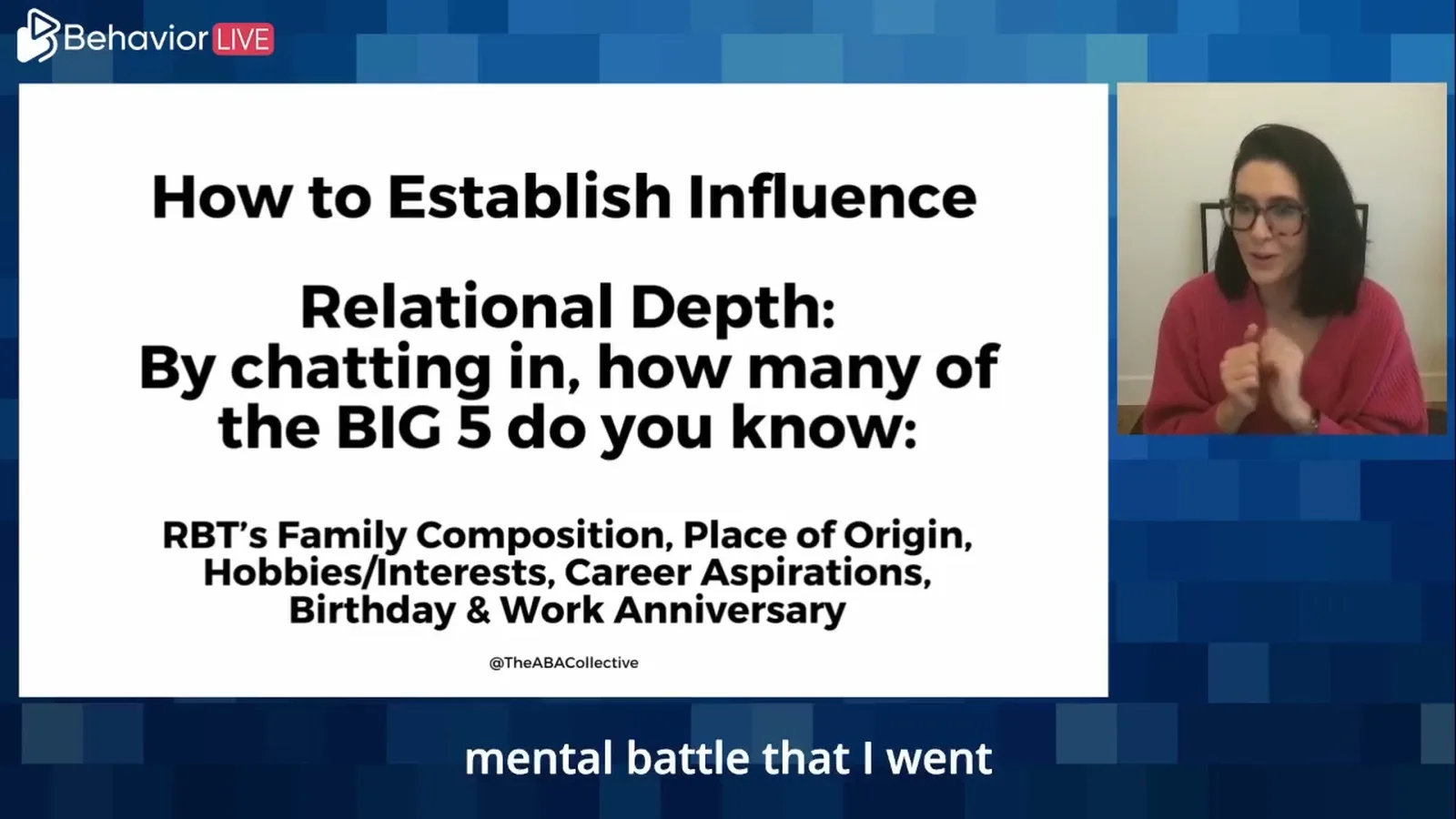
A good BCBA supervisor knows the Big Five about every RBT (registered behavior technician, the person running sessions with the client). The Big Five are family, place of origin, hobbies, career goals, and important dates.
Dunder Mifflin’s Guide to BCBA Supervision: Lessons from The Office
Free learning path on this topic
Supervision, Done Right
Four supervision CEUs that build on each other. What reflective supervision is, how to build a supervision system, how to assess supervisee competence instead of counting hours, and how supervision affects provider outcomes. The BACB asks supervisors for three supervision CEUs per cycle. This covers it.
On this page · 8 sections▾
A good BCBA supervisor knows the Big Five about every RBT (registered behavior technician, the person running sessions with the client). The Big Five are family, place of origin, hobbies, career goals, and important dates. The good ones also run a OneNote page per tech so nothing slips. That is the spine of the job. Feedback skill matters. Training method matters. But if your RBT does not feel known by you, the rest of your supervision sits on sand.
This page walks through the five facts that build trust, the simple system that keeps you honest, what to do when you do not click with a person, and how to score yourself today.
The Big Five things every BCBA should know about each RBT#
When Mellanie Page teaches this, she sets a small test. From one to five, how many of these do you know about each person on your team right now?
- Family composition. Who lives with them. Who they take care of. Who takes care of them.
- Place of origin. Where they grew up. Where they call home, even if they moved.
- Hobbies and interests. What they do on a Sunday when no one is watching.
- Career aspirations. Where they want to be in two years. BCBA track? Clinical lead? Out of the field entirely?
- Important dates or milestones. Birthday, work anniversary, the day their kid was born, the day they passed their RBT exam.
This is not small talk. It is the foundation that lets every other supervision move actually land. When you give corrective feedback and the RBT trusts that you see them as a whole person, they hear it as coaching. When that foundation is missing, the same words land as criticism, no matter how kindly you say them.
there are five big things that you should know about your RBT or your team. Family composition. Place of origin. Hobbies and interests. Career aspirations. And important dates or milestones. From the talk — Mellanie Page
Notice what is not on the list. Politics. Religion. Salary. Marital status as a yes-or-no fact. The Big Five are open enough that the RBT chooses what to share, but specific enough that you can actually remember it and follow up.
Why you can write it down (and the OneNote-per-tech system)#
Here is the part that gives most new supervisors permission to actually do this work. You can write it down.
A lot of BCBAs feel weird about taking notes on a person. It can feel like you are filing them away. Page hit that same wall. Her working memory was not strong enough to hold every detail across five, ten, fifteen RBTs. So she felt fake every time she made a note.
my working memory is very poor. And so when someone shared something about themselves, I felt like it was a little bit disingenuine to write it down or to remind myself somehow, please do not go through that same mental battle. From the talk — Mellanie Page
The reframe she landed on, and that one of her own supervisees, Jordan, models cleanly: the act of writing it down is the care. You are not surveilling anyone. You are making sure that when their grandmother is in the hospital this Tuesday, you remember to ask about it next Tuesday.
The system is dead simple. Open OneNote, Notion, Apple Notes, or a plain Google Doc. Make one page per RBT. At the top, put the Big Five. Underneath, log anything they share that you want to remember. Review the page for two minutes before your next one-on-one.
That is it. No special software. No HR template. One page per tech.
The reason this works so well is that it removes the cognitive load that used to make supervisors quietly avoid the relational side of the job. You no longer have to pretend to remember. You actually remember, because you wrote it down, because you cared enough to.
Building relational depth when you don't 'vibe' with someone#
Every supervisor eventually gets paired with an RBT they would not have picked as a friend. Different sense of humor. Different communication style. Different energy. Page uses the Michael-and-Toby clip from The Office to name this honestly. Michael tries to be friends with Toby. It does not work. Toby is not the problem. The bias is.
The Big Five framework gets even more useful here, because relational depth and personal chemistry are not the same thing. You do not need to like someone the way you like your best friend. You need to know them well enough to coach them as a whole person.
A few moves that help when chemistry is off:
- Treat the relationship as a tool for the client, not a tool for you. The relationship exists so the kid you both serve gets better care. That purpose carries you through low-chemistry days.
- Believe people have the best intentions, by default. Negativity bias makes us read neutral behavior as personal. Pre-commit to charitable interpretation.
- Stay on behaviors, not personality. If something needs to change, name the behavior. Do not name the person.
- Put in the work even when it feels one-sided at first. Trust builds slowly when chemistry is low, but it does build.
The tenure objection does not hold up. You will hear it as, "I have only worked with this RBT for a week, so I cannot really know them yet." Page pushes back.
you can know the person for a week, but if you put in the due diligence, for example, to get to know the big five, get to know them a little better, and then over time build that up. From the talk — Mellanie Page
Relational depth is not about how long you have been together. It is about whether you are paying attention.
Modeling accountability with I-language#
A good supervisor takes the hit first. Not in a performative way. In the small, daily way that lowers the cost of feedback for everyone else on the team.
I-language is the practical tool here. "I did not write that program clearly enough" is different from "you ran the program wrong." Both might be partly true. The first one signals that you see your contribution. The second one closes the conversation.
When you model I-language, two things happen at once. First, the RBT stops feeling like they are the only person whose work gets examined. Second, they learn the language by hearing you use it, so when they have feedback for you, they have a script.
This connects directly to receiving feedback. Page is firm on one rule: when an RBT gives you feedback, do not explain. Even if you have a great reason, hold it. Say thank you. Move on.
The reason is behavioral. If your RBT works up the courage to say "you have been on your laptop a lot during sessions," and your first sentence is "well, I had a reauth due," you have just punished the act of giving feedback. They will think twice before doing it again. If the reauth really was the reason, the cleanest fix is to show up fully present at the next session. Behavior tells the truth that words cannot.
Hiring for difference, not just culture fit#
Most "culture fit" hiring quietly means "hire people like the existing team." That is fine for vibes. It is bad for client outcomes.
Page's point on hiring: a team of different personalities, backgrounds, and perspectives is a team that catches more about each client. Someone notices the sensory antecedent you missed. Someone reads the family dynamic differently than you would have. Someone challenges a programming choice you had stopped questioning.
This is not a diversity statement. It is a clinical move. A homogeneous team has shared blind spots. A varied team has overlapping coverage.
For supervisors, the implication is that "I do not vibe with this person" is not a hiring veto and not a supervision veto. It is information about your own bias. The Big Five is what you use to bridge it.
How to score yourself: a one-to-five self check#
Here is the test. Pick one RBT on your team. Without looking anything up, write down what you know about:
- Their family composition.
- Where they are from.
- One hobby or interest.
- What they want to be doing in two years.
- One important date in the next ninety days.
Count your hits out of five. That is your score for that RBT.
Now do it for every RBT you supervise. The pattern is more telling than any single score. If you average a two, you have your starting point. If you average a four, you are doing the work most supervisors only talk about.
A few rules for the score:
- No partial credit for vague guesses. "Somewhere in the Northeast" is not knowing.
- The Big Five is the floor, not the ceiling. Knowing more than five things does not earn extra points on this scale, but it is a sign you are paying attention.
- Repeat the test every quarter. Trust drifts. So does memory.
If your scores are low, do not announce a new system to your team. Just start the OneNote page. Use your next one-on-one to ask one Big Five question naturally. Write down the answer after the meeting. Build it from there.
Frequently asked questions#
Is asking about family or hobbies a boundary issue under the ethics code?
No, when you ask openly and let the RBT choose what to share. The ethics code does not block you from knowing your team. It blocks dual relationships, coercion, and using personal information against someone. Asking "where did you grow up" in a one-on-one is not a dual relationship. Pressing for information after they decline, or storing notes somewhere others can see, would be a problem. Use a private file. Let them volunteer. Stop if they signal stop.
What if my RBT doesn't want to share personal info?
Some people open up in week one. Some take six months. Page is direct about this: not everyone is willing or open, and that is okay. Keep asking light, low-stakes questions. Notice what they do volunteer and remember it. Many techs who hold back early start sharing once they see you actually retain what they said the first time. Trust is the prerequisite, not the goal.
How often should I update my notes on each RBT?
After every one-on-one is the cleanest rhythm. You will hear something worth noting almost every meeting if you are listening. If that feels heavy, batch it to once a week. Sit down for ten minutes on Friday and update the pages for any tech you spent meaningful time with that week. The goal is that nothing important gets lost between meetings, not that you build a dossier.
Bring this into your next one-on-one#
You do not have to overhaul your supervision style this week. Open one note. Write one RBT's name at the top. List the Big Five underneath. Fill in what you already know. Bring the gaps to your next one-on-one and ask one question.
Then watch the Mellanie Page talk for the full picture, including the conflict and feedback pieces this page did not cover.
Turn this topic into a CEU
You just studied this. Now get credit for it.
Watch Dunder Mifflin’s Guide to BCBA Supervision: Lessons from The Office with Mellanie Page and earn 1 free BCBA CEU. Detailed certificate, delivered the moment you finish.
Keep going with a free learning path
Supervision, Done Right
Four supervision CEUs that build on each other. What reflective supervision is, how to build a supervision system, how to assess supervisee competence instead of counting hours, and how supervision affects provider outcomes. The BACB asks supervisors for three supervision CEUs per cycle. This covers it.