Co-Regulation in ABA: Calming Down Together
Co-regulation means an adult models calming skills side by side with a learner. See how BCBAs use it for PDA, ADHD, and school behavior plans.
Key takeaway
Co-regulation is when a calm adult models a calming skill side by side with a learner who is upset. The adult does the strategy too, instead of telling the learner what to do from across the room.
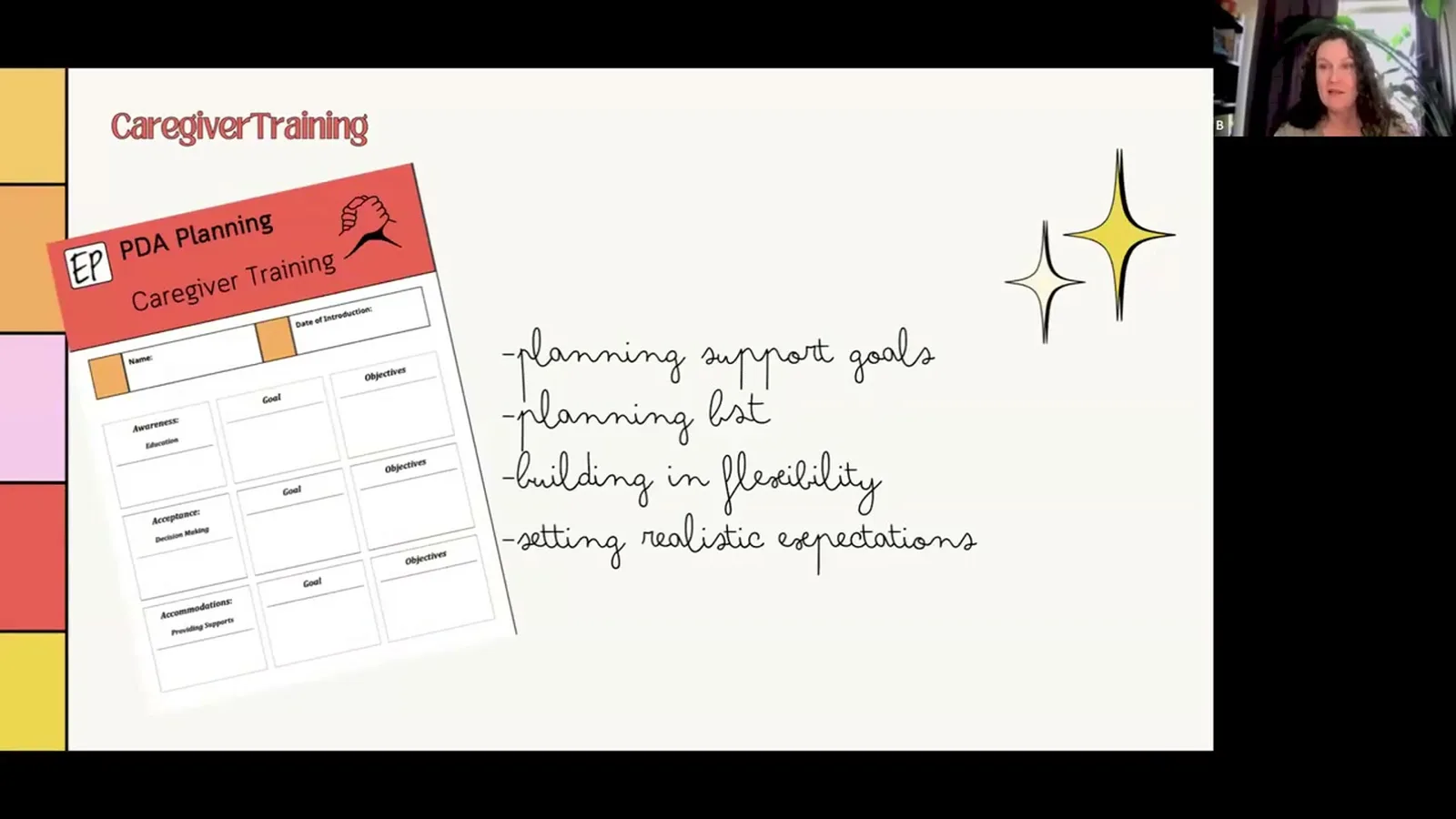
PDA Caregivers, Complex Profiles, Replacement Behaviors, and Being Trauma Informed
Experts who cover this
4 recordings on openceu cover co-regulation.
- Featured talk1.50 CEUs
PDA Caregivers, Complex Profiles, Replacement Behaviors, and Being Trauma Informed
B. Kuerine GrayThe Behaviorist Bookclub
Gray gives an extended walkthrough of modeling co-regulation for a PDA profile: narrating one's own internal state and calming strategy (e.g., 'my body's going…
- 1 CEU
Streamlining BIPs & Data Collection Systems for Schools
Nicola Schneider, LBA-NJNRS Compassionate Behavior Services
For unsafe (level 3) behavior, staff use co-regulation strategies and OT-recommended sensory tools in a calming area rather than moving the student, aiming to…
- 1 CEU
Shaping Behavior Change when ADHD is in the Picture
Nicole StewartThe Behaviorist Bookclub
Nicole recommended pausing demands, reducing sensory load, and co-regulating (including the adult staying calm and using non-accusatory body-based language)…
- 1 CEU
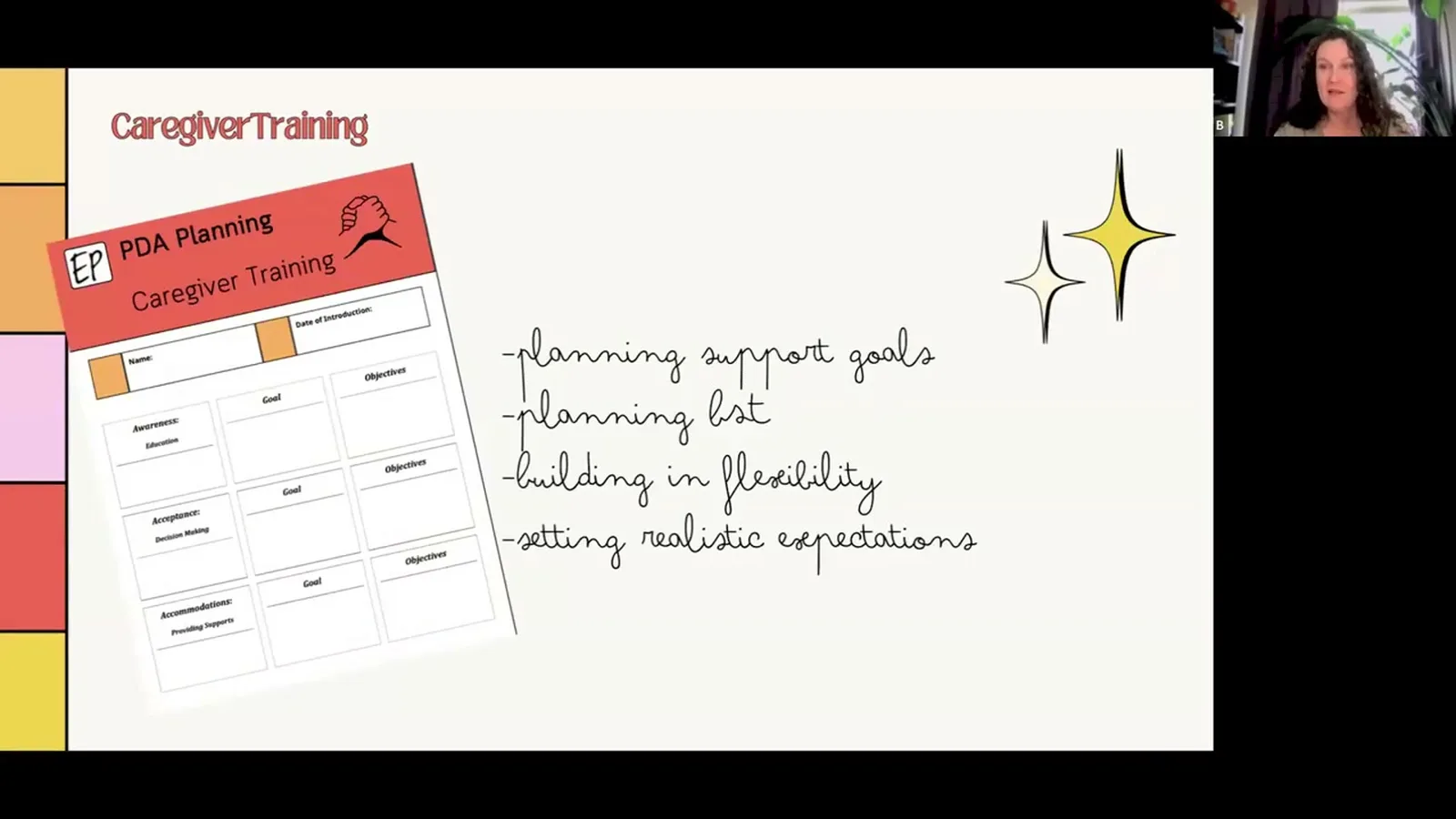
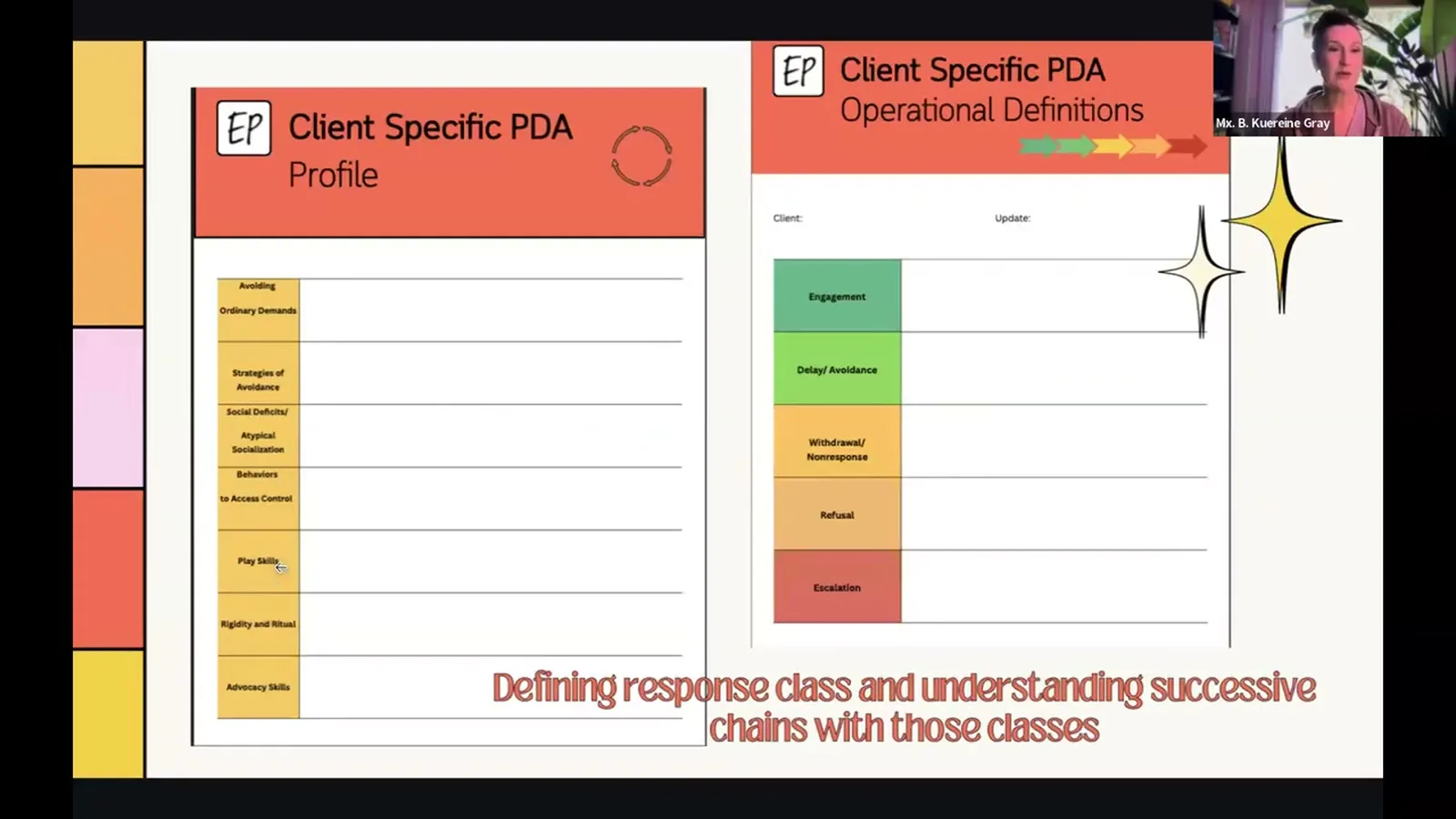
PDA: Collaborating for Success
B. Kuereine GrayThe Behaviorist Bookclub
Presented as the required alternative to self-regulation goals for PDA learners, since their loss of control means they cannot regulate independently…


On this page · 13 sections▾
Co-regulation is when a calm adult models a calming skill side by side with a learner who is upset. The adult does the strategy too, instead of telling the learner what to do from across the room. The learner is invited to join, but never forced.
This matters because many treatment plans jump straight to self-regulation goals. Those goals ask a learner to calm down alone. Several behavior analysts argue that many learners are not ready for that yet. Young children, learners with complex profiles, and students in the middle of a meltdown often need a partner first. Co-regulation is that partner step.
What co-regulation looks like in practice#
At its core, co-regulation is simple. The adult shows how they calm down, and they ask the learner to try it with them. Nikki, who presented on compassionate behavior change in schools, gave a clear working definition. She noted that the word has become a bit of a buzzword. It shows up in social work, psychology, and education writing. But her own meaning is plain and practical.
Co-regulation simply means for me, it's about modeling how I regulate and asking the learner to do that with me. But I'm not going to prompt it. I'm not going to require it.
From the talk — Nikki
Nikki described sitting next to the student and doing the skill herself. Her hope is that most students will notice and think, "All right, let's do it together." That is the whole move. The adult becomes a live model, not a coach shouting tips.
B. Kuerine Gray made the same point in her talk on collaborating with learners who have a PDA profile. She put it as "us modeling it, doing it side by side, providing that support." Both speakers stress the word "with." The adult is inside the moment, not managing it from outside.
Why self-regulation goals can come too soon#
Gray raised a concern she sees across many settings. She reviews treatment plans from schools, day programs, person-centered plans for adults, and insurance-funded services. Many of them are full of self-regulation goals. She does not say those goals are bad. She says they are often out of order.
We spend a lot of time on treatment goals, focusing on self-regulation, self-regulation, self-regulation, and self-regulation is fantastic. However, if you don't have a strong foundation of understanding what regulation is and having co-regulated... you're not at a place where you can self-regulate, you have to engage in co-regulation.
From the talk — B. Kuerine Gray
Gray pointed out that young children, developmentally, do not self-regulate. They co-regulate. The same can be true for learners with cognitive delays. She broke co-regulation into smaller steps a team can actually track. A learner can first tolerate co-regulation. Then they can accept it. Later they can start it on their own. Finally they understand that co-regulation is available and useful to them.
That ladder gives teams something real to write goals toward. Gray urged providers not to rush past these steps just because a plan calls for independence.
Co-regulation for learners with a PDA profile#
Gray spent extra time on learners with a PDA profile. PDA describes learners who react to everyday demands as a loss of control, often with strong avoidance. For these learners, she argued, co-regulation is not optional.
For individuals with PDA, because of the way their behavior presents, they require co-regulation. If they could do it on their own, then they would be in control and they can't.
From the talk — B. Kuerine Gray
Her logic is direct. If the learner could calm down alone, they would already be in control. Since they can't, asking them to use a solo tool misses the point. Gray contrasted this with a common script. A staff member reminds the learner of a tool they practiced, such as taking four breaths. Gray has used tools like that herself. She said the tool is not bad. It may just be the wrong fit for this learner.
She tied this to checking whether an intervention is actually working. When a learner is fully escalated, she asks the team to think about time, space, and compassion. The goal is to help the learner feel safe enough to calm down with the adult. She also stressed explaining the reason behind any non-negotiable rule, even for learners with severe intellectual disabilities.
Narrating your own body out loud#
The most detailed example came from Gray's talk on PDA caregivers and trauma-informed care. She walked through exactly what she says when a learner is escalating. She does not tell the learner to calm down. Instead, she names what is happening in her own body.
My body's going really fast. My breathing is going fast. I'm talking a little louder and I don't usually talk this loud... Sometimes it's good to have a buddy to help you calm down. You can do it with me. If you want, you're presenting the choice.
From the talk — B. Kuerine Gray
Gray explained why she labels her own internal events, or the feelings and body signals inside her. It gives the learner words they can borrow. She might pick up a fidget or start pacing the room. Then she watches. Often the learner mirrors her, even in a subtle way, like stepping closer or simply watching her.
When that happens, she keeps the tone warm. She might thank the learner for doing it with her and say her body is starting to feel slower. If the learner talks, she may ask whether they liked the strategy. If they say they hated it, that is fine. She asks what they like to do to calm down, and offers to do that with them instead. The learner still gets a partner. They just get to choose the tool.
Invite, never demand#
Every speaker who described co-regulation in detail made the same rule clear. The adult offers. The learner decides. Gray said demands during this moment can shut the whole response down. That is why her script ends with "if you want."
Nikki connected this to assent, which means the learner's ongoing willingness to take part. She watches for assent withdrawal, or signs that the learner is saying "no" with words or behavior. Nicola Schneider listed some of those signs in her talk on school behavior change. A student might want the adult to leave. They might want the adult to stop talking. Certain materials on the table might set them off.
Schneider gave one memorable example she calls "the signal of doom." She was clear that this is her own phrase, not a term from the research. It is an item like a timer or token board. It tells the student something good will come, but only after a long wait. For a stressed student, that can make things worse.
Schneider also stressed that the learner should help choose the regulation skills. Then the adult keeps watching for assent and assent withdrawal the whole time.
Pause the demand first#
 Advertisement
Several speakers agreed on the order of steps. Calm comes before learning. Nicole Stewart, who presented on ADHD, laid out a short sequence for a learner who is falling apart.
So to regulate before instruction. We might pause, you're going to pause the demand. Reduce your sensory load. You're going to co-regulate.
From the talk — Nicole Stewart, BCBA
Stewart asked adults to weigh the cost of pushing through. Is a finished worksheet worth an unsafe situation? Usually not. She said this is even more true when a learner has both autism and ADHD. She also asked adults, parents most of all, to keep themselves calm. A calm adult is the engine of co-regulation.
Nikki made a matching point about schoolwork. She was careful to say she is not skipping the whole math period.
If they're not even able to co-regulate with you, what makes you think that putting that math worksheet back on that desk is going to be successful, right?
From the talk — Nikki
Once the student is calm, Nikki looks at what went wrong. Which skill was missing? What in the room made the task hard? Stewart ended her sequence the same way. Give time for recovery and repair, and then come back to the demand.
Language that lowers the heat#
Stewart added a small but useful detail about wording. Many learners with ADHD push back when an adult labels their feelings for them. If you say "you're angry," the learner may snap back, "I'm not angry!" So she changes the frame.
your body is telling me you're overwhelmed right now or your body's telling me you're angry
From the talk — Nicole Stewart, BCBA
Stewart said this phrasing softens the message. It describes what the learner is showing to the world, without accusing them. If the label is wrong, it opens a conversation instead of a fight. She also noted that learners can read an adult's tone and word choice very sharply. An adult who says "I'm not yelling at you!" in a loud voice is sending two messages at once.
This lines up well with Gray's approach. Gray names her own body signals. Stewart names the learner's body signals in a gentle, non-blaming way. Both give the learner plain words for what is happening inside. Both keep the adult calm and the tone low. Teams can use either one, depending on the learner and the moment.
Teaching coping before the explosion#
Nicola Schneider framed co-regulation as a skill to teach early. She was blunt about timing. Once a student is fully down or exploding, it is not the moment for academics.
We want to then teach co-regulation. We want to model and engage in skills with the learner to cope.
From the talk — Nicola Schneider
Her goal is to build coping skills before a student reaches that point. She pointed to work from colleagues who use ACT, or acceptance and commitment training. ACT uses a six-part model called the hexaflex to sort which skills a person needs.
There is quite a bit of literature... talk about co-regulation, identifying on the hexaflex, what type of skills they need to work on in these instances.
From the talk — Nicola Schneider
Schneider also shared what the end of a hard moment can look like. One of her students likes to snuggle once he is back to himself. He does not want that while he is still cursing at her. The calm phase is where connection happens. That is where the relationship gets repaired.
Co-regulation during unsafe behavior#
Nicola Schneider described how co-regulation fits into a formal behavior plan at school. Her example focused on a student at the highest level of risk, where behavior could become unsafe. The team had a calming area set up for him. It was not a timeout space. It had a carpet, a beanbag, and nothing that could hurt anyone if thrown. Staff did not move the student out of that space. Instead, they worked through co-regulation strategies that had worked before, including sensory tools from the student's occupational therapist, or OT.
Schneider kept those OT-recommended tools in a bin in the calming area. She was careful to say she was not prescribing OT treatment herself. She included what the OT recommended because staff could see it working. The student's unsafe behavior went down when those strategies were used.
This example shows co-regulation as part of a data-driven plan, not only an in-the-moment instinct. Staff used approved blocking to keep everyone safe. They stayed with the student. They reached for strategies that had worked before. And they tracked whether the behavior actually decreased.
No single method works for everyone#
The discussion was firm that there is no one right script. During a Q&A, some attendees shared mixed results. Modeling calmed one learner but escalated another.
There is no one co-regulation methodology that's going to be more successful than the other. It has to be individualized. And that probably means you're going to have to try things out.
From the talk — B. Kuerine Gray
The key, as that discussion framed it, is to understand the logic of co-regulation first. Then you fit the pieces to the learner. The session suggested pairing it with SBT, or skill-based treatment. In SBT, adults drop demands quickly when a learner shows distress. That makes it safer to try several calming methods and see which one helps.
The discussion compared this to an augmented competing stimulus assessment. That is a fast way to test many possible preferred activities without causing problem behavior. The same spirit applies here. Rotate through options, stay safe, and let the data show what works.
Where experts differ: prompt it or just invite it?#
The speakers agree on the big picture. Model the skill, stay calm, and pause demands. But they draw the line in slightly different places on prompting.
Nikki is the clearest on one side. She says she will not prompt co-regulation and will not require it. Gray takes a similar stance. Her script offers the choice and warns that demands can shut the learner down.
Nicola Schneider's school example sits a little differently. In her plan for a student with unsafe behavior, staff do prompt him toward the OT's sensory tools in the calming area. Her words were, "that is what I'm saying we prompt him to." She measures success by whether the unsafe behavior decreases.
This is less a flat conflict than a real difference in context. Nikki and Gray are describing a moment where any pressure can backfire, including learners with a PDA profile. Schneider is describing a written plan for a high-risk moment, with a known set of tools that have a track record. Practitioners should notice the tension. For some learners, even a gentle prompt counts as a demand. For others, a short prompt toward a proven tool may be what keeps everyone safe. The learner's assent signals should decide which way to lean.
What the research says#
The research in this area is still growing, and the studies here focus mostly on young children with autism and their mothers. Two studies are useful.
The first is titled "The co-regulation of emotions between mothers and their children with autism." It followed 34 toddlers with autism and their mothers during an early intervention. The intervention focused on joint engagement, or shared attention between parent and child. The researchers coded every moment of real distress across 24 sessions. Over time, the children showed less negativity. The mothers also offered more emotional and motivational support. This suggests co-regulation can grow when adult and child learn to engage together.
The second is titled "Self- and Co-regulation of Anger and Fear in Preschoolers with Autism Spectrum Disorders: The Role of Maternal Parenting Style and Temperament." It studied 40 preschoolers with autism and 40 matched peers. For the autism group, parenting style mattered. An authoritarian style, which relies on strict rules and low warmth, predicted more self-regulation and less co-regulation of anger. An authoritative style, which pairs warmth with structure, predicted more self-regulation of fear. The authors concluded that flexible parenting helps children with autism regulate emotions.
FAQ#
What is the difference between co-regulation and self-regulation? Self-regulation means a person calms down on their own. Co-regulation means a calm adult does the calming skill alongside the learner. Gray describes co-regulation as the foundation that comes first. Many learners, including young children, need it before self-regulation is realistic.
Should I prompt a learner to use a calming strategy? It depends on the learner. Nikki and Gray avoid prompting and simply invite the learner to join. Nicola Schneider's school plan does prompt a student toward sensory tools that have worked before. Watch the learner's assent and pull back if they show signs of refusal.
What should I say when a learner is escalating? Keep it short and calm. Gray names her own body signals, like "my breathing is going fast." Stewart names the learner's signals gently, like "your body is telling me you're overwhelmed." Pause the task first, and return to it only after recovery and repair.
For more on this topic, see Shaping Behavior Change when ADHD is in the Picture and Streamlining BIPs & Data Collection Systems for Schools.
 Advertisement
Turn this topic into a CEU
You just studied this. Now get credit for it.
Watch PDA Caregivers, Complex Profiles, Replacement Behaviors, and Being Trauma Informed with B. Kuerine Gray and earn 1.5 free BCBA CEUs. Detailed certificate, delivered the moment you finish.