Relational Frame Theory in Plain Terms
Relational frame theory explains how people link words and ideas. See how ABA experts use it to teach language, skills, and new reinforcers.
Key takeaway
Relational frame theory, often shortened to RFT, is a behavior science account of how people connect words and ideas. It looks at how we link any two things in our minds.
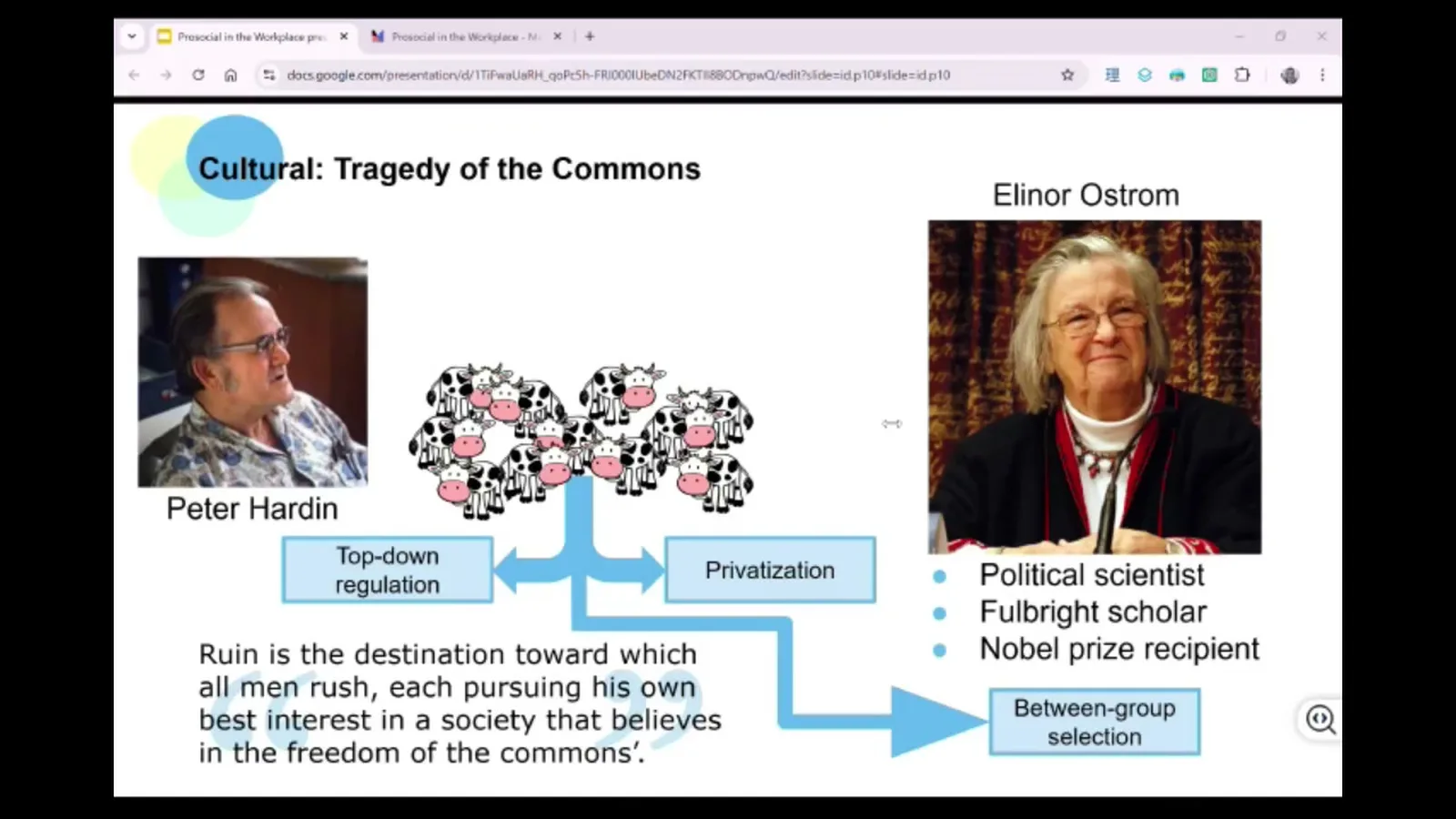
Prosocial in the Workplace
Free learning path on this topic
Supervision, Done Right
Four supervision CEUs that build on each other. What reflective supervision is, how to build a supervision system, how to assess supervisee competence instead of counting hours, and how supervision affects provider outcomes. The BACB asks supervisors for three supervision CEUs per cycle. This covers it.
Experts who cover this
4 recordings on openceu cover relational frame theory.
- Featured talk1 Supervision CEU
Prosocial in the Workplace
Jason StaufferThe Behaviorist Bookclub
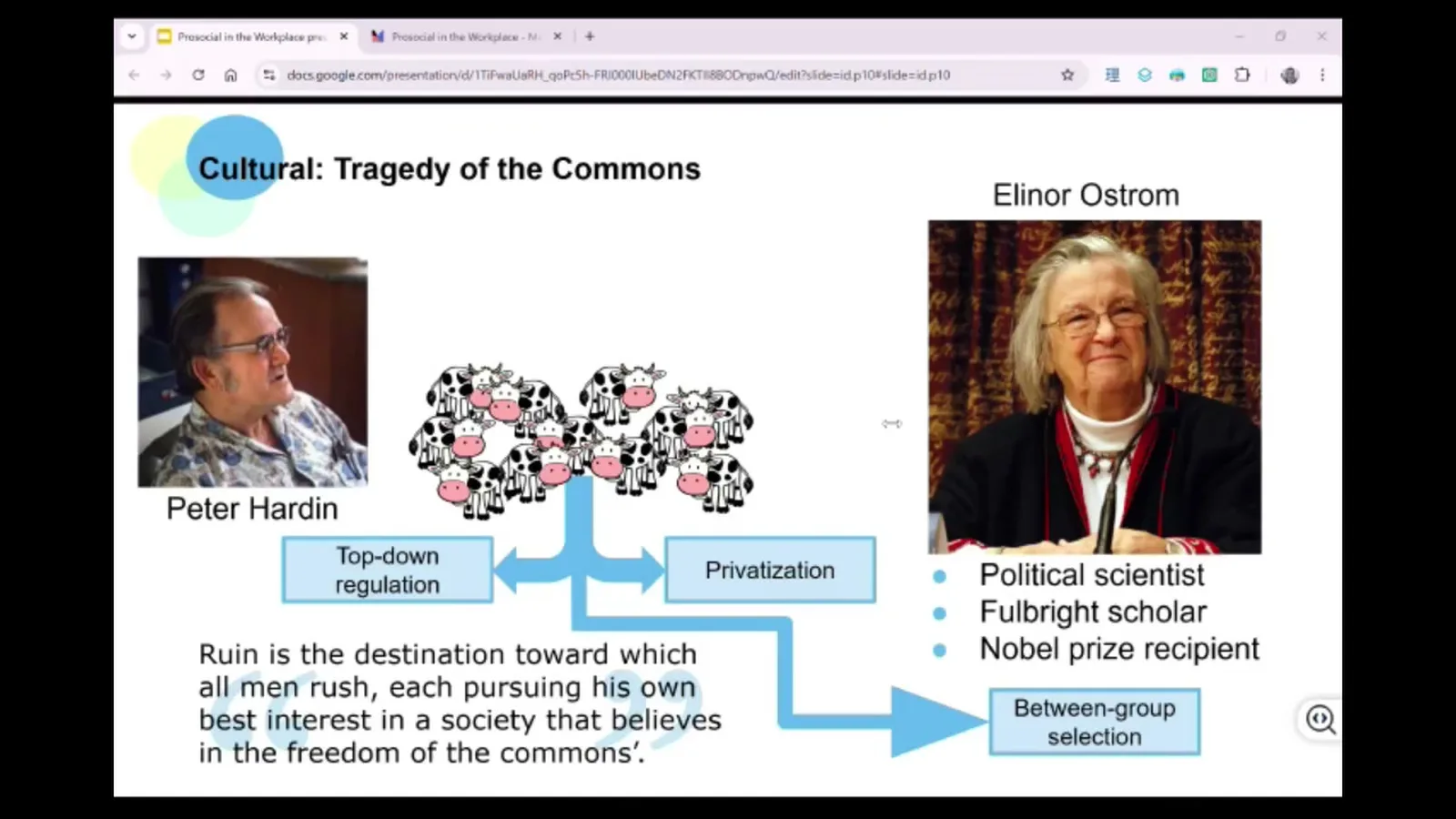
Explains relational frame theory as the basic science behind derived relational responding, illustrated with a spontaneous banana/power example and a…
- 1 CEU
Multiple Exemplar Instruction (MEI): Training for Generalization
Dr. Jessica OsosCopper Consulting Group
Presented as a complementary framework to verbal behavior for explaining why MEI produces generative outcomes, with verbal behavior defining the function of…
- 1 Supervision CEU
Dunder Mifflin’s Guide to Training and Onboarding: Lessons from The Office
Mellanie PageThe Behaviorist Bookclub
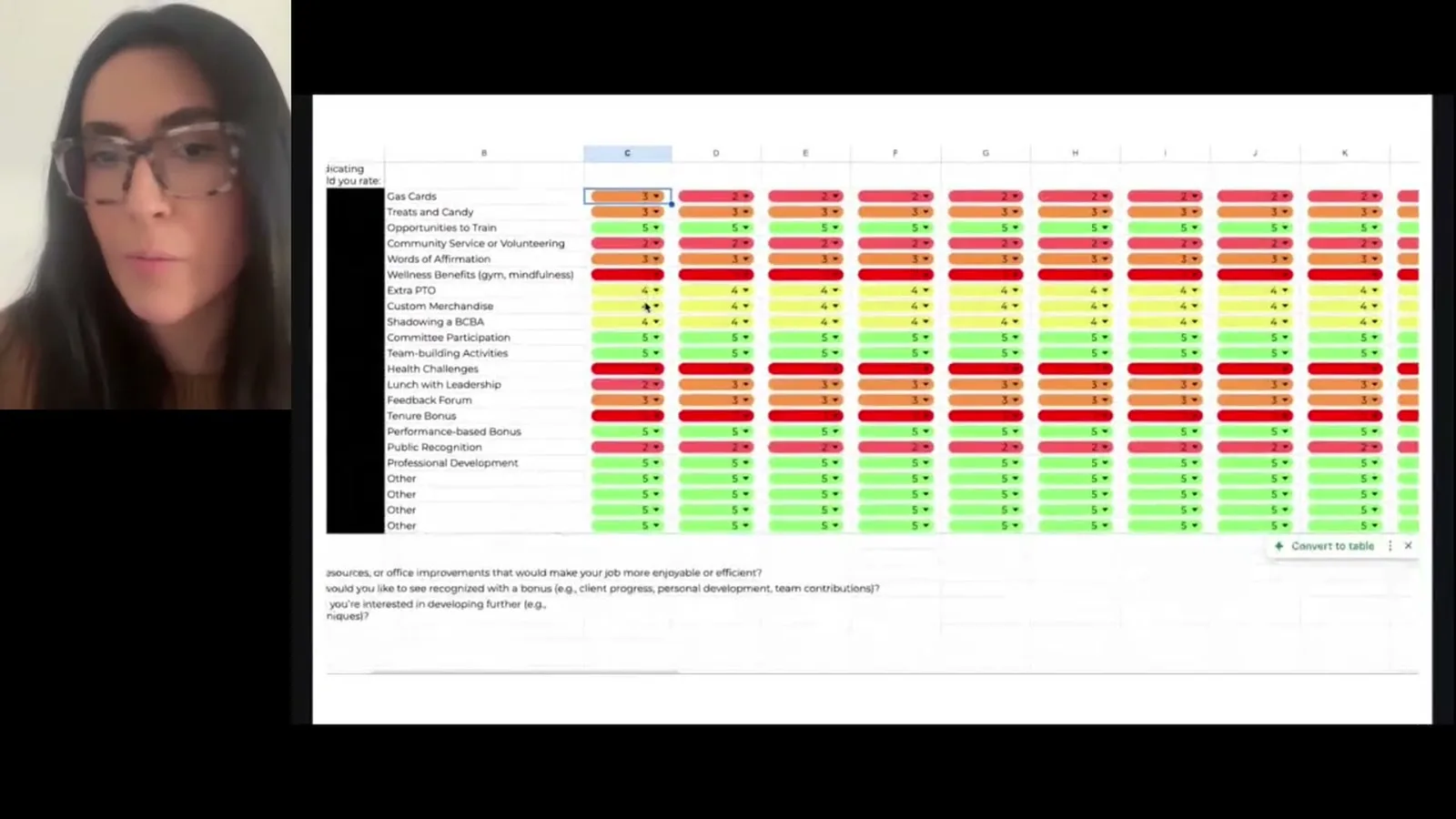
Page uses RFT informally to explain how to teach RBTs to creatively generate new reinforcers by branching out from one known preference (e.g., an animal…
- 2.50 CEUs
5 Days of Manding Mastery
Matt HarringtonThe Behaviorist Bookclub
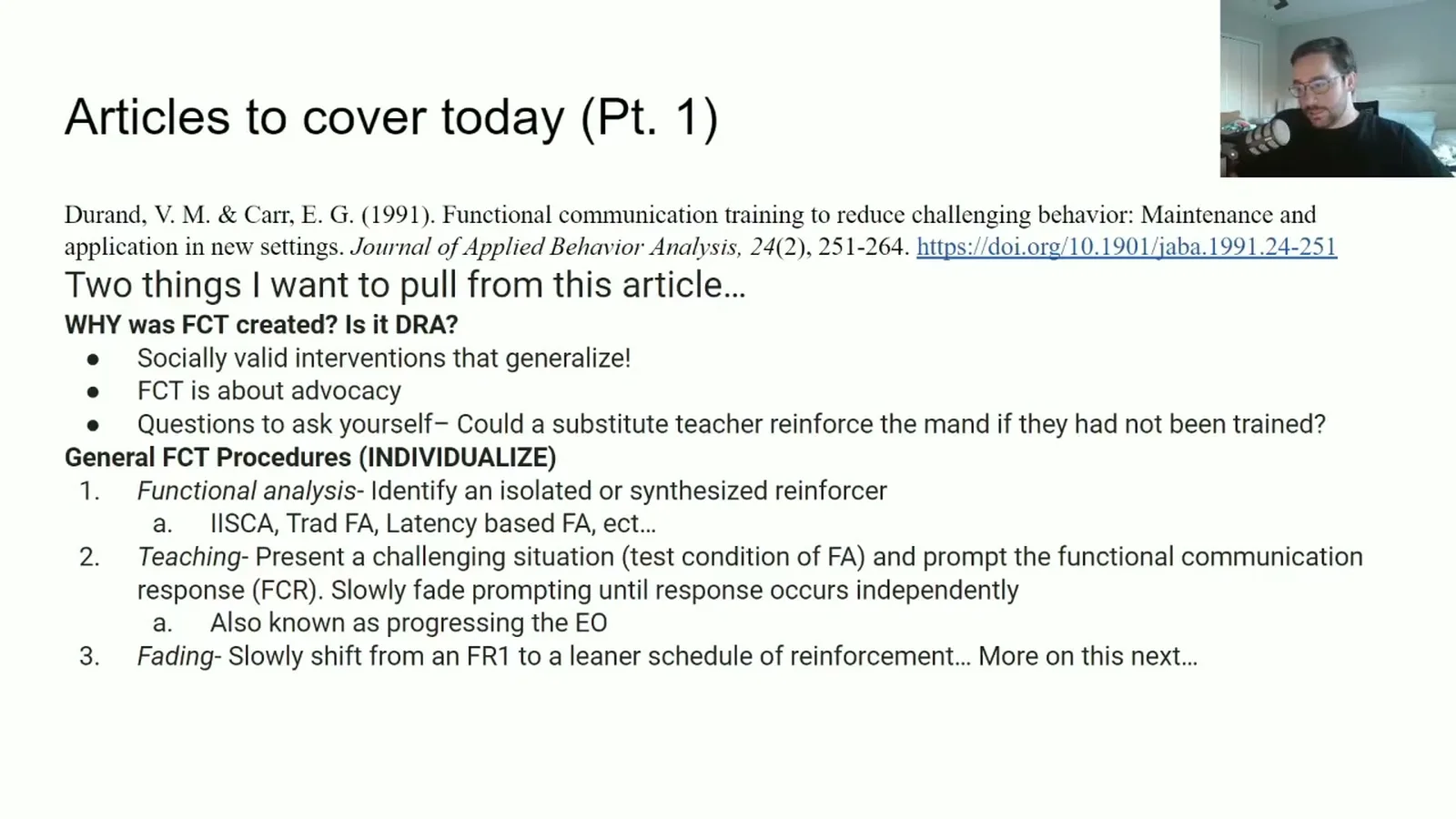
Invoked to explain why concurrent mand-tact training works: verbal relations form networks, so learning to tact, mand, and use intraverbals together in the…

On this page · 8 sections▾
Relational frame theory, often shortened to RFT, is a behavior science account of how people connect words and ideas. It looks at how we link any two things in our minds. We can relate them as the same, as different, as bigger, or as part of a whole. Once we learn a few of these links, we can figure out new ones on our own.
This matters for anyone who teaches. Human language grows fast because people derive relations they were never taught directly. If you understand that engine, you can build lessons that spread. You teach a few pieces, and the learner fills in the rest. That is why so many ABA talks keep coming back to this one idea. ABA, short for applied behavior analysis, is the field that uses learning science to teach skills.
What relational frame theory actually means#
Dr. Tom Szabo frames it as a natural next step from Skinner. Skinner studied verbal behavior, which is language treated as learned behavior. Relational frame theory picks up that work and looks at how we relate things. Szabo uses simple parts. There are the things being related, a cue that says how they relate, and a context that sets the whole thing up.
RFT is an account of human languaging. That is, of language and cognition. From the talk — Dr. Tom Szabo
Szabo adds one key point. The same two things can relate one way in one setting and another way somewhere else. So context does a lot of work. A word means one thing at home and another thing at school. The frame shifts with the situation, and that flexibility is the heart of the theory.
Why it powers human language#
Jason Stauffer treats relational frame theory as the mechanism under language itself. His talk on prosocial behavior at work shows how fast these links form. A person can tie almost any idea to almost any other idea, with no direct training. Stauffer calls this ability a uniquely human trait that evolved in our species.
Through relational frames, almost anything can be verbally related to almost anything else. From the talk — Jason Stauffer
This is where the theory earns its keep. Words gain power over feelings and actions through these networks. Stauffer shows how a neutral word can start to carry the weight of something scary once it gets related to it. That same process explains both learning and suffering, and it works quietly in the background all day.
Derived relations and the tests we skip#
Brian Middleton shares an honest lesson from his own work. He was running discrete trial teaching (DTT), which teaches one skill at a time in clear steps. Then he moved to generalization. But he skipped the middle. He never tested whether the learner could derive links he had not trained.
I'm doing the DTT and then the generalization. And I'm not moving into the transitivity and reflexivity sections. And I was making that mistake. From the talk — Brian Middleton
Middleton fixed it by writing a custom relational chain. He trained a set of links directly. Then he tested for reflexivity, which means the learner matches a thing to itself. He also tested for transitivity. That means the learner connects A to C after learning A to B and B to C. These tests show whether the learner truly derived the links or simply memorized answers.
Stimulus equivalence as the starting point#
 Advertisement
Dr. Jessica Osos ties relational frame theory to multiple exemplar instruction, which teaches with many varied examples. She treats the theory as a partner to verbal behavior. Verbal behavior names what each response does. Relational frame theory explains how new, untrained relations show up on their own.
Stimulus equivalence is the most basic form of RFT, right? From the talk — Dr. Jessica Osos
Osos points to stimulus equivalence as the simplest case. Stimulus equivalence is when a learner matches items that were never paired in training. Her talk on Multiple Exemplar Instruction (MEI): Training for Generalization shows how the right setup makes new relations more likely. You arrange the environment so links form, then generative results follow.
Building verbal networks in real teaching#
Matt Harrington uses the theory to explain why he teaches several verbal skills at once. His manding work trains asking, naming, and answering in the same context. Manding means asking for what you want. Tacting means naming what you see. Intraverbals means answering questions with words.
Harrington notes that verbal relations form networks, not lonely facts. So teaching these skills together lines up with how derived relations grow. When you train them in one shared context, the learner builds a web instead of a list. That web is what lets language stretch beyond the exact things you taught.
Getting creative with reinforcers#
Mellanie Page brings the theory down to daily staff training. She uses it to help registered behavior technicians, who are the front-line staff running sessions, invent new reinforcers. A reinforcer is anything that rewards a behavior and makes it happen more often. She starts with one known preference. Say a learner loves a stuffed animal. Then the technician branches out to related things.
Page keeps it humble and practical. She does not claim to be an expert. But she shows how the theory gives a simple map for expanding options. Her talk Dunder Mifflin's Guide to Training and Onboarding: Lessons from The Office turns the idea into a training habit. Staff learn to absorb information and grow it on their own, the same way learners do.
What the research says#
The evidence base has grown a lot over the past two decades. A major review traces that growth and the new concepts that reach past the original 2001 book (Barnes-Holmes & Harte, 2022, Journal of the Experimental Analysis of Behavior). Their work shows the theory is still developing.
The classroom results are worth noting. One team tested an online relational skills program called SMART with school children (Stricker et al., 2024, Journal of Behavioral Education). The trained group beat controls in reading and math. Gains were large from before to after training.
The theory also talks to its neighbors. One paper compares it with verbal behavior development theory (Sivaraman et al., 2023, Journal of the Experimental Analysis of Behavior). The authors map where the two accounts of language overlap and where they differ. Another paper looks at naming theory, stimulus equivalence, and relational frame theory together (Regaço et al., 2025, Perspectives on Behavior Science). The authors argue these accounts explain language best when read side by side.
Frequently asked questions#
Is relational frame theory the same as stimulus equivalence?
No, but they are close cousins. Stimulus equivalence is when a learner matches items that were never trained together. Many experts, like Dr. Jessica Osos, treat it as the simplest form of relational frame theory. The theory covers a wider set of relations, such as opposites, comparisons, and more.
How do behavior analysts use relational frame theory in sessions?
They use it to plan for skills that spread. Teachers train a few relations directly, then test for derived ones. Some build custom relational chains and check for reflexive and transitive links. Others use it to expand reinforcers or to teach several verbal skills in one shared context.
Do I need to know relational frame theory to be a good ABA provider?
You can teach without it, but it sharpens your thinking. It explains why some lessons generalize and others stall. It also helps you test whether a learner truly derived a link or just memorized an answer. That check protects your data and your learner's real progress.
 Advertisement
Turn this topic into a CEU
You just studied this. Now get credit for it.
Watch Prosocial in the Workplace with Jason Stauffer and earn 1 free BCBA CEU. Detailed certificate, delivered the moment you finish.
Keep going with a free learning path
Supervision, Done Right
Four supervision CEUs that build on each other. What reflective supervision is, how to build a supervision system, how to assess supervisee competence instead of counting hours, and how supervision affects provider outcomes. The BACB asks supervisors for three supervision CEUs per cycle. This covers it.