Bloom's Taxonomy for ABA Training: Right-Size the Depth
How to use Bloom's taxonomy to right-size ABA training depth for RBTs, BCaBAs, and caregivers, from a BCBA-led CEU.
Key takeaway
Right-sizing the cognitive depth of an ABA training means asking whether your RBT, your BCBA, and your caregiver really need the same lesson on reinforcement, because the RBT only has to spot when something is working as a reinforcer on a Monday shift, the BCBA has to discriminate positive from negative reinforcement and defend that call in supervision, and the caregiver just needs one move they can run at bedtime.
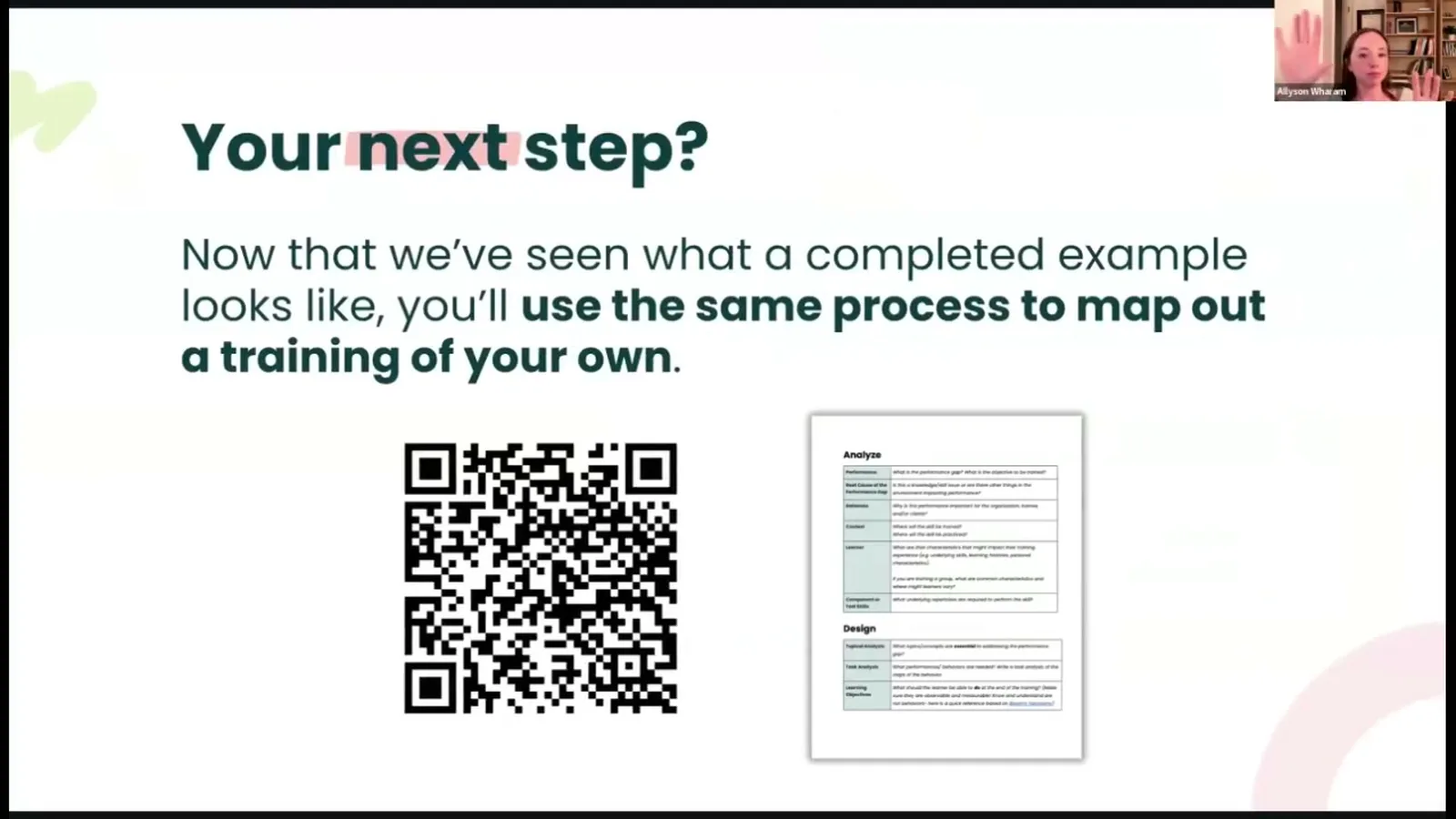
Design Smarter: Using Instructional Design to Improve Staff and Stakeholder Training
Free learning path on this topic
Supervision, Done Right
Four supervision CEUs that build on each other. What reflective supervision is, how to build a supervision system, how to assess supervisee competence instead of counting hours, and how supervision affects provider outcomes. The BACB asks supervisors for three supervision CEUs per cycle. This covers it.
On this page · 8 sections▾
Right-sizing the cognitive depth of an ABA training means asking whether your RBT, your BCBA, and your caregiver really need the same lesson on reinforcement, because the RBT only has to spot when something is working as a reinforcer on a Monday shift, the BCBA has to discriminate positive from negative reinforcement and defend that call in supervision, and the caregiver just needs one move they can run at bedtime. Three audiences. Same topic. Three different rungs of depth. That sorting job, matching how deep a person needs to think about a topic, is exactly what Bloom's taxonomy was built for. And it slots into ABA training cleaner than most BCBAs realize.
Bloom's taxonomy in one paragraph for busy BCBAs#
Bloom's taxonomy is a ladder of how deeply someone has to process information to do something with it. The original rungs go remember, understand, apply, analyze, evaluate, create. You do not need to memorize the ladder. You just need the idea: a person who can recall a definition is doing a different thing than a person who can apply a procedure, and that person is doing a different thing than someone who can analyze a tricky case and pick the right intervention. Each rung asks for more cognitive work. When you design a training, you are picking a rung for each goal. Pick too low and your staff cannot do the job. Pick too high and you waste their time and yours teaching depth they will never use.
The trap is that most ABA trainings drift to the highest rung by default, because that is how we were taught in grad school. You can see this when an onboarding deck for new RBTs includes a full lesson on the four-term contingency, schedules of reinforcement, and matching law. The material is correct. It is also the wrong rung for someone whose job, on Monday, is to run a discrete trial and write a clean note.
Why understand and know fail as objectives in ABA#
Walk into the average staff training and you will see a slide that says, "By the end of this session, staff will understand reinforcement." That objective is broken. You cannot see "understand." You cannot graph it. You cannot run an IOA check on it. Wharam puts the fix in ABA-native language:
These are the same sort of objectives that we would write for a client learner where we're not saying they'll be able to understand or know, or something that is not measurable. We want to look at actual behaviors and performances that we can observe to know when someone has gotten something or not.
That is the Bloom's verb problem in one sentence. Verbs like understand, know, appreciate, and be familiar with live in your head. Verbs like identify, write, correct, and demonstrate live in the world, where you can see them. If you have written behavior plans, you already do this for clients. The job is to do it for the adults you train too. For a deeper look at how to write the objectives themselves, the writing measurable learning objectives for BST guide pairs with this one.
Matching cognitive level to role: RBT vs. BCBA vs. caregiver#
This is where Bloom's earns its keep. Start with the role and ask what the person actually has to do on the floor.
For an RBT, the job is to deliver programs, capture data, and reinforce well. They need to identify when something is working as a reinforcer and act on it. They do not need to discriminate positive from negative reinforcement in writing on a supervision form. Wharam frames the call this way:
Do they necessarily need to be able to discriminate between positive and negative reinforcement and punishment and have all the technical terminology or do they need to be able to understand and practice when something is functioning as a reinforcer or not? So really thinking about the levels that that person actually needs to be able to do the job and do the job effectively.
That is a Bloom's decision in plain language. RBTs sit at apply. Caregivers usually sit at apply too, but for a much smaller slice of skills, often one or two routines.
For a BCBA or BCaBA, the rung climbs. They have to analyze function, evaluate competing programs, and create plans. They need the terminology because they have to talk to peers, defend choices in supervision, and read research without getting lost. Push them too low and they cannot do the work. Push an RBT that high and you have wasted ninety minutes of training time on a depth they will never use, which means you also did not have time for the practice rep they actually needed.
For caregivers, drop another rung. The goal is rarely fluent terminology. The goal is one or two behaviors they can run inside a real morning routine. Right-sizing here is a kindness, not a downgrade. A parent who can run a token board at bedtime is doing more for the kid than a parent who could pass a quiz on schedules.
Bloom's verbs translated for behavior analysts#
Forget the original list. Here is a working set of verbs that map to ABA training and that you can write objectives around without anyone wincing.
For the remember and understand rungs: label, list, match, define in your own words, give an example. These show up in early RBT onboarding and in caregiver psychoeducation. You use them when someone needs to recognize a concept, not run a procedure with it yet.
For the apply rung: demonstrate, implement, run, deliver, prompt, fade, capture data on. This is the rung where most RBT and caregiver training lives. The staff member can run the procedure in a real setting and get it mostly right.
For the analyze and evaluate rungs: compare, contrast, select between, audit, critique, defend. These are BCaBA and BCBA verbs. You ask supervisees to compare two prompting hierarchies, audit a colleague's note, or defend an intervention choice to a parent.
For create: design, write, build, draft a plan for. This is mostly BCBA work, with BCaBAs starting to dip in. Designing a teaching procedure for a new program is the create rung. So is writing a behavior intervention plan from an FBA.
The point is not to pick fancy verbs. The point is to pick verbs that match the job and the rung, and then write objectives around those verbs. Wharam keeps the test simple: it has to be something you could watch a person do.
Worked example: rewriting a session-notes objective at three levels#
Session notes are the cleanest example to walk through, because almost every ABA company has a notes problem and almost every Bloom's rung shows up in the fix. Here is the same skill written at three different rungs.
At the apply rung, the objective is: the staff member will write a session note that includes all of the required elements. This is what you want from a fluent RBT, six months in. They do not have to critique anyone. They just have to produce a clean note every session.
At the analyze rung, the objective lifts to: the staff member will identify and correct vague or subjective language in a sample note. Now you are not just asking for production. You are asking for a discrimination, between vague and objective language, and a fix. This is the rung you want for a senior tech who is going to mentor newer staff, or for a BCaBA in supervision.
At what we would call the apply-with-language rung, the objective is: the staff member will use objective language to describe the client performance. This is the bridge. The person has to take a fuzzy thing they saw and put it on paper in observable terms. Wharam stacks all three on the same slide:
So in this case, our learning objectives are to identify and correct vague or subjective language in a sample note, use objective language to describe the client performance, and then write a session note that includes all of the required elements.
That is three Bloom's rungs in one session, each with its own verb, each watchable, each tied to a job task. None of them say "understand."
How Bloom's pairs with task analysis and topical analysis#
Once you have picked a rung, you have to pick a content lens. ABA has two clean ones already: topical analysis for concepts and rules, and task analysis for procedures and behaviors. Wharam draws the line:
Topical analysis. So this is more where we're looking at like concepts, facts, rules, things like that. The next is like a physical performance or behavior. And that's something where we can write the actual task analysis and break down a procedure to engage in that. And you might have a mix of both of these.
That maps onto Bloom's almost one to one. Concepts, facts, and rules tend to sit at remember, understand, and analyze. Behaviors tend to sit at apply and create. A training on writing session notes uses both: a short topical piece on what objective language is, then a task analysis of how to produce a note. A caregiver training on token boards is mostly a task analysis with a sliver of topical content on what reinforcement is doing. Pick the rung first, then pick the lens, then write the verb. The order matters. If you start with the slide deck, you have already lost.
This is also where Bloom's stops feeling like a school of education concept and starts feeling like ABA. You are doing what you already do for clients: pick a goal at the right level, break it down, and pick verbs you can measure. The framework is just a check on whether you picked the right level for the person in front of you. For the bigger design loop that this slots into, the ADDIE model for BCBA training walkthrough covers the surrounding phases.
FAQ#
What is Bloom's taxonomy and does it apply to ABA? Bloom's taxonomy is a ladder of cognitive depth, from remembering facts up to creating new work. It applies to ABA the same way it applies to any teaching, because we are teaching adults to do a job and we have to pick how deeply they need to think about it. The verb you pick for a learning objective sits on a Bloom's rung whether you label it that way or not.
Should RBTs be trained at the same Bloom's level as BCBAs? No, and trying to is a common training mistake. RBTs mostly sit at the apply rung: they need to run procedures and capture clean data. BCBAs sit higher, at analyze, evaluate, and create, because they have to pick between options and design new programs. Pushing every role to the same rung wastes time at the bottom and starves it at the top.
How do I rewrite an ABA training objective using Bloom's verbs? Drop verbs like understand and know. Pick a verb you could watch a person do, like identify, write, correct, demonstrate, or deliver. Then make sure the verb matches the rung that the role actually needs. An RBT objective should usually start with deliver, capture, or run. A BCaBA objective can start with audit, compare, or defend. A BCBA objective can start with design or write.
Watch the full CEU#
The Bloom's framing in this post comes from one section of Ally Wharam's CEU on instructional design for ABA. The full session walks through ADDIE, Gagne's nine events, and a worked staff-training example end to end, with a free template you can copy. If you train RBTs, supervise BCaBAs, or coach caregivers, the rest of the hour is worth your time.
Watch the full CEU on openceu.com.
Turn this topic into a CEU
You just studied this. Now get credit for it.
Watch Design Smarter: Using Instructional Design to Improve Staff and Stakeholder Training with Ally and earn 1 free BCBA CEU. Detailed certificate, delivered the moment you finish.
Keep going with a free learning path
Supervision, Done Right
Four supervision CEUs that build on each other. What reflective supervision is, how to build a supervision system, how to assess supervisee competence instead of counting hours, and how supervision affects provider outcomes. The BACB asks supervisors for three supervision CEUs per cycle. This covers it.