The Four Functions of Behavior in ABA, Explained
Every behavior has a reason. Learn the four functions of behavior in ABA and how they guide better classroom and home support.
Key takeaway
Every behavior happens for a reason. In ABA, we call that reason the function. A child is not "just acting out." Their behavior is working to get something or to avoid something.
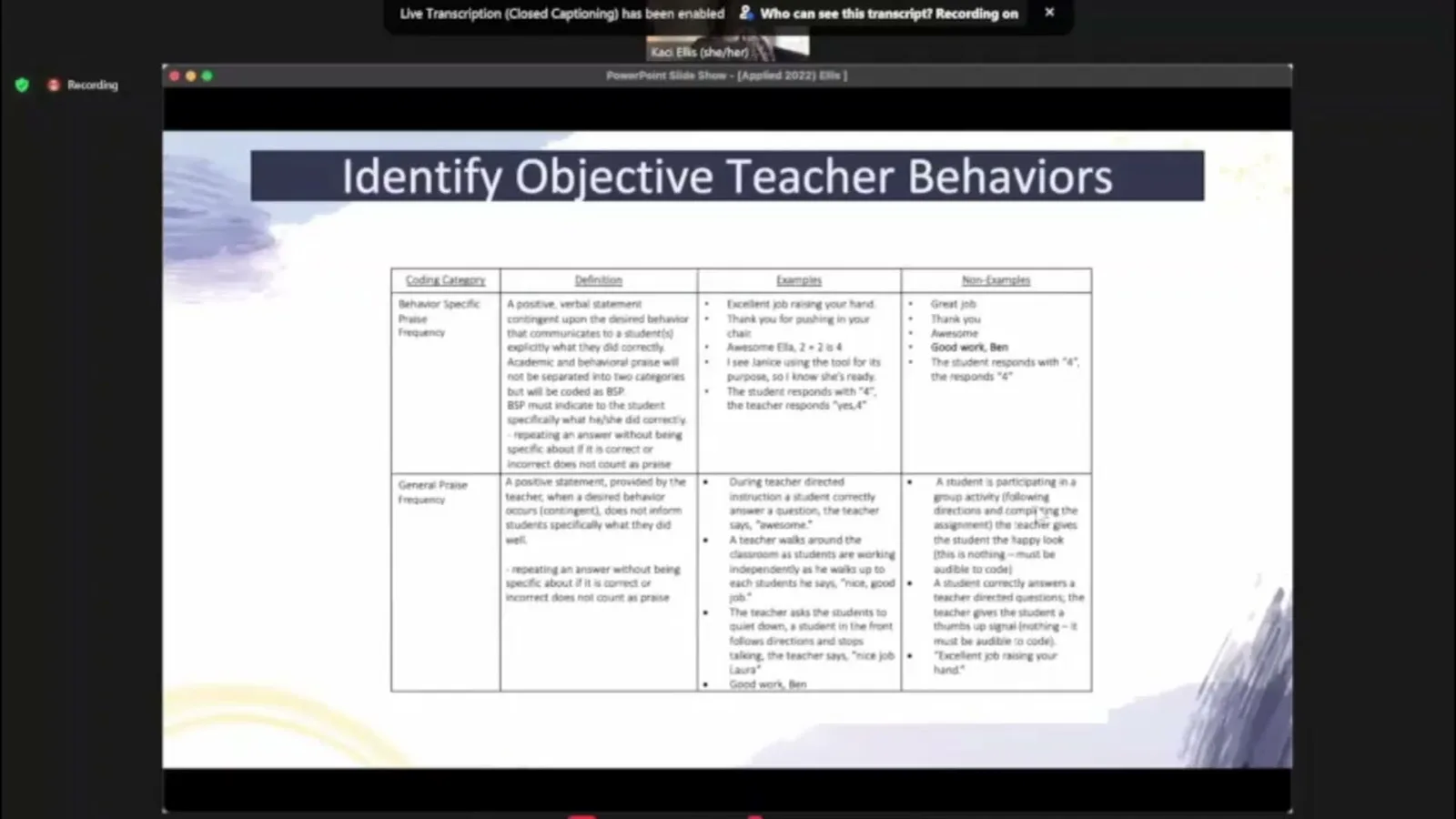
Practical Takeaways for School-Based Behavior Analysts
Free learning path on this topic
Supervision, Done Right
Four supervision CEUs that build on each other. What reflective supervision is, how to build a supervision system, how to assess supervisee competence instead of counting hours, and how supervision affects provider outcomes. The BACB asks supervisors for three supervision CEUs per cycle. This covers it.
Experts who cover this
2 recordings on openceu cover functions of behavior.
- Featured talk1 Supervision CEU
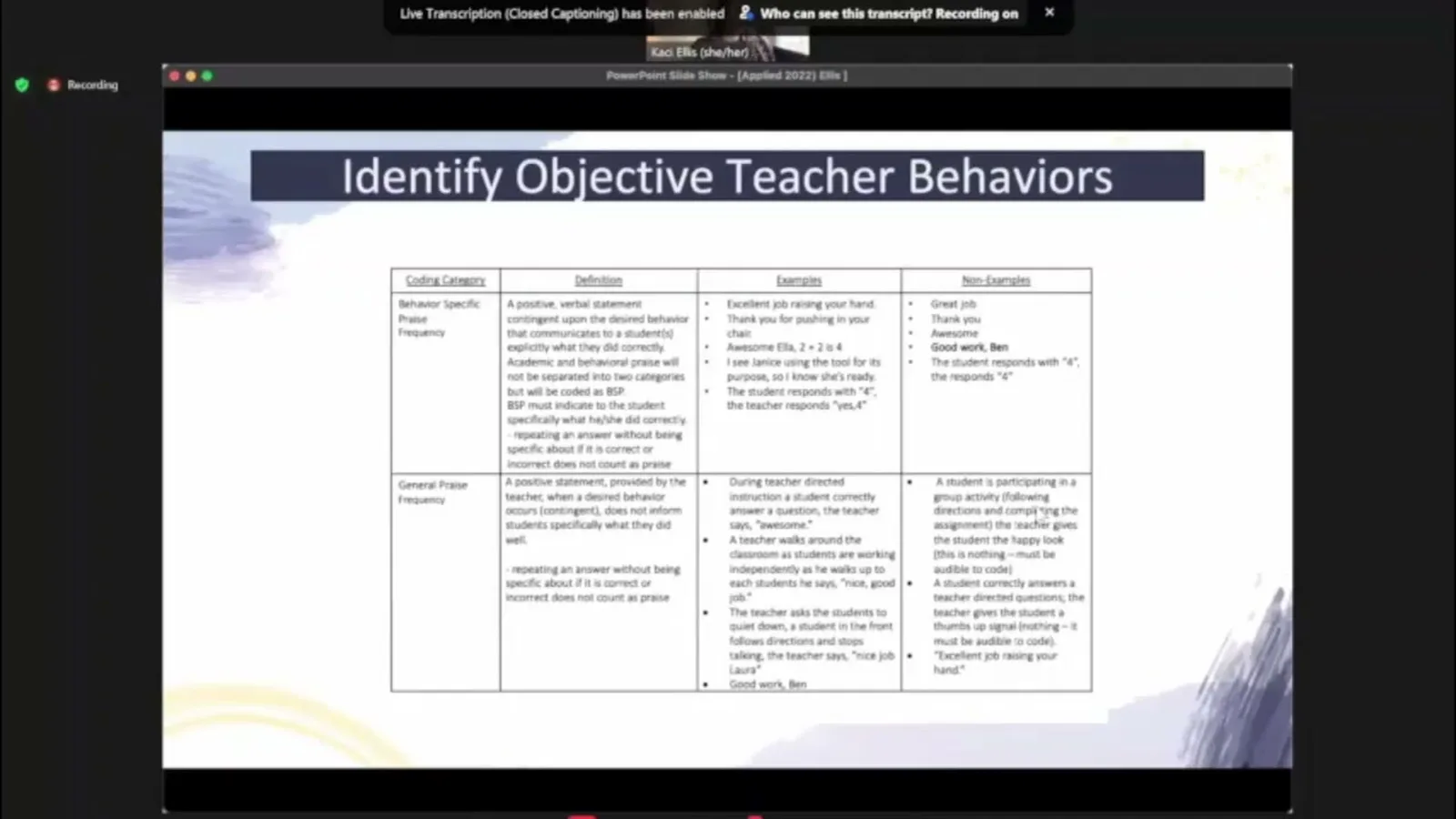
Practical Takeaways for School-Based Behavior Analysts
Dr. Kaci EllisThe Behaviorist Bookclub
Broken down into a simplified obtain/escape framework the presenter uses specifically to teach teachers, applied to real classroom scenarios to show how…
- 1 CEU
The Interdisciplinary Case Conference
Michelle VencesThe Mindful Learner LLC
Michelle explains the four functions of behavior framework to the OT/PT audience and applies it to a self-injury case, discussing how automatic and escape…

On this page · 7 sections▾
Every behavior happens for a reason. In ABA, we call that reason the function. A child is not "just acting out." Their behavior is working to get something or to avoid something.
Knowing the function changes everything. It tells you why a behavior keeps happening. It also points you to a plan that actually helps. This is useful for BCBAs, RBTs, teachers, and parents alike.
The four functions, in plain words#
Most behavior serves one of four functions. Dr. Kaci Ellis teaches a simple version to help school staff. She groups it into what a child wants to get or get away from.
Attention, escape, tangible, sensory... to obtain adult attention, peer attention, tangible, sensory input. To escape demands sensory attention. From the talk — Dr. Kaci Ellis
Here is each one in plain terms. Attention means the child wants a person to notice them. Tangible means they want an item or activity. Escape means they want out of a task or demand. Sensory means the behavior feels good on its own.
A child may seek these things, or they may try to avoid them. The same four ideas cover both sides. This short list is a strong first tool for any team.
Ellis uses this simple frame on purpose. Teachers do not need heavy jargon to help a child. They need a clear way to ask one question. What is this behavior getting for the student? That question opens the door to a real plan.
The same behavior can have different reasons#
Two children can do the same thing for different reasons. One child yells to get attention. Another child yells to escape a hard task. The behavior looks alike, but the function differs.
This is why we never guess based on looks alone. We watch what happens right before and right after. That pattern reveals the real function. Then the plan can match the true reason.
Sometimes a single behavior even serves more than one function. A child might flee a task and get attention at the same time. Careful observation helps you sort this out.
How adults reinforce a function by accident#
 Advertisement
Adults often feed a behavior without meaning to. When you give in at the wrong moment, you teach the child that the behavior works. Ellis uses real classroom scenes to show this.
During independent math practice, Ralph put his head down and refuses to complete the worksheet and the teacher let him sleep... this teacher is reinforcing Ralph's wanting to escape demands. From the talk — Dr. Kaci Ellis
Ralph learned that heads-down means no math. The escape worked, so it will likely happen again. The teacher was kind, but the response strengthened the behavior. Attention works the same way.
During whole group instruction, Janice bangs on her desk repeatedly until the teacher calls her name and walks over to her. So what are we looking at? Obtaining adult attention. From the talk — Dr. Kaci Ellis
Janice banged, and the teacher came over. The banging paid off with attention. Now Janice has a reason to bang again tomorrow.
Ellis walks through more classroom scenes like these in Practical Takeaways for School-Based Behavior Analysts.
Why the function drives the plan#
Once you know the function, the plan almost writes itself. You teach a better way to meet the same need. This is the core idea behind function-based support.
If a child wants escape, teach them to ask for a break. If a child wants attention, teach them to raise a hand or ask nicely. The replacement behavior gets the same result, but in a safe way. Guessing the function leads to plans that fail.
This is also fairer to the child. You are not just stopping a behavior. You are giving them a skill that meets their real need.
How to spot the function in daily life#
You do not need a lab to start reading behavior. You need to watch the ABCs. That means the antecedent, the behavior, and the consequence. In plain words, what came before, what happened, and what came after.
The antecedent is the trigger or setting. Maybe a hard task was placed on the desk. The behavior is what the child did next. The consequence is what they got or got away from. That last part usually reveals the function.
Try it with a quick notebook or a simple form. Jot down these three parts a few times. Soon a pattern jumps out. The task always leads to escape, or the noise always brings attention. That pattern is your best clue to the function.
Watch out for your own role in the pattern. Adults are part of the consequence side. What you do after a behavior can teach the child what works. Reading the ABCs keeps you honest about that.
What the research says#
Matching support to the function is well studied. In one study, four middle school students with autism had a brief functional analysis first. Then video Social Stories were built to match each student's function. This function-matched approach raised task engagement in the general classroom for all four students.
Caregivers can learn this skill too. In a training study, parents completed four short sessions on functional assessment. They learned to define behaviors, spot functions, and design function-based plans. Their scores on problem analysis and intervention design improved significantly.
Function-based teaching also holds up across many reviews. A mega-review pulled together six reviews of Functional Communication Training in schools. It found consistent positive effects on challenging behavior when teaching was tied to the behavior's function (Corr, Rispoli, & Welker, 2025). Function first, then a matched replacement skill.
FAQ#
What are the four functions of behavior? They are attention, escape, tangible, and sensory. Attention means wanting a person to notice you. Escape means wanting out of a task. Tangible means wanting an item, and sensory means the behavior feels good itself.
How do you find the function of a behavior? Watch what happens right before and right after the behavior. Look for the pattern over several times. That pattern points to the reason. A formal functional assessment can confirm it.
What is the difference between a function and a behavior? The behavior is what the child does, like yelling or hitting. The function is the reason it keeps happening. Two children can show the same behavior for different reasons. That is why we look at the function, not just the action.
 Advertisement
Turn this topic into a CEU
You just studied this. Now get credit for it.
Watch Practical Takeaways for School-Based Behavior Analysts with Dr. Kaci Ellis and earn 1 free BCBA CEU. Detailed certificate, delivered the moment you finish.
Keep going with a free learning path
Supervision, Done Right
Four supervision CEUs that build on each other. What reflective supervision is, how to build a supervision system, how to assess supervisee competence instead of counting hours, and how supervision affects provider outcomes. The BACB asks supervisors for three supervision CEUs per cycle. This covers it.