Coaching Para-Educators and RBTs in Schools: A BCBA Field Guide
How school BCBAs coach paras and RBTs on safety, function, and feedback that sticks, from a BCBA-led CEU.
Key takeaway
Coaching a para-educator on a school campus means three things at once: making sure no adult is ever alone with an escalating student, putting the function of behavior into words a non-BCBA can actually use, and holding a hard line that academic instruction is not your RBT's job, even when the courtyard is loud and the teacher is watching from the window.
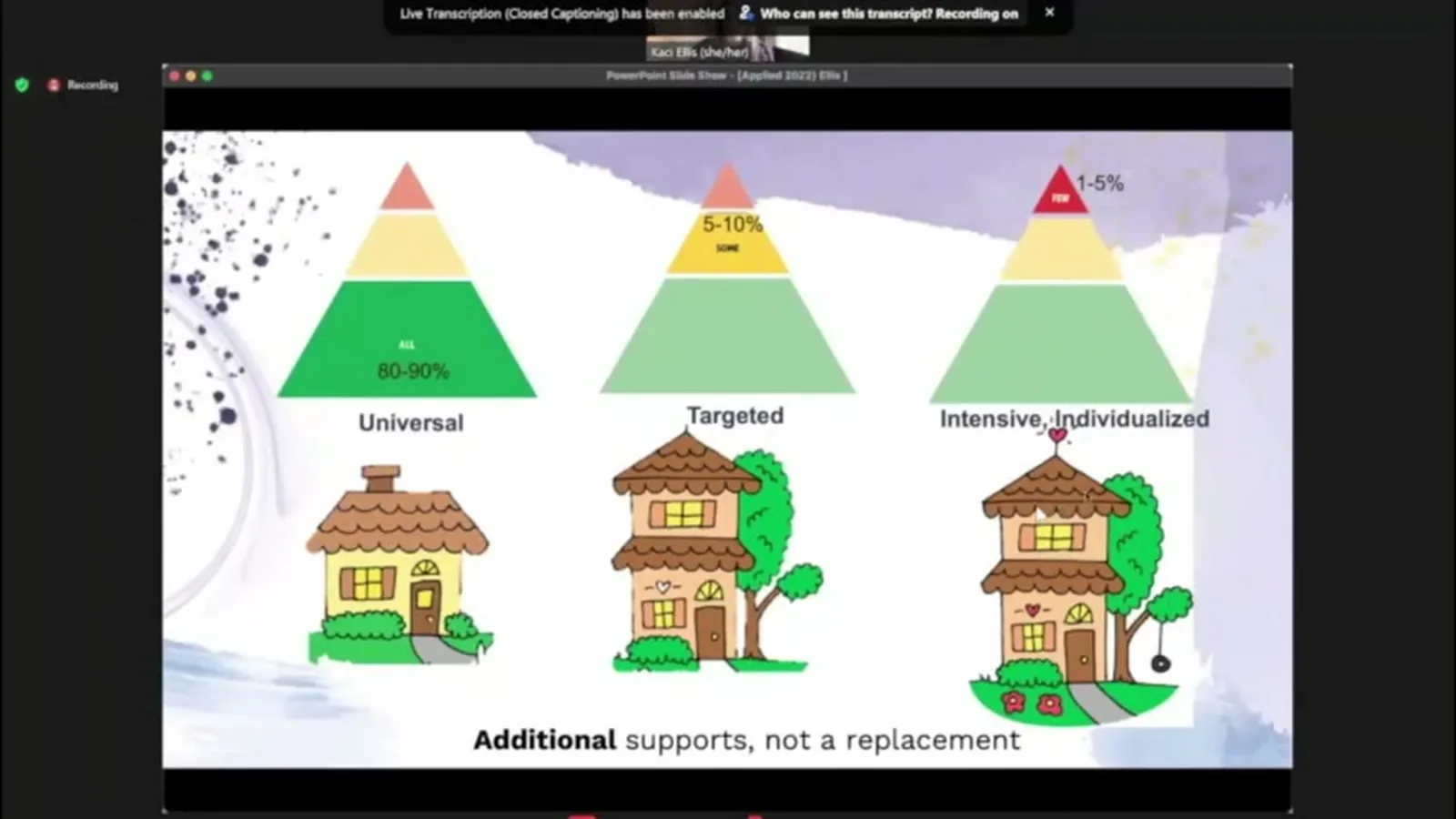
Practical Takeaways for School-Based Behavior Analysts
Free learning path on this topic
Supervision, Done Right
Four supervision CEUs that build on each other. What reflective supervision is, how to build a supervision system, how to assess supervisee competence instead of counting hours, and how supervision affects provider outcomes. The BACB asks supervisors for three supervision CEUs per cycle. This covers it.
On this page · 9 sections▾
Coaching a para-educator on a school campus means three things at once: making sure no adult is ever alone with an escalating student, putting the function of behavior into words a non-BCBA can actually use, and holding a hard line that academic instruction is not your RBT's job, even when the courtyard is loud and the teacher is watching from the window. If you are a school-based BCBA, your para or RBT is the person closest to the kid all day, and the way you coach them is the way the plan actually runs.
Why paras and RBTs need a different coaching script than teachers#
Teachers come in with a credential, a classroom, and years of training in pedagogy. Your para or RBT often does not. They are smart, they care about the kid, and they are watching you to learn what a "good" response looks like in real time. So your coaching script has to be different. With a teacher, you can ask questions and let them lead. With a para, you have to be more direct about steps, scripts, and who to call.
Two things to keep clear up front. First, your para or RBT is part of the school team, not a stand-alone clinician. They follow the school's rules, not just your behavior plan. Second, your job is to translate the plan into moves they can actually do on a Tuesday at 10:42 a.m. when a kid flips a desk. If a step in your plan needs a master's degree to run, it is not a step. It is a wish.
A simple rule of thumb: every coaching point should fit on an index card. If a para cannot repeat it back in one sentence, rewrite it.
Safety rule one: never alone with an escalating student#
This is the rule that protects the kid, the para, the school, and you. A para or RBT should not be alone with a student who is hitting, kicking, or lunging. Not in a hallway. Not in a courtyard. Not in a sensory room with the door closed. The moment a student starts to escalate on a one-to-one, a second adult should be in the room or on the way.
Dr. Ellis walked through a real example from the recording. A student begins to punch, kick, and lunge at her RBT. The RBT walks the student out for a break. The teacher offers help and the RBT says no. Now the RBT and the student are alone in the courtyard, and the student is still lunging. The teacher is watching from a window.
they are not to be alone with the student in a school setting... what steps or what should we do if the student needs to leave the classroom? Who should we call?
That is the conversation you owe your RBT before the courtyard ever happens. Not a policy memo. A scripted answer to one question: who do I call.
Building a "who do I call" protocol for your school#
Every school has a response team. CPI-trained staff, a behavior interventionist, an admin, a school counselor, a nurse, a campus officer. Your job as the school BCBA is to know who is on that list, where they sit, and how to reach them in under sixty seconds.
Then you write it down for your para or RBT. A laminated card on a lanyard works. It should have three things: the names of the two closest adults to call for help, how to call them (radio channel, room number, phone extension, hand signal to the teacher), and a single sentence to say so the call is clear. Something like, "I am with [student], we are at [location], we need a second adult now."
as a BCBA, I want to tell my RBTs, this is exactly what you do. This is who you need to call
Run through the card with your para in person. Then practice it once with no kid in the room. The first time they use it should not be the first time they have said the words out loud.
Teaching function of behavior without the jargon#
Function is the why. Every BCBA knows that. Your para does not need the four-function chart from grad school. They need a way to look at a student and ask one question: what did this behavior get for them, or get them out of.
A clean way to teach it: "obtain or escape." Obtain adult attention, peer attention, a thing, or sensory input. Escape a demand, a sensory thing, attention, or a setting. Five minutes of practice with real classroom scenarios will move a para further than a slide deck on operant principles.
explaining functions of behavior. Because we all know how important it is. It is the root of everything we do. It is the why
Use scenarios from the actual student. A favorite from the recording: Ralph puts his head down, refuses to do the worksheet, and the teacher lets him sleep. Ask your para, "What did Ralph get out of that?" When they say "he got out of the math worksheet," they have it. Now ask, "And next time the math worksheet shows up, what is Ralph going to do?" That is reinforcement, in a sentence they can use.
The same scenario teaches the adult side: well-meaning adults reinforce behavior all day without knowing it. Your para reinforces. You reinforce. The teacher reinforces. The goal is not blame. The goal is awareness, so the team can shift one small move.
Coaching feedback that lands (and does not tank rapport)#
Most paras and RBTs have been told "you are doing it wrong" more times than "here is how to do it right." So your feedback has to do two jobs at once: change the behavior, and keep them wanting to work with you next week.
A simple script that works on a school campus:
- Start with what you saw, with no judgment. "I saw him come up to the desk four times, and you talked to him each time."
- Connect it to function in plain words. "Right now, coming up to the desk gets him your attention, which is what he is looking for."
- Give one move to try next time. "Next time, can you give him a five-second wait, then walk over and talk to him at his seat?"
- Ask what is hard about it. "What gets in the way of doing that?"
That last step is the one most BCBAs skip. It is the one that builds the relationship. A para who feels heard will run your plan. A para who feels graded will quietly stop.
Hold the feedback in private, never in front of the student or other staff. And do it close to when the behavior happened. A note slid across the table at lunch beats an email Friday afternoon.
Scope: what your RBT can and cannot do on a school campus#
This is where school BCBAs get pulled into territory that is not theirs, and pull their RBTs in with them. A school RBT is there to support the behavior plan. They are not there to teach math. They are not there to modify a worksheet. They are not there to decide which standards the student should access today.
I would not expect an RBT to just know how to do this because again, that's outside of our competence. We are not meant to be providing academic instruction
That boundary protects everyone. The student gets real instruction from the teacher who has a teaching credential. The RBT gets to focus on what they were trained to do. You get to stay inside your own scope of competence.
What this looks like in practice. If a worksheet is too hard and the student is escalating, the RBT does not shorten the worksheet on their own. They flag it to the teacher: "He is having a hard time with this. Can we look at it together?" Then the teacher decides what to change academically. You can then coach around the behavior side, like prompting, reinforcement, or breaks.
Write this into the plan. Put a line that says, "Academic content decisions are made by the classroom teacher. The RBT supports behavior, not curriculum." It saves a lot of awkward conversations later.
Documenting fidelity so the plan actually runs#
A plan you cannot measure is a plan that quietly stops running. For each behavior plan, you need three quick data streams: student outcome data, treatment fidelity data, and a check on the classroom-level supports underneath the plan.
A short fidelity checklist on a clipboard works. Five to seven yes/no items: did the para give the visual prompt, did they give behavior-specific praise, did they wait before responding to attention-seeking, did they hand off to a second adult during escalation. Once a week, spend ten minutes watching, scoring, and giving feedback using the script above. Once a month, look at the data with the team and decide what to keep, change, or drop.
If the data shows the plan is not running with fidelity, the answer is not a longer plan. It is a shorter one, or a better-coached para, or a different "who do I call" protocol. Always work the simpler change first.
FAQ#
Can an RBT be alone with a student at school? No. Especially during escalation, your RBT should not be alone with the student in a classroom, hallway, or courtyard. Build a "who do I call" protocol so they always have a path to a second adult.
How do I teach a para about function of behavior? Skip the jargon. Use "obtain or escape" and one or two real scenarios from the student you both work with. Ask the para what the behavior got for the student, or got them out of. Practice five times. That is the lesson.
What if a para keeps reinforcing the wrong thing? Coach in private, name what you saw without judgment, tie it to function in plain words, give one specific move to try, and ask what gets in the way. Most reinforcement loops break with one small change in adult behavior, not a lecture.
Can RBTs deliver academic instruction at school? No. Academic instruction is the classroom teacher's job. The RBT supports the behavior plan. If a worksheet is driving escalation, the RBT flags it to the teacher, and the teacher decides what to change.
What should I do if a student starts escalating on a 1:1? Call for a second adult right away using your school's protocol. Move to a safer space if you can do it without isolating yourself. Stay calm, do not block exits unless trained to, and document what happened as soon as the student is regulated.
Ready to coach your team with a plan that actually runs?#
Watch Dr. Kaci Ellis walk through the full session, including the courtyard scenario, the functions-of-behavior teaching script, and the inquiry stance that keeps school staff on your side. The CEU is on-demand on openceu.com.
Turn this topic into a CEU
You just studied this. Now get credit for it.
Watch Practical Takeaways for School-Based Behavior Analysts with Dr. Kaci Ellis and earn 1 free BCBA CEU. Detailed certificate, delivered the moment you finish.
Keep going with a free learning path
Supervision, Done Right
Four supervision CEUs that build on each other. What reflective supervision is, how to build a supervision system, how to assess supervisee competence instead of counting hours, and how supervision affects provider outcomes. The BACB asks supervisors for three supervision CEUs per cycle. This covers it.