PDA: What it is and What it isn't
Presented by B. Kuereine Gray
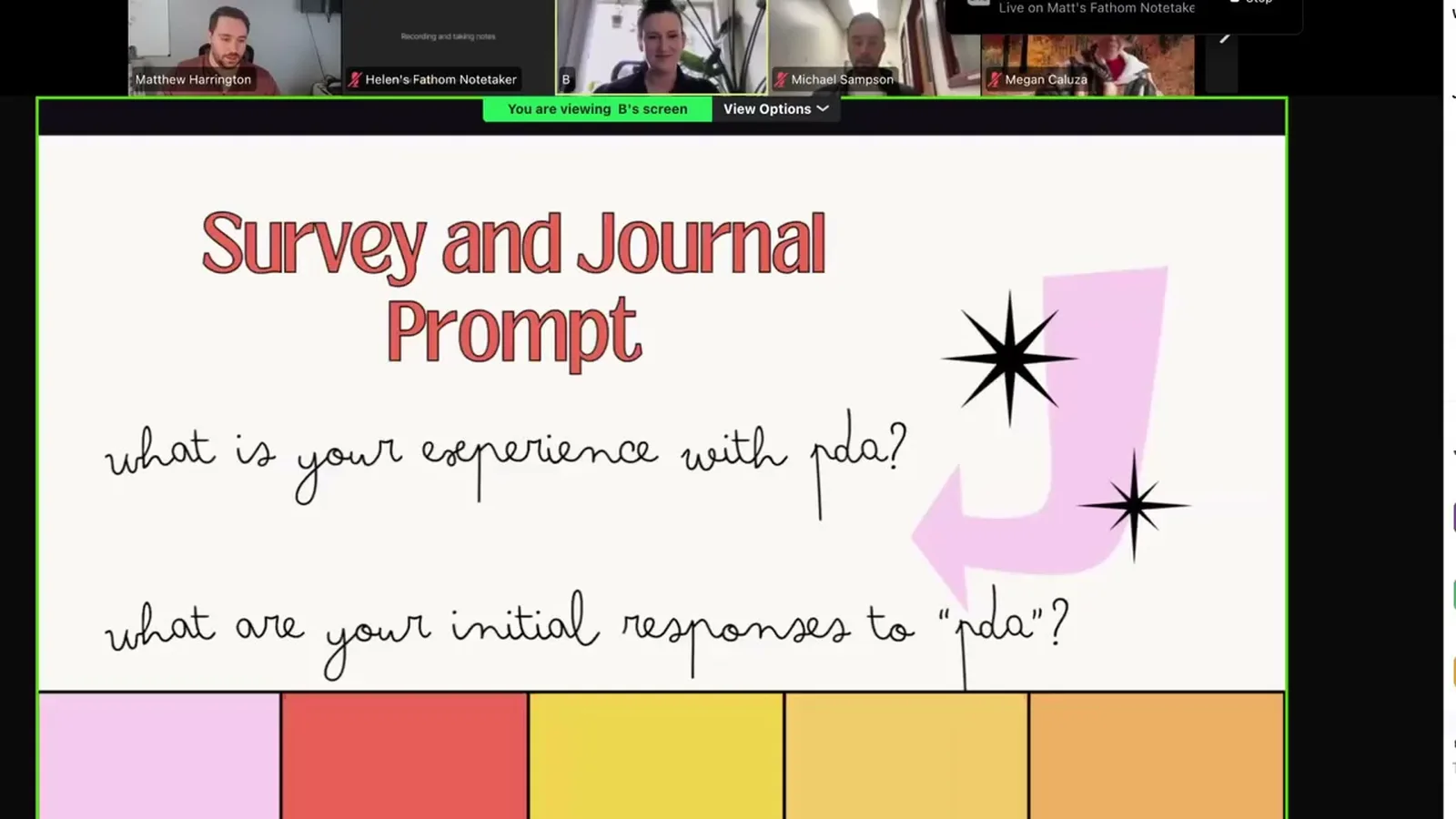
Pathological Demand Avoidance (PDA) is an increasingly discussed behavioral profile, yet it is often misunderstood, inconsistently defined, and misapplied in clinical practice. This continuing education session provides behavior analysts with a clear, evidence-informed overview of PDA, including its historical context, current conceptualizations, and common areas of confusion. Participants will learn to distinguish PDA-related behavioral presentations from other forms of escape-maintained behavior, consider ethical responsibilities to clients when addressing emerging profiles, and identify appropriate assessment considerations. The session also emphasizes maintaining professional competence, advocating for appropriate services, and locating reliable professional and stakeholder resources to support clients and families.
Cancel any time. Cert delivered to your inbox the moment you pass the quiz.
Learner ratings
from 220 learners
97% would recommend this CEU to other professionals in their field (168 responses)
“Very informative! Can't wait for the next part of the series!”
— Tarie P.“Good basic information presented in a compassionate way”
— Deborah B.“Great information”
— Meredith C.“Someone did not mute their mic. There were typing sounds, yawning, and coughing throughout the video.”
— Yee N.
About this CEU
Pathological Demand Avoidance (PDA) is an increasingly discussed behavioral profile, yet it is often misunderstood, inconsistently defined, and misapplied in clinical practice. This continuing education session provides behavior analysts with a clear, evidence-informed overview of PDA, including its historical context, current conceptualizations, and common areas of confusion. Participants will learn to distinguish PDA-related behavioral presentations from other forms of escape-maintained behavior, consider ethical responsibilities to clients when addressing emerging profiles, and identify appropriate assessment considerations. The session also emphasizes maintaining professional competence, advocating for appropriate services, and locating reliable professional and stakeholder resources to support clients and families.
From the talk
What was covered
What PDA is, what it is not, and why demands stack. A behavior analyst's guide from B. Kuereine Gray's CEU talk.
- Treat PDA as a spectrum profile, not a yes or no label, and support the traits even when no diagnosis is in place.
- Look for refusal of familiar, easy tasks the person has already mastered, not just new or hard ones.
- Track the chain of small precursor behaviors, because they look typical and get missed right before a fast escalation.
- Think threshold, not task size. Demands stack across the day, so a plan can work Monday and fail Tuesday.
- Stay in scope by naming the traits you see, referring for assessment, and running a tailored trial with data.
- Use plain, non-stigmatizing words with families and point them to PDA Society resources for the UK and North America.
Where the Term PDA Came From
Pathological Demand Avoidance (PDA) is a pattern of extreme demand refusal. The term comes from psychology, not from our field. It names a class of behavior, and it names it in a harsh way. The work behind it is older than the buzz.
Elizabeth Newsome began writing about these patterns in the 1980s. She kept seeing the same set of traits in the people she served. Those traits did not fit oppositional defiance (a pattern of defying adults). She asked whether this group could be sorted out and served in a tailored way. Her first paper came out in 2003. PDA was framed as a separate profile inside autism.
From about 2013 to 2020 the term spread fast. Many people called it pseudoscience (an idea without real proof). Then papers started to come out. A rating scale started to take shape. In the UK, autism evaluations now often screen for PDA as a subtype. That has not caught on in the US or Canada.
People with the profile have also built their own groups. They are kids and adults, and they have strong views on how this gets framed. Current thinking treats PDA much like autism. It is a spectrum. You can show some PDA traits and still not meet the profile. Those traits still need to be accommodated.
PDA is not new, even though you may just be hearing from it.
From the talk — B. Kuereine Gray
Key Features of a PDA Profile
The feature list comes from psychology, so some of it sounds mentalistic (talk about inner states, not actions). Gray flagged that up front. The words are also stigmatizing. She used them because assessors use them. She was clear that they are not words for families.
The core feature is resisting or avoiding the ordinary demands of life. Around that sit a set of avoidance strategies. The lexicon calls some of it social manipulation. On the surface many of these people seem sociable. They may still lack a social identity and miss social nuance. Mood can swing fast. The need to be in charge runs through all of it.
Some show obsessive behavior. Most are fine with role play and pretend, which trips up old school autism screening. Many have strong language and talk early. They are often high masking (hiding traits to fit in). Their words and manners cover real gaps, so some are missed for autism. And they often do not respond to standard autism plans.
It is not appropriate to be using with your stakeholders, but it is currently being used when we discuss analysis or identification.
From the talk — B. Kuereine Gray
What PDA Is Not: Ruling Out the Look-Alikes
PDA is not conduct disorder (a pattern of breaking rules and hurting others). People with the profile can lack pro social behavior (behavior that helps others), such as starting a greeting. But what you tend to see more is behavior tied to anxiety. These fall into response classes (groups of behaviors that serve a similar purpose). It is also not an anxiety disorder or social anxiety. An attendee asked if this is the same as antisocial behavior. Gray said no, and she drew the same line against oppositional defiance.
It is not bad behavior. It is not bad parenting. Gray stressed this for families and for the person too. No one is trying to be bad at work or in a day program. It is not a matter of effort.
There is a high overlap with autism and ADHD together. Gray offered a hypothesis here, not a finding. One profile wants routine and order. The other wants spontaneity. Staying regulated between those two pulls is hard work.
Many of us have joked that the function (the reason behind a behavior) is just control. Gray thinks those are the same people who show up in this profile. Note what the demand looks like. It is a known routine, a known request, a known SD (the cue that starts a task). The skills are there. The person still cannot start.
It's I can't do this, not I won't do this.
From the talk — B. Kuereine Gray
Assessment Tools and Staying in Your Scope
The main tool is the EDA-8 (a demand avoidance rating scale), now updated to the EDA-10. Most people with this profile score threes across the board, the very true rating. There is also the diagnostic interview for social and communication disorders (an assessment interview used in autism evaluation). It is not easy to get unless you hold that license. On the ADOS (an autism observation assessment), the same threes show up across areas. Assessors also report that these clients engage less with the evaluation itself.
Most of us do not diagnose. That does not leave you stuck. You can say that a person seems to show traits of this profile. You can refer to someone who can assess. You can run a trial of a tailored plan and watch the data. Did the rate of learning change? Did problem behavior drop in a way you had not seen? Look at it in an empirical way, not a hunch way.
Skipping the referral has a real cost. Families can lose access to services. Care across providers gets patchy, so progress stalls and gains stay low. Masking makes it even harder to get the right level of support. Over years that shows up as anxiety, skin picking until it bleeds, or trichotillomania (pulling out one's own hair). Gray has seen clients pull out eyelashes and eyebrows.
we are not diagnosticians unless you have that licensure
From the talk — B. Kuereine Gray
The Threshold Model: Why Demands Stack Up
Escalation in this profile often runs through a loop. The person engages. Then they get distracted. Then they put things off. Then they pull away. You rarely get a clean antecedent, behavior, consequence line. Instead you get a run of small precursors. They look like mini R2 and R3 behavior (non dangerous and dangerous problem behavior). That chain can be very reliable. It also gets missed, because each step looks normal. Then the blow up arrives fast.
Gray used a bucket to explain the load. Think of spoon theory (a way to picture daily energy). You wake up with twenty spoons. Every demand takes one. For most people a break resets the count. For this profile the demands pile up instead. What matters is the total, not how big any one ask was.
Under that sits a simple cycle. A demand shows up, and it can be one the person set for themselves. Then comes distress. Then comes avoidance. Then comes short relief. That loop repeats at every step of the escalation, from the quiet precursors all the way up.
it's the threshold of demands it is not the severity of demand
From the talk — B. Kuereine Gray
Why a Good Plan Works Monday and Fails Tuesday
Token boards. Reinforcement schedules. Visual schedules. Clear, salient demands. Proactive strategies stacked on top. None of that tracks the bucket. Some days a person walks in the door with half the spoons already gone. The plan has no way to see that, so responding looks random.
Gray gave supervisors a script for this. When a supervisee says it works some days and not others, stop and pull up the whole profile. Ask what you are not accounting for. Ask whether a referral is due. Ask whether a trial of a different approach is worth running. The goal is to help the individual succeed.
She also reported a pattern worth testing. When she presents tasks the way you would for a PDA profile, success comes faster. That held for adults with complex medical needs, limited language, and no PDA diagnosis. One client had a mixed receptive expressive language disorder (a disorder that affects understanding and using language). At first they showed only mild traits. As language grew, the traits got much clearer. Her read is that the profile was there all along. It is just harder to spot, so you have to watch the patterns.
They may not respond to typical intervention methods used for autism.
From the talk — B. Kuereine Gray
How It Looks at Three, at Six, and at Twenty
Gray walked through three cases across the lifespan. The first was a toddler in a parent coaching model. The child had language and looked warm and social. Play told a different story. It ran the same way every time. If the parent moved a toy car the wrong way, the child directed the parent back on script. Once school started, the afternoon threshold dropped hard. Play my way came first. Then talking at the parent, not with them. When the team pushed for a small change, things shifted fast. Language dropped off, then ignoring came, then lining up toys. Turning away came next, then screeching and throwing.
That chain is the teaching point. Gray asked for an evaluation and named PDA screening as the reason. The evaluator agreed. The team kept using SBT (skill based treatment, an approach built around teaching skills). They tweaked it to build in a sense of autonomy. Demand tolerance went up.
The second case was a six year old before school. They can dress, brush teeth and hair, pick clothes, and start breakfast. On some mornings none of it happens. Clothes they like feel wrong. The visual schedule does not help. The whole day snowballs until it switches off on its own.
The third was a twenty year old at a day program with a work site. On a good day they text, put away lunch, take medication, do chores, and enjoy free time. On a hard day they sit down, keep the headphones on, cross their arms, and drop their chin. Texting stops working too. Push too soon and it goes to screaming, slammed doors, and broken things.
there were subtle precursors that were sequential
From the talk — B. Kuereine Gray
Language, Advocacy, and Where to Send Families
The autism and PDA communities have pushed back on the word pathological. They do not want to be framed as broken. Two other readings of the letters come from that community. Both put autonomy at the center, which is the real issue in play.
Gray also answered a good question about setting. If a family says it only happens at school, do not assume home is safe. It is usually there, just quieter. Ask for a low key observation, such as a phone propped in a main room. Often the home has built natural accommodations, because caregivers learned what heads off the blow ups. School and work cannot flex the same way.
For resources she pointed to the PDA Society in the UK and a North America group. A few creators explain the profile in plain terms for caregivers, and she sends families to them. Get consult from people with real PDA experience. Use the open source PDA assessment tools so you share language with other providers. Then read the research behind it.
This was part one of three. Part two covers intervention and working with the team. Part three looks at the profile in more complex clients. She also plans to cover response classes and how to write clear definitions for behavior that keeps shifting shape.
This isn't pathological. It's a persistent desire for autonomy or a pervasive drive for autonomy.
From the talk — B. Kuereine Gray
Common questions
Is PDA an official diagnosis?▾
Not in the US or Canada. It is framed as a profile, and in the UK it is often screened for during an autism evaluation. Current thinking treats it as a spectrum, so a person can show traits without meeting the full profile. Those traits still need support.
Is PDA only part of autism, or can it stand alone?▾
That is still an open debate in the field. Some people treat it as a subtype of autism. Others argue it is its own distinct profile. Gray said there is no settled answer yet, and she noted the tradeoff: more labels can dilute a file, but specific labels tend to lead to more finely tuned treatment.
How is PDA different from oppositional defiance or conduct disorder?▾
The demand refusal in PDA hits tasks the person already knows how to do, including ones they like. It reads as cannot, not will not. Gray also drew a line against conduct disorder and against antisocial behavior. What you tend to see instead is behavior that lines up with anxiety response classes.
Can a PDA profile show up at school but never at home?▾
It tends to show up everywhere, though it can be much quieter at home. If a family reports none at home, ask for a simple observation, such as a phone set in a main room. Often caregivers have already built in accommodations for autonomy without naming them. School and work settings usually cannot flex that way.
What should a behavior analyst do when they suspect a PDA profile?▾
Stay in scope. Say that the person appears to show traits of this profile, then refer to someone who can assess. You can also run a trial of a tailored approach and watch learning rate and problem behavior. Skipping the referral can cost the family access to services and years of consistent progress.
About the speaker
B. Kuereine Gray, who goes by B, has been a certified behavior analyst since 2007. She owns a private practice. She has done clinical work and helped write and run clinical trials. She has advocated alongside special education attorneys and given expert testimony in applied behavior analysis, special education, and autism. She supervises clinical candidates and technicians. She consults with small businesses on staff structure. She also runs a weekly social group for elementary age kids with PDA profiles.
This summary was generated from the recording’s transcript. Quotes are taken word for word from the talk.
What you'll learn
- 1Learning Objectives
- 2After completing this session, participants will be able to:
- 3Describe the historical development and current status of PDA-related profiles and discussions within the broader autism and behavioral health communities (Ethics Code 3.01).
- 4Identify key features of PDA-related behavioral presentations and distinguish what PDA is and is not, based on current research and community-informed perspectives (Ethics Code 1.06).
- 5Recognize behavioral responses, antecedents, and contextual factors commonly associated with increased probability of PDA-type responses, while avoiding overgeneralization (Ethics Code 1.06).
- 6Locate appropriate professional, community, and stakeholder resources to support ethical advocacy and service recommendations for clients and families (Ethics Code 3.12).
Concepts in this CEU
Related talks
Talks that cover the same concepts
PDA: Collaborating for Success
The Behaviorist Bookclub
New Year, New Care Collab Goals
The Behaviorist Bookclub
Hey, Chillax Man! Understanding the Logic of Anxiety
The Behaviorist Bookclub

ABA Beyond Autism
The Behaviorist Bookclub
Confessions of a New Behavior Analyst in Functional Analysis
The Behaviorist Bookclub
That's Outside My Scope of Competence
Willow Mentorship & Consulting, LLC
More from The Behaviorist Bookclub

Harm Reduction Within ABA Practice
The Behaviorist Bookclub
Supervising Beyond Technical Skills: Professionalism, Communication, and Clinical Judgment
The Behaviorist Bookclub
Reflective Supervision and Client Outcomes
The Behaviorist Bookclub
OpenCEU is supported by advertising from third-party sponsors. Sponsors are clearly labeled, have no influence over course content, instructors, or CEU decisions, and never appear on certificates. The BACB does not sponsor, approve, or endorse OpenCEU sponsors or their products.