Why Token Boards and Visual Schedules Fail With PDA Kids
Why traditional ABA interventions don't work for PDA: token boards, visual schedules, and reinforcement schedules backfire on the demand threshold, from a BCBA-led CEU.
Key takeaway
Standard ABA tools stall for PDA learners because of threshold accumulation, not because ABA itself is wrong. The token board still works on the learning principles you trust.
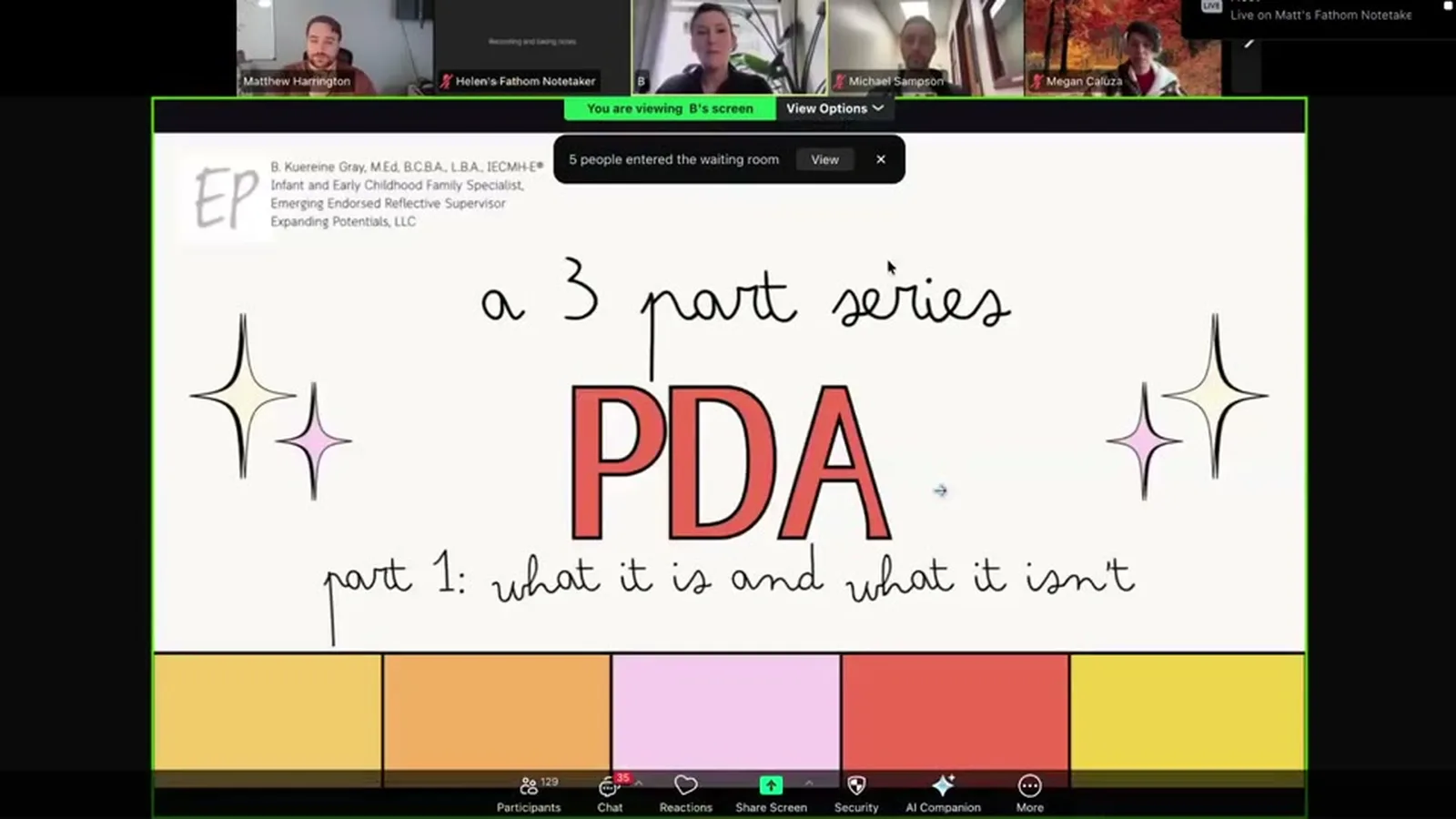
PDA: What it is and What it isn't
On this page · 9 sections▾
Standard ABA tools stall for PDA learners because of threshold accumulation, not because ABA itself is wrong. The token board still works on the learning principles you trust. The visual schedule still breaks tasks into clear steps. But the kid in front of you walked in already past their limit. The plan can be solid and still fail on a Tuesday. That mismatch is what this page unpacks.
PDA stands for pathological demand avoidance. Some clinicians now call it a persistent drive for autonomy. Either way, it points to a behavioral profile where ordinary demands stack up fast. The learner has the skill. The learner has done the task before. They still cannot do it today. This page is for the BCBA whose plan keeps slipping, not for someone hunting a label.
The "works some days, not others" pattern is the signal#
You wrote a clean plan. You ran the data. You trained the team. Then Monday goes great. Tuesday falls apart. Wednesday is half a session. Most BCBAs have lived this exact week.
They may not respond to typical intervention methods used for autism. You have that one kid and they're like, man, I've been doing all the things, I've been following all the rules, all the guidance, all the research and they are just not successful or it's successful for a week and then it doesn't last. From the talk — B. Kuereine Gray
That pattern is data. Note when the wins land and when they vanish. Look at what happened before the session, not just inside it. Did the kid come from school? Did they skip breakfast? Was the morning routine a fight? The session is one box on a long day.
If the plan only "sticks" for a week before backsliding, that is also data. It tells you the plan is touching the right skill but missing the context. The skill is in the learner. The capacity to use it is not always there.
Why token boards make it worse, not better#
Token boards work by making reinforcement visible. Earn the token, see the progress, get the prize. The board is supposed to lower the cost of the work.
For a PDA learner, the board can do the opposite. Each token is a small demand. Each demand sits on top of the last one. The board says, "Do five more." The learner hears, "Five more times you have to comply." Compliance itself is the trigger.
The token also makes the demand permanent. The kid can see it. They cannot pretend the task is not there. For a learner driven to protect autonomy, a visible count of pending demands is a stress signal, not a motivator.
This does not mean every token board hurts. It means the board is doing something different than you think. Watch the kid's body when you set it up. Watch what happens when you add the third token. That is your real data.
Visual schedules and reinforcement schedules: where they break#
Visual schedules are supposed to lower anxiety. You show what comes next. You make the day predictable. For most autistic learners, that helps a lot.
For a PDA learner, the schedule can become a list of threats. Each picture is something they will be asked to do. The kid sees the whole day at once. The whole day is demands.
Reinforcement schedules face the same problem. A fixed-ratio schedule says, "Do three, then break." A PDA learner may not get to three. They may get to one and stall. Then the schedule itself becomes a fight. The schedule is supposed to motivate. It now signals more work.
Traditional intervention might be like oh we have this token board or oh we have these reinforcement schedules or oh we have these visual schedules… but what it's failing to account for is someday I'm showing up… like I'm walking in the door and half my spoons are gone. From the talk — B. Kuereine Gray
The tools are not broken. They are tuned for a learner whose tank fills back up between demands. PDA learners do not fill back up the same way.
Threshold accumulation vs single-trial reinforcement#
This is the mechanism. It matters because it changes how you think about a "failed" trial.
Most ABA training treats each trial like a clean slate. You present the SD, a brief signal for what to do. You wait for the response. You reinforce or you do not. The next trial starts fresh. That model works when the learner resets between trials.
PDA learners do not reset. Each demand adds to a pile. The morning's toothbrushing carries into the car ride. The car ride carries into the classroom. By the time you sit down for a session, the pile is high. Your first SD is not their first demand of the day. It might be their fortieth.
With individuals who have the PDA profile those demands can be cumulative because it's a threshold that they're meeting and that is why we don't see response to traditional intervention. From the talk — B. Kuereine Gray
This reframes a "non-compliance" trial. The learner is not refusing the task. They are at the top of their threshold. The same SD on a lower-demand day would land. The plan did not fail. The day did.
When to pause your current plan and reassess#
Pausing a plan feels bad. You wrote it. The team trained on it. You owe it time to work. But there is a difference between giving a plan time and waiting through harm.
If a plan that should fit is not working, the answer is rarely "more fidelity." It is usually "wrong fit." That is a clinical decision, not a coaching problem.
When… supervisees currently under me are saying hey I've tried these interventions and like some days it works and some days it doesn't we have to sit down and go through that child's profile like hey could there be some characteristics we're not accounting for should we refer out for assessment should we do a trial of different interventions. From the talk — B. Kuereine Gray
So sit down. Pull the profile. Ask three things. Is the skill in there? Is the day stacking demands before we even start? Are we missing a profile feature like high masking or threshold limits? If the answer to any of those is yes, the plan needs more than a tweak.
You do not need a PDA diagnosis to act on this. You need a hypothesis and a trial. You can pilot a different approach for two weeks and watch the data. The data tells you if you guessed right.
What to try instead#
This page does not teach the alternative plan. That is a full page on its own. The PANDA approach, low-arousal language, and choice-rich antecedent strategies are covered separately.
What this page does say is that the alternative works. Even when the diagnosis is not formal, the approach holds up.
I also have several adults that do not have a diagnosed PDA profile but because of… complex medical needs it presents very much like a PDA profile… and when we use interventions… [that] instead we present… as you would present them for someone with PDA or a PDA profile the success is so much faster. From the talk — B. Kuereine Gray
Read that line twice. It is your permission to run a trial without waiting for a label. If the profile fits, the approach can fit.
How to brief your RBTs so they don't double down#
Your team is trained to push through. That training is usually a strength. With a PDA learner, it can deepen the hole.
Tell your RBTs three simple things. First, a "no" today is not the same as a "no" yesterday. The kid's threshold may already be full. Second, do not stack a demand on top of a demand. If the first ask lands as refusal, change the ask before you repeat it. Third, log the day, not just the trial. Note what happened before session.
Give them a script for the bad day. Something like, "We are pivoting. We will work on tolerance today, not the targets." That gives them a job. It also stops the reflex to push for compliance because compliance is the metric they know.
You are the BCBA. You can make this pivot legal. They cannot. So tell them, in writing, when to pivot and what to do next.
Frequently asked questions#
If my BIP isn't working, do I need a PDA diagnosis before I switch approaches? No. A BIP is a working hypothesis. If the data says it is not landing, you are obligated to revisit it. You can run a trial of a different approach and document the change in your clinical notes. A formal diagnosis can help with school services and insurance, but it is not required to change your plan. BIP stands for behavior intervention plan, the document that guides how the team responds.
Should I keep running data on a token board if the kid is shutting down? Stop the board. Keep the data. Track what happened when you removed it. That is still data, and it is more useful than fidelity counts on a tool that is hurting the session. If the kid regulates without the board, you have your answer. Add a note to the file and bring it to your next clinical review.
What do I tell parents who paid for the visual schedule materials? Tell them the truth. The materials are not wasted. They will likely help another phase of treatment. Right now, the kid's threshold is full before session starts, and the schedule is adding to it. Frame it as a clinical decision based on the kid's response, not a failure of the tool. Most parents are relieved to hear someone is paying attention.
Watch the full session#
This page covers one slice of the talk. The full CEU walks through the history of PDA, the assessment tools, three case examples, and the start of an intervention framework.
Watch the full CEU on openceu.com
Turn this topic into a CEU
You just studied this. Now get credit for it.
Watch PDA: What it is and What it isn't with B. Kuereine Gray and earn 1 free BCBA CEU. Detailed certificate, delivered the moment you finish.