Prompt Fading in ABA: How to Fade Prompts the Right Way
Prompt fading helps learners do skills on their own. Learn the main fading methods, common mistakes, and what the research shows for BCBAs and RBTs.
Key takeaway
Prompt fading means slowly removing the help you give a learner. You start with support, like a gesture or a physical guide. Then you take that support away, bit by bit.

Solving Clinical Challenges with Research
Free learning path on this topic
Child Development for Behavior Analysts
Typical development for behavior analysts. Kristen Byra's overview, then Kelly Brzak's deep dives on ages 2 to 5, 6 to 8, and 9 to 11, with milestones, common problem behaviors, and programming tips for each band.
Experts who cover this
4 recordings on openceu cover prompt fading.
- Featured talk2.50 CEUs
Solving Clinical Challenges with Research
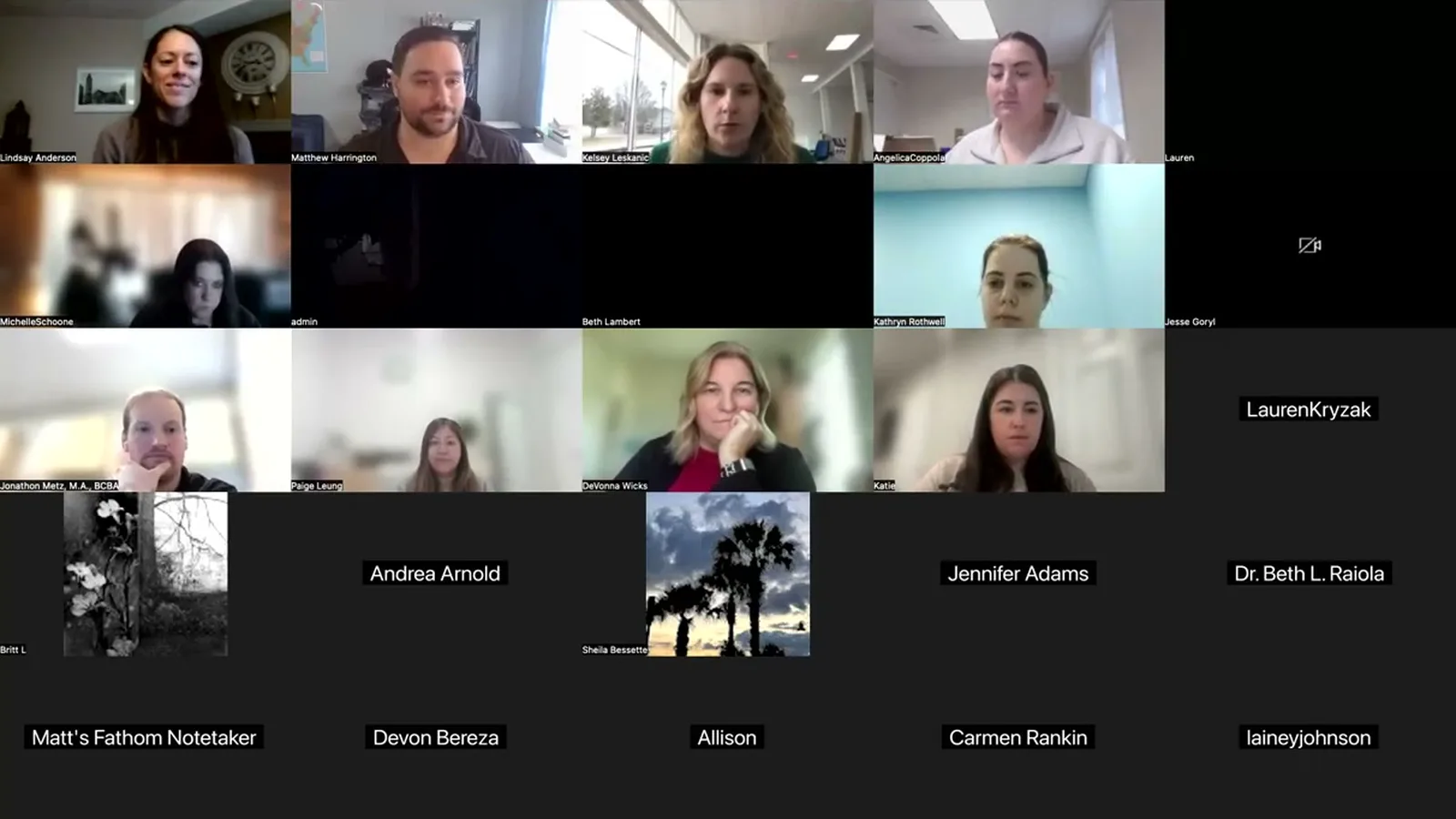
Matthew HarringtonThe Behaviorist Bookclub
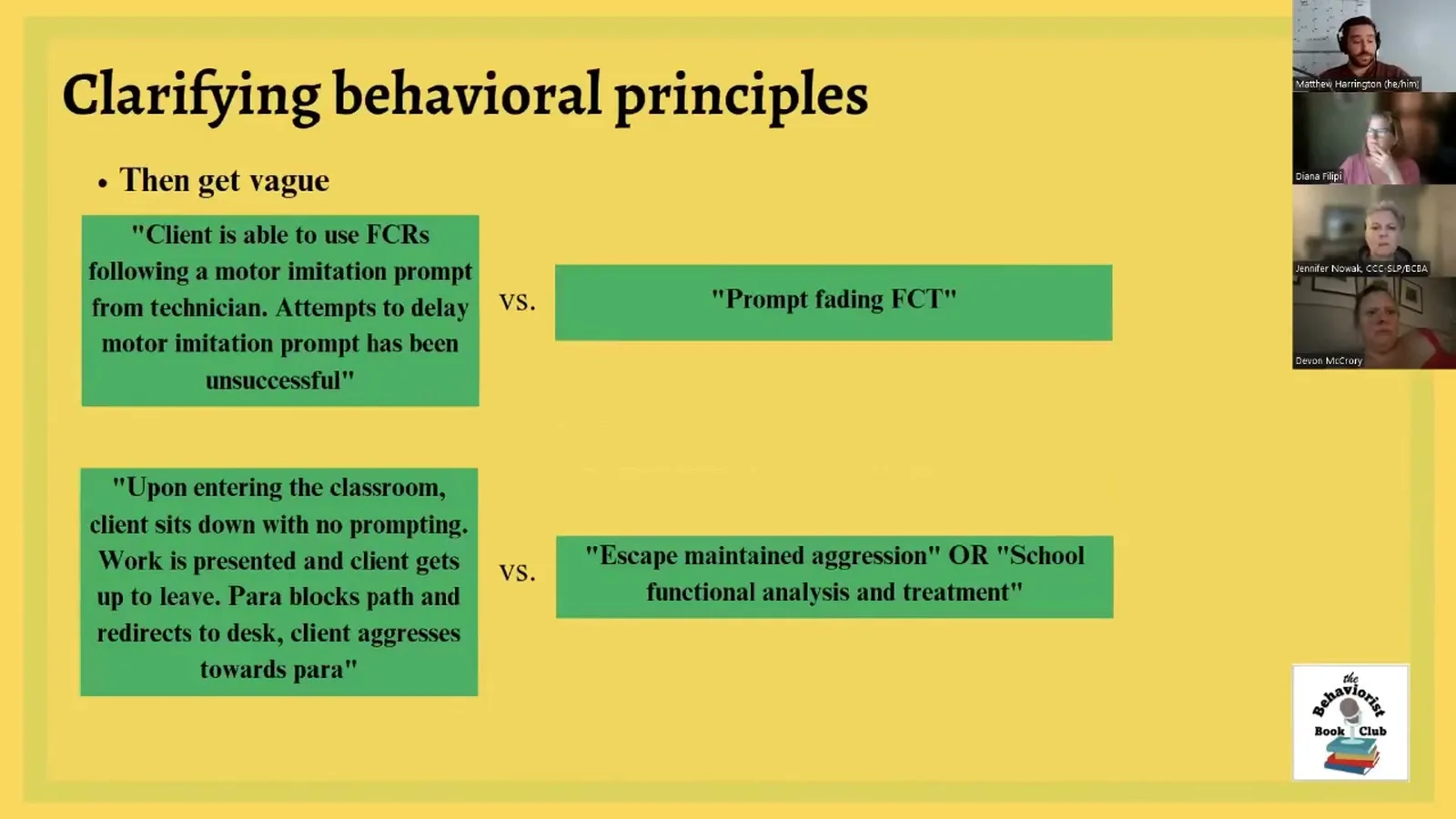
Prompt fading, specifically fading a motor imitation prompt within an FCT program, is Harrington's primary worked example of turning a vague clinical…
- 1 CEU
Why are they Waking up at 2 AM?
Lindsay AndersonThe Behaviorist Bookclub
Details a stepwise fading procedure for caregiver bedtime support, listing each component of parental presence (lying down, back rub, singing) and removing one…
- 1 CEU
Research to practice - extending past the pages
Matt HarringtonThe Behaviorist Bookclub
The concrete clinical hinge point identified in the FCT case example; the speaker shows how to reframe a vague struggle into the specific search term 'prompt…
- 1 CEU
genArete: To Teach or not to Teach!
Mark MaladyThe Behaviorist Bookclub
Raised in Q&A as a strategy that can misfire when component skills are missing: if fading attempts stall, Mark recommends going back and verifying whether the…


On this page · 7 sections▾
Prompt fading means slowly removing the help you give a learner. You start with support, like a gesture or a physical guide. Then you take that support away, bit by bit. The goal is a learner who does the skill on their own.
This matters to almost everyone in ABA. BCBAs plan the fading steps. RBTs run them during sessions. Teachers and parents use them at home and school. When fading works, the learner stops needing you and starts doing it alone.
What prompt fading actually is#
A prompt is any help that makes a right answer more likely. You might point, model, or move a hand. Fading is how you shrink that help over time.
Think of it as a dial, not a switch. You turn the support down in small steps. Each step still lets the learner win. Over time, the learner needs less and less from you.
The end point is independent responding. That means the learner does the skill with no prompt at all. Good fading gets you there without a lot of errors.
Fade one piece at a time#
One clear way to fade is to remove support in small chunks. Lindsay Anderson shows this with bedtime help for families. She lists every part of what a parent does at bedtime. Then she drops one part on each step.
we're going to work with families to make a list of each component of the parent's presence that the child requires in order to fall asleep. And then make a plan to fade one component at a time. From the talk — Lindsay Anderson
This is often called quality fading. You lower the quality or amount of one part. The rest of the support stays the same for now.
on that first night of quality fading, they'll still be laying down with the child and rubbing their back, but they just won't be singing. They'll be sitting quietly instead. From the talk — Lindsay Anderson
Notice how small each step is. Only the singing goes away first. The back rub and lying down stay. Small steps keep the child calm and keep the plan working.
There is no single right method#
 Advertisement
There are many ways to fade a prompt. The best one depends on the learner and the skill. Matthew Harrington points this out when he works a real case.
On prompt fading FCT, there are multiple ways to fade prompts, whether it be a noise based, positional based, all at once and extinction, shaping. From the talk — Matthew Harrington
Some teams fade the loudness of a sound cue. Some fade where a picture sits on a table. Some shape the response by rewarding closer and closer tries. There is no one method that always wins.
This is also a good research question. When you feel stuck, name the exact problem. Harrington turns a vague worry into a clear search. He states it in plain terms. The team has a prompt, and they cannot fade it during FCT.
Once the problem is that clear, you can go read what worked for others. That habit turns a stuck session into a plan.
When fading stalls, check the small skills#
Sometimes fading just does not move. You lower the prompt and the learner starts to fail. Mark Malady warns that this can trap you.
the errorless teaching could or could not be again you can get yourself in some trouble there um and you might get stuck in a situation where you cannot fade From the talk — Mark Malady, BCBA
His fix is to look under the hood. A big skill is often built from smaller ones. If a small piece is missing, the big skill cannot stand on its own.
if you're finding yourself in a position where like your fading attempts just aren't working you want to go back and you want to kind of break down that composite skill into the components and just verify that those components are actually there From the talk — Mark Malady, BCBA
So when fading stalls, do not just push harder. Break the target into parts. Check that each part is solid. Then fading has something to stand on.
Watch out for prompt dependency#
The main risk of prompting is prompt dependency. That means the learner waits for your help every time. They can do the skill, but only with a cue. Fading is how you prevent this.
The key is to move at the right speed. Fade too slow and the prompt becomes a crutch. Fade too fast and errors pile up. Good data tells you which way to adjust.
Pick a fading path and watch the learner respond. If independent tries go up, keep going. If errors climb, slow down or add a step back in.
What the research says#
Research backs up the idea that fading should fit the learner. One study tested different prompt types and fading paths for children with autism. It found learner-specific results for prompt type. The least-to-most fading path was most efficient for all learners in that study (Schnell, Vladescu, Kisamore, DeBar, Kahng, & Marano, 2020).
Flexible prompt fading asks the teacher to read the learner and adjust in the moment. This takes clinical judgment. One study showed staff can be taught this skill. Both behavioral skills training and a progressive training approach worked to teach it (Arthur et al., 2024).
Fading also helps with challenging behavior tied to wanting items. One case study compared several methods during functional communication training. The treatment raised independent requests and cut challenging behavior to zero (Weyman, Imler, & Kelly, 2024).
Prompt fading can even ride on technology. In one study, textual prompts on a smart watch raised social starts for teens with autism. Two teens stayed reliant on the prompts. One kept starting talks after prompts were fully faded (DiDomenico, Tincani, & Dowdy, 2024). That mix is a good reminder to plan fading from day one.
FAQ#
What is the difference between prompting and prompt fading?
Prompting is the help you add to get a right answer. Prompt fading is how you take that help away over time. You almost always plan both together. The prompt gets the skill started, and fading makes it independent.
What are the main types of prompt fading?
Common types include most-to-least and least-to-most fading. Others fade a time delay, a sound, or a position. You can also shape the response with rewards for closer tries. The right type depends on the learner and the skill.
How do I fix a prompt that will not fade?
First, slow your fading steps down and use smaller changes. Next, break the skill into its smaller parts. Check that each part is strong on its own. If a part is weak, teach it first, then try fading again.
Prompt fading also shows up in sleep work. For a full walkthrough with families, see Why are they Waking up at 2 AM?.
 Advertisement
Turn this topic into a CEU
You just studied this. Now get credit for it.
Watch Solving Clinical Challenges with Research with Matthew Harrington and earn 2.5 free BCBA CEUs. Detailed certificate, delivered the moment you finish.
Keep going with a free learning path
Child Development for Behavior Analysts
Typical development for behavior analysts. Kristen Byra's overview, then Kelly Brzak's deep dives on ages 2 to 5, 6 to 8, and 9 to 11, with milestones, common problem behaviors, and programming tips for each band.