Staff Burnout in ABA: Causes, Warning Signs, and Fixes
What causes staff burnout in ABA, why it hits RBTs in crisis work hardest, and what supervisors and leaders can do about it, from four expert talks.
Key takeaway
Staff burnout is a state of deep work exhaustion that makes it hard for a clinician to give good care. In applied behavior analysis (ABA), it hits registered behavior technicians (RBTs) and BCBAs alike.
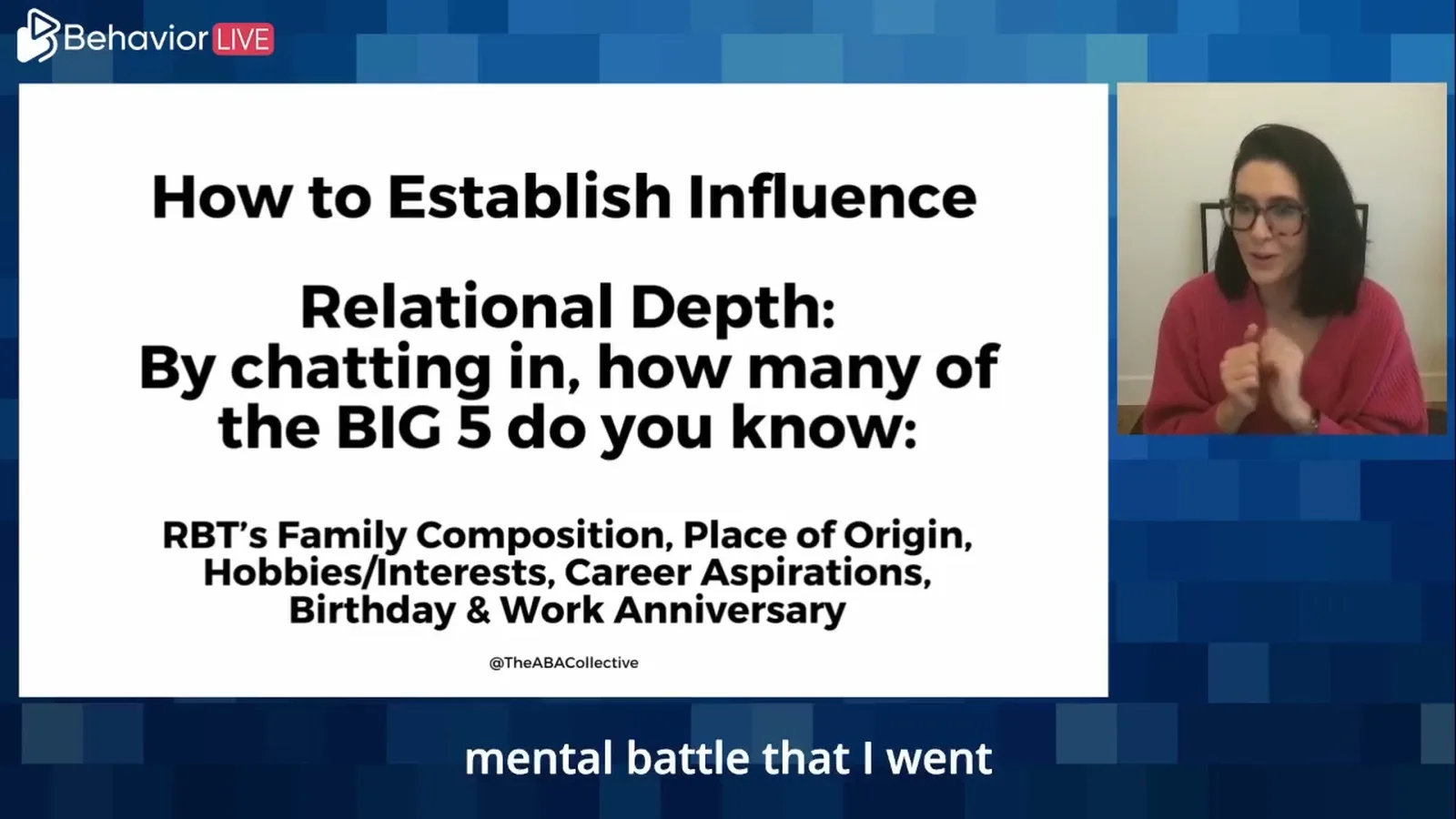
Dunder Mifflin’s Guide to BCBA Supervision: Lessons from The Office
Free learning path on this topic
Supervision, Done Right
Four supervision CEUs that build on each other. What reflective supervision is, how to build a supervision system, how to assess supervisee competence instead of counting hours, and how supervision affects provider outcomes. The BACB asks supervisors for three supervision CEUs per cycle. This covers it.
Experts who cover this
5 recordings on openceu cover staff burnout.
- Featured talk1 Supervision CEU
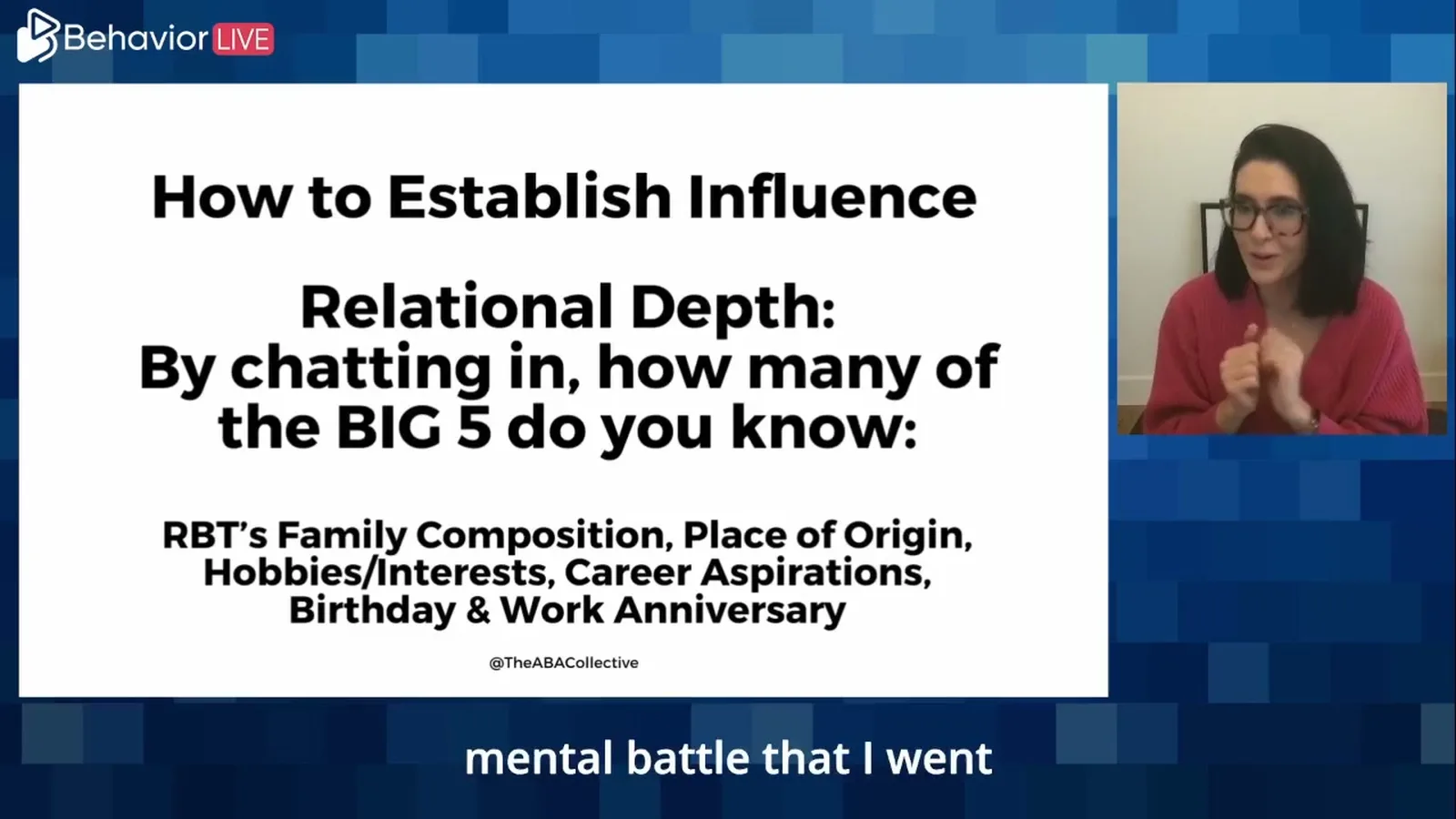
Dunder Mifflin’s Guide to BCBA Supervision: Lessons from The Office
Mellanie PageThe Behaviorist Bookclub
Frames RBT burnout as usually rooted in more than just work stress, and offers actionable prevention strategies like socializing the team, celebrating micro…
- 1 Supervision CEU
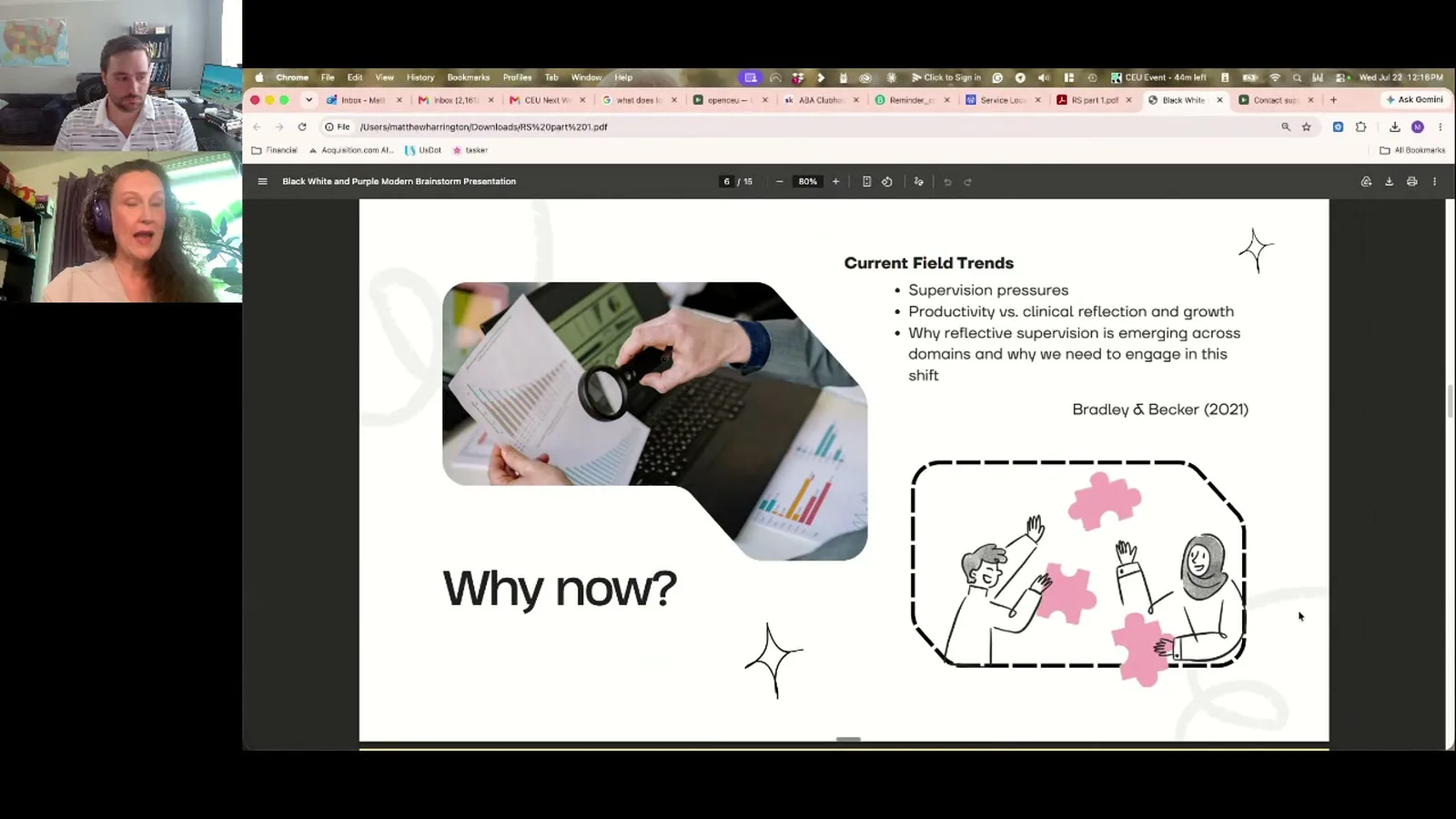
Reflective Supervision and Provider Outcomes in ABA
B. Kuereine GrayThe Behaviorist Bookclub
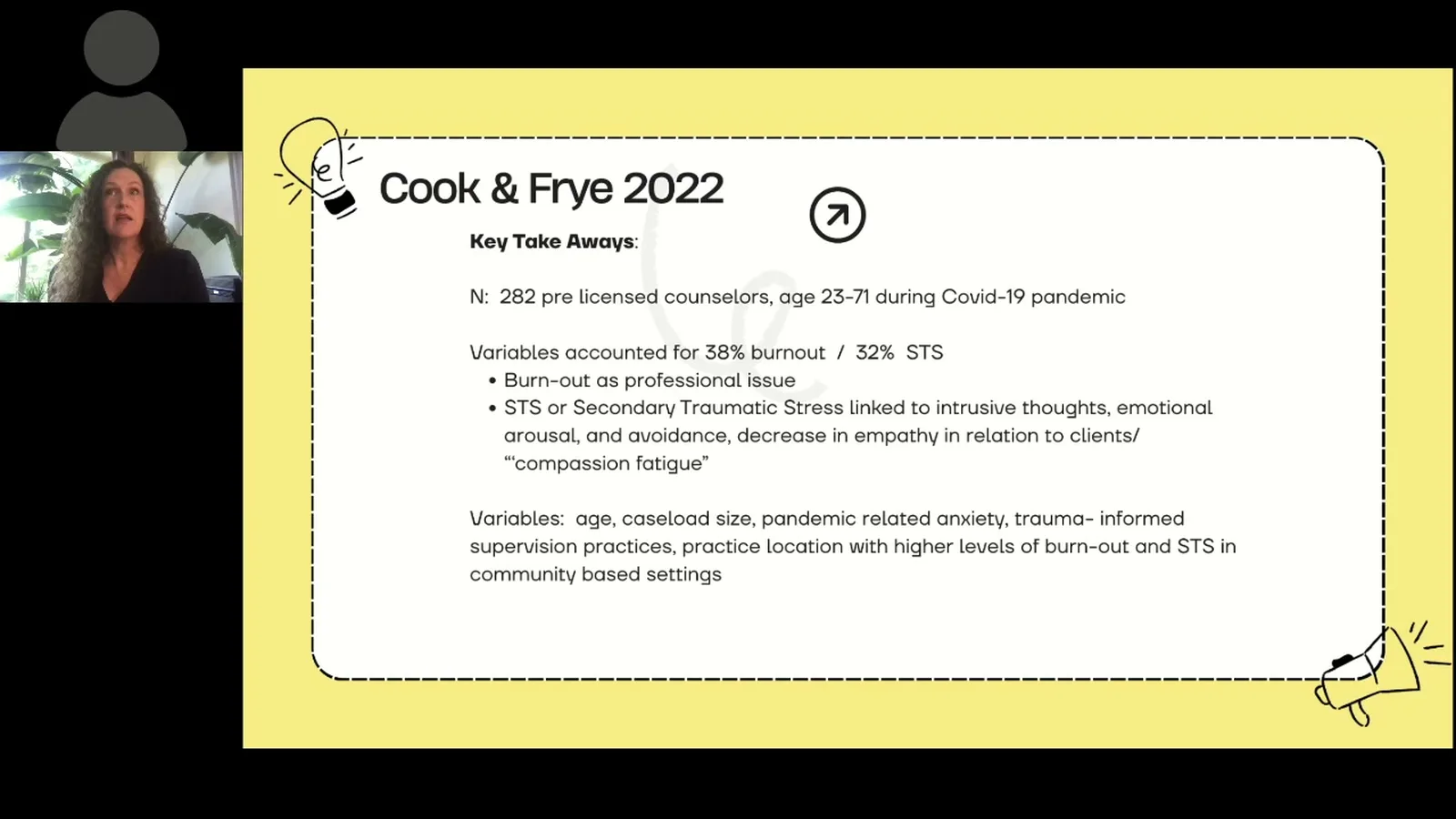
Gray defines burnout as a professional (not personal) issue that impairs a provider's ability to deliver care, citing a Cook and Fry (2022) study of 282…
- 1 Supervision CEU
So You Think You Can Lead, Ten Self Reflection Questions for Leaders in ABA
Sean YocumHickory Learning Group
Yocum argues ABA burnout stems from leaders prioritizing scaling and billable hours over culture; cites Novak & Dixon (2019) linking poor supervisor support…
- 1 Supervision CEU
Foundations of Reflective Supervision in Behavior Analysis
B. Kuereine GrayThe Behaviorist Bookclub
Citing a meta-analysis, the talk notes that supervision frequency was not linked to burnout, but the quality and perceived emotional and instrumental support…
- 1 Supervision CEU
Reflective Supervision and Client Outcomes
B. Kuereine GrayThe Behaviorist Bookclub
Named as a tertiary stakeholder benefit of reflective supervision: providers experience less burnout and stress and show more consistent performance with fewer…

On this page · 12 sections▾
Staff burnout is a state of deep work exhaustion that makes it hard for a clinician to give good care. In applied behavior analysis (ABA), it hits registered behavior technicians (RBTs) and BCBAs alike. BCBA stands for Board Certified Behavior Analyst, the credentialed supervisor role in the field. Burnout shows up as tiredness, less care for clients, more call-outs, and people quitting.
Burnout matters because ABA already has too few workers. Each person who burns out leaves a gap that clients feel. The experts below agree that burnout is real and costly. They do not fully agree on where it comes from. That difference shapes what a supervisor should do first.
Why crisis work speeds up burnout#
Dr. Shane Spiker works with learners who have severe problem behavior, like aggression or self-injury. He says crisis work is where burnout grows fastest. He points to a field that is already short on RBTs and behavior analysts. In that setting, he calls burnout the worst possible outcome for the people who stay.
direct care staff burn out more rapidly when they're working with learners that have severe problem behavior.
From the talk — Dr. Shane Spiker
Spiker credits this finding to work by Mills and Rose. He also notes that more writers took up the topic around 2022. His point is simple. If your team handles many crisis cases, you should expect more burnout. That means you should plan for it before it starts. He treats burnout checks as part of good crisis planning, not an extra.
He also warns about a "warrior culture" in crisis work. This is when staff treat injuries like a badge of honor. Spiker says glamorizing the fight makes the problem worse, not better. A team that brags about getting hurt may also hide how worn down it feels.
Burnout as an ethics problem#
Spiker goes a step further than most speakers. He says poor self-care is not just a personal risk. It is an ethics risk for the clients in the room. When staff are worn out, they rush through sessions. They may stop caring about the people they serve.
if we don't do good self care practices, it's an ethical dilemma... We also run the risk of potential abuse.
From the talk — Dr. Shane Spiker
He ties this to a 2021 article on warrior culture. That article compared warrior culture in crisis work to patterns seen in some police forces. The link is uncomfortable but important. Staff who feel under attack and exhausted may react with more force than a situation needs.
For supervisors, this changes the frame. Self-care is not a nice perk to offer when there is spare time. It protects clients from harm. A supervisor who ignores burnout is also ignoring a client safety risk. That is why Spiker wants burnout watched as a preventive practice, just like any other risk.
Where experts disagree: is burnout personal or professional?#
The speakers split on a basic question. Is burnout mostly about the job, or mostly about the person's life?
Mellanie Page leans toward the person. She supervises RBTs and has watched many near burnout. She says work adds stress, but it is often not the main cause.
when I'm supervising someone who's nearing burnout, it is not, it is 1000% not related to work all the time. And so work is a contributor, but it's not the main reason.
From the talk — Mellanie Page
Page says these staff often have stressful lives outside work, or habits that make stress harder to handle. Her fix is to treat the person as a whole person. That means helping with sleep, exercise, friends, and time off.
B. Kuereine Gray draws the line the other way. In her framework, burnout is defined by its effects on the job, not by where the stress started.
Burnout is defined as a professional issue. Burnout is not a personal issue.
From the talk — B. Kuereine Gray
Gray says burnout counts as professional because it hurts care, the company, and the client. She puts the personal, inward experience under a different label, secondary traumatic stress (see below). On the question of what causes burnout, Sean Yocum leans the same direction as Gray. He blames the system staff work in, not their home lives. So the split is real. Page points supervisors toward a staff member's life outside work, while Gray and Yocum point them toward the workplace itself.
Burnout versus secondary traumatic stress#
Gray's talk adds a useful second term. Secondary traumatic stress, or STS, is the strain of caring for people who are hurting. It was often called compassion fatigue during the COVID-19 pandemic. Gray calls STS the personal side, while burnout is the professional side.
She lists the signs of STS. They include intrusive thoughts, trouble managing emotions, and staying on high alert. They also include avoidance, like canceling sessions, and a drop in empathy. Some of these look a lot like burnout from the outside. Knowing the difference helps a supervisor pick the right support.
Gray then cites a 2022 study by Cook and Fry. It looked at 282 pre-licensed counselors still under clinical supervision. Gray compares them to BCBA candidates and brand-new BCBAs. Four factors stood out: caseload size, pandemic anxiety, access to trauma-informed supervision, and work location. Together they explained 38% of burnout and 22% of STS. Gray says the risk factors in ABA are very similar.
Why home and community settings raise the risk#
 Advertisement
One Cook and Fry finding stood out to Gray. Providers who worked in community settings, like homes, had higher burnout and STS. Gray says the pattern in the data was clear. Both burnout and secondary traumatic stress ran higher for providers working in community-based settings than for those in clinics.
Gray explains why. In a clinic, hospital, or classroom, other people are nearby. That support network acts as a buffer against stress. An RBT working alone in a family's home loses that buffer. There is no coworker down the hall after a hard session.
This matters a lot for ABA, where many sessions happen in homes. A supervisor with home-based staff cannot count on hallway support to catch problems. They need to build that support on purpose. That could mean more check-ins, peer contact, or quicker access to a BCBA after a tough day.
Supervision quality matters more than supervision hours#
Many companies try to fix burnout by adding more supervision time. Gray says the research points somewhere else. In her talk on the basics of reflective supervision, she describes a meta-analysis. A meta-analysis is a study that pools results from many other studies. That research found that the amount or frequency of supervision sessions was not related to burnout, well-being, or job satisfaction.
What did matter was the quality of the relationship. Gray says the key was how much emotional and instrumental support a provider felt. Instrumental support means practical help, like tools, training, and clear feedback. That perceived support is what buffered against emotional exhaustion and burnout.
Gray also names what good supervision sessions often include. These are an agenda, role play, corrective feedback, and case discussion. So the lesson is not "meet less." It is "make each meeting count." A short, warm, useful session may do more than a long, cold one.
In a separate talk, Gray links reflective supervision to lower burnout, less stress, fewer call-outs, and better treatment fidelity. Treatment fidelity means running the plan the way it was written.
Clear expectations and small wins#
Page offers some of the most practical tools in the set. One of her biggest points is about clarity. RBTs often work without a supervisor watching. If they do not know what "good" looks like, they assume they are failing.
lack of clarity can lead to feelings of failure and burnout.
From the talk — Mellanie Page
Page suggests a quick test. Ask your RBT what they think you expect from them. If they cannot answer clearly, you have not been clear enough. That gap is on the supervisor, not the RBT.
She pairs this with other steps. Check in often and ahead of time, not only when things go wrong. Ask open-ended questions. Streamline processes so staff are not guessing all day. Celebrate small wins, and make work fun enough that people want to be there.
Page also teaches staff to set low expectations on hard days. After a tough session, it is fine to go home and rest. There is no need to go home and keep working. She wants supervisors to model that, too.
Spotting early warning signs#
Page says good supervisors look for precursors. These are small changes that show up before full burnout. She gives the example of an RBT who seems more anxious. Or someone who comes to work a little less cheerful than usual.
When a supervisor sees those signs, Page says it may be time to suggest a break. Time off at key moments can help someone reset before they hit a wall. She also stresses empathy. Supervisors are not in the trenches every day. They can imagine how a session felt, but they did not feel it. So they should not brush off an RBT's stress.
Gray's list of STS signs fits well here. Canceled sessions, lower motivation, and less empathy are all things a supervisor can notice. Spiker's advice also applies. On a crisis-heavy team, check for these signs on purpose and often. Waiting for a staff member to speak up is usually too late.
When growth outpaces culture#
Sean Yocum talks to ABA leaders and owners. He asks whether they are leading people or just pushing numbers. When the focus is the next referral or the next billable hour, he says, staff pay the price.
Novak and Dixon in 2019, they identified that poor supervisor support and organizational focus on scaling over culture as the top predictors of RBT burnout and turnover.
From the talk — Sean Yocum
Yocum notes that chasing growth is an immediate reinforcer for leaders. In plain terms, the reward comes fast, so the habit sticks. The cost comes later and lands on staff. He describes talented, passionate therapists who are simply done. They still love ABA. The system around them is what wore them out.
He is blunt about it. Staff feel overwhelmed, under-supported, and like a cog in a machine. Yocum says that is not leadership. He calls it exploitation. His view lines up with Gray's. Burnout starts with how the organization is run.
How burnout reaches clients#
Every speaker ties burnout back to client care. Yocum says it plainly. When staff run on fumes, clients get scraps.
your best RBTs are burning out faster than like a light bulb.
From the talk — Sean Yocum
Gray lists what follows burnout across a field. There is more turnover and lower quality of care. Staff use fewer evidence-based practices. People just go through the motions instead of focusing on good work.
Spiker adds the safety angle. Tired staff in crisis settings may rush, stop caring, or even risk harm. Gray's reflective supervision talk shows the reverse, too. When providers have less burnout, they call out less and run plans with more fidelity. Clients get more steady, reliable care. Outside research on disability services found the same chain from staff to families (see below).
What the research says#
The published research mostly backs up what the speakers describe. It also adds a few details they did not cover.
Several studies look at care staff who support people with intellectual disabilities. One survey of residential staff, "Client characteristics, organizational variables and burnout in care staff," studied challenging behavior and emotional exhaustion. It found that fear of assault fully explained the link between them. A second study, "The relationship between challenging behaviour, burnout and cognitive variables," found the same pattern. Negative emotion, namely fear of assault, sat between challenging behavior and burnout. This fits Spiker's point about crisis work.
A community study of 80 support staff, "Stress, depression, workplace and social supports and burnout," found something similar. Low organizational support went along with burnout. Staff who were happy with their social support felt less emotional exhaustion under stress. This supports both Page's focus on life outside work and Gray's focus on support.
A large two-part study, "Linking Staff Burnout to Family Members' Satisfaction," surveyed over 1,300 workers and 1,400 family members. Staff burnout was linked to lower service quality and lower family satisfaction. Another study tested the Spanish Burnout Inventory and suggests that feelings of guilt be part of burnout support.
On supervision, Valentino, Fuhrman, and Beck built a tool to score supervisor behavior in an objective way. Their work notes that supervision quality affects service quality, client outcomes, staff satisfaction, and burnout (Valentino et al., 2024).
To go deeper on the supervision side, watch Reflective Supervision and Provider Outcomes in ABA.
FAQ#
What causes staff burnout in ABA? Common causes include heavy crisis caseloads and weak supervisor support. Unclear expectations and working alone in homes add to it. So does a company that values growth over culture. Some experts also point to stress in staff members' lives outside work.
Does more supervision prevent burnout? Not by itself. Research Gray describes found that the amount of supervision was not tied to burnout. The quality of the relationship mattered, and so did how supported staff felt.
What is the difference between burnout and compassion fatigue? Gray describes burnout as a professional issue that harms care. Compassion fatigue, or secondary traumatic stress, is more personal. It includes intrusive thoughts, emotional strain, avoidance, and lower empathy.
 Advertisement
Turn this topic into a CEU
You just studied this. Now get credit for it.
Watch Dunder Mifflin’s Guide to BCBA Supervision: Lessons from The Office with Mellanie Page and earn 1 free BCBA CEU. Detailed certificate, delivered the moment you finish.
Keep going with a free learning path
Supervision, Done Right
Four supervision CEUs that build on each other. What reflective supervision is, how to build a supervision system, how to assess supervisee competence instead of counting hours, and how supervision affects provider outcomes. The BACB asks supervisors for three supervision CEUs per cycle. This covers it.