Self-Monitoring in ABA: How Tracking Changes Behavior
What self-monitoring means in ABA, why watching your own behavior drives change, and how BCBAs use it to coach staff, kids, and health goals.
Key takeaway
Self-monitoring is when a person tracks their own behavior. They watch what they do and write it down. That small act can change how they act.
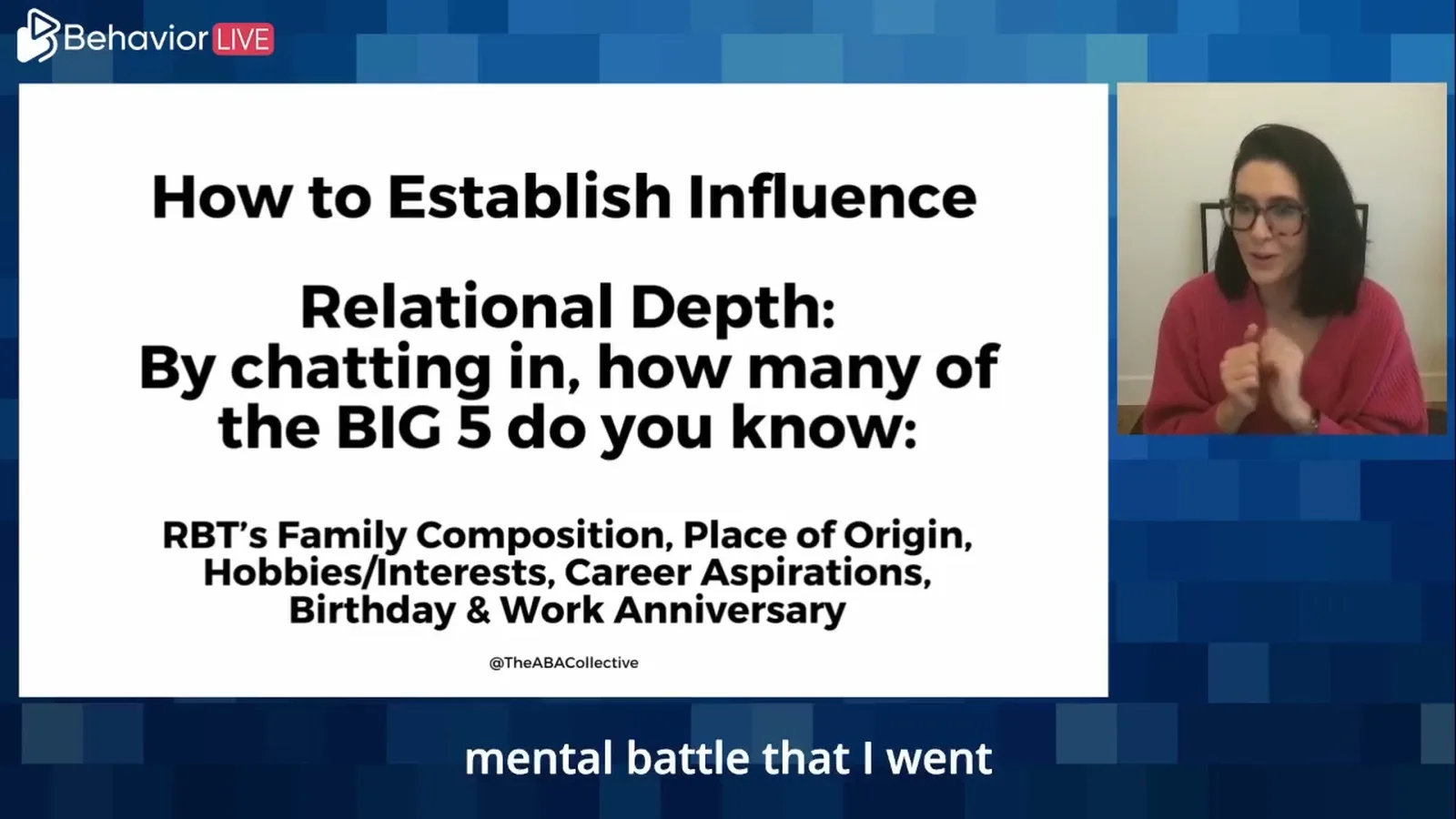
Dunder Mifflin’s Guide to BCBA Supervision: Lessons from The Office
Free learning path on this topic
Supervision, Done Right
Four supervision CEUs that build on each other. What reflective supervision is, how to build a supervision system, how to assess supervisee competence instead of counting hours, and how supervision affects provider outcomes. The BACB asks supervisors for three supervision CEUs per cycle. This covers it.
Experts who cover this
3 recordings on openceu cover self-monitoring aba.
- Featured talk1 Supervision CEU
Dunder Mifflin’s Guide to BCBA Supervision: Lessons from The Office
Mellanie PageThe Behaviorist Bookclub
Suggests recording an RBT implementing a treatment plan, outlining objective fidelity criteria in advance, then having the RBT watch and take IOA-style data on…
- 1 CEU
Child Development for BCBAs- Age 9-11
Kelly BrzakThe Behaviorist Bookclub
Kelly frames self-reflection as the psychologist's version of self-monitoring and recommends teaching 9-11 year olds to evaluate their own behavior, such as…
- 1 CEU
ABA Beyond Autism
Nicole ParksThe Behaviorist Bookclub
Discussed as a health-and-fitness tool (fitness apps, food journals, checklists) that helps clients see behavior patterns they'd otherwise miss, with the act…


On this page · 8 sections▾
Self-monitoring is when a person tracks their own behavior. They watch what they do and write it down. That small act can change how they act. People often behave better once they start paying attention to themselves.
This tool shows up all over ABA. RBTs use it to check their own work. Kids use it to notice their own choices. Adults use it to reach health goals. In this guide, three experts share how they put it to work.
What self-monitoring means in ABA#
Self-monitoring has two simple parts. First, the person notices a target behavior. Second, they record it in some way. That record can be a tally, a checkmark, or an app entry.
The act of tracking often changes the behavior on its own. This effect has a name. It is called reactivity, which means people act differently when they are being watched. With self-monitoring, the person watches themselves. So the change can happen without anyone else in the room.
This makes self-monitoring both a measure and a treatment. It gives you data about the behavior. It also nudges the behavior in the right way. Few tools do both jobs at once. That is why it shows up in so many kinds of ABA work.
Using it to coach RBTs#
Mellanie Page uses self-monitoring to grow staff skills. She starts by recording an RBT running a plan. Then she writes out the criteria she will grade before they watch.
you can record your RBTs implementing a treatment plan and then outline the objective criteria you're evaluating. From the talk — Mellanie Page
Next, the RBT watches the video and scores their own work. The supervisor scores it too. Then they compare notes side by side.
She even has staff take IOA data as they watch. IOA means two observers score the same session and check if they agree. This lets the RBT spot their own gaps.
You can ask them to take IOA data as they watch with you so they can pinpoint areas of consistency with expectation and then areas where they need to make improvements. From the talk — Mellanie Page
The RBT sees the gap for themselves. That is stronger than being told about it.
Teaching kids to watch their own behavior#
Kelly Brzak brings self-monitoring down to the child's level. She frames it as self-reflection for older kids. She wants 9 to 11 year olds to judge their own actions.
Self-reflection is the psychologist's version of self-monitoring. And we all know that self-monitoring can lead to behavior change. From the talk — Kelly Brzak
She gives the child simple questions to answer. Did I follow instructions? How long did it take me to follow them? These questions hand the child their own tools. This age-based approach is covered in Child Development for BCBAs- Age 9-11.
Self-monitoring for health and fitness#
 Advertisement
Nicole Parks uses the same idea with adult health goals. She calls it one of the best ways to build lasting habits. Simple tools make it work.
self monitoring, which is one of the most effective ways to promote adherence to health and fitness behaviors. Tools like fitness apps, food journals, or even simple checklists help clients stay aware of their actions and the effects they have on their goals. From the talk — Nicole Parks
Tracking helps clients see patterns they would miss. For example, skipping a meal can lead to overeating later. The record makes that link clear.
She also points out that the tracking itself acts as a reward. People keep up behaviors they are actively watching. You can hear more of this in ABA Beyond Autism.
Why tracking changes behavior#
The power of self-monitoring is that it is cheap and fast. You do not need fancy tools. A hand counter or a phone note can work.
The catch is that some effects fade when the watching stops. Studies show behavior can drift back when no observer is present. So clinicians often pair self-monitoring with feedback or goals. That combination helps the new behavior last.
Self-monitoring also builds a skill worth keeping. The person learns to check their own actions. Over time, they need less help from an outside coach. That independence is a big win for staff, kids, and clients.
How to start self-monitoring#
Begin with one clear target. Pick a behavior you can define in plain words. A fuzzy target makes tracking hard and messy.
Next, choose a simple way to record it. A tally sheet, a clicker, or a phone note all work. The tool should fit the person and the setting.
Then set a clear goal to aim for. A goal gives the tracking a point. Without it, the numbers can feel flat.
Last, review the data together on a regular basis. Look at what went well and what slipped. Praise honest tracking, even when the numbers are low. Honest data is what makes the whole tool work.
What the research says#
Research backs up self-monitoring as a simple, low-cost tool. In one study, teachers tracked their own praise with a hand counter. Their rate of behavior-specific praise went up. The gains even carried into new times of the school day (Justus, Hott, & Heiniger, 2023).
One study looked at what happens when the observer leaves. Staff performance rose mostly when they knew they were being watched. This shows that reactivity to an observer is real and worth planning for (Fuesy, Miltenberger, & Howell, 2025).
Self-monitoring also helps clients build social skills. In one study, teens with autism improved their conversation skills. They used self-monitoring along with a short video model each day (Ayvazo, Shmuel, & Bin-Nun, 2024). Technology-based self-monitoring has also raised positive staff interactions in group homes. Some staff there needed added text feedback to reach the goal (Ruby & DiGennaro Reed, 2021).
FAQ#
What is self-monitoring in ABA?
Self-monitoring is a procedure where a person tracks their own behavior. They notice a target action and record it. The tracking often changes the behavior on its own. It is used with staff, kids, and adults alike.
Does self-monitoring really change behavior?
Yes, and the effect has a name. It is called reactivity, which means people act differently when watched. When you watch yourself, that same change can happen. The effect is stronger when paired with clear goals or feedback.
How do you teach a child to self-monitor?
Start with one clear, simple behavior. Give the child an easy way to score it, like a checklist. Ask short questions such as "Did I follow the instruction?" Praise honest tracking so the habit sticks.
 Advertisement
Turn this topic into a CEU
You just studied this. Now get credit for it.
Watch Dunder Mifflin’s Guide to BCBA Supervision: Lessons from The Office with Mellanie Page and earn 1 free BCBA CEU. Detailed certificate, delivered the moment you finish.
Keep going with a free learning path
Supervision, Done Right
Four supervision CEUs that build on each other. What reflective supervision is, how to build a supervision system, how to assess supervisee competence instead of counting hours, and how supervision affects provider outcomes. The BACB asks supervisors for three supervision CEUs per cycle. This covers it.