BST for RBT Training: Instruction, Modeling, Rehearsal, Feedback
Run Behavior Skills Training with an RBT on a real BSP, step by step, from a BCBA-led CEU.
Key takeaway
BST, or Behavior Skills Training (the four-step staff training procedure), is the way a BCBA, or Board Certified Behavior Analyst (the supervisor on the case), teaches an RBT, or Registered Behavior Technician (the staff running sessions), to actually run a plan.
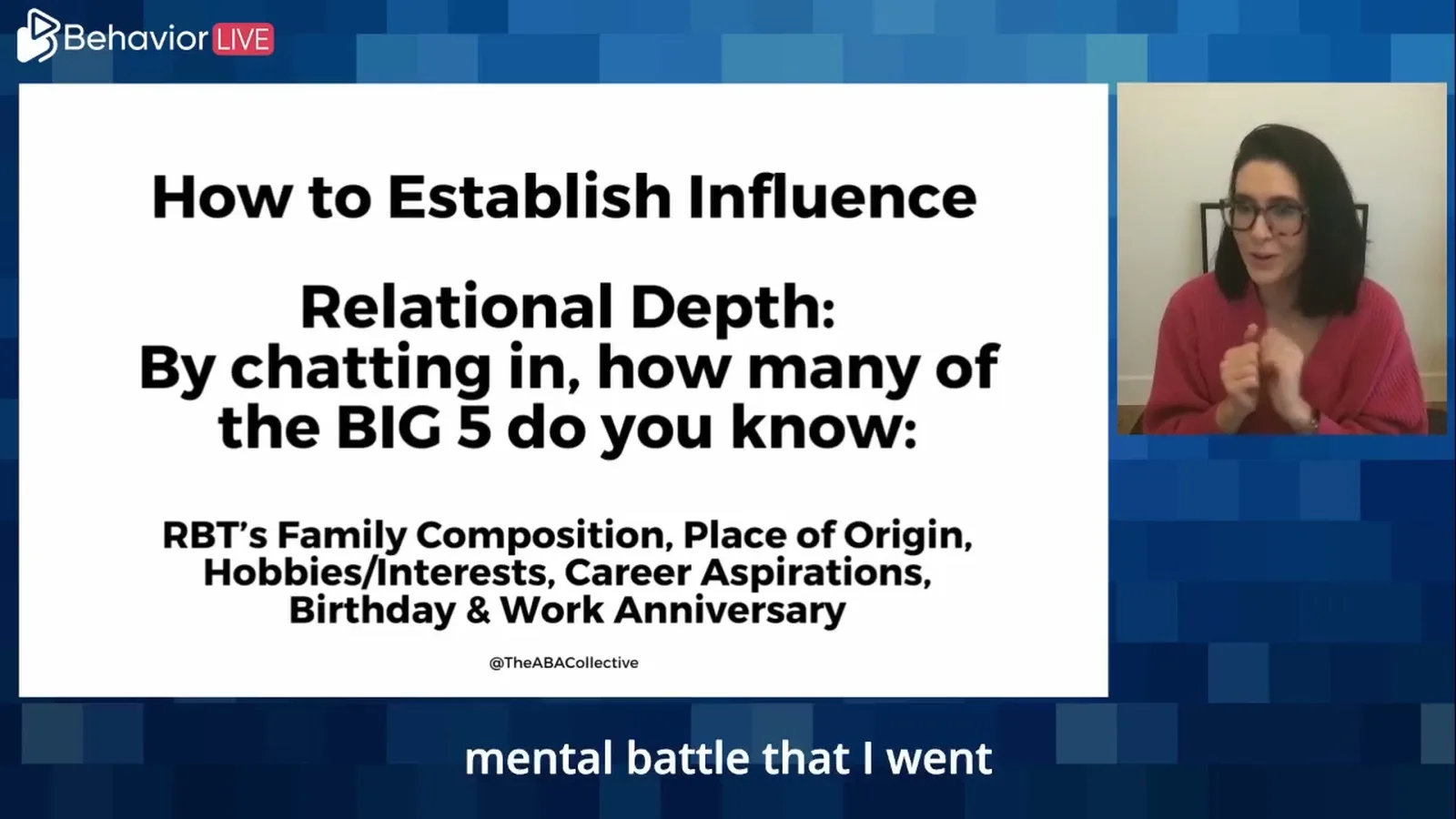
Dunder Mifflin’s Guide to BCBA Supervision: Lessons from The Office
Free learning path on this topic
Supervision, Done Right
Four supervision CEUs that build on each other. What reflective supervision is, how to build a supervision system, how to assess supervisee competence instead of counting hours, and how supervision affects provider outcomes. The BACB asks supervisors for three supervision CEUs per cycle. This covers it.
On this page · 9 sections▾
BST, or Behavior Skills Training (the four-step staff training procedure), is the way a BCBA, or Board Certified Behavior Analyst (the supervisor on the case), teaches an RBT, or Registered Behavior Technician (the staff running sessions), to actually run a plan. The four steps are instruct, model, rehearse, and give feedback. The sharpest version we have seen pulls in two extras Mellanie Page covers in her supervision CEU: rehearsing on the real BSP, or Behavior Support Plan (the written protocol for one client), and a video self-eval where the RBT scores their own session against your rubric using IOA, or Inter-Observer Agreement (two scorers agreeing trial by trial).
BST in one sentence, then four steps#
BST is instruct, model, rehearse, feedback. That is it. You tell the RBT what to do and why. You show them. You have them do it. You give them feedback that points at a behavior they can change tomorrow.
Most supervisors do step one and step four. They send the BSP as a PDF, then critique what they see in session. That skips the two steps that make new skills stick: watching it done correctly, and doing it under conditions where mistakes are cheap.
The elements of BST, behavior skills training, are instruction, modeling, rehearsal, and feedback. And so in this particular example, you would start by instructing on the elements of the BSP. From the talk — Mellanie Page
The page below walks each step on a real BSP, with the on-the-ground twists Mellanie uses when an RBT keeps missing the same target.
Step 1: Instruction (what the BSP says and why)#
Open the actual BSP for the client this RBT will work with. Not a generic one. Not last quarter's. The current one, with the current targets.
Walk through it in this order:
- The target behavior, in plain words, with one example and one non-example.
- The antecedent strategies. What goes up before sessions to make the behavior less likely.
- The reinforcement plan. What the client earns, on what schedule, for what response.
- The reactive strategies. What the RBT does when the behavior happens.
- The data sheet. Where the RBT marks each trial or each occurrence.
Ask the RBT to read each section back to you in their own words. If they cannot, you have not instructed yet. You have handed them a PDF.
The "why" matters here. If the BSP says "block elopement at the door," the RBT also needs to know the function the team is targeting (escape, attention, access, sensory). When they know the why, they make smart calls in the moments the BSP does not name.
Step 2: Modeling with the client or in role play#
Modeling is where most supervisors quietly drop out. They assume the RBT can copy what they read. They cannot. Reading a reinforcement schedule is not the same as running one.
You have two ways to model.
Live with the client. You run the protocol while the RBT watches with the data sheet in hand. They mark trials as you go. After the session, you compare what they marked to what you marked.
Role play. You play the client, the RBT runs the protocol. Or another tech plays the client. This is the right call when the target behavior is dangerous, when the client is escalated, or when you need to practice a reactive strategy you cannot ethically wait for.
An RBT is new to implementing a specific behavior support plan, move into modeling that implementation, either during a client behavior or through role play. From the talk — Mellanie Page
Role play feels awkward. Do it anyway. The first time an RBT delivers a reinforcer should not be on a real kid.
Step 3: Rehearsal with behavior-specific feedback#
Now the RBT runs the protocol. You watch. You hold the same data sheet they hold. You score the same trials.
Set the rehearsal up so they get reps before they get a real client. Three to five short trials, with a reset between each. If they nail one trial, that is one data point, not mastery. Most BCBAs we see sign off after one good run. That is not enough.
Between trials, point at one specific behavior. Not "be more engaged." Not "watch your tone." Say: "On that last trial, you waited two seconds after the SD before prompting. The BSP says four. Run the next one and count to four in your head."
That is behavior-specific feedback. It names the behavior, the gap, and the fix. The RBT can act on it on the next trial.
Step 4: Feedback the RBT can actually act on tomorrow#
After rehearsal ends, sit down. Pick two or three behaviors. Not ten. Two or three.
For each one, say:
- What you saw, in observable terms.
- What the BSP expected.
- What to do differently next time, in one sentence.
Then ask the RBT to repeat back what they will change. If they cannot say it back, you have not given feedback. You have given a lecture.
End with one thing they did well. Make it specific. Not "good job today." Try "you ran the four-second wait on every trial after the third one." That is a behavior they can keep doing because they know what it was.
The video self-eval add-on for "can't" vs "won't"#
Sometimes you run all four BST steps and the RBT still misses the same target in real sessions. That is when you separate "can't" from "won't."
"Can't" means they do not see what you see. "Won't" means they see it and do it anyway. The two need different responses, and you cannot tell them apart from your seat.
The fix is a video self-eval. Record one of the RBT's sessions. Write down the objective criteria you are evaluating, in numbers if you can. Then have them watch the recording with the criteria in front of them.
Self-evaluation. So sometimes those RBTs that may not be, quote unquote, listening to you or incorporating your feedback, they may have blind spots. You can record your RBTs implementing a treatment plan and then outline the objective criteria. From the talk — Mellanie Page
If they watch the tape and say "oh, I had no idea I was doing that," you have a "can't." Run more modeling and rehearsal. They needed to see it. If they watch the tape and say "yeah I know, I was tired," you have a "won't." That is a different conversation about expectations and follow-through.
Using IOA between you and the RBT to surface blind spots#
Here is the move that pulls the video self-eval all the way through. While the RBT watches their own session, you watch too. You both score it against the rubric at the same time. Then you compare scores trial by trial. That is IOA, or Inter-Observer Agreement (two scorers checking each other), applied to the RBT scoring themselves.
The math is simple. Count agreements. Count disagreements. Divide agreements by the total. If you are at 90% or higher, the RBT sees what you see, and the gap is performance, not perception. If you are at 60%, you have a perception gap, and more rehearsal is the next move.
The trick is the rubric has to be specific enough to score. "Engagement" cannot be scored. "Made eye contact within two seconds of saying the client's name" can. Spend the time to write criteria you and the RBT can both code from a tape.
Frequently asked questions#
How many rehearsal trials are enough before I sign off?
There is no fixed number, but three correct trials in a row at the criterion the BSP names is a reasonable floor. If the protocol calls for a four-second wait, the RBT runs the wait correctly three times in a row, in the same session, without you cuing them between trials. One good run is not mastery. It is a single data point.
For tricky reactive strategies, push for five in a row before you sign off. If the wrong move could hurt the client or the RBT, your bar is higher.
Can BST be done remotely if I supervise across telehealth?
Yes. Instruction works the same on video. Modeling works if you can share screen and play a recorded session, or if you can run a live role play with another tech on the call. Rehearsal works if the RBT runs the session while you watch over a camera placed on a tripod or laptop in the room.
Feedback is the part that gets harder. Pauses feel longer on video. Build in more reset time between trials, and ask the RBT to read back what they will change after every block of three. That keeps them anchored even when the camera angle is bad.
What if the RBT is good in role play but falls apart with the actual client?
That gap is real and common. Role play does not have a tantrum, a parent in the doorway, or a tech who slept four hours. When you see this, do two things.
First, run rehearsal with the real client present, with you in the room as a coach. Not silent. Whisper the next step in their ear if you have to. Fade your prompts across sessions.
Second, look at the antecedent strategies in the BSP. If the RBT can run the protocol cold but cannot run it when the client is already escalated, the team probably has an antecedent gap, not a training gap. That is a BCBA problem, not an RBT problem.
What to do this week#
Pick one RBT and one BSP. Block 45 minutes. Run all four BST steps on one target. Record one session this week, score it with the RBT, and calculate IOA. If you are under 90%, you found the gap you have been missing.
If you want to watch Mellanie walk through the supervision frame this came from, the full talk is up top. Worth an hour.
Turn this topic into a CEU
You just studied this. Now get credit for it.
Watch Dunder Mifflin’s Guide to BCBA Supervision: Lessons from The Office with Mellanie Page and earn 1 free BCBA CEU. Detailed certificate, delivered the moment you finish.
Keep going with a free learning path
Supervision, Done Right
Four supervision CEUs that build on each other. What reflective supervision is, how to build a supervision system, how to assess supervisee competence instead of counting hours, and how supervision affects provider outcomes. The BACB asks supervisors for three supervision CEUs per cycle. This covers it.