Dunder Mifflin’s Guide to BCBA Supervision: Lessons from The Office
Presented by Mellanie Page
This interactive CEU brings supervision to life through the lens of The Office, leveraging satirical workplace scenarios to examine evidence-based practices for supervising RBTs and behavior analytic staff. Participants explore how to build trust, nurture professional development, reduce burnout, and provide clear, effective feedback through humor, guided reflection, and practical examples. Topics include behavior-specific feedback, bias management, performance tracking, self-evaluation, and conflict resolution. Attendees leave with actionable tools to improve supervisory practices that are grounded in the ethics and science of Applied Behavior Analysis.
Register free & watch nowCancel any time. Cert delivered to your inbox the moment you pass the quiz.
About this CEU
This interactive CEU brings supervision to life through the lens of The Office, leveraging satirical workplace scenarios to examine evidence-based practices for supervising RBTs and behavior analytic staff. Participants explore how to build trust, nurture professional development, reduce burnout, and provide clear, effective feedback through humor, guided reflection, and practical examples. Topics include behavior-specific feedback, bias management, performance tracking, self-evaluation, and conflict resolution. Attendees leave with actionable tools to improve supervisory practices that are grounded in the ethics and science of Applied Behavior Analysis.
What you'll learn
- 1Learning Objectives
- 2By the end of this CEU, participants will be able to:
- 3Identify supervision best practices through analysis of fictional workplace behavior and contrast them with behavior-analytic standards.
- 4Apply behavior-specific feedback strategies such as Behavior Skills Training (BST), modeling, and reinforcement to improve supervisee performance.
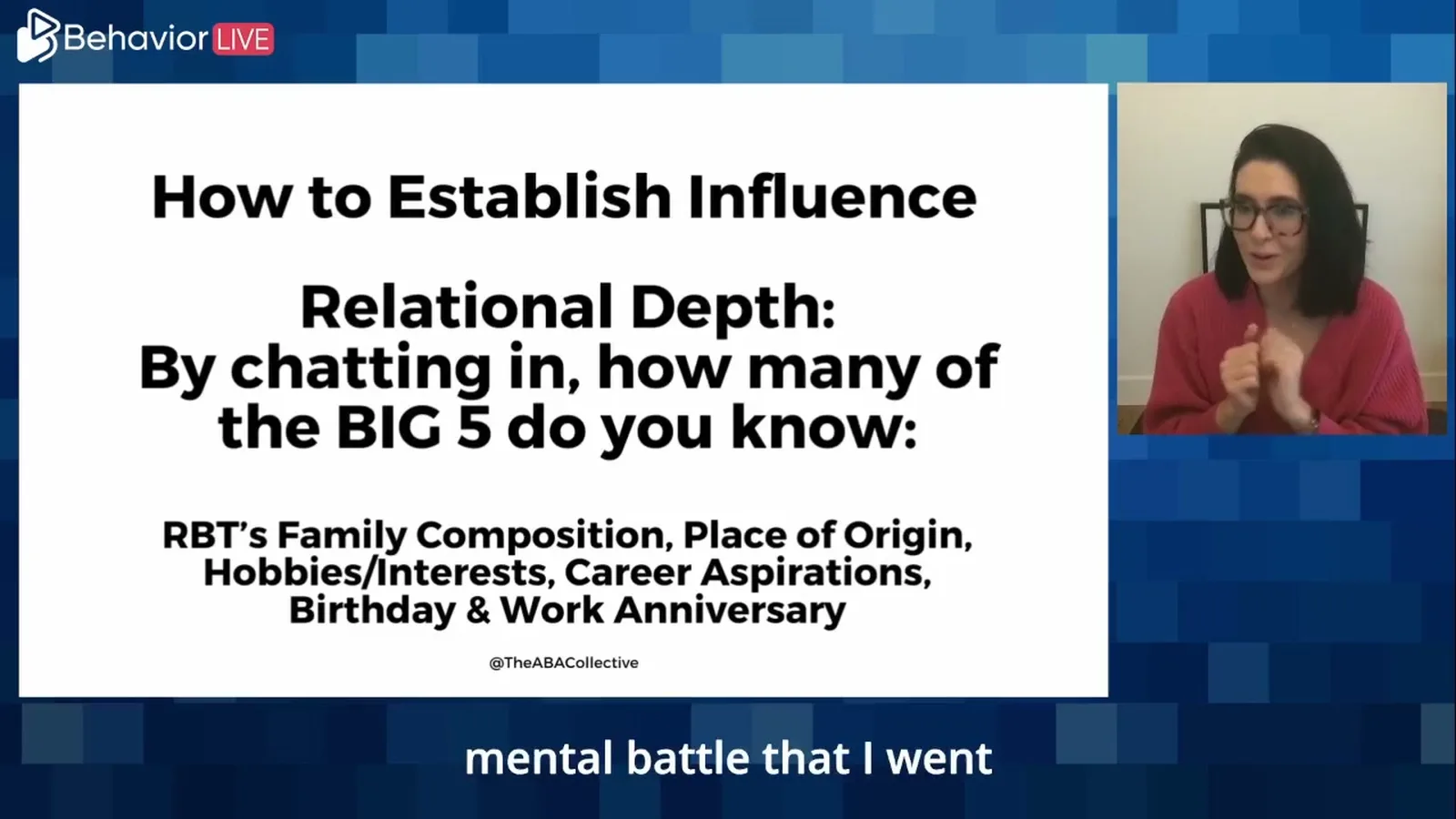
- 5Develop supportive and personalized supervisory relationships by learning the “Big Five” of relational depth and creating reinforcement systems that prioritize staff well-being.
- 6Implement objective performance metrics and continuous feedback systems to improve staff accountability, treatment fidelity, and clinical quality.
- 7Recognize and address early signs of staff burnout, and apply practical strategies to support team resilience and satisfaction.
- 8Create an environment of psychological safety and reciprocal feedback, using tools such as anonymous surveys, open-ended prompts, and non-defensive communication strategies.
- 9Apply conflict resolution styles strategically by understanding and adapting one’s own conflict response using tools like the Thomas-Kilmann Conflict Mode Instrument (TKI).
Concepts in this CEU
More from The Behaviorist Bookclub
Foundations of Reflective Supervision in Behavior Analysis
The Behaviorist Bookclub
Teaching WH-Questions Isn’t Enough: Building True Conditional Discrimination
The Behaviorist Bookclub
Reframing Behavior through an ADHD Lens
The Behaviorist Bookclub
OpenCEU is supported by advertising from third-party sponsors. Sponsors are clearly labeled, have no influence over course content, instructors, or CEU decisions, and never appear on certificates. The BACB does not sponsor, approve, or endorse OpenCEU sponsors or their products.