Preventing RBT Burnout: What BCBAs Can Actually Do
Spot early RBT burnout, cut response effort, and stop being the sole support system, from a BCBA-led CEU.
Key takeaway
The early signs of RBT burnout look a lot like the Stanley scene from The Office, where the team turns the room into an "intensive care unit" because Stanley feels like he is going to die at his desk, and the supervisor who only spots it after the meltdown is usually the same supervisor who became that RBT's sole source of help.
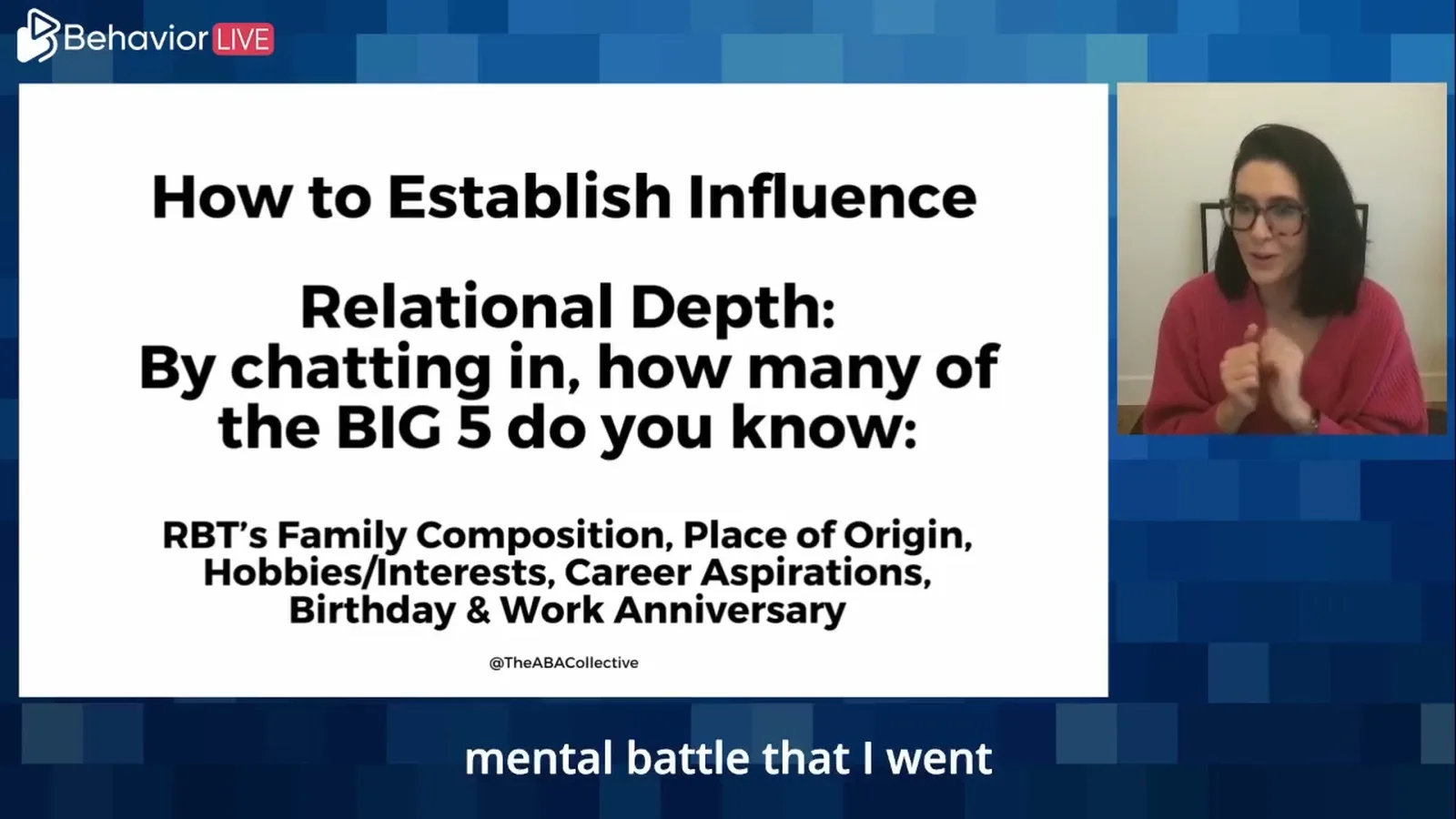
Dunder Mifflin’s Guide to BCBA Supervision: Lessons from The Office
Free learning path on this topic
Supervision, Done Right
Four supervision CEUs that build on each other. What reflective supervision is, how to build a supervision system, how to assess supervisee competence instead of counting hours, and how supervision affects provider outcomes. The BACB asks supervisors for three supervision CEUs per cycle. This covers it.
On this page · 8 sections▾
The early signs of RBT burnout look a lot like the Stanley scene from The Office, where the team turns the room into an "intensive care unit" because Stanley feels like he is going to die at his desk, and the supervisor who only spots it after the meltdown is usually the same supervisor who became that RBT's sole source of help. RBTs, which stands for Registered Behavior Technicians, are the people running your plans hour by hour. When a BCBA (Board Certified Behavior Analyst, the clinician who designs and supervises the plan) is the only adult that RBT can lean on, the relationship feels close. It also breaks them faster.
This page is about catching the slide before the meltdown, and choosing supervision moves that prevent burnout instead of just reacting to it. The talk this is built from leans on The Office for laughs, but the clinical points underneath are sharp.
The Stanley test: spotting precursor signs before someone breaks#
Stanley does not become "the guy yelling in the kitchen" overnight. He gets quiet first. He gets short on the phone. He stops laughing at things he used to laugh at. The whole point of the ICU scene is that the office only reacted once the doctor told him he might die.
You do not have to wait that long. Burnout has precursor signs you can name and track:
- Less small talk. The RBT who used to chat after session goes straight to the car.
- Lower energy in pairing. The play feels flat. The voice goes flat.
- Late notes. PTO requests that feel sudden. Cancelled sessions that pile up.
- "I'm fine" said too fast.
These are not character flaws. They are data. Note them the way you would note a client's precursor behaviors, because that is what they are. If you can name two of these in a single week, the right move is a real check-in, not a reminder about session-note quality.
A useful habit: at the end of every supervision visit, jot a one-line read on the RBT's energy in your notes. Not their performance, just how they showed up. A green-yellow-red flag works. Three weeks of yellow with no red is the slide. That is your cue to act, not to wait for a flameout.
Why being the 'only' supportive supervisor backfires#
There is a version of supervision that feels great in the moment and ends badly. The RBT comes to you for every problem. You solve every problem. You feel needed. They feel safe. And then they quit, because the only person they can talk to at work is the person grading them.
Mellanie names this directly: being the sole solution is not the win it looks like.
if we're the sole solution for our RBTs, we may be reinforced by that relationship, but it's probably not the healthiest long term. So really trying to socialize your team with each other is a huge help. From the talk — Mellanie Page
The clinical move here is to widen the support network on purpose. That looks like:
- Pairing newer RBTs with a peer "buddy" for the first 60 days, not just with you.
- A team chat where people post wins and vent about the day without the supervisor reading it like a chart.
- Monthly low-stakes social time. Axe throwing, dinner, walk-and-talks. Anything that builds peer relationships so you are not the only adult they trust.
You are still the clinical lead. You are no longer the only valve.
One tell that you have slipped into sole-solution mode: an RBT only opens up to you, and your one-on-ones run long because they are using the time to vent about everything that is not the case. That is not a bad RBT. That is a missing peer network. Build the peer side first, then the one-on-one can go back to clinical work.
Lowering response effort on the daily tasks RBTs hate#
This is behavioral framing for a problem most leaders try to solve with motivation talks. If a task takes more effort than the reinforcement it produces, the behavior drops. Notes get late. Data gets messy. Sessions run loose. That is not a values problem. That is response effort.
Lower the response effort for the things that they have to do. If you can, right. Make some fun out of the day. From the talk — Mellanie Page
Look at the daily list and cut friction where you can:
- Notes. Use a short template with prompts, not a blank box. Pre-fill what does not change.
- Data. Make sure the sheet matches what they actually run. Programs that are not being run should not be on the sheet.
- Communication. One channel for clinical questions, not five. If you are texting, Slacking, emailing, and using a Monday board, pick one and kill the rest for them.
- Setup and clean-up. Boxed materials by program, labeled. They should not be hunting for the picture cards every morning.
Every small cut adds up to an RBT who finishes the day with gas left in the tank.
A quick audit you can run this week: ask three RBTs to list the two daily tasks they hate most. If the same task shows up twice, fix it. You are not making the job soft. You are making sure the effort they spend goes to the kid, not the paperwork.
Reinforcing independent problem-solving (so you're not the bottleneck)#
The trap above (being the sole solution) has a fix at the behavior level, not just the social level. You can shape independence the same way you shape any other skill. Reinforce it when it happens.
When an RBT says, "I had a tough run with bolting, so I moved the work area closer to the door and re-paired for ten minutes," that is the moment. Praise the decision, not just the outcome. Out loud. In writing. In your one-on-one notes. Over time, the RBT learns that solving on their own gets noticed and that they are trusted to call the shot.
if I constantly feel helpless, I'm always going to end up burnt out. That's just a fundamental truth. From the talk — Mellanie Page
Helplessness is a slow path to burnout. If every problem has to go through you, the RBT learns that their own judgment does not count. That builds a brittle technician and a tired supervisor. Build the opposite.
The non-work contributors most BCBAs miss#
Here is the reframe a lot of supervisors flinch at. When an RBT is sliding into burnout, work is rarely the whole story.
when I'm supervising someone who's nearing burnout, it is not, it is 1000% not related to work all the time... work is a contributor, but it's not the main reason. From the talk — Mellanie Page
Sleep, money stress, a sick parent, a long commute, a roommate situation, a second job. None of that shows up on a fidelity check. All of it shows up in the sessions.
You are not a therapist. You should not try to be. But you can do three things that change the picture:
- Ask one open question that is not about the client. "What did your weekend actually look like?" beats "How are you?" every time.
- Be flexible where you can. A schedule swap. A short day. Approving PTO without a face. These are cheap moves with big returns.
- Normalize protecting non-work hours. If you email at 9 PM and they reply at 9:04, you are training a habit that ends in resignation. Send it as a draft. Schedule send it. Or just wait until 8 AM.
The clinical decision here is to stop treating burnout as a caseload problem only. Sometimes the right move is fewer sessions. Sometimes the right move is asking a question that opens a door, then actually listening.
A weekly check-in script that gets past 'I'm fine'#
"How are you?" gets you "fine" every time. Mellanie's trick is to put a number on the ask, because the brain wants to fulfill an inventory. Try this set, one per week or rotated:
- "Tell me two things this week that drained you and one thing that filled you up."
- "Name two parts of your sessions that felt clear and one part where you wanted backup."
- "What is one thing I could start, and one thing I could stop, that would make this week easier?"
Two ground rules make these questions actually work:
- Hold your explanations. If they say you are slow to respond on the team chat, do not explain why. Just say thank you and fix it next week. Explanations land as excuses and shut down future honesty.
- Write the answers down. Even one line per RBT in a notebook or a shared doc. The fact that you remembered last week's "filled me up" answer this week is a bigger reinforcer than any gift card.
A weekly five-minute check-in with these questions, run for a quarter, will tell you who is sliding before they say a word about it.
Frequently asked questions#
How do I bring up burnout with an RBT without making it weird?
Name behavior, not character. "I noticed you have been quieter in team and your last two notes went in the morning after. Anything going on I should know about?" beats "I think you are burning out." Behavior-first feedback works the same in clinical supervision as it does on a session program. You are observing and inviting a conversation, not diagnosing them.
Is burnout a clinical reason to reduce a client's hours?
Not on its own, because hours are a clinical decision based on the client. But staff stability is a quality-of-care issue. If you are losing your third RBT on a case in six months, that pattern is clinical data. It is worth raising with the BCBA-D or clinical director, and worth thinking about whether the case mix on that RBT's day is sustainable.
What's the difference between RBT burnout and compassion fatigue?
Burnout is broad. It comes from chronic mismatch between effort and reinforcement, often across the whole job and life. Compassion fatigue is narrower. It is the emotional cost of caring for clients with high suffering, especially over time. An RBT can have one, the other, or both. The supervision response overlaps (lower response effort, build peer support, protect non-work hours), but compassion fatigue often needs more direct conversation about the specific cases that are weighing on them, plus a referral path to actual mental health support.
Keep going#
If you want the full version with the Office clips and the live chat exchanges, watch the recording.
Then pick one move from this page and try it for two weeks. The check-in script is the best place to start.
Turn this topic into a CEU
You just studied this. Now get credit for it.
Watch Dunder Mifflin’s Guide to BCBA Supervision: Lessons from The Office with Mellanie Page and earn 1 free BCBA CEU. Detailed certificate, delivered the moment you finish.
Keep going with a free learning path
Supervision, Done Right
Four supervision CEUs that build on each other. What reflective supervision is, how to build a supervision system, how to assess supervisee competence instead of counting hours, and how supervision affects provider outcomes. The BACB asks supervisors for three supervision CEUs per cycle. This covers it.