Redefining the Boundaries of Efficiency during a Functional Analysis of Problem Behavior - Applied 2022
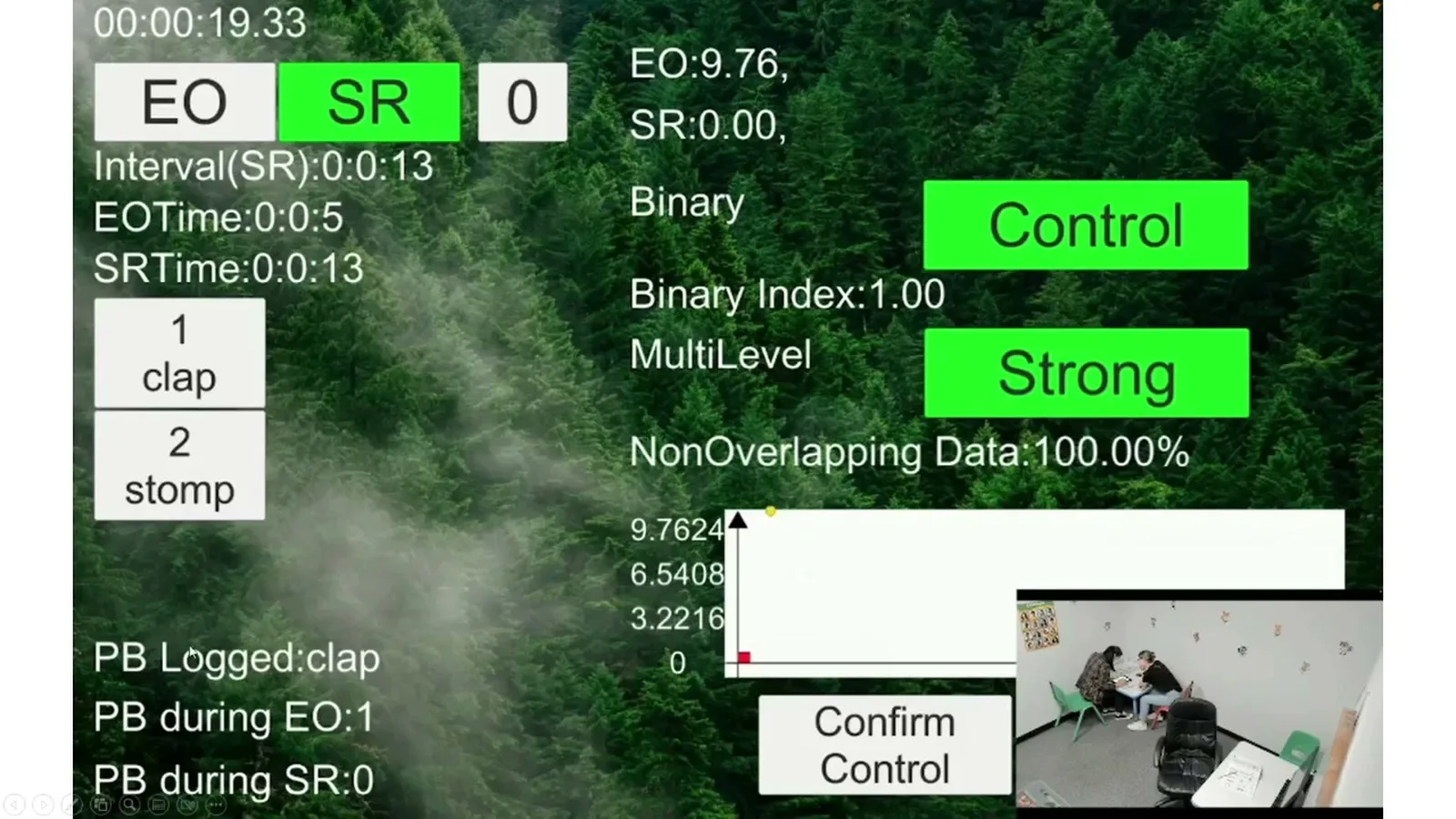
Abstract This session bridges “today’s ABA” values with practical, low-risk methods for assessing and treating severe problem behavior. The presenter reframes functional assessment choices through compassion, safety, and efficiency: listening first, creating joyful, client-led contexts, and empowering learners to guide pace and teaching. After contrasting indirect/descriptive assessments with functional analysis, the talk motivates why clinicians underuse FAs (time, safety, feasibility) and shows how to close that gap with the Practical Functional Assessment (PFA) workflow: open-ended interview → brief, unstructured observation → an interview-informed synthesized contingency analysis (ISCA). Variations—including an open contingency class, Single-Session ISCA (within-session EO/reinforcer toggles), and Performance-Based ISCA (five EO presentations with calm-based reinforcement)—demonstrate strong control in minutes while minimizing dangerous topographies. Attendees see criteria for rating “level of control,” the idea of the interpretive leap, and real-time data tools (paper template and an analysis app) that render within-session graphs and automated interpretations. The result is an ethically aligned, rapid pathway from function discovery to treatment that prioritizes dignity, assent, and faster access to skill-building over prolonged exposure to evoked problem behavior.
Cancel any time. Cert delivered to your inbox the moment you pass the quiz.
What you'll learn
- 1Learning Objectives
- 2• Differentiate indirect/descriptive assessments from functional analysis and justify when an FA is ethically indicated to reduce uncertainty and guide treatment.
- 3• Implement the PFA workflow (interview → observation → ISCA) and describe why an open contingency class and values-aligned conditions reduce risk and escalation.
- 4• Conduct a Single-Session ISCA by alternating EO/reinforcer intervals within one session and interpret within-session differentiation to establish functional control.
- 5• Conduct a Performance-Based ISCA by arranging ~five EO presentations with calm-contingent reinforcement, tracking dangerous vs. precursor topographies, and terminating safely.
- 6• Use an explicit “level of control” rubric (none/weak/moderate/strong) to decide whether to proceed to treatment or adjust assessment conditions.
- 7• Apply real-time data supports (paper template or app) to capture within-session responding, automate interpretation, and accelerate transition to values-consistent, assent-honoring treatment.