Response Effort in ABA: Why Easy Behaviors Win
Response effort is how much work a behavior takes. See how BCBAs raise or lower effort to teach skills and reduce problem behavior.
Key takeaway
Response effort is how much work a behavior takes to do. It covers the distance a person moves, the force they use, and the number of steps in the response.
Shaping Behavior Change when ADHD is in the Picture
Experts who cover this
4 recordings on openceu cover response effort.
- Featured talk1 CEU
Shaping Behavior Change when ADHD is in the Picture
Nicole StewartThe Behaviorist Bookclub
A recurring analytic lens throughout the talk: behaviors were reframed in terms of whether the response effort required exceeds what an ADHD brain can…
- 1 CEU
Reframing Behavior through an ADHD Lens
Nicole StewartThe Behaviorist Bookclub
Framed as a key variable for ADHD clients: attending to repetitive, non-preferred SDs carries a high response effort that a dopamine-seeking brain often will…
- 0.50 PDUs
Bite-Size Behavior Analysis: Differential Reinforcement
Anlara HoskinsCandid Contingencies, LLC
Response effort is manipulated as one parameter of reinforcement in the iPad example — the client is required to complete a demand/correct request before…
- 3.50 Ethics CEUs
Analyzing Assent and Taking Data
Matt HarringtonThe Behaviorist Bookclub
Frames the difference between severe escape-maintained behavior and a safer assent-withdrawal signal as a response-effort comparison, arguing that when only…


On this page · 11 sections▾
Response effort is how much work a behavior takes to do. It covers the distance a person moves, the force they use, and the number of steps in the response.
Effort quietly shapes almost every choice a person makes. When two behaviors get the same payoff, the easier one usually wins. This page shows how experts use that rule with real clients.
What response effort means#
Response effort is a simple idea with a wide reach. Reviews of applied research describe it three ways. It can be distance, like how far a child walks to get a snack. It can be force or pressure, like how hard a button must be pushed. It can be the number of separate steps a person must complete.
Behavior analysts treat effort as something they can change on purpose. In studies, changing effort has been used to reduce self-injury and pica (eating non-food items, which can be dangerous). It has also been used to increase eating, compliance, and requesting. The same lever shows up in workplaces, where lower effort raises safety behavior and recycling.
That makes effort unusual. It is not a reward and it is not a punishment. It is the price tag on a behavior, and you can move that price up or down.
Why the easy behavior usually wins#
People do not pick behaviors at random. They pick what works for the least work. If a child can get a break by whining or by finishing ten math problems, whining is cheaper.
This is why effort matters so much in treatment plans. A new skill has to compete with an old one. If the new skill costs more effort and pays the same, it will lose. Teams often call that "the client won't use their communication." Usually the math just favors the old response.
The fix is rarely more motivation. The fix is usually a better price. You lower the effort of the skill you want, and you check that it pays at least as well. That single comparison explains a huge share of plans that stall.
When effort decides how a client escapes#
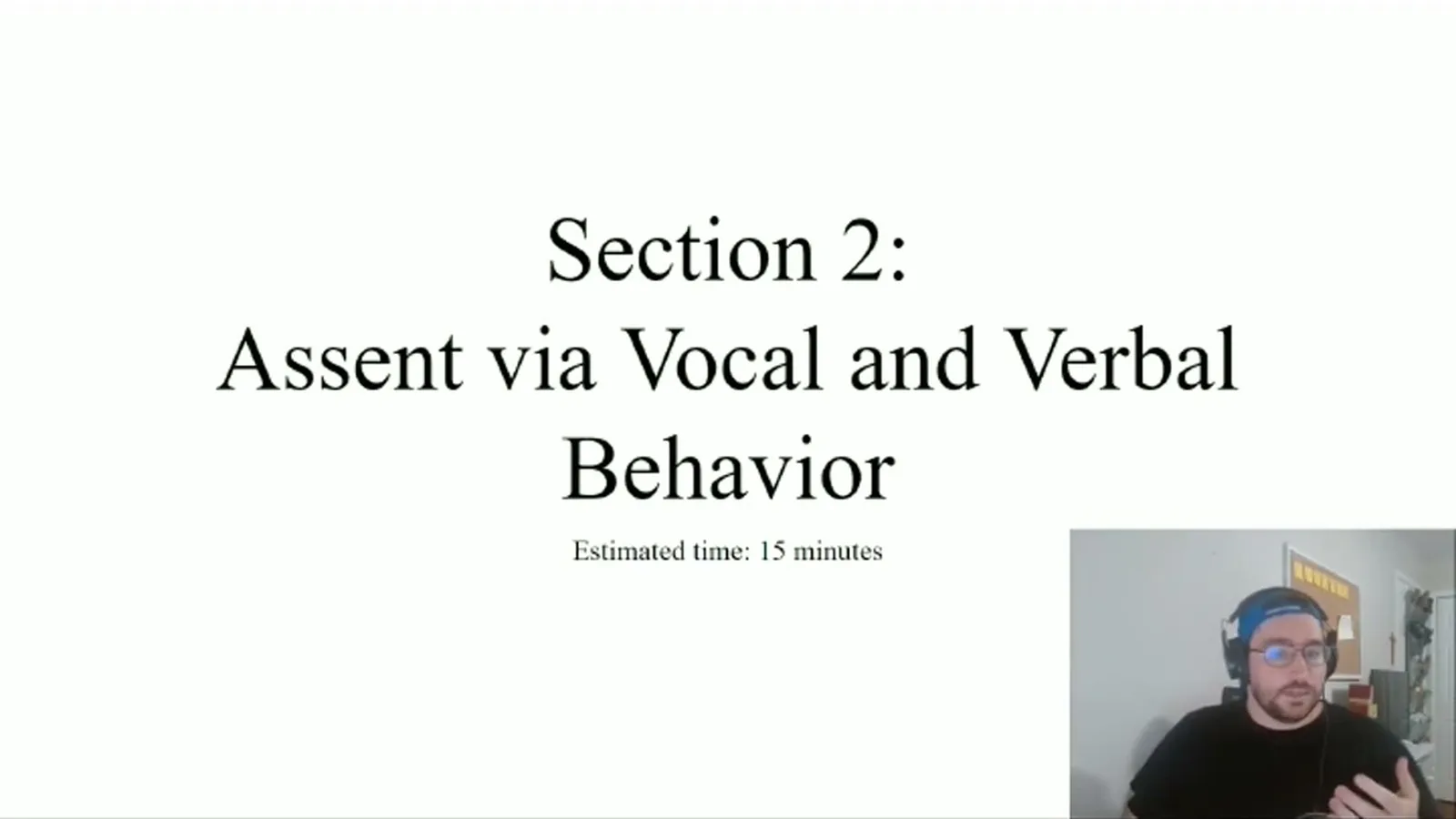
Matt Harrington uses effort to explain escalation. In his talk on assent, he describes a client who escapes tasks through property destruction. Even with good escape extinction in place (the team no longer lets the behavior end the task), the pencil still gets thrown. In that moment the client gets some escape, so the behavior still works.
He argues you can analyze this without a full functional analysis first. A functional analysis is the formal test that identifies why a behavior happens.
I think you can go from it with a basic response hierarchy, or excuse me, response effort conversation. From the talk — Matt Harrington
Then he asks what that escape actually costs the client.
What is the effort of that reinforcement response? Fairly significant. In order for them to receive reinforcement, they have to escalate their behavior to a significant level. From the talk — Matt Harrington
His point is uncomfortable and useful. If big behavior is the only response that reliably buys escape, the client has to go big. Harrington then maps the response class hierarchy. It is a set of behaviors ranked by effort that all produce the same result. Walking away, precursor signals, and assent withdrawal (a client's quieter way of signaling they want to stop) all sit lower on that ladder. Those cheaper responses are where the team should build.
Response effort and the ADHD brain#
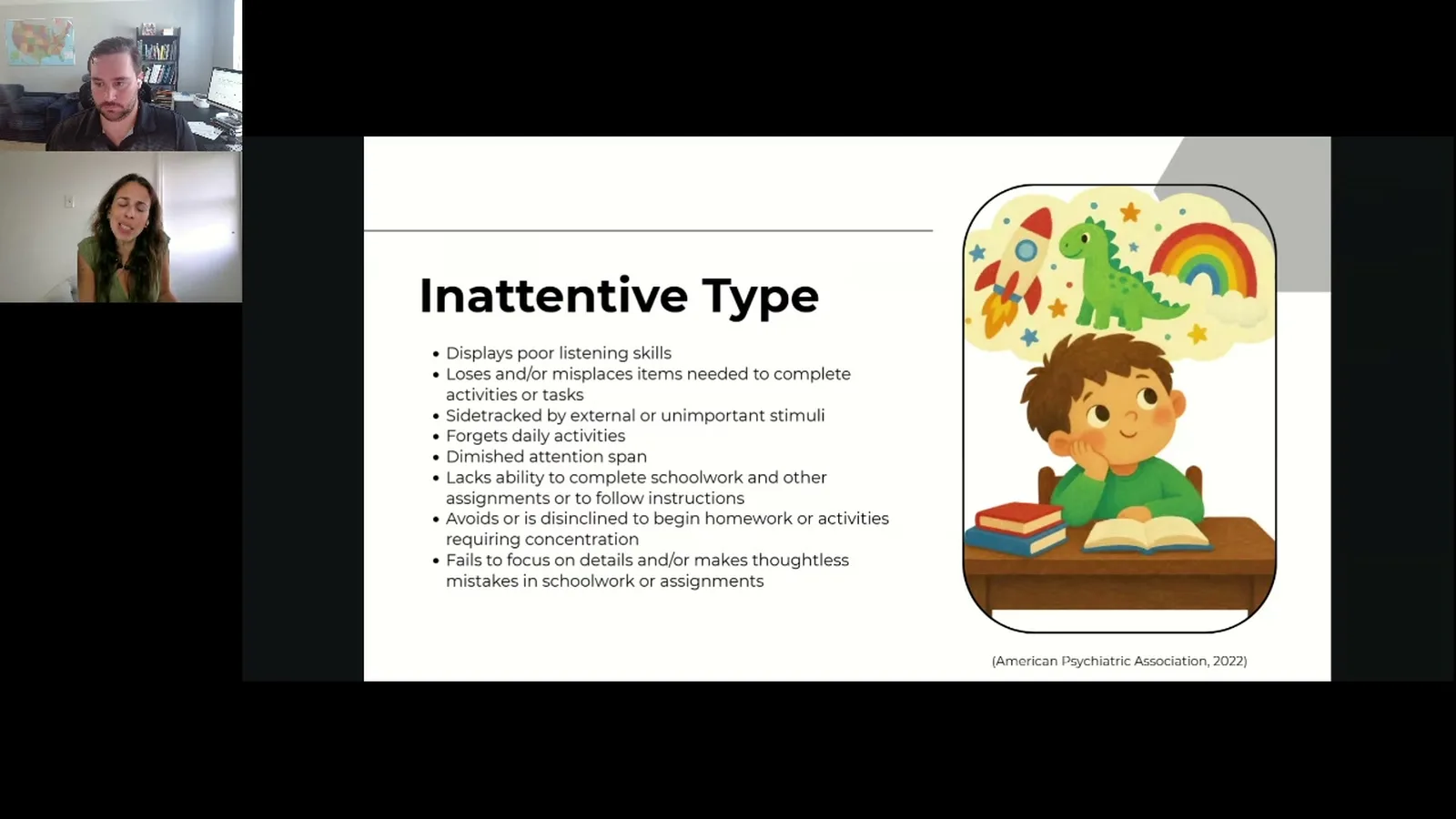
Nicole Stewart, BCBA, applies the same idea to attention. In her talk on reframing ADHD behavior, she describes task paralysis at the start of homework. The child is not refusing the work in some moral sense. Starting simply costs more than the brain can pay right then. As Stewart puts it, the effort required to start the task is higher than the child's brain capacity in that moment.
She ties this to stimulation. A repetitive, non-preferred instruction gives very little input. Meanwhile the child's inner world, or a stereotypic behavior, delivers dopamine on demand. The boring task is not just dull. It is expensive.
Response effort is high From the talk — Nicole Stewart, BCBA
That is Stewart's rule in five words. When the cost goes up, the behavior gets less likely, whether it is a math worksheet or a chore.
Stewart also flags a reinforcement trap. If the token or prize never changes, it stops working as a motivator. Now the child faces high effort and a flat payoff. The behaviors that follow often look like aggression, yelling, or refusal. Those behaviors are loud, but they are cheap and they deliver something.
Is this refusal, or is the task too big?#
 Advertisement
In her follow-up talk, Stewart pushes this into a decision question for teams. She warns that skipping the effort question leads to bad labels. In her words, the effort to attend to a non-preferred, repetitive task goes up because the brain is asking for stimulation and input it isn't getting.
She says many programs call this noncompliance, or claim the child lacks the skill. Both readings can be harmful. The child may have the skill and still not be able to spend what the moment demands.
So she ends with a check that any BCBA can run.
whether the response effort is within the child's current capacity From the talk — Nicole Stewart, BCBA
Or does it exceed what their brain can sustain right now?
Stewart pairs this with a blunt self-check. Am I solving the problem, or am I just making this child behave? A plan can suppress the surface behavior and still leave the real mismatch untouched. If twenty minutes of quiet attention is beyond the child today, the plan needs to change, not the child.
Raising effort on purpose#
Effort does not only get lowered. Anlara Hoskins shows the other direction in a differential reinforcement example (reinforcing one behavior while reducing reinforcement for another, unwanted one). A client wants the iPad. The team wants a clear vocal request, not screaming.
Screaming still gets some access, because they do not want to punish communication outright. But the deal gets worse.
we will manipulate the parameters of reinforcement where they might have to increase the response effort From the talk — Anlara Hoskins
In practice, a scream now leads to a demand first. The client completes work, gives the correct request, and then earns the iPad. Access is also shorter than it would have been. The better request stays the cheap, fast route. Hoskins walks through this and the rest of the response class in Bite-Size Behavior Analysis: Differential Reinforcement.
Notice what she does not do. She does not make the target skill harder. She raises the price of the topography, the specific form the behavior takes, that she wants to fade. The preferred response stays easy.
Where experts disagree about raising effort#
These speakers do not line up neatly, and that is worth naming. Hoskins treats added effort as a normal treatment tool. Raising the cost of screaming is how the better request wins. Stewart is far more cautious about adding demands. In her view, high effort is usually the signal that something is already wrong.
Their disagreement is about the default move. Hoskins starts from the consequence side and adjusts what each response buys. Stewart starts from capacity and asks whether the child can afford the task at all. Add a demand to a child who is already over budget, and you may just get bigger behavior.
Harrington sits closer to Stewart on severe behavior. His concern is that the appropriate response often costs more than the dangerous one. His answer is to make the low-effort option work, not to make the high-effort option more expensive.
The honest reading is that both moves are real, and the order matters. Check capacity first. Adjust the price second.
Effort changes with the setting#
Effort is not a fixed trait. Stewart describes clients who handle expectations well in one setting and fall apart in another. Parents often read that as embarrassing or willful. The environment was simply different, and so was the cost of the same task.
This is why "he can do it at school" is weak evidence. It tells you the skill exists. It does not tell you what the skill costs at 6 p.m. in a loud kitchen. Noise, fatigue, hunger, and boredom all raise the bill.
Harrington makes a related point about convincing a team. He suggests showing your own data rather than arguing. Run the lower-effort plan on your caseload, get the child running to start session, and bring that to the staff meeting. Data about effort travels better than opinions about effort.
Small changes that lower effort#
Most effort reductions are small and boring. Move materials closer. Cut a ten-step task to three steps. Accept a one-word request before requiring a sentence. Shorten the work interval before attention breaks down.
Prompting counts too. A prompt lowers the cost of getting started, which is often the most expensive part. Stewart's task-paralysis example is exactly that problem. Starting costs more than continuing.
Variety matters as well. If the reinforcer never changes, its value drops while effort stays the same. Rotating what a child works for keeps the payoff side honest.
None of this lowers your standards. You are changing the price, not the destination. Once the skill is fluent and cheap, you can add effort back on purpose, slowly.
What the research says#
Research on effort reaches past the classroom and into relapse. One study had six children place balls into baskets that were close or far away. During resurgence tests (when an old behavior reappears after being replaced), the higher-effort response came back at minimal to low rates across all six children (Wilson, Glassford, & Koerkenmeier, 2016, Behavior Analysis in Practice). Behaviors that cost more are less likely to come roaring back.
A translational study found the same pattern with adults and adolescents. Participants touched moving shapes on a screen for points, with easy and difficult versions. Relapse was larger when the original response had been easy (Walter & Dickson, 2023, Journal of the Experimental Analysis of Behavior). Easy old habits return with more force than hard ones.
Effort also applies to staff, not just clients. Researchers made group materials easier to access and added an email prompt for 17 therapists. Preparedness went up compared to the no-email condition (Felde, Haggerty, Sleiman, & Gravina, 2020, Behavior Analysis in Practice). If your team keeps missing a step, check the effort before you check their motivation.
One study even questions the usual story that effort is aversive. Rats pressed a force sensor while the required force went up and down. Counting only the responses that met criteria showed the expected drop in rate. Counting every press showed rate going up instead (Pinkston & Libman, 2017, Journal of the Experimental Analysis of Behavior). How you define the response changes what effort appears to do.
FAQ#
What is response effort in ABA? Response effort is how much work a behavior requires. It is measured by distance, force, or the number of steps involved. When effort goes up, people are less likely to do the behavior.
How do you reduce response effort? Move materials closer, shorten the task, and cut extra steps. Accept a simpler form of the response at first. Prompting the start of a task also lowers effort, since starting is often the hardest part.
Does increasing response effort reduce problem behavior? It can, when you raise the cost of the unwanted response and keep a better option cheap. It backfires when the task already exceeds what the person can sustain. Check capacity first, then adjust the price.
 Advertisement
Turn this topic into a CEU
You just studied this. Now get credit for it.
Watch Shaping Behavior Change when ADHD is in the Picture with Nicole Stewart, BCBA and earn 1 free BCBA CEU. Detailed certificate, delivered the moment you finish.