Rad N Bad: Your Error Correction Sucks — Error-Correction Assessments, Trials to Mastery, and Learner-Informed Procedures
Presented by Sean Yocum, MA, BCBA, LBA & Michael Carrero, BCBA, LBA

Error correction, whatever a teacher does immediately after an incorrect response, occurs hundreds of times a week in skill-acquisition programming, yet many organizations train a single 'house style' procedure and apply it to every learner and target. In this episode, hosts Sean Yocum and Michael Carrero examine how that practice, combined with procedural drift across staff and changes in delivery over the day, can slow acquisition or make instruction aversive. They argue that percent-correct graphs hide differences in efficiency and recommend measuring trials or sessions to mastery, and they describe simple data collection for detecting escape behavior that follows corrections. They review research showing that error-correction procedures can operate through more than one behavioral process, including avoidance of additional work (Rodgers & Iwata, 1991; Worsdell et al., 2005), and that the most efficient procedure differs across learners and can be identified through brief assessments (McGhan & Lerman, 2013; Carroll et al., 2015; Kodak et al., 2016). Kodak and colleagues also had participants choose among effective procedures. The hosts outline a practical error-correction assessment that compares two or three procedures across similar targets, rotates them across sessions, and uses trials to mastery as the decision measure. They recommend selecting the least intrusive effective procedure, writing it into each program, training it with behavioral skills training, checking procedural integrity, and incorporating learner preference consistent with the BACB Ethics Code. Participants will leave with an error-correction assessment guide.
Sign in to buy — $5One-time purchase, permanent access. Cert delivered to your inbox the moment you pass the quiz.
About this CEU
What happens right after a wrong answer is one of the most repeated things we do all day, and in a lot of clinics nobody actually chooses it. Mike and I go after the one-size 'house style' correction, look at the research showing the most efficient procedure differs from learner to learner, and lay out a brief error-correction assessment your RBTs can actually run. Disclosures & Publication Info Sean Yocum owns Hickory Learning Group (HLG), the CE provider for this event. Neither instructor has a financial interest in Disrupt ABA, Alan Fullbright or Attend Behavior. HLG has a non-financial business relationship with Attend Behavior. The episode includes a promotional read for Disrupt ABA 2026, where Sean is a presenter, and a read for these OpenCEU events; neither is counted as instructional time. Safety-Care is mentioned in passing as a staff-training example; no commercial products are promoted. Published: 2026-11-06 Listening alone doesn't earn credit. Completing the knowledge checks, not listening alone, is required to earn credit.
Abstract
Error correction, whatever a teacher does immediately after an incorrect response, occurs hundreds of times a week in skill-acquisition programming, yet many organizations train a single 'house style' procedure and apply it to every learner and target. In this episode, hosts Sean Yocum and Michael Carrero examine how that practice, combined with procedural drift across staff and changes in delivery over the day, can slow acquisition or make instruction aversive. They argue that percent-correct graphs hide differences in efficiency and recommend measuring trials or sessions to mastery, and they describe simple data collection for detecting escape behavior that follows corrections. They review research showing that error-correction procedures can operate through more than one behavioral process, including avoidance of additional work (Rodgers & Iwata, 1991; Worsdell et al., 2005), and that the most efficient procedure differs across learners and can be identified through brief assessments (McGhan & Lerman, 2013; Carroll et al., 2015; Kodak et al., 2016). Kodak and colleagues also had participants choose among effective procedures. The hosts outline a practical error-correction assessment that compares two or three procedures across similar targets, rotates them across sessions, and uses trials to mastery as the decision measure. They recommend selecting the least intrusive effective procedure, writing it into each program, training it with behavioral skills training, checking procedural integrity, and incorporating learner preference consistent with the BACB Ethics Code. Participants will leave with an error-correction assessment guide.
Credits
0.5 CEUs · 33 min
From the talk
What was covered
Why one house-style error correction fails. How to run a brief error-correction assessment. Why trials to mastery is the measure that matters.
- Write the error-correction procedure into each program in one plain sentence. Then train it with behavioral skills training (explain, model, practice, give feedback).
- Ask three staff separately what they do when one learner gets a target wrong. Three different answers means you have three procedures, not one.
- Stop judging error correction by percent correct and start counting trials or sessions to mastery plus total time.
- Add two yes-or-no columns to a paper data sheet for a week to see if problem behavior follows corrections.
- Compare two or three procedures on similar targets and rotate them across sessions. Make the winner the default for new programs.
- Ask learners who can answer which correction they want, and keep tracking whether that choice still speeds up learning.
What Counts as Error Correction, and Why Most Clinics Never Choose One
Error correction is whatever you do right after a wrong answer. That is the whole definition. It happens hundreds of times a week in skill acquisition programs (teaching new skills). It is also one of the least planned parts of the day.
The menu is long. You can re-present the trial with a prompt (a hint that helps the answer). You can model the answer and have the learner repeat it. You can ask for several repeats. You can move on and come back later. You can say no and wait. Each one is a real procedure with research behind it.
Here is the autopilot problem. In a lot of companies, one procedure is the house style. Staff learn it in training. Then it runs for every learner and every target, forever. Sean compares it to a mechanic with one fix for every car. Dead battery, blown head gasket, flat tire: squirt some WD-40 on it. Mike's version is the tape ad on TV. One giant patch for a hole in a boat, a drafty window, and a cracked wall.
A house style works fine for a diner menu. Everybody gets the same eggs. Teaching is not a diner. Nobody is checking which learners the house style fits and which ones it slows down.
the house style isn't going to be the right fit for some learners
From the talk — Sean Yocum, MA, BCBA, LBA & Michael Carrero, BCBA, LBA
Written, Trained, and Then Drifted: How Staff Stop Matching Each Other
Mike's rule is simple. There should always be a written procedure for how to correct an error. Not a three letter acronym. The write-up needs to say how to correct, when to correct, and in what manner. Then it has to be trained and followed up on.
Paper alone does nothing. You can put beautiful words on a page. If staff cannot run it, it means nothing. And if two people work with the same learner, the same program should look the same in both hands.
Now look at the load. A tech might work with two to four learners in a day. They might also be staffed with many more in one room. A typical BCBA caseload runs from three to four clients. Some report caseloads of fifteen or twenty. Plans can be fifty pages. Nobody holds all of that in their head. So people blend procedures based on how the learner responded or what worked last time. That is procedural drift (small changes that creep in). More variability with less structure means more risk.
Tone drifts too. The same correction can happen at nine in the morning and at four thirty after a rough day. Same words, different voice. Learners hear it and feel it. Mike's frame is the setting event (what happened before the trial). The word did not change. Your day did.
If it's 50 pages long, it can be great on paper, but poor in practice.
From the talk — Sean Yocum, MA, BCBA, LBA & Michael Carrero, BCBA, LBA
Percent Correct Hides the Cost: Measure Trials to Mastery Instead
Most graphs that go to funders show frequency, rate, or percent correct (the share of right answers). Those graphs answer one question. Did the learner get there? They do not answer the question that picks your procedure. How fast did the learner get there?
That gap is the whole problem. One learner might take two months to master a skill under the house style. The same learner might have reached it in days under a different correction. On a percent correct graph, both look like success. The lost weeks never show up, and the learner does not get them back.
Trials to mastery (how many tries it took to learn) is the number that matters here. Most data platforms can already report it. Almost nobody asks for it. Sessions to mastery and total teaching time work too.
Mike's travel version makes it concrete. You can walk across the country. You can skateboard. You can ride a bike. All three get you from point A to point B. One gets you there a lot sooner.
when you hit that criteria, right, and eventually that program hits 80%, it's going to look like everything works
From the talk — Sean Yocum, MA, BCBA, LBA & Michael Carrero, BCBA, LBA
Signs Your Correction Procedure Has Become Unpleasant
Sean's picture is lane assist yanking the wheel every time you drift an inch. You stay in the lane. You also white-knuckle the wheel because you hate the car. Learning can look like that. The data say the target is moving. The learner looks miserable.
Watch what happens in the seconds after a correction. Does the learner slow down, look away, push the materials, or leave the table? That is escape behavior (behavior that gets you out of something). It is feedback, delivered in real time, and a graph will never show it.
There is an easy way to catch the pattern. Put two columns on a paper data sheet for one week. Column one: did you run an error correction on that trial, yes or no. Column two: did problem behavior occur, yes or no. Look at the few trials right after each correction. You now have a reason to change the procedure before you change anything else. It is like a car that only shakes when you brake. Do not replace the tires. Check the brakes.
Mike adds the coaching version. If two lifters have two different flaws, the same cue will not fix either one. You might muscle through it. You also raise the odds of getting hurt.
If someone is actively engaging in escape behavior right after corrections, that's not a coincidence.
From the talk — Sean Yocum, MA, BCBA, LBA & Michael Carrero, BCBA, LBA
What the Research Says About Why Corrections Work at All
Rogers and Iwata (1991) picked apart why error correction works. Five of their seven participants did better under some form of correction. For three of them, the best condition added extra trials with unrelated material after an error. That design separated out avoidance. Translation: part of why correction works may be that the learner wants to dodge the extra work.
Wardsdale and colleagues (2005) looked at repeating the correct answer after an error. Asking a learner to repeat it several times beat a single repetition, and this held for all six participants. Correcting every error beat correcting about a third of them. Participants improved even when the repetition practice used a different word. The authors said more than one process was likely at work.
Mike explains the avoidance side as response effort (how much work something takes). The fastest way to graduate basic training is to go through basic training. Skip it and you stay much longer. A learner does that math fast. If the correction is a long, flat grind, answering correctly becomes the cheaper option. The skill may not be the thing that improved.
Then there is the individual piece. Magan and colleagues (2013) ran a quick assessment to find the least intrusive procedure for each learner. Later teaching matched that assessment for four of five learners. Carol and colleagues (2015) compared four common procedures. Several worked for everybody, but one or two were more efficient for each person. Kodak and colleagues (2016) compared five procedures and found efficient ones for all participants. They also let participants choose among the procedures that worked.
Doing more for the sake of doing more is never the answer.
From the talk — Sean Yocum, MA, BCBA, LBA & Michael Carrero, BCBA, LBA
How to Run a Brief Error-Correction Assessment With Your RBTs
None of the studies above took a year. They compared a handful of procedures on a few targets and counted how many trials each one needed. You can do that in about two weeks. It is not a dissertation.
Here is the doable version. Pick several similar acquisition targets (skills you are teaching). Pick two or three common procedures, such as model plus one repetition or multiple repetitions. Assign one procedure per target. Rotate them across sessions so one procedure does not always land in the fresh morning slot. Count trials to mastery for each, and track total time if you can.
Keep data collection boring for the tech. Paper is fine, and sometimes better, because many apps will not capture this out of the box. One column per target. One tally per trial. When one procedure wins, that becomes the learner's default on new programs. Write it in the plan. Recheck it if acquisition slows down again.
You do not need to do this for every learner. It earns its keep with slow acquisition. It also helps a learner with a long list of programs ahead, or anyone who starts escaping right after corrections. Mike also notes that the best correction can differ by skill type. Correcting a drawing task may look nothing like correcting a cooking task.
find some similar targets, pick three error correction procedures, one per target, rotate them across sessions, count trials to mastery for each
From the talk — Sean Yocum, MA, BCBA, LBA & Michael Carrero, BCBA, LBA
Document It, Train It, and Actually Check It
Once you have a winner, name it in the program in one clear sentence. Then train it with behavioral skills training (explain, model, practice, give feedback). Model it at the next team meeting. Nobody should have to guess.
Sean's spot check is quick. Pick one program. Ask three staff separately what they do when the learner gets that target wrong. If you get three answers, you know what you have.
Then keep checking. Procedural integrity (running it the way it is written) almost never gets reported for error correction. The same goes for interobserver agreement (two people scoring and matching). Same procedure, three different deliveries, and the errors are in the teaching, not the learner.
Mike is firm about how that feedback lands. Walking up, checking on the skill, and correcting it on the spot is the job. Asking someone to just do it right is not. If the team is not running it, the first finger points at the supervisor. Reconvene, retrain, close the loop. Plan the fade-out too, and plan what you will do if the old problem returns.
And if you get three different answers, you don't have an error correction procedure, you have three, right?
From the talk — Sean Yocum, MA, BCBA, LBA & Michael Carrero, BCBA, LBA
Letting the Learner Choose, and the Monday Morning Plan
Kodak and colleagues let participants pick among procedures that already worked. Our code says intervention should weigh client preference. So if the learner can answer the question, ask it. Mike keeps it blunt. He asks the learner how to help with the skill. Then he offers a few options and asks where they want to start.
There is a caveat, and Sean names it. Preference is not proof. A learner can pick the option they like and still not learn any faster. Keep watching independent responding and trials to mastery. If the pick is pleasant but the learning stalls, you have a long-term problem, not a win. That is social validity (whether people accept the procedure) working alongside efficiency, not replacing it.
Monday looks like this. Rule one: least intrusive, most efficient. If two procedures work about the same, use the gentler one. Rule two: write it into the program and name it in every plan. Train it so every staff member runs it the same way. Rule three: ask the learner, then verify what you chose.
And keep your eyes up. A graph cannot see a learner turn away from the table. An error is information about your teaching, not a flaw in the learner.
Watch the learner and not just the data.
From the talk — Sean Yocum, MA, BCBA, LBA & Michael Carrero, BCBA, LBA
Common questions
What is an error-correction assessment?▾
It is a brief comparison of two or three correction procedures run on similar acquisition targets for one learner. You assign one procedure per target and rotate them across sessions. Then you count how many trials or sessions each target needs to reach mastery. The procedure that gets there fastest becomes that learner's default on new programs.
How long does an error-correction assessment take?▾
About two weeks in most cases. The published studies compared a handful of procedures across a few targets, not across a whole curriculum. It is a short data-collection project, not a research dissertation.
Why is percent correct not enough for picking an error-correction procedure?▾
Percent correct tells you the learner reached the finish line. It does not tell you how long the trip took. Two procedures can both end at mastery while one needs weeks longer than the other. Trials or sessions to mastery is the measure that exposes that difference.
How do I know if my error correction is hurting instead of helping?▾
Watch the seconds right after each correction. Slowing down, looking away, pushing materials, and leaving the table are signs worth taking seriously. Add two yes-or-no columns to a paper data sheet for a week. Mark whether a correction happened, and whether problem behavior followed. If a pattern shows up, change the procedure.
Should I run this assessment for every learner on my caseload?▾
No. It pays off most for learners with slow acquisition. It also helps learners with a long list of programs ahead, or any learner who escapes right after corrections. For everyone else, the bigger win is simpler. Write the procedure down, train it, and check that staff run it the same way.
Can a learner pick their own error-correction procedure?▾
Yes, if the learner can answer the question and the options presented already work. The code asks us to weigh client preference. Letting learners choose among effective procedures has been done in the research. Keep tracking independent responding and trials to mastery. A preferred option that stalls learning is not the right option.
About the speaker
Sean Yocum, MA, BCBA, LBA and Michael Carrero, BCBA, LBA host the Rad N Bad podcast from Hickory Learning Group. Each episode takes one everyday practice apart and rebuilds it. In this talk they covered error-correction procedures and the research on why corrections work. They also walked through a brief assessment practitioners can run in about two weeks. The talk closes with how to train and monitor the procedure once it is chosen. Both draw on supervision, staff training, and coaching experience in their examples.
This summary was generated from the recording’s transcript. Quotes are taken word for word from the talk.
What you'll learn
- 1Describe common error-correction procedures and the risks of applying one 'house style' procedure to every learner and target. Explain how an error-correction procedure may change behavior through more than one process, including avoidance of additional response effort. Identify observable signs (e.g., escape behavior shortly after corrections) that an error-correction procedure may be functioning as an aversive stimulus. Design a brief error-correction assessment that compares procedures across similar targets and uses trials or sessions to mastery as the efficiency measure. Describe how to select, document, train, and monitor the least intrusive effective error-correction procedure, including how to incorporate learner choice.
Concepts in this CEU
Course materials
Related talks
Talks that cover the same concepts
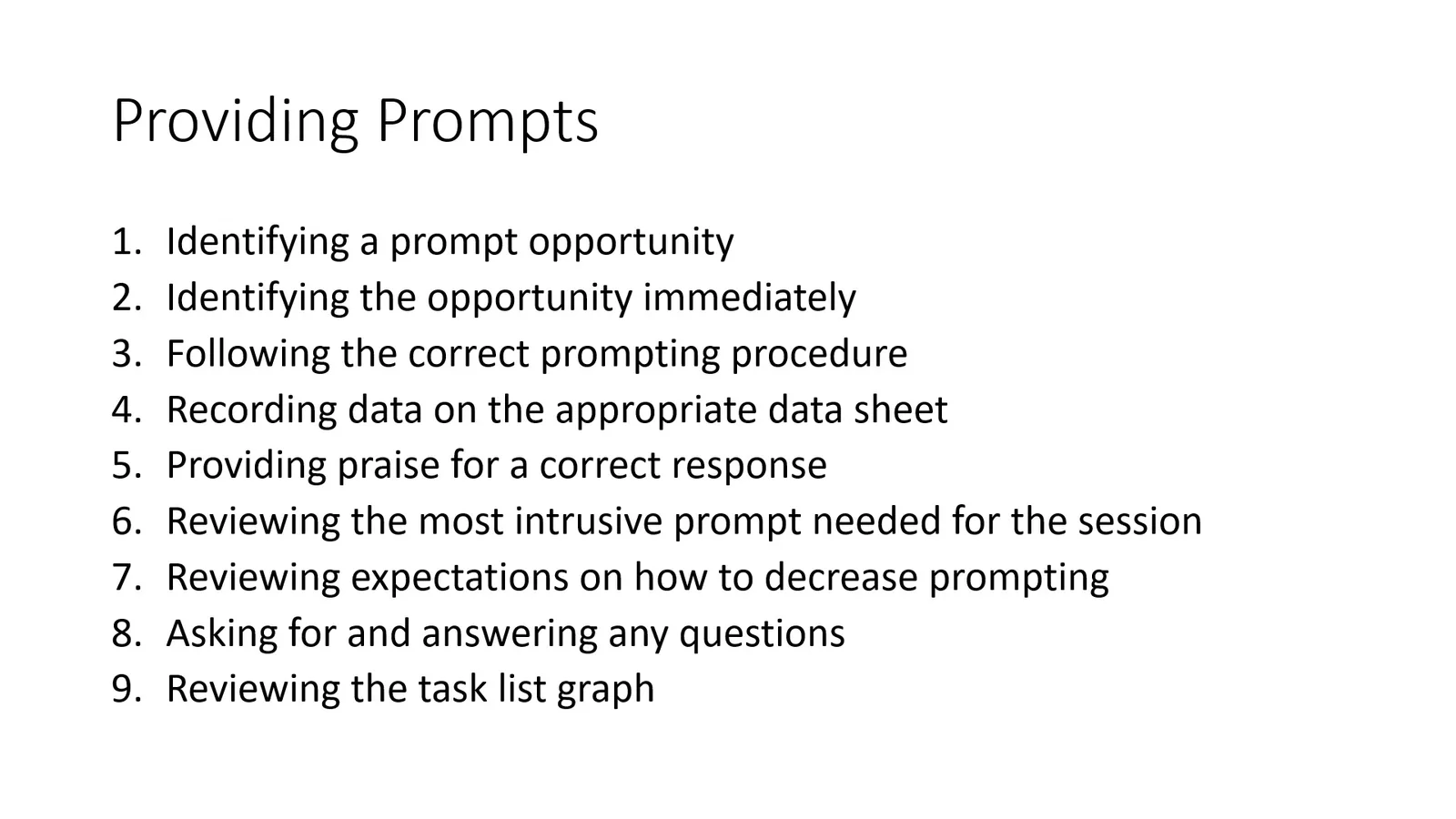
Toward an Evidence-based Supervision Model: Training Students in Independent Fieldwork
Willow Mentorship & Consulting, LLC

Rad N Bad: Your Programming Sucks, Let's Make It Better — Individualized Goals, Layered Skills, and Generalization by Design
Hickory Learning Group

Rad N Bad: Your Prompting Hierarchy Sucks — Individualized Prompt Selection, Written Fading Rules, and Preventing Prompt Dependency
Hickory Learning Group
Quality Without Measurement is Just Marketing: A Critical Analysis of Quality Service Delivery
Upskill ABA
Is It Technical or Relational? A Framework for Pinpointing Caregiver Collaboration Breakdowns
Parenting with ABA

Shaping Behavior Change when ADHD is in the Picture
The Behaviorist Bookclub
More from Hickory Learning Group

Intersection of Cultural Ontogeny, Ecological FBA and the Behavior Instructional Plan
Hickory Learning Group

Rad N Bad: The Middle Ground of NET — Escaping the Babysitting Trap with Rigorous Natural Environment Teaching
Hickory Learning Group

Rad N Bad: The Other Side of the Table — Ethical Failures, Compassionate Care, and Consumer Realities in ABA
Hickory Learning Group
OpenCEU is supported by advertising from third-party sponsors. Sponsors are clearly labeled, have no influence over course content, instructors, or CEU decisions, and never appear on certificates. The BACB does not sponsor, approve, or endorse OpenCEU sponsors or their products.