The IEP: A BCBA's Guide to School Plans
An IEP is a legally binding school plan built for one student. Learn how the team works and what BCBAs should know about IEP goals.
Key takeaway
An Individualized Education Program is a written school plan for one student. People call it an IEP for short. It lists the student's goals, services, and support at school.
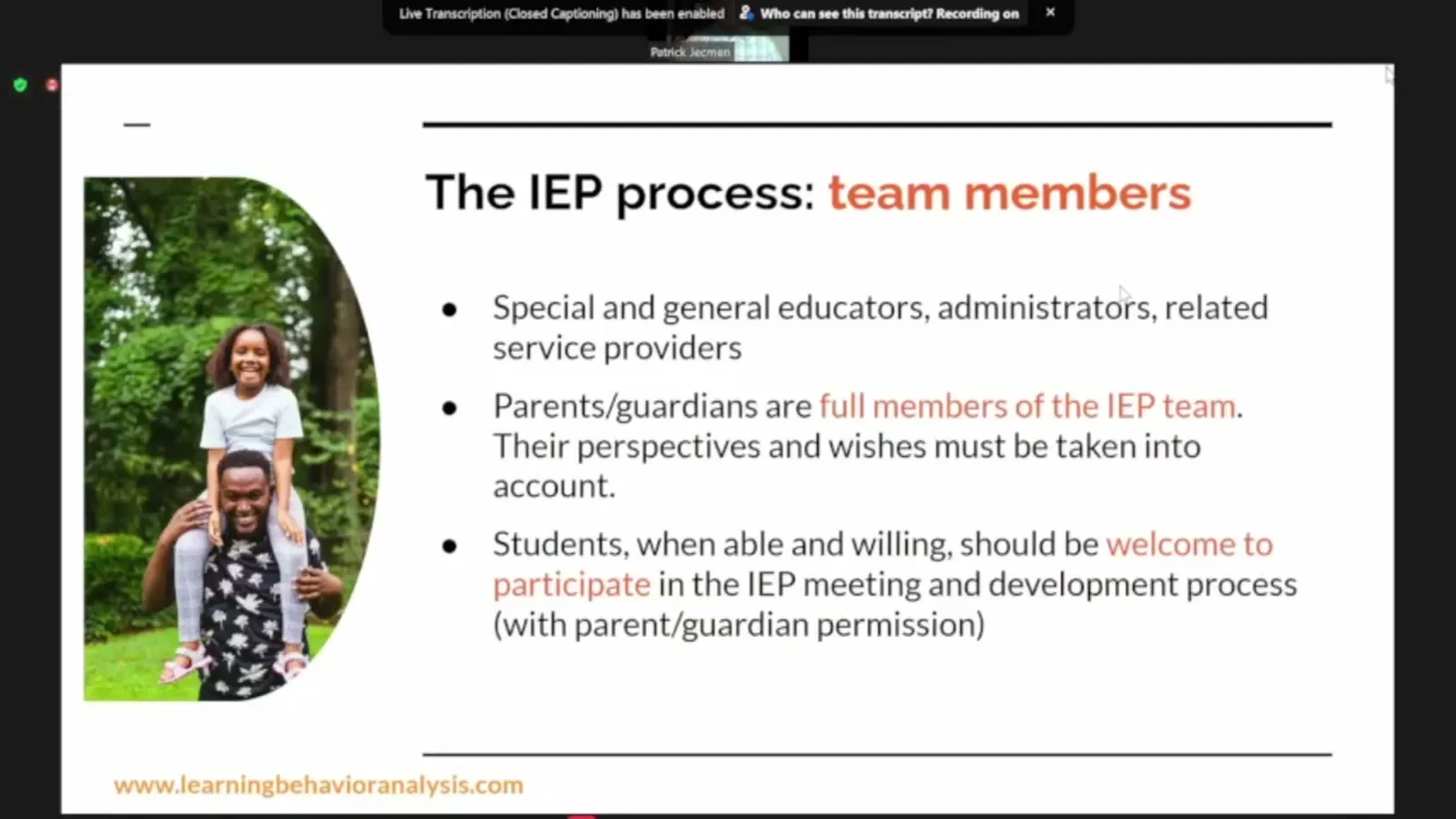
School Collaboration as an Area of Competence - Applied 2022
Free learning path on this topic
Supervision, Done Right
Four supervision CEUs that build on each other. What reflective supervision is, how to build a supervision system, how to assess supervisee competence instead of counting hours, and how supervision affects provider outcomes. The BACB asks supervisors for three supervision CEUs per cycle. This covers it.
Experts who cover this
The recording behind this guide covers individualized education program.
- Featured talk1 CEU
School Collaboration as an Area of Competence - Applied 2022
Dr. Clelia SigaudThe Behaviorist Bookclub
Explained as the legally binding, individualized document (not a diagnosis-based program) that details a student's instruction, present levels, goals, and…
On this page · 8 sections▾
An Individualized Education Program is a written school plan for one student. People call it an IEP for short. It lists the student's goals, services, and support at school.
BCBAs who work in schools meet the IEP all the time. It shapes what a student is taught and by whom. Knowing how it works helps you be a strong team member.
The IEP is built for one child#
The IEP is not a program for a label or a diagnosis. It is made for a single learner and their needs. Patrick Jackman describes it as the map for a student's day.
The IEP is really the guiding document for those supports and services... it details the nature of the instruction that's going to be provided... it's developed by the team for each unique individual. From the talk — Patrick Jackman
It names the goals the student is working toward. It also names the services the school will provide. Everything ties back to that one child.
An IEP is a legal promise#
The IEP is not just a nice plan. In the United States, it is a legally binding document. The school must deliver what it promises.
When it comes to the formation of an IEP in the US, the IEP is a legally binding document... the services and supports the school is obligated to provide those things to that learner, regardless of what their staffing is. From the talk — Patrick Jackman
Staffing problems are not an excuse. If the IEP says a service happens, it must happen. This is a strong protection for families.
The team works like a jury#
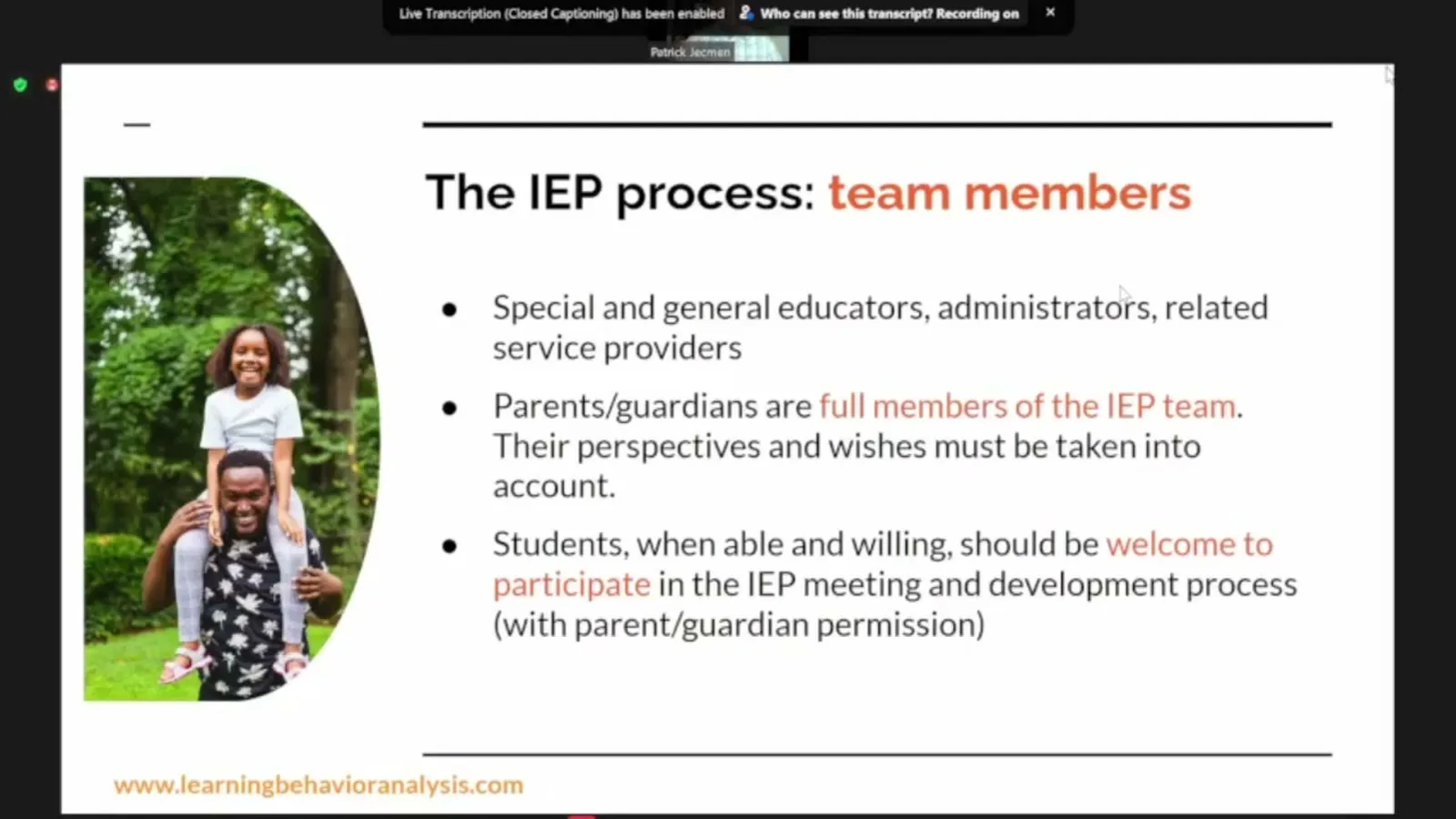
Many people join an IEP meeting. Parents, teachers, and specialists all have a voice. Jackman uses a sharp comparison to explain how they decide.
the IEP team is a little bit unique in that it's unique because it works like a jury and not a democracy. We don't vote. From the talk — Patrick Jackman
A jury talks until it reaches agreement. The team does not just count hands and move on. This pushes everyone to keep working toward one shared plan. As a BCBA, your data and clear voice help the team agree. You can hear the full discussion of school teams in School Collaboration as an Area of Competence - Applied 2022.
What lives inside an IEP#
 Advertisement
An IEP is more than a list of goals. It also shows where the student stands right now. These are called the present levels of performance. They set the baseline for every goal.
The plan then names the services the school will give. It may include speech, occupational therapy, or behavior support. It lists how often each service happens and where. All of it ties back to the student's own needs.
The IEP is not the only school plan a family may meet. A Section 504 plan is a different, often lighter option. The team decides which path fits the student best.
How a BCBA can strengthen the plan#
You bring a clear, data-based voice to the table. That voice helps the team set goals that can be measured. Vague goals are hard to track and easy to miss. Sharp goals show real progress or the lack of it.
You can also help the team stay focused on meaningful skills. Some goals drift toward simple compliance instead. Push for goals that help the student do more in real life. That is where behavior science and good schooling meet.
How the IEP guides your daily work#
The IEP is not just a meeting document. It should shape what happens in the room every day. The goals tell you what to teach and track. The services tell you how much support the student gets.
When you run a session, you are often serving IEP goals. Your data shows whether those goals are being met. That data comes back to the team at the next review. In this way, your daily work and the IEP stay linked.
A strong BCBA reads the whole IEP, not just the behavior part. You want to know the student's other goals too. Speech, academics, and social goals all connect. Seeing the full picture helps you support the whole child.
You also follow the plan even when it is hard. If the IEP calls for a support, you help deliver it. Families count on that promise being kept. Your steady work is part of what makes the plan real.
What the research says#
Research shows IEP goals do not always match a student's real needs. One study looked at goals for students with complex support needs. Most goals reflected older teaching ideas. Only about a quarter aimed at grade-level academic content (Curricular Philosophies Reflected in Individualized Education Program Goals for Students With Complex Support Needs).
Another study found many goals focused on student compliance. They left out skills for self-direction and choice (Instructional Content and Self-Determination in Individualized Education Program Annual Goals for Students With Extensive Support Needs). Goals that only ask a child to obey can miss meaningful growth.
Older teens face similar gaps. One study reviewed IEPs for students with autism in their last year of high school. Many lacked social skills goals. Present levels, IEP goals, and future goals often did not line up (Individualized Education Program Quality for Transition Age Students with Autism). Placement matters too. Research shows where a student is taught can affect how well they reach goals (Impact of Educational Placement on the Goal Attainment Outcomes of K-6 Students With Complex Needs).
FAQ#
What is an IEP? It is a written plan for one student who qualifies for special education. It lists goals, services, and supports for the school year. The plan is built by a team around that single learner.
Is an IEP legally binding? Yes. In the United States, the school must provide the services the IEP lists. Short staffing is not a valid reason to skip them. Families can hold the school to the plan.
What is the BCBA's role in the IEP? A BCBA helps write clear, measurable goals and tracks progress with data. You share your findings so the team can agree on a strong plan. You act as one voice on a team that works toward consensus. Your data can keep the plan focused on real, meaningful skills.
 Advertisement
Turn this topic into a CEU
You just studied this. Now get credit for it.
Watch School Collaboration as an Area of Competence - Applied 2022 with Dr. Clelia Sigaud and earn 1 free BCBA CEU. Detailed certificate, delivered the moment you finish.
Keep going with a free learning path
Supervision, Done Right
Four supervision CEUs that build on each other. What reflective supervision is, how to build a supervision system, how to assess supervisee competence instead of counting hours, and how supervision affects provider outcomes. The BACB asks supervisors for three supervision CEUs per cycle. This covers it.