Graduated Extinction for Night Wakings: The Time-Based Visiting Plan
Time-based visiting is a kinder graduated extinction plan for night wakings. Step-by-step intervals and pitfalls, from a BCBA-led CEU.
Key takeaway
Lindsay Anderson teaches a time-based visiting plan where the parent steps out, says "I'll be right back," and returns for a quick pat, and she has families rehearse that exact line in the kitchen and living room during the day before any of it shows up at bedtime.
Why are they Waking up at 2 AM?
On this page · 8 sections▾
Lindsay Anderson teaches a time-based visiting plan where the parent steps out, says "I'll be right back," and returns for a quick pat, and she has families rehearse that exact line in the kitchen and living room during the day before any of it shows up at bedtime. That daytime practice is what makes the nighttime version safe to try, and it is the heart of graduated extinction for night waking when the goal is a kinder, more responsive plan than pure cry-it-out.
If you are a BCBA, this is a sleep plan you can hand to a family without holding your breath. It uses real shaping. It respects how tired the parents already are. And it does not ask anyone to listen to a child cry in a closed room while a clock ticks down. Anderson built it around the same logic we use during the day with any new skill: keep the step small enough that the child stays calm, then stretch.
Why pure extinction often backfires at night#
Pure extinction is the version most families have heard about. Put the child to bed. Close the door. Do not respond. Wait it out. It can work on paper, and the research shows it does reduce crying for many neurotypical kids. The problem is what happens with our caseload.
If a child has never learned how to fall asleep on their own, taking away the parent does not teach the skill. It just removes the support. Anderson is direct about this.
Pure extinction without teaching the skills to fall asleep often gives you kids who stop coming out of their room but still are not sleeping any better.
That is the part that should land for BCBAs. We do not run an escape extinction plan on a feeding case without also teaching the child what to do with the food. Sleep is the same idea. There is a skill underneath the behavior, and the skill is falling asleep without a parent in the room.
The second reason to slow down: safety. If bedtime already comes with aggression, hitting, or self-injurious behavior, pure extinction is not appropriate. The child can get hurt. The parent can get hurt. The bedroom can become a place the child fights to leave. None of that helps you reach independent sleep.
What time-based visiting is and how it differs#
Time-based visiting is graduated extinction with a script and a stopwatch. The parent puts the child in bed, says "I'll be right back," steps out for a few seconds, and comes back. They give a quick pat or a quiet word. Then they leave again. The interval grows a little bit each time, only as fast as the child can handle it.
The piece that makes this different from cry-it-out is the visit itself. The parent is not waiting for crying to escalate before going in. The parent is leaving on a timer, returning on a timer, and using the return as a reset. The child experiences a steady rhythm of leave, come back, leave, come back, and the gaps slowly stretch until the child falls asleep during one of them.
This works for the same reason most ABA shaping works. The child gets reinforcement for tolerating a short absence before that absence ever feels scary. You are building the behavior of staying calm while alone, in small pieces, with a predictable return baked in.
The daytime "I'll be right back" rehearsal#
This is the step most plans skip, and it is the step Anderson treats as non-negotiable. The script gets practiced during the day, in rooms the child already feels safe in, long before the lights go off.
We would never expect a child to practice a coping strategy for the first time, like when their favorite toy breaks. A lot of times we expect kids to use sleep skills for the first time at night.
Start in the kitchen or the living room while the child is happy and playing. The parent says "I'll be right back," steps out of sight for three to five seconds, and comes right back. That is it. If the child does not notice, great. If the child notices and stays calm, even better. You can dress it up like peek-a-boo at first if you need to.
Once the child is doing well with short absences in common areas, move it to the bedroom. Keep the same script. Keep the same calm tone. Stretch the time the parent is out of sight, in small jumps, until the child can stay alone in the bedroom for about one to two minutes without distress.
This is also a great spot to loop in the RBT. Trials of "I'll be right back" fit cleanly into session and into caregiver collaboration. The child gets more reps. The parent gets coached on the same script you are teaching. Everyone is running the same play.
Picking your starting interval (seconds, not minutes)#
Here is where teams get into trouble. Even after a child can sit alone in the bedroom for two minutes during the day, bedtime is harder. The room is dark. The child is tired. The whole point of the day is winding down. So the first nighttime interval should be shorter than the longest daytime interval, not equal to it.
Start short enough that problem behaviors do not happen, then stretch.
A few seconds is fine. Five seconds is fine. Ten is fine if the child is solid. The rule is simple: pick a length where the child does not escalate. If the child cries, hits, or climbs out of bed, the interval was too long. Reset. Make it shorter. Try again once the child is calm.
This is the same logic you use in any escape-maintained behavior plan. You do not start at the terminal step. You start at a step the learner can succeed at, and you fade in difficulty from there.
When parents ask for a starting number, give them seconds, not minutes. Minutes feel like a goal to chase. Seconds keep them honest about how small the first step needs to be.
How to stretch intervals without losing the child#
Once the child is calm during the short absences, the parent makes the next absence a little longer. Maybe five seconds becomes ten. Ten becomes twenty. Twenty becomes a minute. There is no fixed rate. You shape based on what the child shows you on that night and the next.
A few practical notes for the team.
Keep the return brief. The visit is a check-in, not a play break. A quick pat, a quiet word, and back out. Long visits build a new dependency, where the child waits in bed for the parent to come back and stay.
Expect middle of the night wakings to keep happening for a while. Parents need this warned in advance or they will think the plan failed.
Wakings will not stop until the intervals are long enough that the child actually falls asleep while the parent is out of the room.
That sentence is the whole mechanism. The child is not getting "trained" to sleep through. The child is getting practice at falling asleep in the absence of the parent. The first time that practice succeeds is the first time you start to see the wakings shorten. Until then, you are still building the skill.
Coach parents to take data. Just three columns is enough: time out of the room, child's response, time back in. A week of that tells you whether to stretch faster, hold, or shorten.
When you need to stop and pick a different plan#
Time-based visiting is not the right plan for every family. There are a handful of signals that should make you pause and pick something else.
If the child has severe aggression or self-injurious behavior at bedtime, this is not the place to start. Anderson is clear that pure extinction is unsafe in this situation, and the visiting version still includes brief separations that can trigger an escalation. Work on the prerequisites first. Pair the bedroom with reinforcement during the day. Build tolerance for short, calm separations in low-demand contexts. Then revisit.
If the parents are so sleep deprived that they cannot run the protocol with any consistency, do not push it. Anderson's "camping out" plan, where the parent sleeps on a mattress in the child's room and slowly moves it toward the door over nights, is often a better starting point. It buys the family sleep right away while still moving toward independence.
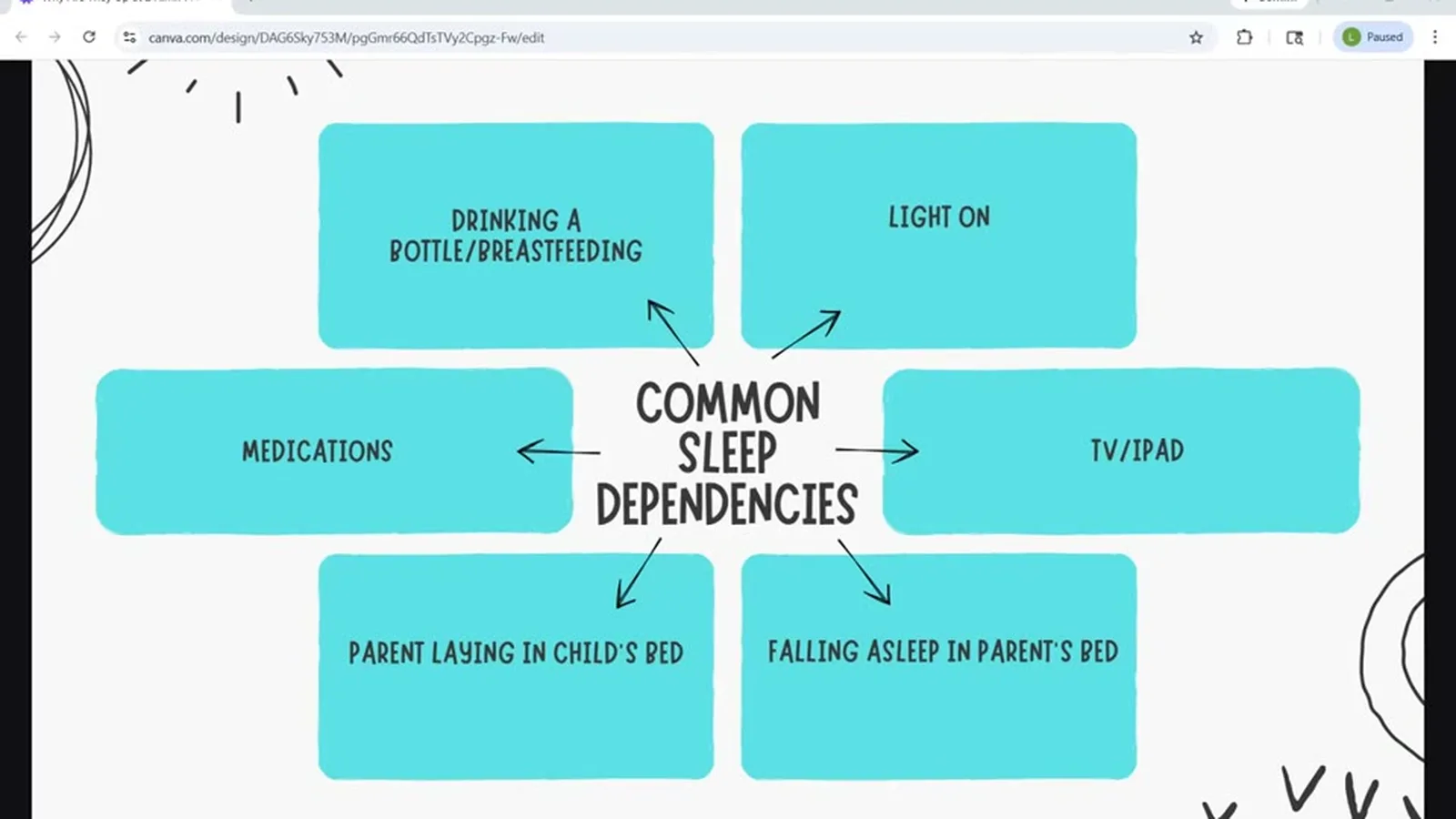
If sleep dependencies have not been faded yet, slow down. A child who needs a bottle, the TV, or a parent in bed to fall asleep at bedtime is going to need the same thing at 2 AM. Time-based visiting works best after the more tangible dependencies have already been swapped for sustainable ones.
And if a medical issue is in the mix, like sleep apnea, reflux, or restless legs, that gets a referral first. No behavior plan outruns an untreated medical cause.
FAQ#
Is graduated extinction the same as cry it out?
No. Cry it out, the strict version, means no parent contact until morning. Graduated extinction, in the form Anderson teaches, has the parent visiting on a timer and giving quick reassurance. The child is not left to escalate alone, and the visits are part of the plan, not a failure of it.
How short should my first interval be?
Short enough that the child does not get upset. For most kids that is somewhere between three and ten seconds for the first night. If your child melts down at fifteen seconds, drop back to five. The starting number is just a number. The rule is calm.
What if my child has aggression at bedtime?
Pause the visiting plan. Aggression and self-injury at bedtime are signals that the room is already aversive or the demand is too high. Work first on pairing the bedroom with reinforcement, building short calm separations during the day, and ruling out medical causes. Bring in your BCBA before you push forward.
How long until graduated extinction works?
Plan on one to three weeks of consistent nights before you see middle of the night wakings shorten or drop. The first nights often look worse, not better, because the child is practicing a brand new skill. If you are still stuck after three solid weeks, that is a sign to reassess, not to push harder.
Do I do the same intervals at 2 AM as at bedtime?
You use the same script and the same visit style, but you usually need shorter intervals at 2 AM. The child is groggy, the room is dark, and the parent is tired. Start small again. Stretch as the child tolerates it. The goal is the same either way: long enough alone that the child falls asleep without you in the room.
Bring it back to the family#
If you are the BCBA on this case, your job is not to read a script to the parents and walk away. It is to teach the visiting plan during the day, run it with them on the first night you can, and adjust the intervals based on real data. The plan is simple. The shaping is where the skill lives.
For the full hour, including assessment tools, sleep dependencies, and Anderson's camping-out variant for exhausted families, watch the CEU.
Turn this topic into a CEU
You just studied this. Now get credit for it.
Watch Why are they Waking up at 2 AM? with Lindsay Anderson and earn 1 free BCBA CEU. Detailed certificate, delivered the moment you finish.