BCBA Self Care After a Client or Caregiver Death: A Behavior Plan for Yourself
Burnout, dysregulation, and shutdown are common after a client death. Concrete self care steps for BCBAs, from a BCBA-led CEU.
Key takeaway
In a CEU about grief work, Patricia Lund stopped and said the quiet part out loud: she gets so anxious at trainings that she shuts down and does nothing, and she wanted everyone watching to know they are not the only one.
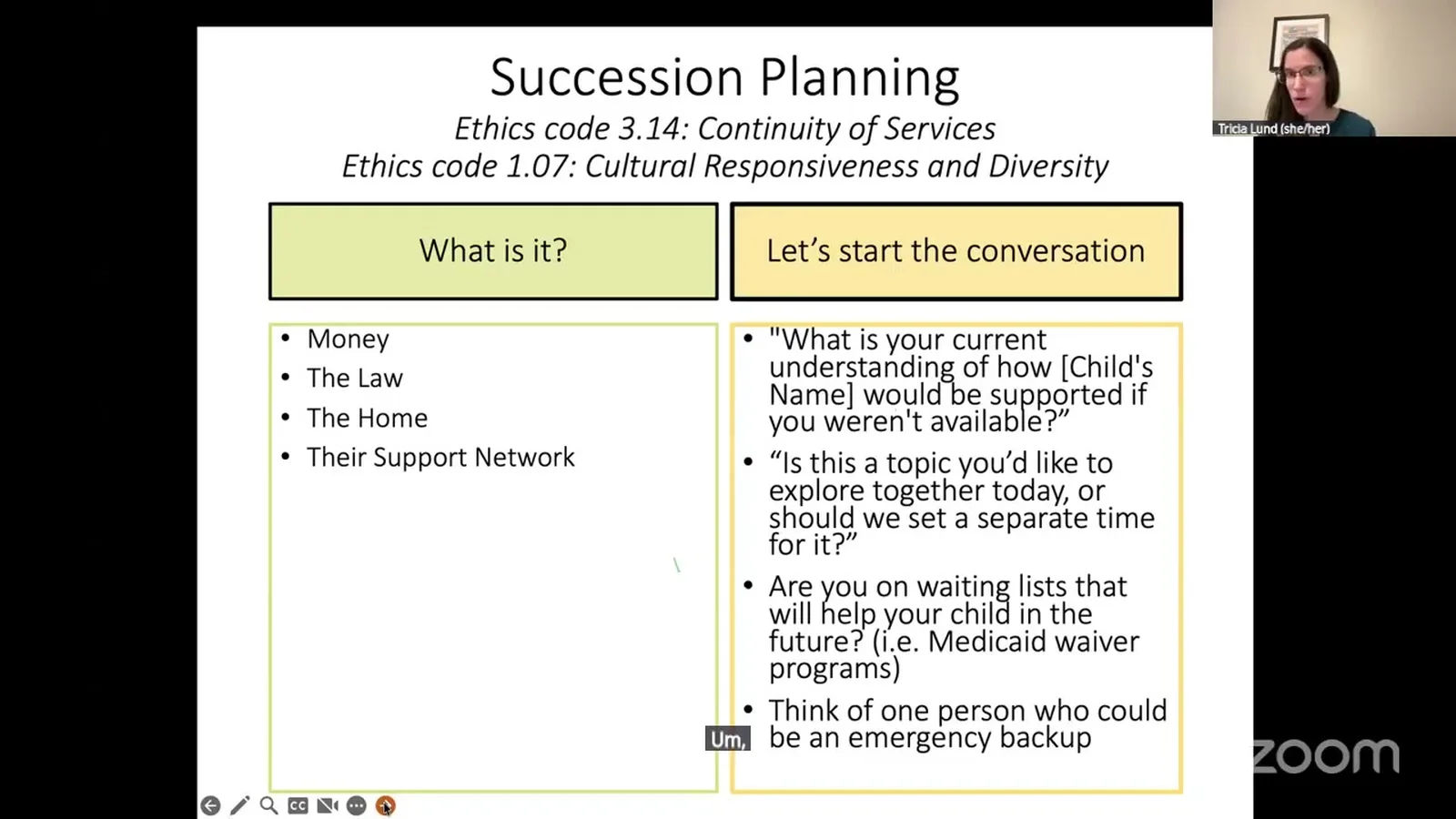
Increasing Competence and Confidence in Helping People with Disabilities through Grief
Free learning path on this topic
Your 4 Ethics CEUs, Done
Four ethics CEUs in three courses, all free. Start with Matt Harrington's assent and data course, then ethical guardrails in behavior reduction, then cultural considerations in clinical practice. Every course carries ethics credit, so this path covers the BACB requirement with nothing to buy.
On this page · 10 sections▾
In a CEU about grief work, Patricia Lund stopped and said the quiet part out loud: she gets so anxious at trainings that she shuts down and does nothing, and she wanted everyone watching to know they are not the only one. That admission is the whole reason this page exists. If you are a BCBA and a client or their caregiver just died, your nervous system is part of the case now, and ignoring it will quietly wreck your work.
This is a self care plan for the human inside the BCBA. Not a vibes pep talk. A behavior plan, the same way you would build one for anyone else: antecedents, replacement behaviors, and a way to check if it is working.
Why grief work hits BCBAs harder than most case types#
Most case types let you stay in your analyst brain. Sleep, feeding, elopement, communication. You can sit at the edge of the room, take data, and go home. Grief is different. Grief asks you to sit close to a hurting human while their world is missing a piece. As Lund put it:
"Death and dying and grief are hard, right? They're hard and they require us to sit with hard feelings."
Three things stack on top of each other in grief cases. One, the client lost a primary reinforcer, and often a primary caregiver, so the behavior picture changes fast. Two, the case bleeds into your own losses, even old ones you thought you were done with. Three, the field gives you almost no training for this, so you feel like you are guessing while a family looks at you for answers. That mix is why a "normal" tough case feels like a 4 out of 10 and a grief case feels like a 9.
The shutdown spiral: anxiety, shame, then avoidance#
Lund named the loop most BCBAs run when a case feels too big. It goes like this. You see what good support could look like. You notice you are not doing it yet. Your brain starts a list of everything you should be doing better. The list grows. You feel ashamed. Then you avoid the case, the email, the supervision meeting, the chart note.
"I get very anxious because I see all the things I should be doing better. And then my brain starts telling me, well, why aren't you doing this? Then I get myself so dysregulated that I shut down and I don't do anything."
The trap is that shutdown looks like rest. It is not. The case keeps moving, the family keeps grieving, and the avoidance bill grows interest. The fix is not to try harder. The fix is to interrupt the loop before it gets to shutdown, which means catching the first sign of dysregulation in your own body.
Signs you are dysregulated in session and do not know it#
Most of us miss the early signs because we are trained to look outward, not inward. Use this short body scan after every grief session for two weeks. Most BCBAs find one or two of these are their personal canaries.
- You skim the parent's words instead of listening. You are already planning your answer.
- Your shoulders are up by your ears, or your jaw is tight.
- You feel a strong pull to fix the feeling in the room with a strategy, fast.
- You over-explain. You hear yourself talking and cannot stop.
- You feel numb. The session ends and you cannot remember what was said.
- You feel a hot rush of "I am not qualified for this" right before you speak.
- You laugh at something that is not funny.
- You schedule the next visit further out than you normally would.
None of these mean you are bad at your job. They mean your nervous system tapped you on the shoulder. The job is to notice and respond, not to grade yourself.
Five recovery rituals you can use after a hard visit#
These are short on purpose. A ritual you skip because it is too long is worse than no ritual at all. Pick two and run them for a month.
-
The five minute car reset. Before you start the engine, put both feet flat on the floor of the car. Breathe out longer than you breathe in for ten breaths. Name three things you can see. Then drive. This drops your heart rate enough to be safe behind the wheel and to not bring the session into the next visit.
-
The voice memo dump. Open your phone, hit record, and talk for three minutes about what happened. Do not edit. Do not solve. Delete the file at the end of the week. The goal is to move the story out of your head and into the air.
-
The one sentence supervision note. Send your supervisor one line: "Hard grief session with [client initials], I am running warm, I am OK, just flagging." That is it. You are not asking for a meeting. You are creating a paper trail and breaking the shame loop in one move.
-
The body before brain rule. For the rest of the day after a grief session, do not write the chart note from memory. Do twenty minutes of something physical first. A walk, a short run, push-ups in your office, dishes. Then write. Your notes will be better and your sleep will be better.
-
The grief drawer. Keep one physical object in your office or car that has nothing to do with work. A book. A photo. A weird rock. Touch it after a hard visit. It is a cue that the session is over and you are back.
How to debrief with a peer without breaking confidentiality#
You need a person. You also need to protect the client. Both are true.
Build a short debrief script you can use with a trusted BCBA peer. It has three parts. First, ask permission: "Can I debrief a case in code for ten minutes?" Second, use generic labels: "an adult client, recent caregiver death, I am having a strong reaction." Third, ask for what you need: feedback, a sanity check, or just to be heard. Then stop.
What you do not share: names, ages within five years, city, employer, diagnosis details that would identify the person, family details, dates. What you do share: your reaction, the clinical question, the ethical question.
If you are tempted to share more, that is a sign you need a licensed therapist, not a peer. Peer debriefs are for processing your reaction. Therapy is for processing your story. They are different tools.
When to take yourself off the case#
This is the question most BCBAs avoid because it feels like failure. It is not. It is competence. The ethics code asks you to practice inside your scope, and your scope includes your own current capacity.
Signs it is time to ask for a transfer, even temporarily:
- You cried in three sessions in a row and could not name why.
- The case is bleeding into your sleep more than two nights a week.
- You are avoiding a specific family member because they remind you of someone you lost.
- You notice you are giving advice that fits your story, not the client's.
- A trusted peer has told you twice that you sound different about this case.
Stepping back is not quitting. It is modeling exactly what you want families to do. Bring it to your supervisor as a plan, not a confession: "I want to stay involved in case planning, and I think a co-BCBA should run the next 60 days of direct visits. Here is the handoff." That is what scope of competence looks like in real life.
Supervision questions to ask your own supervisor#
If you have access to supervision, bring these questions. If you do not, write them on a card and answer them yourself once a month.
- Where am I working at the edge of my competence on this case, and what is the plan to close the gap?
- Who outside our team should be at this table? An LPC, a social worker, the medical team, a faith leader, a death doula?
- What does success look like for the next 30 days, in a way I can measure?
- What would be a reason for me to step back, and who decides?
- What support do I need from you that I have not asked for?
Bring data when you can. Even a simple one to ten rating of how dysregulated you felt before, during, and after the last three visits is useful. You would track this for a client. Track it for yourself.
Long term: building a grief work peer group#
One case will not break you. A career of cases without support will. The single highest return action a BCBA doing grief work can take is to build a small peer group, four to six people, that meets once a month for an hour. Same time, same format, no exceptions.
A simple format that works: ten minutes of check-ins, twenty minutes for one person to present a case in code, twenty minutes of feedback, ten minutes for resources and reading. That is it. You are not running therapy. You are building a culture where grief work is normal, and where asking for help is the rule, not the exception.
Lund offered a frame for the inner critic that is worth keeping close:
"Notice that the thoughts are coming from a place of love and that the thoughts are coming from, from you wanting to be a better professional."
The voice that says "you should be doing more" is not an enemy. It is a sign you care. The work is to give that voice a job, not let it drive the car.
FAQ#
Is it normal for BCBAs to feel anxious after a client death? Yes. Lund said so out loud in front of hundreds of BCBAs. Anxiety after a client or caregiver death is a sign you are paying attention, not a sign you are broken. The risk is when anxiety turns into avoidance for more than a few days.
How do I know if I am too dysregulated to work the case? Use the body scan in this guide. If you check two or more boxes in three sessions in a row, you are running warm. Bring it to supervision and build a plan. You can stay on the case and still get help.
Should I take time off after a client dies? At least take a half day. Cancel paperwork-heavy meetings, eat a real meal, move your body, sleep. If you cannot stop crying after 72 hours, or you cannot function at home, call your own doctor or therapist. This is a normal response to a hard thing.
Who can I debrief with without breaking HIPAA? A trusted BCBA peer or supervisor, using code and no identifying details. Your own therapist, who is bound by their own confidentiality. A formal peer consultation group with a written agreement. Not your spouse. Not a friend over drinks. Not a public post.
How do I keep grief work from burning me out? Three things. One, build a monthly peer group so you are not alone. Two, run the recovery rituals in this guide after every hard visit, not just the worst ones. Three, get your own therapy if you carry losses of your own. Grief work without your own support is how good clinicians leave the field.
Keep going#
Self care is the floor, not the ceiling. The next step is knowing what you can and cannot do clinically, and how to partner with other professionals so the family gets full care. Lund teaches the BCBA-side of this work weekly on openceu.com. Watch the source CEU below and pick one ritual from this page to start tomorrow.
Turn this topic into a CEU
You just studied this. Now get credit for it.
Watch Increasing Competence and Confidence in Helping People with Disabilities through Grief with Patricia Lund and earn 1 free BCBA CEU. Detailed certificate, delivered the moment you finish.
Keep going with a free learning path
Your 4 Ethics CEUs, Done
Four ethics CEUs in three courses, all free. Start with Matt Harrington's assent and data course, then ethical guardrails in behavior reduction, then cultural considerations in clinical practice. Every course carries ethics credit, so this path covers the BACB requirement with nothing to buy.