Increasing Competence and Confidence in Helping People with Disabilities through Grief
Presented by Patricia Lund
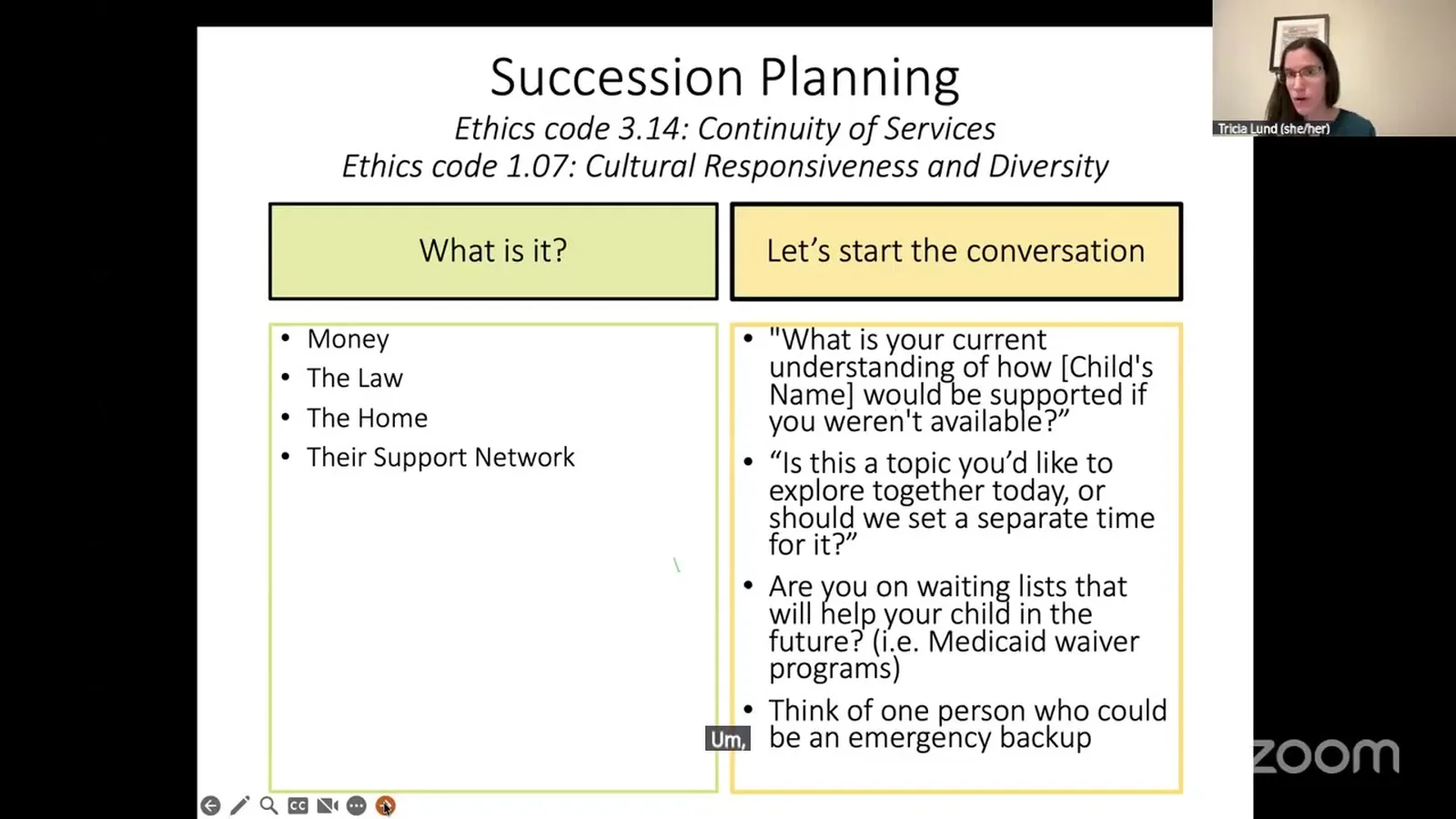
This presentation addresses the critical role of Board Certified Behavior Analysts (BCBAs) in supporting clients through grief, establishing bereavement as a behavioral process involving respondent and operant changes following the loss of a significant reinforcer. By exploring environmental variables and relevant Ethics Codes, the session underscores the importance of maintaining professional competence and pursuing interdisciplinary collaboration within the BCBA’s scope of practice. Given that adults with developmental disabilities are living longer and increasingly facing the death of primary caregivers, we will examine the resulting "secondary losses"—such as shifts in housing and social support—and engage in interactive activities to develop behaviorally-based strategies that provide compassionate, evidence-based support during these significant life transitions.
Register free & watch nowCancel any time. Cert delivered to your inbox the moment you pass the quiz.
About this CEU
This presentation addresses the critical role of Board Certified Behavior Analysts (BCBAs) in supporting clients through grief, establishing bereavement as a behavioral process involving respondent and operant changes following the loss of a significant reinforcer. By exploring environmental variables and relevant Ethics Codes, the session underscores the importance of maintaining professional competence and pursuing interdisciplinary collaboration within the BCBA’s scope of practice. Given that adults with developmental disabilities are living longer and increasingly facing the death of primary caregivers, we will examine the resulting "secondary losses"—such as shifts in housing and social support—and engage in interactive activities to develop behaviorally-based strategies that provide compassionate, evidence-based support during these significant life transitions.
What you'll learn
- 1Objectives
- 2Participants will be able to define grief in behavior analytic terms
- 3Participants will identify setting events that can impact how someone grieves.
- 4Participants will identify why the death of a caregiver can lead to an increase in challenging behaviors
- 5Participants will identify interventions that can help support adults with disabilities who are grieving a death loss.
Concepts in this CEU
More from The Behaviorist Bookclub
Foundations of Reflective Supervision in Behavior Analysis
The Behaviorist Bookclub
Teaching WH-Questions Isn’t Enough: Building True Conditional Discrimination
The Behaviorist Bookclub
Reframing Behavior through an ADHD Lens
The Behaviorist Bookclub
OpenCEU is supported by advertising from third-party sponsors. Sponsors are clearly labeled, have no influence over course content, instructors, or CEU decisions, and never appear on certificates. The BACB does not sponsor, approve, or endorse OpenCEU sponsors or their products.