What Does Your Body Know? Teaching Individuals with IDD to Recognize Internal Warning Signs`
Presented by Tricia Lund
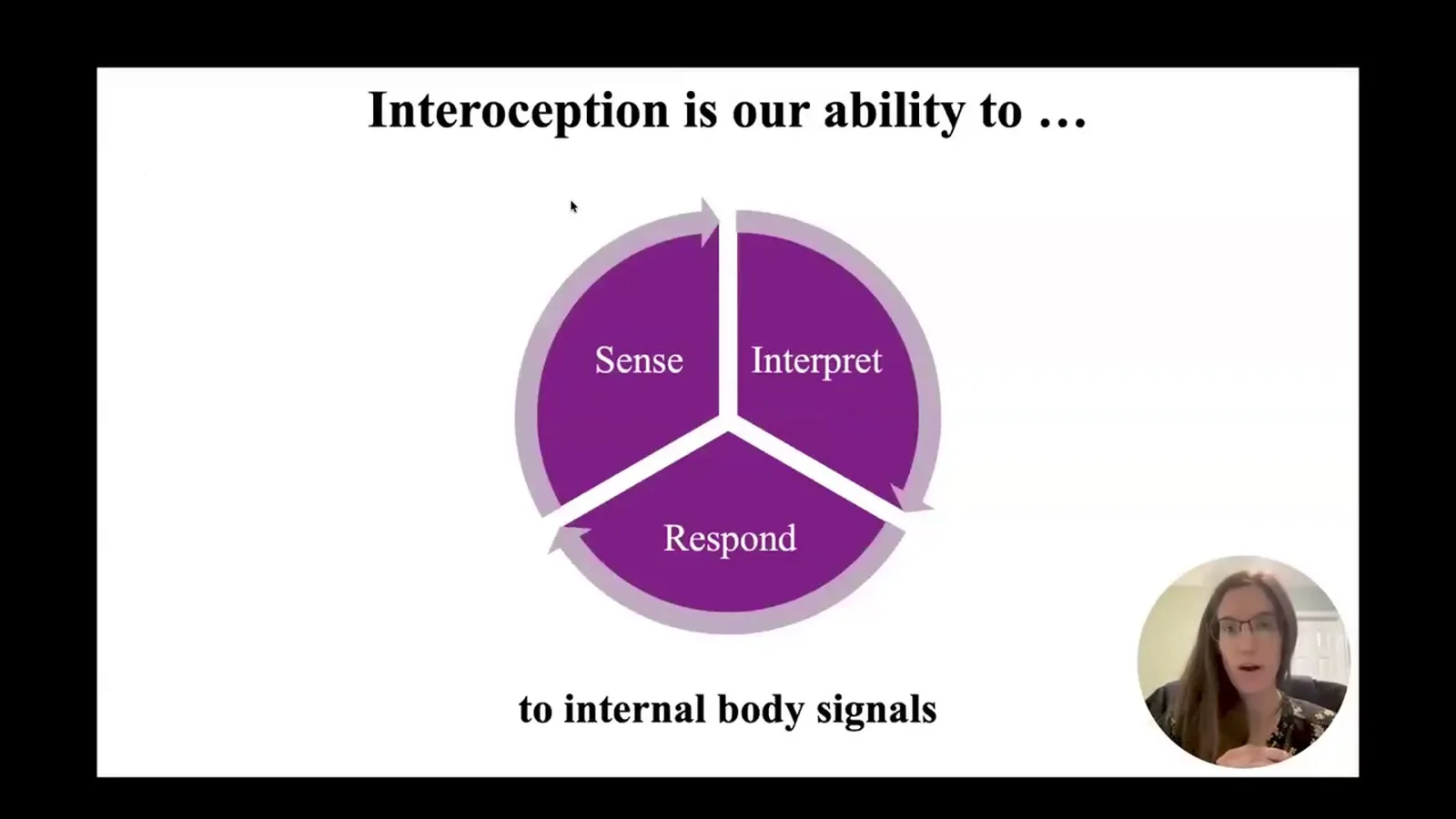
What You’ll Learn & How It Applies to Your Practice Research suggests nearly three-quarters of individuals with autism have significant difficulty reading their own internal body signals unless those signals are extreme — and if a learner can’t recognize that something is wrong inside, no safety skill we teach will trigger in time. Patricia Lund will introduce interoception (the ability to sense and interpret signals from inside the body), explain why it’s a foundational skill for abuse prevention, and give you practical starting points for weaving body awareness into the safety skills training you’re already doing
Register free & watch nowCancel any time. Cert delivered to your inbox the moment you pass the quiz.
Learner ratings
from 88 learners
100% would recommend this CEU to other professionals in their field (32 responses)
“Very good”
— Ana S.“very important”
— Marcelo R.“N/A”
— Javaria A.
About this CEU
What You’ll Learn & How It Applies to Your Practice Research suggests nearly three-quarters of individuals with autism have significant difficulty reading their own internal body signals unless those signals are extreme — and if a learner can’t recognize that something is wrong inside, no safety skill we teach will trigger in time. Patricia Lund will introduce interoception (the ability to sense and interpret signals from inside the body), explain why it’s a foundational skill for abuse prevention, and give you practical starting points for weaving body awareness into the safety skills training you’re already doing
From the talk
What was covered
Why safety rules fail without body awareness, and how to teach learners with IDD (intellectual and developmental disabilities) to notice, name, and trust internal warning signs.
- Teach a learner to notice body signals before you teach them a safety rule.
- "No, go, tell" only fires after the learner has already decided something is wrong, which is often too late.
- Grooming (the slow, gradual process abusers use to build trust) starts with small, normal looking touches that no good touch or bad touch checklist will flag.
- Track the visible signs of hidden states: held breath, a blank or flat face, rising shoulders, sudden quiet compliance.
- Reinforce "I don't like that" and "I need space" instead of quietly reinforcing tolerance.
- Build short body check-ins into toileting, feeding, hygiene, and movement so the skill carries over to new situations.
Why Abuse Prevention Needs More Than a Rule List
Sexual abuse is more likely to happen to people with disabilities. And the person who does it is usually not a stranger. It is often someone the learner already knows and depends on. That single fact should change how we teach body safety. Most of our safety programs are built for strangers and for obvious danger.
This talk opened with a picture of four layers of protection. The individual sits in the center. Clients can learn body safety skills. They can learn to report, to spot red flags, and to leave. Caregivers and parents are the next layer. They have to build a home where the child is safe. Organizations come next: schools, churches, group homes, and ABA clinics. Their policies and safeguards should make abuse structurally harder to carry out. Society is the outer layer, with laws and real consequences.
This talk lives in that center circle. It is about helping clients read internal cues of danger and safety. That raises a fair question for behavior analysts. Is there room for inner experience in our science? The answer here is yes. Inner experience shapes the behavior we can see. And the behavior we can see gives us a window into what is happening inside.
And of course, children should never be the last line of defense, right?
From the talk — Tricia Lund
Interoception: The Sense That Tracks Danger, Not Just Hunger
We have eight sensory systems. A sensory system is just how the body takes in and sorts information. Most of them point outward. We see, hear, smell, taste, and touch. Three point inward. Proprioception (knowing where your body is) tells you where your arm sits in space. The vestibular system (the sense that manages balance and movement) comes next. Interoception (sensing signals from inside you) is the third.
Here is the concrete version. Someone taps your shoulder, and that is your tactile system. You reach behind you without looking, and that is proprioception. Your heart races or your stomach knots because something feels off. That is interoception. It works in three steps. You sense a signal. You interpret it. Then you respond. Your stomach clenches, you read it as hunger, and you go eat. Your eyes feel heavy and your body feels slow, so you lie down or get water.
Now apply that to safety. The same system does not only report hunger and fatigue. It also reports fear and unease. That is why it belongs in abuse prevention work, not just in feeding or toileting goals.
It tracks danger too, which is why teaching interoceptive skills is so important when it comes to abuse prevention.
From the talk — Tricia Lund
Where "No, Go, Tell" Runs Out of Road
A behavior based approach teaches a fixed set of rules. It also teaches the learner to watch for very specific cues. "No, go, tell" is the clearest example. Spot the unsafe request. Say no. Get away. Tell a trusted adult. In the published ABA literature this shows up as behavioral skills training (a structured way to teach responses). Raymond Milton Berger is the author to look for. The research shows it can work. These rules also fit learners who need things black and white.
But the rule has three gaps. First, it assumes the learner can already tell that a situation is unsafe. The grooming literature says abuse rarely looks dangerous at the start. It starts with praise, gifts, and attention from someone familiar. We do not usually teach that those things are bad. So the learner waits for a clear moment of danger that comes far too late.
Second, the rule assumes the learner can get away. Abuse is often carried out by someone in a caregiving role. It is hard to walk away from a person you rely on for care. Third, many programs spend years teaching compliance with adults in authority. Then we ask that same learner to refuse an adult in authority and run. That is a lot to ask.
And so the bottom line is that the no go tell approach is a useful starting point, but it is an insufficient end point.
From the talk — Tricia Lund
Good Touch, Bad Touch and Relationship Circles Miss How Grooming Begins
Good touch and bad touch programs teach the learner to sort touches. Good and okay on one side. Bad and abusive on the other. Then say no, get away, and tell. The problem is that abuse does not follow that script. We teach the extreme end of the range. A learner may well spot a rough grab or a touch to a private area.
Grooming does not start there. It starts with a hand on a shoulder. A tickle. A quick back rub. The person watches how the learner reacts. If nothing happens, they push a little further. The hand lingers. It slides down the back. A touch to a private area happens "by accident." None of those early moves land in the bad touch bucket. A learner who reads internal cues does not need them to. They notice that something feels confusing or icky, and that is reason enough to tell someone.
Relationship sorting programs have a similar hole. They group people into circles, then assign rules for how you talk, touch, and trust each group. Hug and kiss the blue family circle. Never talk to the red stranger circle. The visual is concrete and useful. But what happens when the person doing harm sits in the blue circle? The rule does not just fail. It works against the learner. Abusers know how to get into the inner circles and then start crossing lines.
Three examples from the talk make the gap obvious. A coach's hand lingers on a back, and nobody taught that as dangerous. A youth pastor drives a child home alone, and the child was taught to fear strangers only. A family member offends and says it is fine because they are family. In each case the learner was taught something, and what they were taught did not cover the moment.
And a child who has this developed interceptive awareness doesn't need to wait for a touch to like cross the line before they take action.
From the talk — Tricia Lund
Three Reasons to Add Internal Cues, and Who Struggles Most to Read Them
The first reason is timing. Body signals are faint and they come early. A learner who reads them can leave before anything escalates. They do not have to wait for behavior obvious enough to match a taught rule. The body often knows before the mind can name it.
The second reason is coverage. You cannot write a rule for every situation or every grooming tactic. No curriculum is that big. But one internal signal travels with the learner everywhere.
The third reason is the nature of grooming itself. It works because each step is small, gradual, and easy to explain away. A behavior checklist is nearly useless against that. The body may still register discomfort while the mind is being talked out of it. Teaching a learner to trust that discomfort is one of the few tools that holds up. It is also worth knowing who tends to struggle here. Neurodivergent people (brains that work differently) often do. So do people with a trauma history. Years of compliance focused teaching can do the same. So can medications that act on the nervous system.
So it's not scenario-dependent, and it doesn't require the situation to look like something that they've been taught.
From the talk — Tricia Lund
Private Events and the Public Signs That Travel With Them
Fear, unease, and a sense that something is off are private events (behavior that happens inside the skin). From a radical behaviorist view (a view that includes private behavior), they are still behavior. They are shaped by the environment like anything else. We just cannot see them. We cannot watch a heart rate climb or a stomach tighten. So we work from public accompaniments (what we can see from outside).
The talk grouped those visible signs into clusters. Escape and avoidance shows up as leaning back, turning away, or hiding behind a caregiver. It can also look like refusing to enter a room, a slow approach, or leaving the area. Posture often shifts too: arms crossed tight, shoulders up by the ears, chin tucked, or curling inward. It can also show as covering the chest or genitals, or hands over the face. Proximity shifts include suddenly moving closer to a trusted adult, grabbing a hand, or checking the room. It can also look like pulling away from one specific person. Self soothing responses include rocking, pacing, humming, squeezing hands, rubbing skin, twirling hair, or more stereotypy (repeated movements like rocking or hand flapping).
The quiet signs are the easiest to miss and often matter most. Less eye contact. Flat affect (a face and voice that show little emotion). Fewer words. Short or delayed answers. Freezing. Sudden compliance with no engagement. In grooming situations many learners do not fight. They disengage. Autonomic signs (body reactions you cannot control) can show too: flushed skin, sweating, fast breathing, and repeated swallowing. Trembling, rigid muscles, fidgeting, and foot tapping fit here as well. Verbal behavior shifts as well, with more requests to leave and repeated rule statements. Reassurance seeking and scripted lines like "I'm okay" fit this pattern too. Read these as a shift in motivating operations (what makes something more valuable) rather than as noncompliance.
Six Practical Ways to Teach Interoceptive Awareness
Step one is to teach body discrimination before safety rules. Use body maps, mirrors, visual scales, or tactile body outlines. Ask what the body feels like right now. Ask where the learner feels it. Ask if the body is tight, calm, busy, or heavy. The target is tacting (naming what you notice) small changes inside, well before a crisis. Step two is to pair outside events with inside cues. Run short body check-ins during real moments: greeting a new person, close proximity, transitions, or hands on activities. Ask what the body is telling them right now. Over time, stimulus control (what cue controls a response) moves from your prompt to their own signal. Use many examples, fade prompts, and plan for generalization (using the skill in new situations).
Step three is a pause, scan, decide chain. Pause means stop the automatic response. Scan means check heart rate, breathing, muscle tension, stomach, and the urge to move. Decide means pick a response: move away, move closer, ask a question, stay, request space, or get help. That turns safety from rule following into body informed decision making.
Step four is to reinforce reports of discomfort. Traditional teaching often reinforces tolerance and compliance instead. Reinforce "I don't like that," "I need space," and "something feels weird." Reinforce moving away, hesitating, and setting a boundary. You are strengthening mands (requests for something) for escape, information, and support. Otherwise you quietly extinguish the earliest warning behavior you have. Step five is to embed the work into daily living. Body awareness should show up in toileting, feeding, hygiene, and movement, not only in abuse prevention lessons. That is how it becomes a general repertoire (a set of skills the learner can use) that transfers to social safety.
Step six is the support layer: self monitoring, role play, and caregiver coaching. Use scheduled body scans and quick check-ins. A zero to five tension scale lets a learner rate how activated the body feels. A visual thermometer gives that a concrete picture. Body check routines work too, such as checking whether the heart is calm or racing. Add a body sensation column to your ABC logs (antecedent, behavior, consequence notes). Practice with video modeling and role play, then debrief. What changed in your body? When did your shoulders tighten? When did you want space? Train the adults to notice flushed skin, fast breathing, tension, and voice changes. Then have them prompt body awareness in the moment.
Who Else Belongs on the Team, and What Tools Already Exist
Body awareness does not develop in a vacuum. If we ask learners to notice and trust internal signals, the adults around them need the same language. Interoception does not belong to one discipline. Our part often starts with functional assessment (figuring out why a behavior happens), precursor patterns (small signs before bigger behavior), and motivating operations. Occupational therapists answer a different question: what does that feel like in the body. They bring sensory processing (how the body handles input from the senses), body mapping, and curriculum work. Clinicians trained in specific interoception programs offer structured frameworks. Speech therapists build the words or the AAC system (picture or device based communication) a learner needs to name an internal state. Teachers see these signals in social settings long before we do. Caregivers and direct support staff notice the small shifts first. Collaboration also extends the reach of your safety programming without stepping outside your scope.
Three named tools came up in the talk. MABT, mindful awareness in body oriented therapy, was developed by Dr. Cynthia Price at the University of Washington. It was built for trauma, substance use, and emotion regulation. It teaches three core skills: identifying internal sensations, holding attention on them, and appraising what they mean.
The MAIA-2 is the multidimensional assessment of interoceptive awareness. Dr. Wolf Mehling developed it at the University of California, San Francisco. It was first published in 2018 as an expanded version of the original. It measures eight dimensions, including noticing, attention regulation, and not distracting. It also covers emotional awareness, self regulation, not worrying, body listening, and body trust. It is public domain and available in 30 languages.
The third is RISE, reconnecting to internal sensations and experiences, developed by Dr. April Smith and colleagues. It is a four session online intervention aimed at body awareness and body trust, first studied in military populations. Pilot work showed gains in six of the eight MAIA-2 domains, including body trust. Those gains held at follow up.
Common questions
What is interoception in simple terms?▾
Interoception is your body's ability to sense, interpret, and respond to signals from inside you. A knot in your stomach, a racing heart, or heavy eyes are all interoceptive signals. Most sensory systems collect information from the outside world, but this one reports from the inside. It tracks hunger and fatigue, and it also tracks fear and danger.
Does teaching interoception replace no, go, tell?▾
No. Rule based programs still have real value, especially for learners who need things black and white. The issue is that they only activate after the learner has already labeled a situation as unsafe. Interoceptive awareness is what lets them reach that judgment earlier, so treat it as a supplement rather than a swap.
Why do people with IDD often struggle to notice internal warning signs?▾
Several groups tend to have a harder time reading internal cues. Neurodivergent people often do, as do people with a trauma history. Years of compliance heavy education or treatment can also teach a learner to override body signals. Certain medications that act on the nervous system can blunt both noticing and interpreting.
How do I write an interoception goal that a funder will accept?▾
Frame it as what it is: a safety skill and a social skill. Start from a quality of life outcome, such as safety with peers or safety at home. Then slice the work into specific if X then Y targets you can actually measure. At the end of the day you are taking data on observable responses, and that is what the goal should say.
What behaviors should I watch for as early warning signs?▾
Look for clusters rather than single events. Common ones include leaning or turning away, tight crossed arms, shoulders rising, sudden proximity seeking, rocking or hair twirling, flat affect, delayed or very short answers, and sudden compliance with no engagement. Flushed skin, fast breathing, and repeated swallowing also show up. Track them over time and treat them as information, not as noncompliance.
About the speaker
Tricia Lund is a BCBA and a licensed behavior analyst in Texas. They are also a certified sexuality educator through ASECT, a certified trauma professional, and are completing coursework in somatic experiencing and in death and grief education through ADEPT. They have worked with people with disabilities for more than 15 years, with most of their current work in group homes and residential settings.
This summary was generated from the recording’s transcript. Quotes are taken word for word from the talk.
What you'll learn
- 1Learning Objectives
- 2Participants will define interoception and explain its relevance to abuse prevention for individuals with IDD.
- 3Participants will identify at least two reasons why individuals with IDD may experience difficulty recognizing internal warning signals.
- 4Participants will describe at least two practical strategies for incorporating body awareness into existing safety skills training.
Concepts in this CEU
Related talks
Talks that cover the same concepts

It’s Complicated: Teaching Relationship Safety That Reflects Real Life
The Behaviorist Bookclub

The Interdisciplinary Case Conference
The Mindful Learner LLC
Getting the Right Answer Isn’t Enough: Establishing Speaker–Listener Repertoires for Complex Learning
The Behaviorist Bookclub
When the Foundations Are Right: Unlocking Advanced Verbal Repertoires
The Behaviorist Bookclub
Shaping Behavior Change when ADHD is in the Picture
The Behaviorist Bookclub

Multiple Exemplar Instruction (MEI): Training for Generalization
Copper Consulting Group
More from The Behaviorist Bookclub
Harm Reduction Within ABA Practice
The Behaviorist Bookclub
Supervising Beyond Technical Skills: Professionalism, Communication, and Clinical Judgment
The Behaviorist Bookclub
Reflective Supervision and Client Outcomes
The Behaviorist Bookclub
OpenCEU is supported by advertising from third-party sponsors. Sponsors are clearly labeled, have no influence over course content, instructors, or CEU decisions, and never appear on certificates. The BACB does not sponsor, approve, or endorse OpenCEU sponsors or their products.