Rad N Bad: The Dosage Dilemma — Contingency, Evidence, and Ethics in ABA Treatment Intensity
Presented by Sean Yocum & Michael Carrero

Historically, Applied Behavior Analysis (ABA) has treated high-volume intervention (30–40 hours per week) as an assumed clinical standard. In this 2.0 CEU course, co-hosts Sean Yocum and Mike Carrero deconstruct both the empirical science and ethical dilemmas governing service dosage in behavior analysis. The first half (1.0 Learning CEU) evaluates the foundational and modern literature on Early Intensive Behavioral Intervention (EIBI), contrasting historic treatment packages (Lovaas, 1987; Smith et al., 2000; Eikeseth et al., 2002) with modern meta-analyses (Sandbank et al., 2024), while redefining true behavioral intensity through learning opportunity density and procedural fidelity. The second half (1.0 Ethics CEU) examines how systemic fee-for-service reimbursement and operational utilization models exert competing contingencies on clinical decision-making. Grounded in the Ethics Code for Behavior Analysts (Sections 2.01, 2.14, and 3.01), this course analyzes the behavior analyst’s ethical responsibility to recommend services based strictly on medical necessity, avoid over-prescription driven by reimbursement or staffing structures, and prioritize client independence through systematic, criteria-based treatment titration.
Sign in to buy — $25One-time purchase, permanent access. Cert delivered to your inbox the moment you pass the quiz.
About this CEU
Does recommending 30 hours of ABA a week reflect true behavioral science, or is it circular reasoning with a CPT code attached? In this episode of the Rad N Bad Podcast, hosts Sean Yocum and Mike Carrero critically examine the science, economics, and ethics of treatment dosage in ABA. Hour 1: The Empirical Science of Dosage (1.0 Learning CEU): Sean and Mike examine the history of EIBI—from the 1987 UCLA Young Autism Project and the 2001 National Research Council report to recent 2024 JAMA Pediatrics meta-analyses. They expose the scientific gap between "intensive treatment packages can be effective" and "every child needs 40 hours of 1:1 intervention," establishing a clear functional distinction between administrative treatment volume (time on the clock) and active behavioral intensity (active responding, target relevance, and caregiver implementation). Hour 2: Ethics, Contingencies, and Titration (1.0 Ethics CEU): The discussion shifts to an environmental analysis of provider contingencies. In a fee-for-service healthcare model, organizational survival often depends on billing volume, creating systemic friction against clinical discharge and prompt fading. The hosts explore how behavior analysts can adhere to BACB Ethics Code standards—specifically Code 2.01 (Providing Effective Treatment), Code 2.14 (Discontinuing Services), and Code 3.01 (Behavior-Analytic Assessment & Medical Necessity)—by building audit-proof, individualized titration plans that make professional intervention progressively less necessary.
From the talk
What was covered
Rad N Bad on ABA hours: what the dosage research really shows, how fee for service shapes it, and when to fade.
- Treat an hour count as something you test with data, not a tier you assign.
- Read Lovaas, Smith, and Eikeseth as tests of whole packages, not tests of hours.
- Write fading criteria into the treatment plan on day one, not at discharge.
- Measure learning chances, fidelity (treatment done the right way), and skill carryover instead of time on the clock.
- Spend more plan time on the caregivers who hold the other 138 hours.
- Run the money-free test on your own recommendation before you send it to a funder.
Where the 30 to 40 Hour Model Came From
The hosts start with history, not opinion. Hours did not fall out of the sky. In 1987, Ivar Lovaas published the UCLA Young Autism Project study. Nineteen young autistic kids got early intensive behavioral intervention, or EIBI (many therapy hours each week). The paper describes it as about 40 hours a week, often for years. Lovaas reported that 47% of that group reached what the paper called normal educational and intellectual functioning. Only 2% of the control group did. For 1987, that was a huge result.
Mike adds a clear caveat. He does not back the study's methods, or its goal of making kids look normal. The word fix came out of that era, and it did harm. Sean adds the science problem. That study ran no trial comparing 10, 20, 30, and 40 hours head to head. What worked was a whole package that also happened to run many hours. The field later treated 40 as the active ingredient (the actual cause of change). The study never showed that.
The replications landed lower. Smith, Groen, and Wynn ran a randomized trial in 2000 (kids randomly split into groups for a fair comparison). Their intensive group averaged about 24 and a half hours a week in year one. Hours then dropped in later years. Those kids beat the parent training group on IQ, visual-spatial skills, language, and school skills. The groups did not differ much on adaptive functioning (everyday self-care and life skills) or problem behavior. In 2002, Eikeseth and colleagues studied kids at about 28 and a half hours. The comparison group got about the same hours and still did worse. The authors said features of behavioral treatment, not hours alone, may explain the gap.
Our problem isn't the number. Our problem is when we know the number before the data have earned it.
From the talk — Sean Yocum & Michael Carrero
What the 2001 National Research Council Report Really Said
By the late 2000s, the pooled numbers looked strong. Eldevik and colleagues ran a meta-analysis in 2009 (a study that pools many studies). They found large average effects for IQ and moderate effects for adaptive behavior. A 2012 Cochrane review said EIBI usually runs 20 to 40 hours a week. Cochrane reviews are independent looks at the medical evidence. That same review flagged limits in the evidence and few rigorous studies. These are real findings. They support a package, not a formula.
Then there is the 2001 report, Educating Children with Autism. It gets quoted for one number: 25 hours a week, 12 months a year. Read the rest of the sentence. The committee asked for 25 hours of systematically planned, developmentally appropriate educational activity toward individual goals. That means planned teaching matched to the child's stage. It also said what fills those hours shifts with the child's level, strengths, weaknesses, age, and family needs.
That clock was never a billing code. It can hold school time, teachers, and caregivers. It can include speech, OT (occupational therapy), PT (physical therapy), play in natural settings, and community life. ABA fits inside it. Somewhere along the way, the field read 25 hours as 25 hours of one-to-one therapy by a tech. Those are two different claims.
Education doesn't inherently mean school, but we would prefer some level of school-based academics to support that level of growth and nurturing for an individual.
From the talk — Sean Yocum & Michael Carrero
Sandbank 2024 and the Dose Response Question
In 2024, Sandbank and colleagues published a meta-analysis in JAMA Pediatrics. It asked a narrow question. Does more treatment mean better outcomes? The sample was not small: 144 studies and a bit over 9,000 kids. They looked at daily intensity, how long treatment ran, and total hours. Within a treatment type, they found no significant positive link between amount and effect size. Effect size means how big the difference between groups was.
Their read was careful. The evidence does not robustly show that more intensity brings more gain. Frazier and colleagues pushed back in print. They argued that method and sampling issues could hide a real dose response (more hours means more gain). The hosts call that healthy. Science is supposed to argue.
So do not trade one slogan for another. More hours are always better is not supported. Hours never matter is not supported either. The defensible claim is narrow. We lack strong evidence that each added ABA hour reliably buys more progress for autistic kids.
there's only so many hours in a day. Use them to benefit the individual and the environment that they find themselves in.
From the talk — Sean Yocum & Michael Carrero
How Focused and Comprehensive Tiers Became a Prescription
In 2014 the BACB (the board that certifies behavior analysts) put out practice guidelines for funders and managers. It described two broad models. Focused ABA sat near 20 to 25 direct hours a week. Comprehensive ABA sat near 30 to 40. The same document said dosage should track goals, client needs, and response to treatment. Numbers travel well. Caveats do not.
A tier chart feels clinical. It feels clean. But ask which variable set those numbers. Diagnosis? Severity level? Goal count? Rate of learning? Caregiver capacity? School placement? Natural supports? Payer rules? Each one matters. None of them is a dose. Sean calls the shortcut circular reasoning (explaining something by just repeating it) with a billing code attached.
Picture three kids who all meet the same severity level. Child A has large speech and daily living needs, few behaviors of concern, and parents who learn fast. Child B has severe aggression, self-injury, elopement, poor sleep, feeding problems, spotty school days, and a worn out family. Child C has fewer skill gaps, but dangerous behavior at home. Same label. Three very different plans. Child C may need assessment, caregiver coaching, and home changes more than 35 direct hours.
The system also likes round numbers. Submit 18 hours and reviewers get confused, the hosts say. In their state, a 16-year-old can get labeled focused by age alone. A four-year-old who needs some social skills work gets pushed toward 30. Their advice holds up: strong assessment plus written reasoning usually survives peer review (a funder checking the case).
Adaptive functioning isn't a dosage. Challenging behavior isn't a dosage. And the number of goals isn't a dosage.
From the talk — Sean Yocum & Michael Carrero
Follow the Money: What Fee for Service Rewards
The hosts refuse the greedy provider story. They call it lazy analysis. Instead they run a contingency analysis (what the system actually rewards). Take two clients. Client A gets 30 direct hours a week. Client B gets 15 direct hours, plus heavy caregiver training, school work, and a plan to need less help. Under fee for service (pay for each hour billed), which one keeps money steady?
Follow the chain. More approved hours mean more billable units. That funds staff hours and steady revenue. Steady revenue covers rent, payroll, training, and software. None of that is wrong. Techs need jobs. Profit is not a dirty word. The trouble shows up when the child gets better. Clinically, falling hours are a win. On the ledger, they look like a loss.
Now take two BCBAs (board certified behavior analysts) in one company. The first has ten clients at 30 hours. The second has ten at 15. Families get skilled, skills carry over, kids join school, and some cases near discharge (ending treatment). The second caseload is worth less under a model built on direct hours. The clinician making therapy less needed can make the caseload less profitable.
Response effort (how much work a task takes) pushes the same way. One tech with one 30-hour kid is easy to schedule. One tech split across three 15-hour kids is not. One call-out then wipes out three families' sessions. This is not an ABA flaw alone. It is why healthcare keeps testing new payment models. Value based care, bundled payments, and pay for performance all try to reward results, not just hours.
So, it's not an accusation. It's just a contingency.
From the talk — Sean Yocum & Michael Carrero
Caregivers Hold the Other 138 Hours
Sean does the math out loud. Thirty hours is about 18% of a child's week. Sleep eats another large slice. Most of the rest is awake time with family, siblings, school, and the community. Even strong therapy touches a small part of the week.
The early studies that built the high hour story leaned on caregivers. Modern delivery often treats that work as a nice extra. The hosts say the payment structure rewards time with staff over time with families. For outcomes, that is backwards. One strong caregiver session can shape many hours of a kid's natural week.
Other variables also move the data. Biology, culture, better sleep, and plain development all do work. So hours alone cannot get credit for IQ gains. Mike pushes for real teamwork with OT, PT, speech, and school. Not stepping into their lane. Supporting their targets so skills stick in more places.
Families shouldn't have to be forced to choose one service over the other.
From the talk — Sean Yocum & Michael Carrero
Stop Calling Hours Intensity
Two kids both get 15 hours. On paper that is the same dose. Behaviorally it may be two different treatments. Kid one gets shaky fidelity (treatment run the right way). Reinforcers (things that strengthen behavior) do not work well. Targets get picked because they are easy to write, not because they matter. Much of the session goes to chasing instructional control (the learner follows your lead). Little carries over at home.
Kid two gets a few high value targets that matter to the family. Procedures run with good fidelity. Reinforcers work. Teaching sits inside daily routines. Caregivers join in. The team plans generalization (skills carry over to new places) from day one. Same number on the authorization. Not the same treatment.
So what makes treatment intense? The hosts list parameters you can measure. Learning chances per hour. Fidelity. Reinforcer quality. Target selection with social validity (goals the family truly values). Skill transfer across people, places, and routines. How fast the team changes course when data go flat. A 90-minute session with 100 good teaching chances can beat three hours with 25.
Then flip it. Fifteen direct hours plus 10 hours of caregiver coaching can be the more intense plan. If the family teaches all day, the child contacts learning chances all day. Compare that with 35 hours and no transfer. The hosts split volume, the hours delivered, from intensity, what happened inside them. Bill the volume. Pay for the quality.
15 hours does not equal 15 hours. Hours is measuring presence.
From the talk — Sean Yocum & Michael Carrero
What Would Make You Change the Number
We fade prompts. Nobody keeps full hand over hand help on toothbrushing because the plan said six months. Yet hour counts often sit still while kids improve. The hosts call that dosage by tradition. Medical necessity (treatment insurance will approve as needed) should move with the data. It should work the way a medical dose gets lowered as someone gets better.
So change the question. Not why does this child need X hours. Ask what would have to happen for them to stop needing X. Write the answer as criteria. Skills hold across people, places, and routines. The learner uses concepts, not rote scripts. Caregivers run routines without a tech standing there. Problem behavior drops in daily life. Outcomes hold as hours come down.
Titration (lowering hours step by step) makes real operational mess. Schedules break. A tech needs hours somewhere else. Families get nervous and ask why help is being pulled. Sometimes the push back is blunt: get ready financially first. The fix the hosts want is a scorecard. It should credit fading, durable gains, and graduation (finishing treatment successfully), not the biggest caseload.
Their closing test is the sharpest tool in the episode. Strip out the money. Pay stays the same at 15, 20, 30, or 40 hours. No utilization target (share of approved hours used). No payroll pressure. Now write your recommendation. If 35 hours is truly needed, it stays 35. If 15 was not enough, it is still not enough. They note that when funding rules shifted in their state, many hour counts moved fast.
So clinical necessity should survive the $0 test.
From the talk — Sean Yocum & Michael Carrero
Common questions
Does research show autistic kids need 30 to 40 hours of ABA a week?▾
No. The classic studies tested whole treatment packages that also ran many hours a week. None of them compared 10, 20, 30, and 40 hours head to head. Later randomized work landed closer to 25 hours and still showed gains.
What did the 2001 National Research Council report actually recommend?▾
It asked for at least 25 hours a week, 12 months a year, of systematically planned, developmentally appropriate educational activity toward individual goals. It also said what fills those hours changes with the child's level, strengths, age, and family needs. Those hours can include school, speech, OT, PT, caregivers, and community time.
What did the 2024 Sandbank meta-analysis find about treatment amount?▾
It pooled 144 studies and a bit over 9,000 children. Within a treatment type, it found no significant positive link between amount of treatment and effect size. Frazier and colleagues argued that method and sampling issues could hide a real dose effect. The fair read is that a straight line dose response is not established.
How do I defend an odd number of hours, like 18, to a funder?▾
Show the assessment data and name the variables that drove the number. Tie each block of hours to specific goals and to the response you expect. The hosts say reviewers often accept a number when the reasoning is documented. Round numbers are a habit of the system, not a clinical rule.
If hours are not intensity, what should I measure instead?▾
Count learning chances per hour and check treatment fidelity. Look at reinforcer quality, target relevance, and whether skills show up in new places. Track how fast your team changes the plan when progress stalls. Add caregiver skill, since caregivers carry most of the child's week.
About the speaker
Sean Yocum and Michael Carrero co-host the Rad N Bad Podcast for Hickory Learning Group. They live and practice in North Carolina, and one of them owns an ABA company. In this episode they trace the dosage research, map the billing contingencies behind hour counts, and lay out how to decide, with data, when to lower hours.
This summary was generated from the recording’s transcript. Quotes are taken word for word from the talk.
What you'll learn
- 1Measurable Learning Objectives Part 1: Empirical Literature & Dosage (1.0 Learning CEU) Discriminate between treatment package characteristics and isolated dosage variables by evaluating early intensive behavioral intervention literature (Lovaas, 1987; Smith et al., 2000) alongside contemporary meta-analytic findings (Sandbank et al., 2024).
- 2Contrast administrative treatment volume with behavioral treatment intensity, identifying at least four empirical parameters that govern effective behavioral dosage (e.g., active learning opportunity density, treatment fidelity, reinforcer effectiveness, and stimulus generalization).
- 3Part 2: Ethics, Medical Necessity & Systems Contingencies (1.0 Ethics CEU) Analyze organizational and funding contingencies under BACB Ethics Code 2.01 and 2.14, evaluating how fee-for-service reimbursement models can create competing contingencies that favor service maintenance over client titration and independence.
- 4Formulate criteria-based titration and fading plans aligned with BACB Ethics Code 3.01, establishing objective clinical benchmarks to systematically fade direct therapy hours based on ongoing client progress and caregiver empowerment rather than arbitrary administrative tiers.
- 5Relevant BACB Ethics Code Standards Addressed Code 2.01: Providing Effective Treatment — Prioritizing evidence-based, scientifically validated interventions individualized to client and family needs over generalized organizational templates.
- 6Code 2.14: Selecting, Designing, and Implementing Behavior-Change Interventions / Discontinuing Services — Systematically fading services and preparing clients and caregivers for discontinuation when clinical goals are met or lesser intervention suffices.
- 7Code 3.01: Behavior-Analytic Assessment — Ensuring treatment recommendations, dosage determinations, and service scopes are derived strictly from comprehensive, functional assessment data rather than financial or scheduling expediency.
- 8References & Foundational Literature Behavior Analyst Certification Board. (2020). Ethics code for behavior analysts. Littleton, CO: Author.
- 9Eikeseth, S., Smith, T., Jahr, E., & Eldevik, S. (2002). Intensive behavioral treatment at school for 4- to 7-year-old children with autism: A 1-year comparison controlled study. Behavior Modification, 26(1), 49–68.
- 10Eldevik, S., Hastings, R. P., Hughes, J. C., Jahr, E., Eikeseth, S., & Cross, S. (2009). Meta-analysis of early intensive behavioral intervention for children with autism. Journal of Clinical Child and Adolescent Psychology, 38(3), 439–450.
- 11Frazier, T. W., et al. (2024). Re-evaluating intervention dosage in autism spectrum disorder: Methodological considerations and clinical implications. JAMA Pediatrics, 178(5), 510–512.
- 12Lovaas, O. I. (1987). Behavioral treatment and normal educational and intellectual functioning in young autistic children. Journal of Consulting and Clinical Psychology, 55(1), 3–9.
- 13National Research Council. (2001). Educating Children with Autism. Washington, DC: National Academy Press.
- 14Sandbank, M., Bottema-Beutel, K., Crowley, S., et al. (2024). Intervention amount and developmental outcomes in young children with autism: A meta-analysis. JAMA Pediatrics, 178(3), 260–269.
- 15Smith, T., Groen, A. D., & Wynn, J. W. (2000). Randomized trial of intensive early intervention for children with pervasive developmental disorders. American Journal on Mental Retardation, 105(4), 269–285.
Related talks
Talks that cover the same concepts

Rad N Bad: The Healthcare Fortress — Interdisciplinary Integration, Rational Therapeutics, and Ethics in ABA
Hickory Learning Group

Rad N Bad: The Other Side of the Table — Ethical Failures, Compassionate Care, and Consumer Realities in ABA
Hickory Learning Group

Roadmapping: A Guide to Lasting Independence
Hickory Learning Group

Supervising Beyond Technical Skills: Professionalism, Communication, and Clinical Judgment
The Behaviorist Bookclub
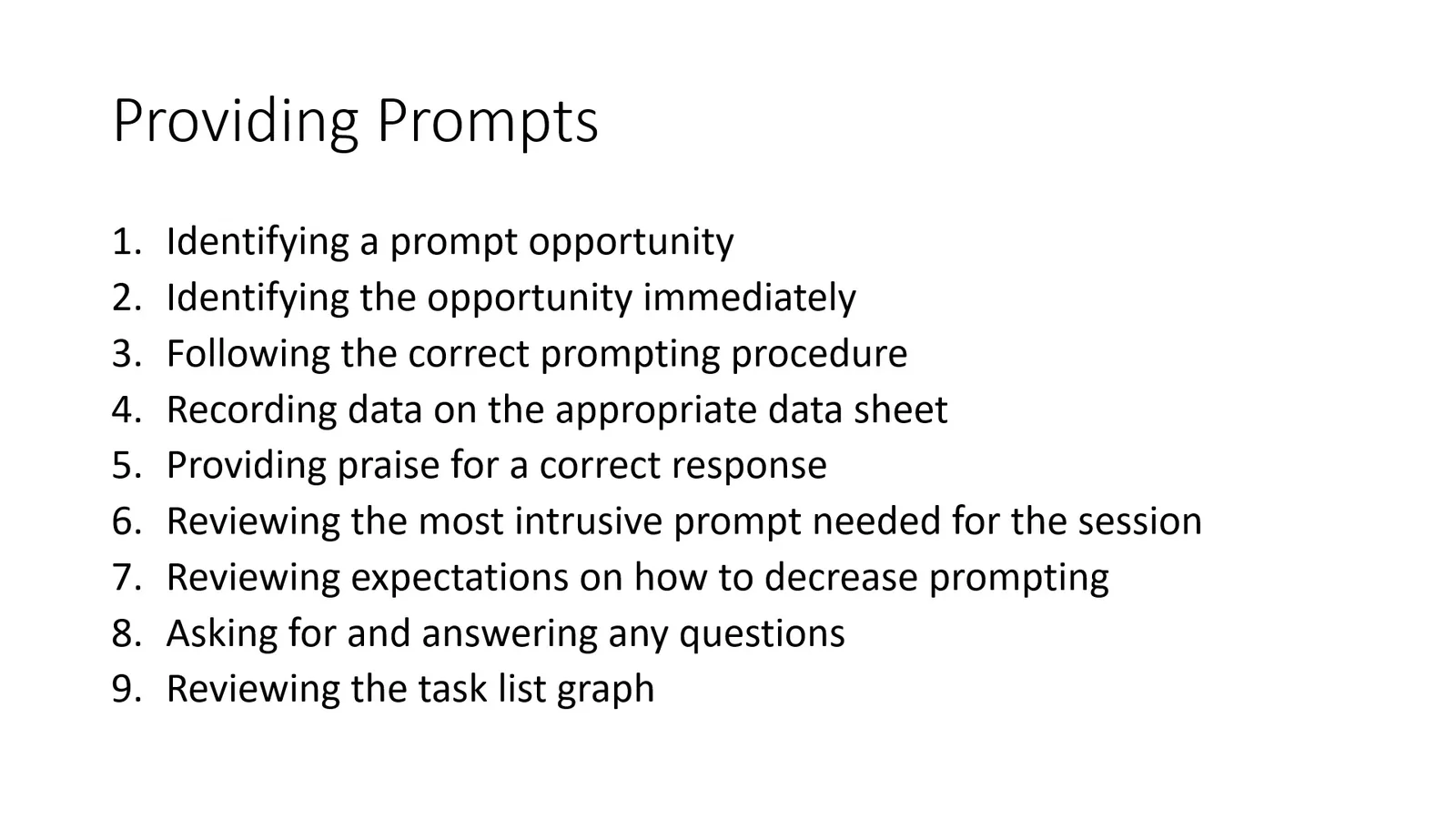
Toward an Evidence-based Supervision Model: Training Students in Independent Fieldwork
Willow Mentorship & Consulting, LLC
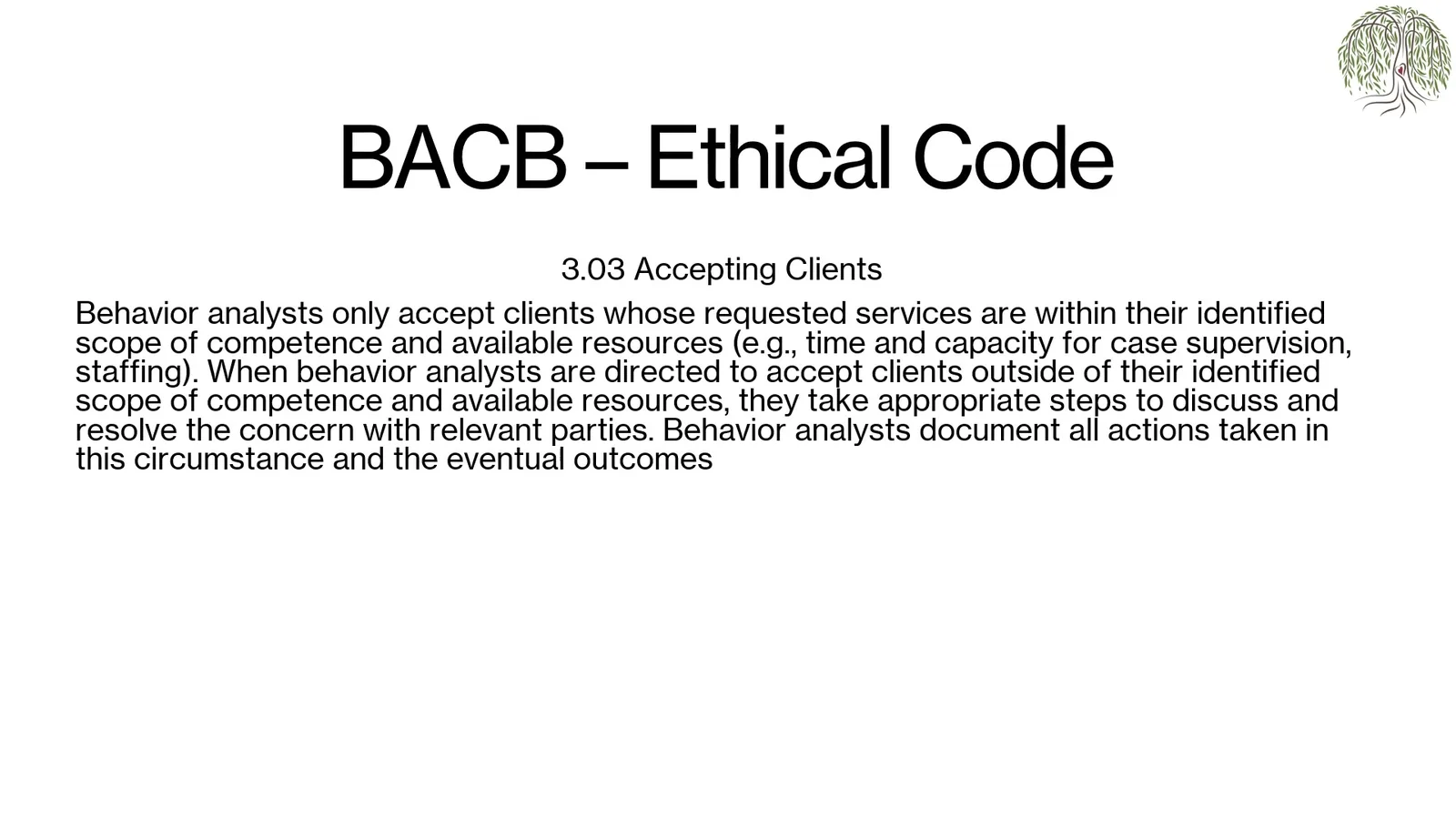
That's Outside My Scope of Competence
Willow Mentorship & Consulting, LLC
More from Hickory Learning Group

OpenCEU is supported by advertising from third-party sponsors. Sponsors are clearly labeled, have no influence over course content, instructors, or CEU decisions, and never appear on certificates. The BACB does not sponsor, approve, or endorse OpenCEU sponsors or their products.