VB-MAPP Alternatives: 6 Skill Assessments BCBAs Are Using in 2026
VB-MAPP is the top-used skill assessment in ABA, but it has gaps. Here are 6 real alternatives and when to pick each, from a BCBA-led CEU.
Key takeaway
If you want a real swap or pair for the VB-MAPP (Verbal Behavior Milestones Assessment and Placement Program), the six tools BCBAs (Board Certified Behavior Analysts) are actually using in 2026 are the ABLLS-R, the AFLS, the EFL, PEAK, the ABLA-R, and Generate.
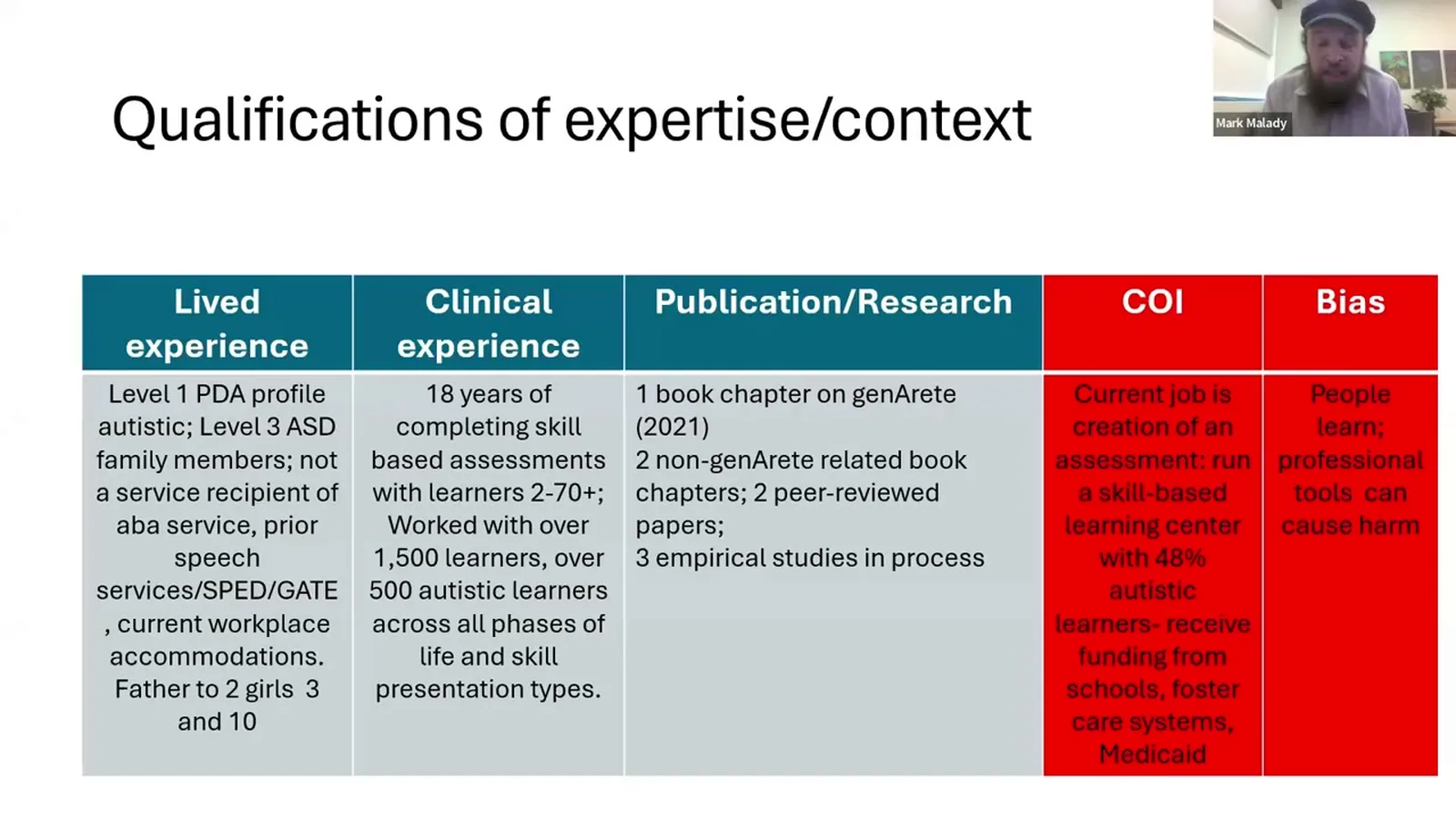
Generate: Learner Centered Skill Assessments
Free learning path on this topic
Child Development for Behavior Analysts
Typical development for behavior analysts. Kristen Byra's overview, then Kelly Brzak's deep dives on ages 2 to 5, 6 to 8, and 9 to 11, with milestones, common problem behaviors, and programming tips for each band.
On this page · 8 sections▾
If you want a real swap or pair for the VB-MAPP (Verbal Behavior Milestones Assessment and Placement Program), the six tools BCBAs (Board Certified Behavior Analysts) are actually using in 2026 are the ABLLS-R, the AFLS, the EFL, PEAK, the ABLA-R, and Generate. Each one solves a different problem the VB-MAPP cannot. Mark Malady, a BCBA who works on the Generate assessment, walked through this in a recent CEU and made the case in plain terms: the VB-MAPP has the biggest market share, but it sits in the "emerging" bucket for validity, it stops around a five-year-old skill set, and it is more than ten years old. Mark called that the "legacy assessment" problem. The good news is that most insurers will accept a new tool if you submit one validity study and one reliability study with your first claim. That single insurance fact is the whole reason this page exists. You do not have to drop the VB-MAPP. You just have to know your other options and how to put one on the table.
Why BCBAs are looking past VB-MAPP in 2026#
The VB-MAPP is the most-used skill assessment in our field, and that is the problem. Use does not equal evidence. In Mark's review of the 2025 Banda and Hart paper, the VB-MAPP and the ABLLS (Assessment of Basic Language and Learning Skills) both land in the "emerging" validity bucket. The tools with strong empirical support, like the ABLA-R (Assessment of Basic Learning Abilities, Revised), are barely used. So the field has a backwards picture. The weakest-evidence tools are the most common ones in clinics.
There are three other reasons to look around. First, ceiling. The VB-MAPP tops out around a five-year-old skill set. If your learner is six, ten, or thirty, you run out of items fast. Second, lifespan. Most legacy tools were built for early intervention. Adult skills like staying home alone, taking care of a pet, or starting a job are missing. Third, the tools are old. The VB-MAPP came out more than a decade ago, and the science has moved. New tools fold in self-advocacy, accommodations, and assent. Old tools do not.
The 6 alternatives worth knowing (ABLLS-R, AFLS, EFL, PEAK, ABLA-R, Generate)#
Here is the short list. Each one has a job.
-
ABLLS-R (Assessment of Basic Language and Learning Skills, Revised). Closest cousin to the VB-MAPP. Covers early learner skills in deeper detail across more domains. Same age range and same emerging-validity issue, but a useful pair when you want a wider net on language and academic skills for a young learner.
-
AFLS (Assessment of Functional Living Skills). Built for older learners and adults. Six modules cover home, community, school, vocational, independent living, and basic living skills. This is the tool you reach for when the VB-MAPP runs out of items and the learner needs to learn how to live in the real world.
-
EFL (Essential for Living, by McGreevy and colleagues). Strong empirical support in the 2025 review. Designed for learners with moderate to severe support needs, including adults. Built around the must-have skills a person needs to be safe, communicate, and avoid restrictive environments. If your learner is non-speaking or has significant support needs, EFL belongs on your shelf.
-
PEAK (Promoting the Emergence of Advanced Knowledge Relational Training System). Goes where the VB-MAPP cannot: relational responding, perspective-taking, and more complex verbal behavior. Useful for learners who have already mastered early VB-MAPP milestones but still struggle in real social or academic settings.
-
ABLA-R (Assessment of Basic Learning Abilities, Revised). The strongest validity scores in the 2025 review, by a wide margin. It is narrower than the others. It looks at six basic discrimination skills. Use it as a quick screen to figure out what type of teaching procedure will work for a learner who is not progressing on a bigger tool.
-
Generate. Built by Mark and his team. Spans ages two to sixty-eight. Uses radial graphs instead of fill-in-the-boxes bar charts. Has no cold probes, builds in assent before each item, and uses milestone-based comparison instead of age-based norms. Empirical case studies are in peer review now. New tool, modern design.
That is six. Six real options, each with a different job. None of them is "the new VB-MAPP." That is the point.
How each one handles ceiling, lifespan, and validity#
Here is the same six tools, mapped against the three gaps Mark called out.
Ceiling. ABLLS-R caps around the same age band as the VB-MAPP. AFLS, EFL, PEAK, and Generate all reach well past it. ABLA-R does not have a skill ceiling in the same sense, because it measures discrimination type, not a skill stack.
Lifespan. AFLS, EFL, and Generate are the three real lifespan tools. AFLS covers adolescent and adult functional skills by module. EFL covers moderate to severe support needs across the lifespan. Generate is the widest on paper, two to sixty-eight, but it is also the newest.
Validity. ABLA-R has the strongest evidence in the 2025 review. EFL has strong support. PEAK has a growing research base. Generate has three empirical studies in peer review. ABLLS-R is still in the emerging bucket along with VB-MAPP, but a 2026 paper on 41,000 ABLLS-R and AFLS records is starting to fill in the gap.
If you want to swap, AFLS and EFL are your best bets for older or higher-support learners. If you want strongest evidence for a single subskill, ABLA-R. If you want a modern, multi-age system, Generate.
So we can look at the VB-MAPP, which most of us have probably used or been oriented to. And we can look at even in 2025, this is not in the very strong or strong category. Instead, it's in the emerging. There's relatively few studies on the actual utilization of VB-MAPP. From the talk — Mark Malady
What insurers will actually approve#
This is the part most BCBAs do not know, and it is the most useful thing in the talk. Insurers will pay for the legacy tools because the legacy tools are written into their policies. That is the whole reason the VB-MAPP has such a big market share. But the same policies usually have a side door.
Most insurers have written policies that they don't make available that as long as there's one validity and one reliability study, that they have to accept it. So if you have one reliability and one validity study, submit that with the first time you submit an instrument. From the talk — Mark Malady
So the play is simple. Pick the alternative you want. Find one reliability study and one validity study in the published literature. Attach them to the first claim where you use the tool. If the insurer pushes back, ask for their evidence-based assessment policy in writing and ask for the policy code. Mark said across fifteen insurers he checked, the standard was the same: one validity, one reliability. That gives you a real, repeatable path to add an alternative.
If you bill private pay or grant funds, you have even more room. You can run a legacy tool alongside an emerging one, write up the differences, and use that to push your payer relationships forward over time.
How to combine two tools instead of swapping one for another#
Most BCBAs do not need to throw out the VB-MAPP. They need a second tool that fills the gap. Mark's recommendation, which lines up with the 2026 CASP and APBA guidelines, is a multimodal package. One tool is rarely enough.
A few real combinations that work:
- Young learner, language focus. VB-MAPP plus a short ABLA-R screen. The ABLA-R tells you what teaching procedure will actually work, so you do not spend three months in a procedure the learner cannot benefit from.
- Older child stuck on VB-MAPP. VB-MAPP plus PEAK. PEAK picks up where the VB-MAPP ceiling stops and pushes into relational skills.
- Teen or adult, daily living focus. AFLS as the primary, with EFL added for safety and communication essentials if support needs are high.
- Anyone with a real life goal that does not map to a milestone. Generate as the primary, with a legacy tool as a familiar reference for insurance.
The key move is to write down why you picked each tool and what each one is doing in the package. That is what funders want to see, and it is what the new CASP and APBA guidelines call for.
One of the biggest contributing factors is that funders in the American autism market will pay for these assessments and sometimes even dictate these assessments. So that legacy assessment indicator I put in for assessments that were over 10 years old. From the talk — Mark Malady
How to pick the right alternative for the learner in front of you#
Start with the learner, not the tool. Ask four questions.
- What is the learner trying to do in real life? A four-year-old learning to ask for things is a VB-MAPP or ABLLS-R job. A nineteen-year-old learning to ride the bus to a job is an AFLS or Generate job.
- How old is the learner, and where does the tool stop? Match the ceiling to the goal.
- Where is the strongest evidence? If you have a payer or a parent asking hard questions, pick the tool with the cleanest published support for that age range.
- What does the funder require? Some payers list approved tools. Some leave it open. Some will accept anything with one validity and one reliability study.
Then pick one primary tool and one secondary. Write a one-page rationale that ties the tools to the goals. Submit the studies with the first claim. Track outcomes for thirty days and adjust.
The VB-MAPP has the largest market share at the time period in 2020, followed by the ABLLS-R. And you can kind of see how that distribution plays out. Some important things that I added on there was kind of we can look at only up to age 5 for ABLLS and the VB-MAPP. From the talk — Mark Malady
Frequently asked questions#
Is VB-MAPP outdated? Not exactly, but it is dated. It came out more than ten years ago, sits in the emerging validity bucket in the 2025 Banda and Hart review, and stops around a five-year-old skill set. It still has a place for very young learners, especially as part of a multimodal package. It just should not be your only tool.
Can I use VB-MAPP and another assessment at the same time? Yes, and that is what the 2026 CASP and APBA guidelines recommend. A multimodal package is the standard now. Pair the VB-MAPP with the AFLS for older skills, with PEAK for relational skills, with the ABLA-R for a quick learning-channel screen, or with Generate for a lifespan view. Document why each tool is in the package.
What skill assessment goes past age 5? Four of the six tools here go well past five: AFLS, EFL, PEAK, and Generate. AFLS covers adolescent and adult functional skills. EFL covers moderate to severe support needs across the lifespan. PEAK pushes into relational and complex verbal behavior. Generate spans ages two to sixty-eight.
Where to go next#
If you want the full picture of how a modern skill assessment is built, the source CEU walks through ceiling, validity, multimodal design, and the insurance angle in one hour. It is free.
Turn this topic into a CEU
You just studied this. Now get credit for it.
Watch Generate: Learner Centered Skill Assessments with Mark Malady and earn 1 free BCBA CEU. Detailed certificate, delivered the moment you finish.
Keep going with a free learning path
Child Development for Behavior Analysts
Typical development for behavior analysts. Kristen Byra's overview, then Kelly Brzak's deep dives on ages 2 to 5, 6 to 8, and 9 to 11, with milestones, common problem behaviors, and programming tips for each band.