Skill Assessment vs Behavior Assessment in ABA: What Each One Does
Skill assessments and behavior assessments answer different questions. Here is how to use them together without overlap, from a BCBA-led CEU.
Key takeaway
A behavior assessment asks why a behavior keeps happening, and a skill assessment asks what the learner can and cannot do across the rest of their life.
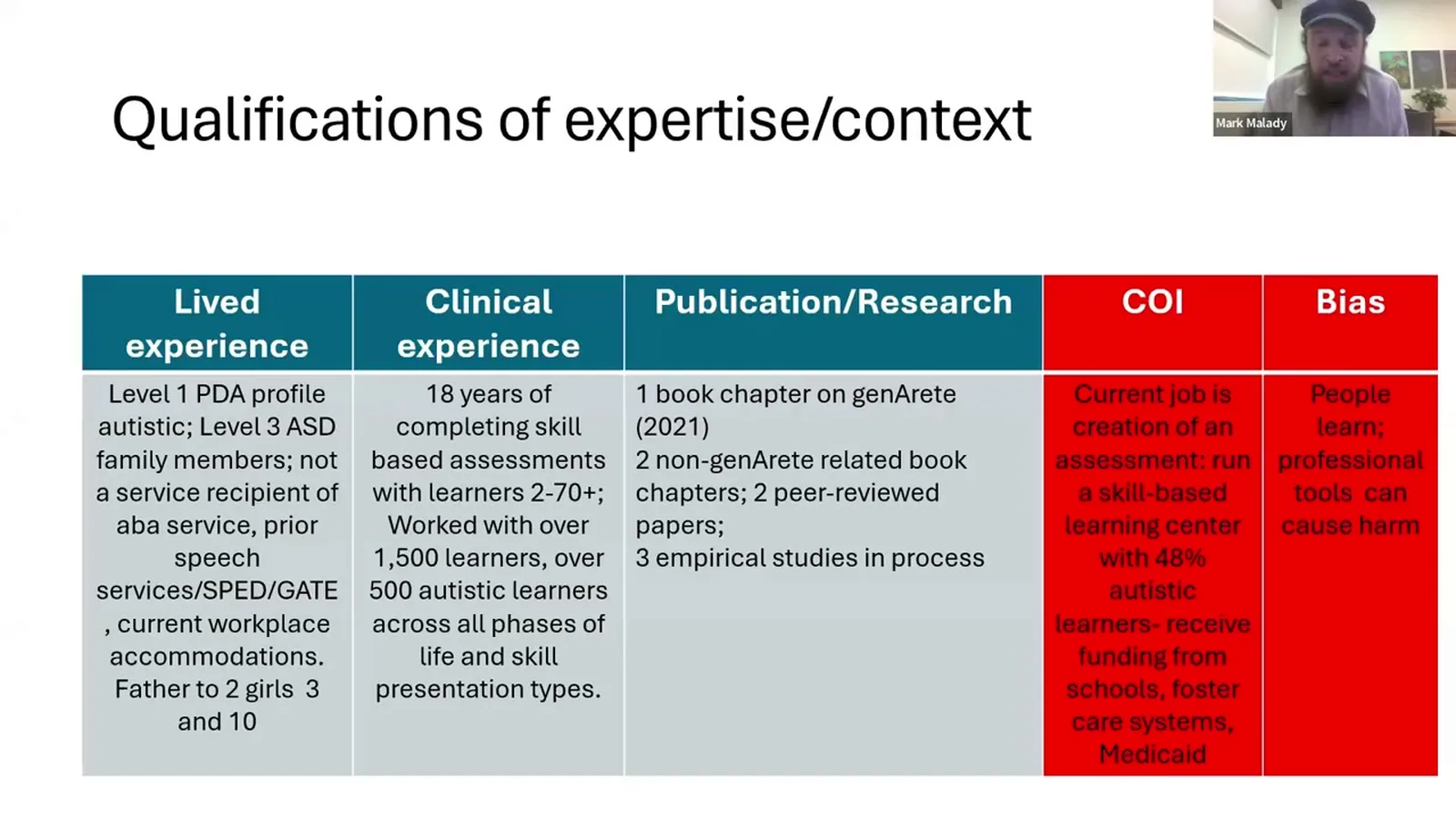
Generate: Learner Centered Skill Assessments
Free learning path on this topic
Child Development for Behavior Analysts
Typical development for behavior analysts. Kristen Byra's overview, then Kelly Brzak's deep dives on ages 2 to 5, 6 to 8, and 9 to 11, with milestones, common problem behaviors, and programming tips for each band.
On this page · 8 sections▾
A behavior assessment asks why a behavior keeps happening, and a skill assessment asks what the learner can and cannot do across the rest of their life. They are two different jobs, and most teams ask the behavior question well before they ever get to the skill question.
If you have spent time with a functional analysis (FA), a functional behavioral assessment (FBA), or a descriptive assessment, you already know the behavior side. This page is the bridge. It sends you from that work to the skill side without making you re-read either one. We pulled the framing from a Board Certified Behavior Analyst (BCBA) talk by Mark Malady, who has spent the last ten-plus years building a skill-based assessment because the behavior tools alone kept leaving teams stuck on skill building.
The two questions ABA assessments are trying to answer#
Every assessment in our field is built to answer one of two questions. The first is, "Why does this behavior keep happening, and what is the environment doing to keep it going?" That is the behavior question. The second is, "What can this learner do, what can they not yet do, and where do they want their life to go?" That is the skill question.
The tools are not the same. They use different methods, produce different reports, and lead to different programs. When teams treat them as one thing, the skill question gets answered with behavior tools, and the answer is thin.
"If any of you know me, you know how I feel about functional analyses and assessment for problem behavior, and how I feel like sometimes we're lacking in the skill acquisition side." From the talk — Mark Malady
That is the gap this page is trying to close.
What a skill assessment is built to do#
A skill assessment looks at what the learner can do across the parts of life that matter to them. It samples a wide set of areas. It checks the depth of each one. It compares the learner not to a generic age group, but to the milestone the learner is trying to reach.
A good skill assessment does five things at once:
- Gives an honest picture of current skills, so nobody over-claims or under-claims what the learner can do.
- Points to areas of growth that line up with where the learner is trying to go.
- Names strengths the learner can lean on.
- Flags areas that need ongoing support, not skill teaching.
- Captures the learner's own picture of their future.
That fourth point is the one most teams miss. Not every gap is a teaching target. Some gaps are best answered with an accommodation that stays in place for life.
"Identify areas of continued support. And I think that this is one that oftentimes is missed inside of behavior analytic instruments. And really what we're looking at here is differentiating what should be skill acquisition targets versus what should be programmed environmental supports." From the talk — Mark Malady
Skill assessments cover daily living, communication, social, work, leisure, self-care, movement, and relationship skills. The exact list depends on the tool. The point is breadth.
What a behavior assessment (FA, FBA, descriptive) is built to do#
A behavior assessment is narrow on purpose. It picks one behavior, often one that is hurting the learner or blocking access to a setting, and figures out what keeps it going.
There are three main types you will run into:
- A functional analysis (FA) sets up the conditions in a controlled way and watches the behavior under each one. It is the strongest method for naming a function.
- A functional behavioral assessment (FBA) is a broader process that pulls in interviews, records, and direct observation to land on a function and a plan.
- A descriptive assessment watches the behavior in the natural setting and tracks what comes before and after, without setting up conditions.
All three answer the same question: what is this behavior doing for the learner, and what is the environment doing to keep it doing that. The output is a function (attention, escape, access, automatic) and a behavior plan.
A behavior assessment does not, on its own, tell you what the learner should be learning next. It will sometimes name a replacement skill, like asking for a break, but it stops there.
Where the two overlap and where they don't#
The overlap is real, and it is also small.
Both assessments care about the learner's environment. Both pull from interviews. Both look at responses in context. Both can flag things like trouble following an instruction, or trouble sitting at a table.
That is where the overlap ends.
The skill assessment cares about the full map of what the learner can do. The behavior assessment cares about one response and what keeps it going. The skill assessment outputs a skill profile and a learning plan. The behavior assessment outputs a function and a behavior plan. Trying to read a skill profile off an FA is like trying to read a map off a thermometer.
"Our subject matter is the interaction of the person and their environment. And our most basic construct is stimulus response stimulus or the operant. And I'm really not a fan of the ABC metaphor because the B in the middle pulls our attention that behavior is action." From the talk — Mark Malady
When the field over-uses the behavior frame, the skill side gets thin. Teams end up with great behavior plans and shallow skill plans, and the learner pays for the gap.
When to run them at the same time, and when to stagger them#
Here is a simple way to decide.
Run them at the same time when: - A new learner is starting services, and you need the full picture fast. - The behavior is happening in the same settings where you also need to score skills, so direct contact is already happening. - Funders or the school team need both reports for the plan to move.
Stagger them when: - The behavior is severe enough that pushing through a skill assessment would be unsafe or unkind. Run the behavior assessment first, build a basic plan to keep the learner and team safe, then come back to the skill side. - The learner is brand new to the team and a cold skill probe would set a punitive first impression. Use the first weeks to pair, gather skill information through interview and observation, then run the formal skill assessment once the relationship can carry it. - The funder will only pay for one at a time. Pick the one that unblocks the next 60 days, document why, and schedule the other.
A short note on order. If you can only run one this month, and the learner is not in crisis, the skill assessment usually moves more programming forward. The behavior assessment moves one program forward. The skill assessment moves the whole curriculum forward.
What to put in the report so each one has a clear role#
The reports should not read like each other. If they do, one of them is doing the other one's job.
The behavior assessment report should include: - The target behavior, defined in plain language. - The data the assessment collected. - The function or functions you landed on. - The plan, including replacement responses, antecedent changes, and what staff should do. - Safety criteria for re-running the assessment if the behavior changes.
The skill assessment report should include: - The areas you sampled and the areas you did not, with a note on why. - The learner's profile across those areas, shown in a way that does not push toward "fill every box." - Strengths and over-skilled areas you can build from. - Skill acquisition targets the team should teach. - Accommodations and supports the team should program, separate from the teaching targets. - The learner's vision for their future, written in their words where possible.
That last piece is what keeps the skill assessment honest.
"Capture the learner's vision for their future. So a skill based assessment should be looking at the skills in context, but it also should be providing the context of what is important to this learner and where are they trying to go." From the talk — Mark Malady
If the report does not name where the learner is going, the team will default to age-based comparison, and the plan will drift toward normalization instead of a life the learner actually wants.
Frequently asked questions#
Do I need an FA before I do a skill assessment?
No, not as a rule. You need a behavior assessment first only when the behavior would make the skill assessment unsafe, when it would shape the skill data in a misleading way, or when a funder requires it for the plan. For many learners, you can run a skill assessment first, or run both side by side. The two answer different questions, so neither one is a gatekeeper for the other.
Can a skill assessment replace an FBA for a school team?
Usually no. School teams need an FBA when a behavior is blocking access to learning or putting someone at risk, and most school policies require an FBA before a behavior intervention plan is written. A skill assessment can sit next to the FBA and make the full plan stronger, but it does not replace the function-finding job the FBA is doing.
What if the behavior is interfering with the skill assessment itself?
Pause, do not push. If the behavior is loud enough to shape every item, the skill scores will not be honest. Three good moves: switch to an interview-heavy sample for the parts of the assessment that allow it, drop down to a lower entry point in the skill cluster so the learner is not asked to fail in a row, or stop the formal scoring and run a brief behavior assessment first. Document what you did and why, then come back to the skill side once the learner can engage without the behavior carrying the room.
Where to go next#
Skill assessments are the bigger lift, and the tool you pick changes the plan. If you are deciding between instruments, start with our walkthrough of AFLS vs VB-MAPP and our guide on how to choose a skill assessment for an autistic learner. If your current tool is not meeting the learner, see VB-MAPP alternatives BCBAs are using in 2026. And if you want the full picture of what learner-centered skill assessment looks like in practice, watch the Generate talk with Mark Malady and read our piece on learner-centered skill assessment in ABA.
Turn this topic into a CEU
You just studied this. Now get credit for it.
Watch Generate: Learner Centered Skill Assessments with Mark Malady and earn 1 free BCBA CEU. Detailed certificate, delivered the moment you finish.
Keep going with a free learning path
Child Development for Behavior Analysts
Typical development for behavior analysts. Kristen Byra's overview, then Kelly Brzak's deep dives on ages 2 to 5, 6 to 8, and 9 to 11, with milestones, common problem behaviors, and programming tips for each band.