Cold Probes in ABA: What They Are and the Debate
A cold probe tests a skill with no feedback before teaching. Learn what cold probes are, why teams use them, and the case for dropping them.
Key takeaway
A cold probe is a quick test of a skill before any teaching happens. The teacher gives a target one time and takes data on the answer.

genArete: Learner-Centered Skill Assessment
Free learning path on this topic
Child Development for Behavior Analysts
Typical development for behavior analysts. Kristen Byra's overview, then Kelly Brzak's deep dives on ages 2 to 5, 6 to 8, and 9 to 11, with milestones, common problem behaviors, and programming tips for each band.
Experts who cover this
2 recordings on openceu cover cold probe aba.
- Featured talk1 CEU
genArete: Learner-Centered Skill Assessment
Mark MaladyThe Behaviorist Bookclub
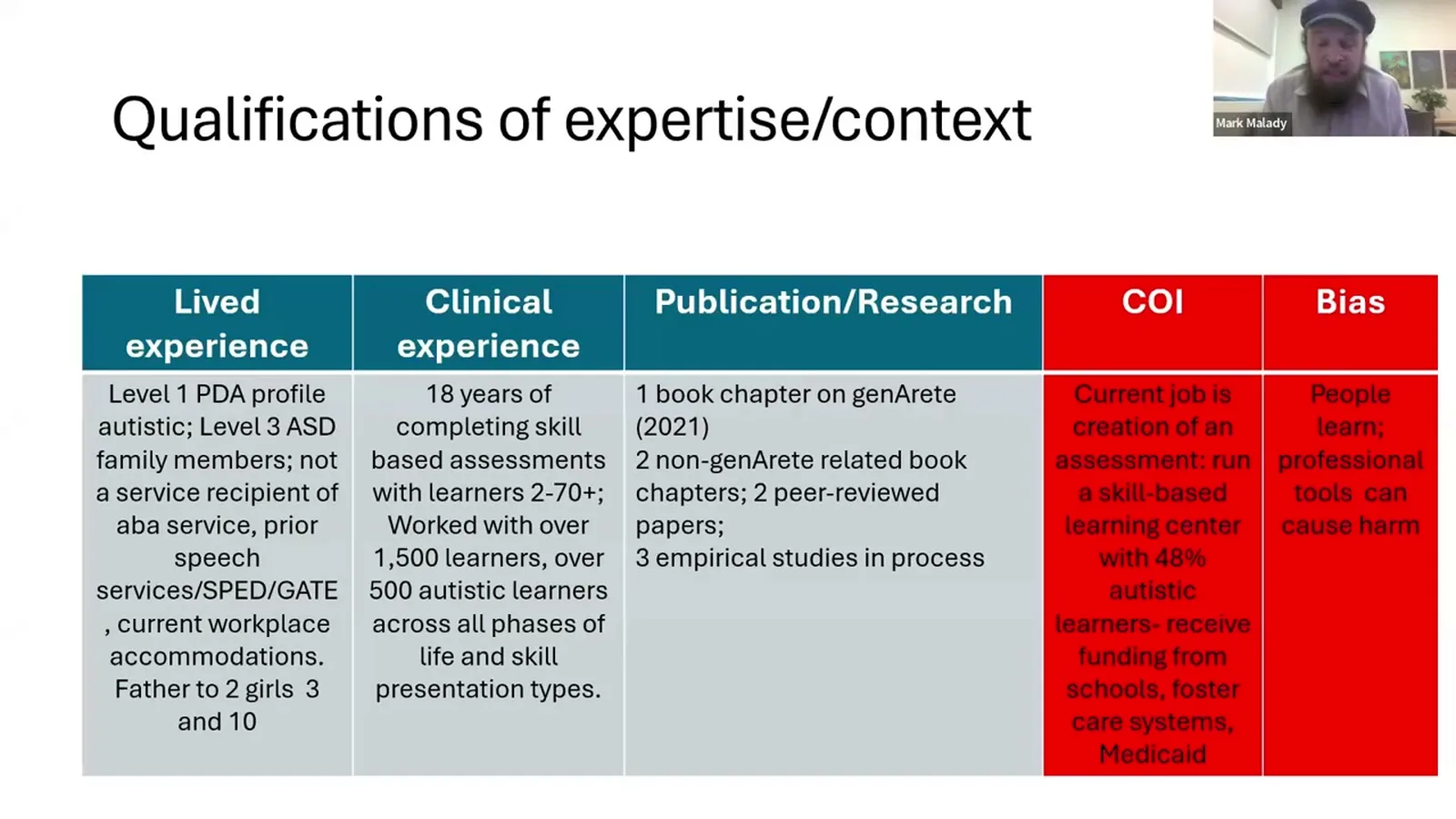
Mark rejects the standard cold-probe design of testing without feedback or reinforcement before teaching begins, arguing it creates an awkward, potentially…
- 1 CEU
Generate: Learner Centered Skill Assessments
Mark MaladyThe Behaviorist Bookclub
Mark critiques the standard assessment/teaching split as built on 'cold probe logic,' where withholding feedback during assessment can feel punitive to the…

On this page · 7 sections▾
A cold probe is a quick test of a skill before any teaching happens. The teacher gives a target one time and takes data on the answer. No help, no praise, and no reward follow the response.
Cold probes matter because they shape a child's first minutes with you. BCBAs, RBTs, and teachers use them to see what a learner already can do. But how you test can set the tone for the whole relationship. The first sessions teach a child what your time together will feel like. That is why some clinicians now question the practice.
What a cold probe is#
The idea behind a cold probe is clean data. You want to know if a skill is truly in the learner's toolbox. So you ask once and watch what happens with no support.
Because there is no reward or feedback, the test is meant to be "cold." The learner gets no hint about right or wrong. Teams then use those numbers to decide what to teach next.
This design comes from a common split in ABA. Assessment is treated as the time to gather facts. Teaching comes later, as a separate step. Mark Malady names this split and pushes back on it.
we fundamentally come from a place that our science is about teaching and the arbitrary distinction between assessment is the place to get information. And then we go into teaching. We think that there's a problem with that. From the talk — Mark Malady
Why teams use cold probes#
Supporters like the clarity. A cold probe tries to remove practice effects from the score. If you praise or prompt during a test, you might teach the skill by accident. Then you cannot tell what the child knew going in.
Cold probes also feel efficient. One trial per target moves fast. A team can screen many skills in a short window. On paper, that looks like a tidy way to plan a program.
Malady traces this thinking back to one core belief. The belief is that teaching gets in the way of clean measurement.
we see that that really comes from this idea of assessments are designed with cold probe logic and that teaching is counterproductive to acquiring information. And instead, we think that you can control for that through really good measurement systems. From the talk — Mark Malady
The case against cold probes#
 Advertisement
Here is the human cost. A cold probe often lands early, before trust is built. The learner faces demands with zero warmth or reward. For a new child, that can feel cold in every sense.
Malady warns that this first meeting can hurt the relationship.
it creates a really awkward initial relationship and it can be perceived as punitive by some learners. From the talk — Mark Malady
Think about what the child learns in that moment. Adults ask hard things. Nothing good comes back. That is a rough way to start a helping relationship. It can teach a learner to avoid you.
Measure without withholding feedback#
Malady's main point is that you do not have to choose. You can gather good data and still be kind. The fix is a better measurement system, not a colder test.
we think that you can control for that through really good measurement systems and you can use the differentiation in those measurement systems to identify if the learner is an acquisition state or if the learner is in a maintenance state or a mastery state. From the talk — Mark Malady
In plain terms, your data can tell the story on its own. Careful records can show if a skill is new, holding steady, or fully mastered. You read those patterns over time. You do not need to freeze the learner out to see them.
This is why his assessment tools are built with "no cold probes." Feedback and reward stay on during assessment. The learner gets a warm start. The data still does its job through smart tracking.
Reading the learner's state from data#
The key move is watching change over time, not a single score. One trial cannot tell you much on its own. A pattern across trials can tell you a lot.
A skill that is brand new looks one way in the data. It is shaky and needs support to appear. A skill in a maintenance state looks steady. A mastered skill shows up fast and clean, session after session.
So you do not need to strip away help to see these states. You keep the learner warm and engaged. Then you let the trend lines reveal where each skill sits. This respects both the learner and the science.
Why the first meeting matters so much#
First impressions stick. A child's early sessions teach them what you are about. A warm start builds trust that pays off for months.
A cold start does the opposite. It can teach a learner that you bring hard tasks and no reward. That lesson is hard to undo. It can slow every program that follows.
This is the heart of Malady's argument. The choice is not just about clean numbers. It is about the relationship you build from minute one. Good data and a warm start can live together.
FAQ#
What does cold probe mean in ABA?
A cold probe is a single test of a skill with no help, praise, or reward. It aims to show what a learner can do on their own. Teams use it to plan what to teach next.
Why do some BCBAs avoid cold probes?
Cold probes can feel harsh at the start of care. A learner meets demands with no warmth or reward. That can damage trust and feel punishing to some children.
Can you assess a skill without a cold probe?
Yes. A strong measurement system can track skills while feedback stays on. Good data can show if a skill is new, steady, or mastered. You do not have to withhold reward to learn this.
Malady expands on this warm approach in Generate: Learner Centered Skill Assessments, which builds assessment around teaching instead of testing.
 Advertisement
Turn this topic into a CEU
You just studied this. Now get credit for it.
Watch genArete: Learner-Centered Skill Assessment with Mark Malady, BCBA and earn 1 free BCBA CEU. Detailed certificate, delivered the moment you finish.
Keep going with a free learning path
Child Development for Behavior Analysts
Typical development for behavior analysts. Kristen Byra's overview, then Kelly Brzak's deep dives on ages 2 to 5, 6 to 8, and 9 to 11, with milestones, common problem behaviors, and programming tips for each band.