DSM-5 ADHD Diagnostic Criteria for BCBAs
A plain-English look at the DSM-5 ADHD criteria and subtypes, and how they inform ABA treatment planning for BCBAs and behavior teams.
Key takeaway
The DSM-5 sets the rules doctors use to name ADHD. It lists the signs, how many are needed, and how long they must last. As a BCBA, a board certified behavior analyst who plans treatment, you do not hand out this diagnosis.
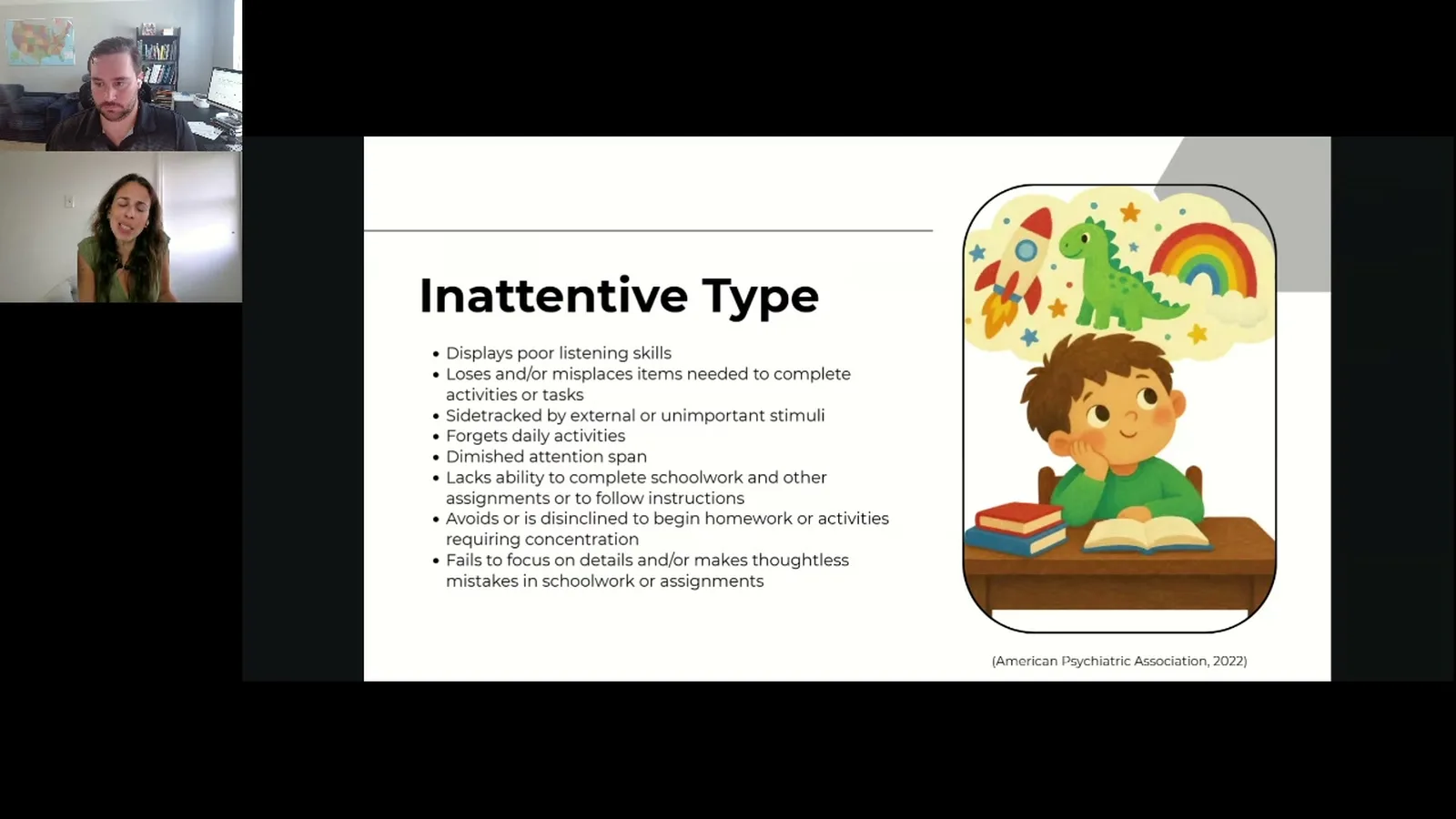
Reframing Behavior through an ADHD Lens
Experts who cover this
2 recordings on openceu cover dsm-5 diagnostic criteria for adhd.
- Featured talk1 CEU
Reframing Behavior through an ADHD Lens
Nicole StewartThe Behaviorist Bookclub
Nicole walks through the DSM-5 criteria: symptoms persisting over six months across two settings, onset before age 12, six symptoms required under 17 (five for…
- 1 CEU
Shaping Behavior Change when ADHD is in the Picture
Nicole StewartThe Behaviorist Bookclub
Nicole reviewed DSM diagnostic requirements for ADHD (six-month persistence across two settings, functional impairment, three presentation types, age-of-onset…

On this page · 9 sections▾
The DSM-5 sets the rules doctors use to name ADHD. It lists the signs, how many are needed, and how long they must last. As a BCBA, a board certified behavior analyst who plans treatment, you do not hand out this diagnosis. But you read it in charts every day.
Knowing these rules helps you make sense of a referral. It tells you what a client's team already saw. It also shapes how you write goals and pick teaching methods. This page walks through the criteria and what they mean for your work.
What the DSM-5 criteria actually require#
The DSM-5 asks for a clear pattern, not a single hard day. The signs have to show up often and get in the way of daily life. They must also fit the person's age.
Nicole Stewart, BCBA, breaks the checklist down in her talk. A child under 17 needs six symptoms. An adult needs five. The count matters because one or two rough moments do not meet the bar.
The signs also have to cause real trouble. A kid might struggle at school and at home. An adult might miss work deadlines and lose track of bills. The DSM-5 wants proof that the pattern hurts, not just that it exists.
Symptoms must last and show up in more than one place#
Two rules keep a diagnosis honest. The signs have to last a long time. They also have to appear in more than one setting.
Nicole Stewart, BCBA, is clear on this point in her talk. The behaviors have to persist for more than six months, and they have to show up across two or more settings.
Six months is the floor. That length rules out a short rough patch after a move or a loss. The two-setting rule matters just as much. A child who only acts out at school might be reacting to that room, not carrying ADHD.
For a BCBA, this is a familiar idea. You already ask if a behavior happens across places and people. When you read that a client meets the two-setting rule, it hints the pattern will follow them into your sessions too.
Onset before age 12#
The DSM-5 also looks back in time. The signs have to start early in life.
Symptoms must have been present prior to 12 years old.
From the talk — Nicole Stewart, BCBA
This rule points to a long history. ADHD is not something that shows up fresh in adulthood. An adult getting a first diagnosis still had signs as a kid. They may have been missed or blamed on something else.
This history can guide your intake questions. Parents may share old report cards or teacher notes. Those early clues help you understand how long a client has coped, and what skills they may never have learned.
The three ADHD subtypes#
 Advertisement
ADHD does not look the same in every person. The DSM-5 names three ways it can show up: inattentive, hyperactive-impulsive, and combined.
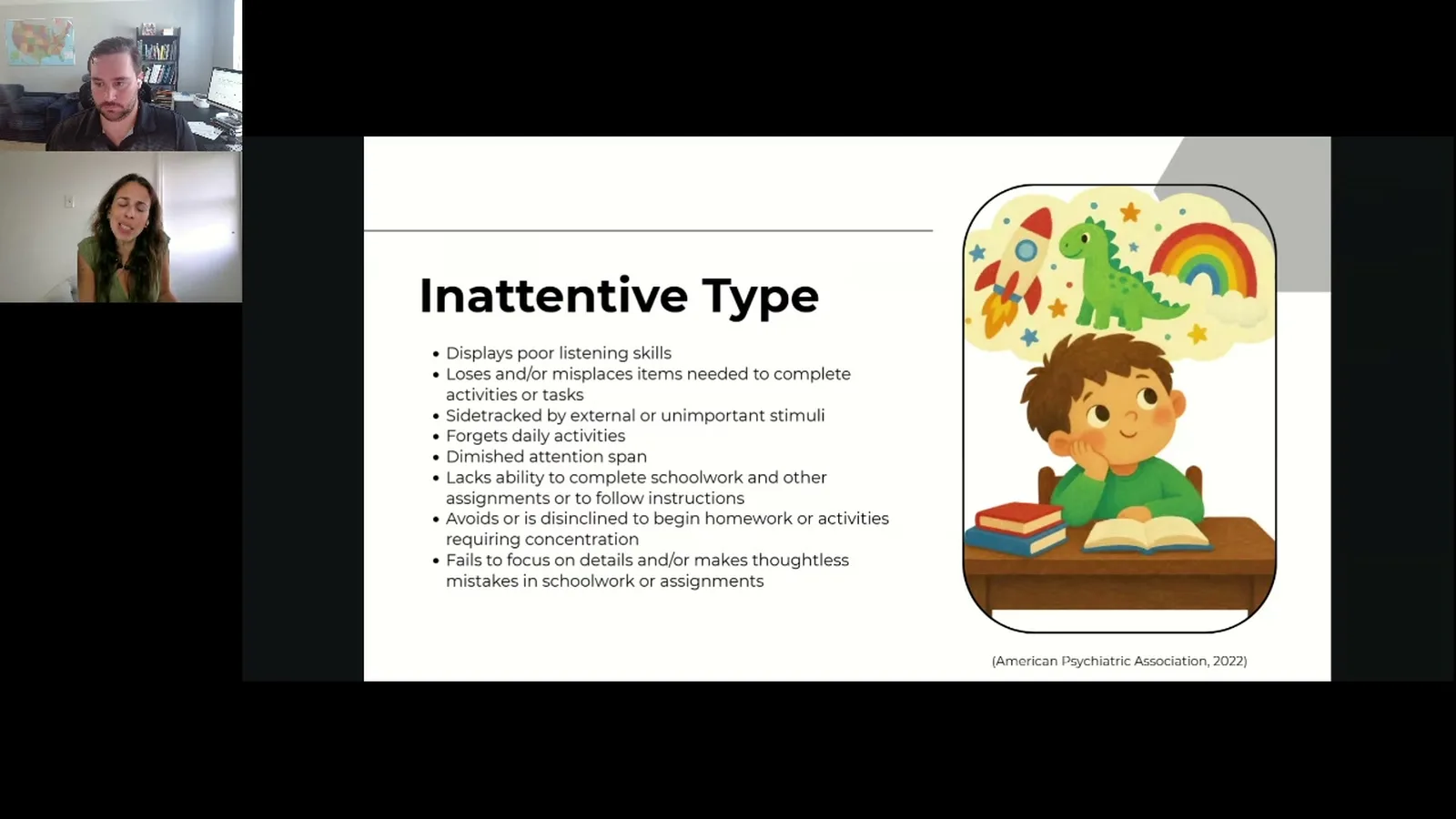
The inattentive type struggles to focus, finish tasks, and stay organized. The hyperactive-impulsive type moves a lot, blurts things out, and acts before thinking. The combined type shows both patterns together.
The subtype changes what you see day to day. An inattentive client may sit quietly and drift off. A hyperactive-impulsive client may be up and moving. Knowing the subtype helps you pick supports that fit the real behavior in front of you.
Why subtypes matter for treatment planning#
Subtypes are not just labels. Research shows the groups behave in different ways. That difference should shape how you set goals.
One study of children with pervasive developmental disorder found clear splits between the types. Pervasive developmental disorder is an older term close to today's autism spectrum. The combined type showed more defiant and aggressive behavior. The hyperactive-impulsive type was the least impaired of the three.
That pattern is useful at the planning table. A combined-type client may need more support around big feelings and conflict. An inattentive client may need help with task steps and follow-through. The subtype gives you a starting map, not a finished plan.
ADHD and autism can show up together#
Many BCBAs serve clients on the autism spectrum. ADHD signs often ride alongside autism. The research says this overlap is real and worth naming.
The study of children with pervasive developmental disorder found ADHD subtypes stood out clearly, even inside that group. The authors concluded ADHD can be a meaningful pattern in these children, not just noise. So a client can carry both profiles at once.
This matters for your data. If you only look through an autism lens, you may miss focus and impulse issues. Reading the ADHD criteria helps you spot a second pattern. That fuller picture leads to goals that actually fit.
How common is ADHD#
ADHD is one of the most common childhood diagnoses. Rates do shift from study to study and place to place.
A population study of Italian students found a prevalence near 3 percent. Within that group, the combined type was most common at about 57 percent. The inattentive type came next, and the hyperactive-impulsive type was smallest.
Those numbers tell you what to expect on a caseload. Combined-type clients will likely show up most often. But the quieter inattentive type is easy to miss, so it deserves a careful look during intake.
What the research says#
Three peer-reviewed studies inform this page. None had a full citation on file, so they are named here by title and finding.
One study compared ADHD subtypes and brain-based test scores in adults. It found real differences between the inattentive and combined types on tests of attention, memory, and executive function. Executive function means the mental skills for planning and self-control. The title is "ADHD subtypes and neuropsychological performance in an adult sample."
A second study looked at ADHD subtypes in children with pervasive developmental disorder. It found the subtypes were clearly different from the non-ADHD group and from each other. The title is "ADHD symptom subtypes in children with pervasive developmental disorder."
A third study measured how common ADHD was in Italian students. It reported a prevalence near 3 percent, with the combined type most common. The title is "Prevalence of ADHD in a sample of Italian students: a population-based study."
Frequently asked questions#
Can a BCBA diagnose ADHD?
No. A BCBA does not give medical or psychiatric diagnoses. That work belongs to a physician, psychologist, or similar licensed provider. Your role is to read the diagnosis, understand it, and build behavior support around it. This page is for learning, not for making a diagnosis.
How many symptoms does the DSM-5 require for ADHD?
The count depends on age. A person under 17 needs six symptoms in a category. An adult 17 or older needs five. The signs also must last at least six months, show up in two or more settings, and start before age 12.
Do the ADHD subtypes change treatment goals?
They can guide your focus. An inattentive client may need help with task steps and organization. A hyperactive-impulsive client may need support around waiting and self-control. A combined client may need both, plus attention to conflict. The subtype is a useful map, but your own data still drives the final plan.
Want the full walk-through from a BCBA? Watch Reframing Behavior through an ADHD Lens with Nicole Stewart, BCBA, and earn CEU credit while you learn.
 Advertisement
Turn this topic into a CEU
You just studied this. Now get credit for it.
Watch Reframing Behavior through an ADHD Lens with Nicole Stewart, BCBA and earn 1 free BCBA CEU. Detailed certificate, delivered the moment you finish.