Rapport in ABA: Trust With Clients and Supervisors
What rapport means in ABA practice, why it comes before hard demands, and how it shapes supervision, feedback, and staff retention.
Key takeaway
Rapport in ABA practice is a trusting, positive relationship that has to exist before you ask someone to do hard things. It applies to the learners you serve.
Reflective Supervision and Provider Outcomes in ABA
Experts who cover this
3 recordings on openceu cover rapport building in ABA.
- Featured talk1 Supervision CEU
Reflective Supervision and Provider Outcomes in ABA
B. Kuereine GrayThe Behaviorist Bookclub
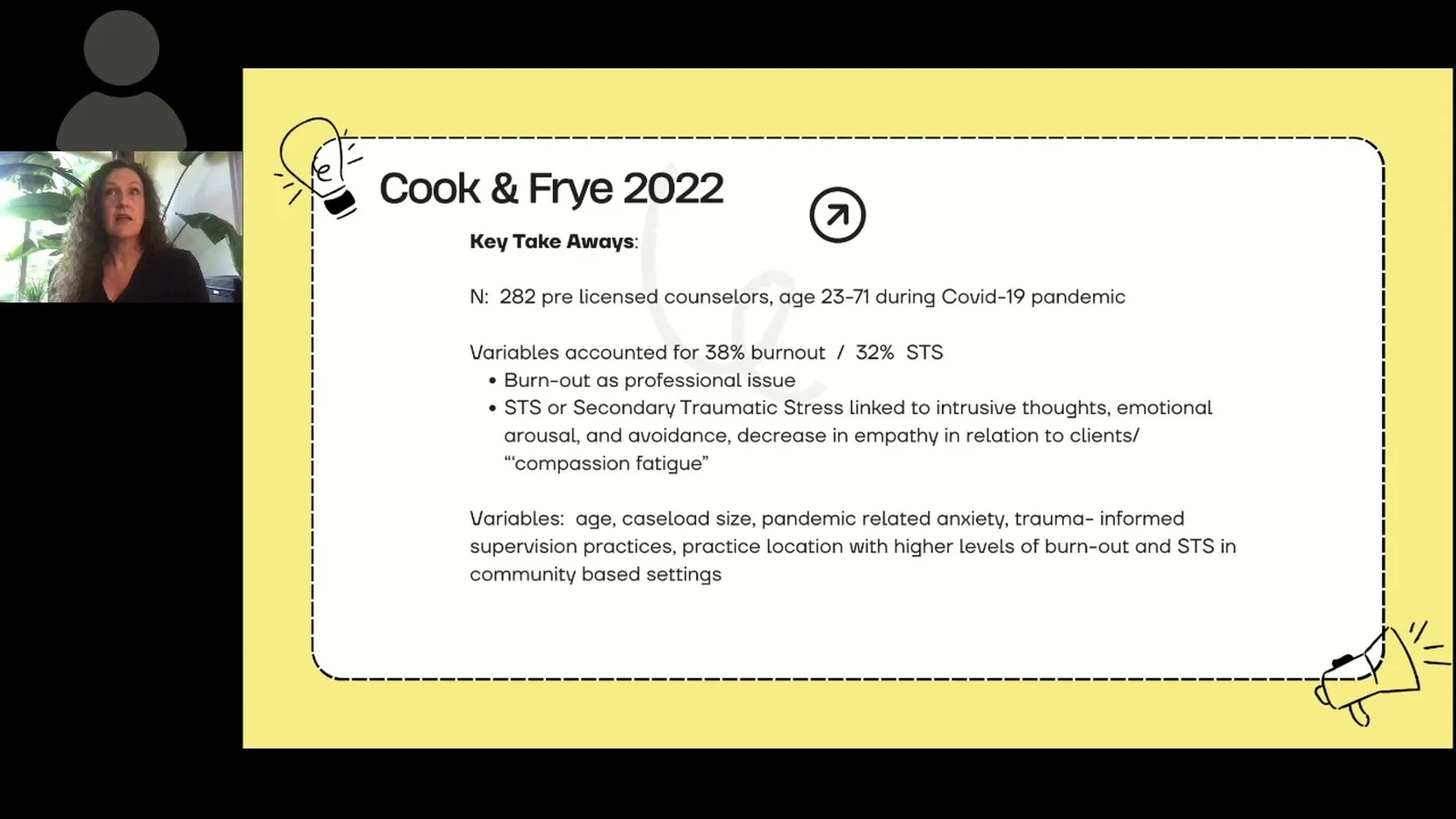
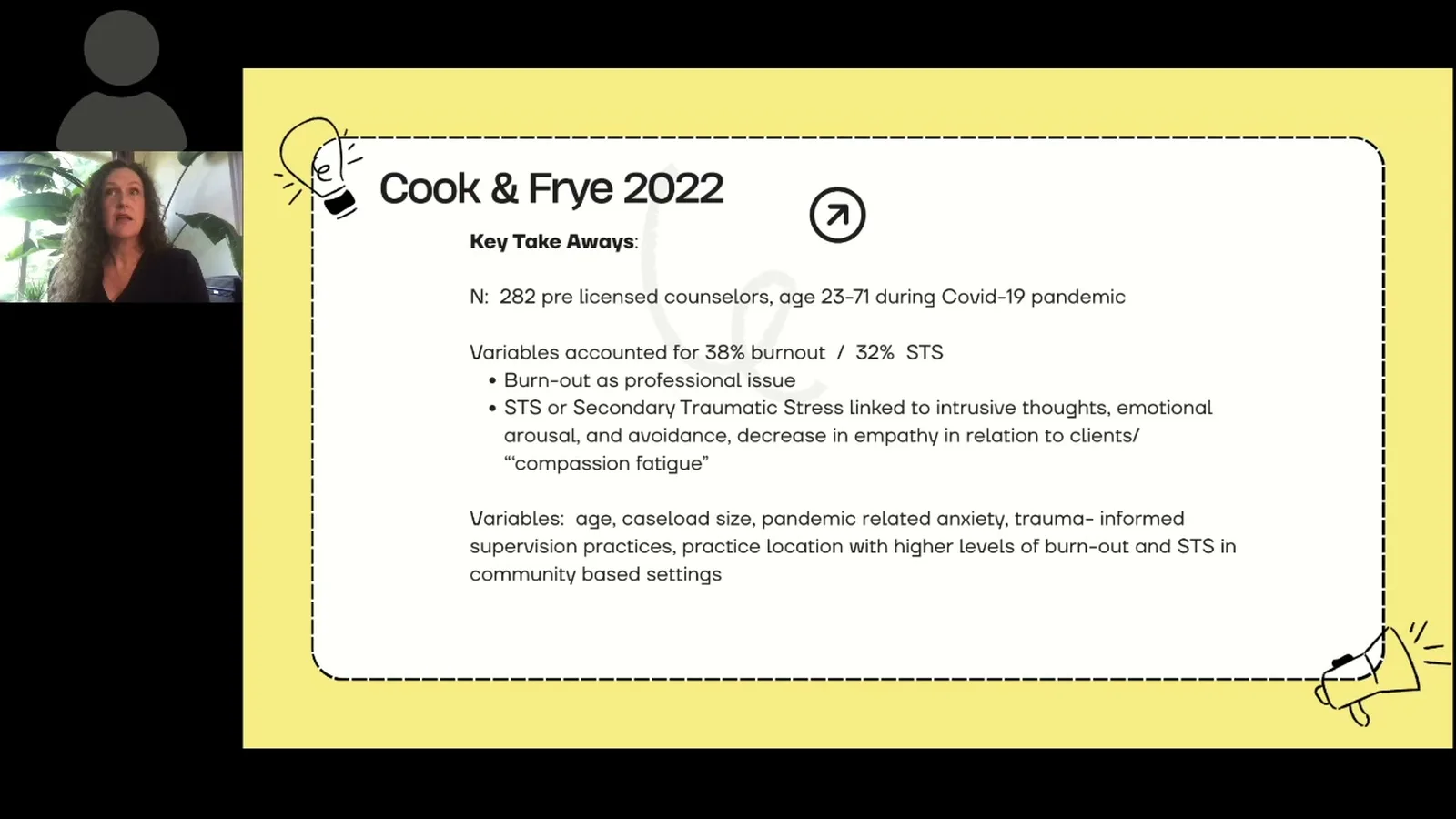
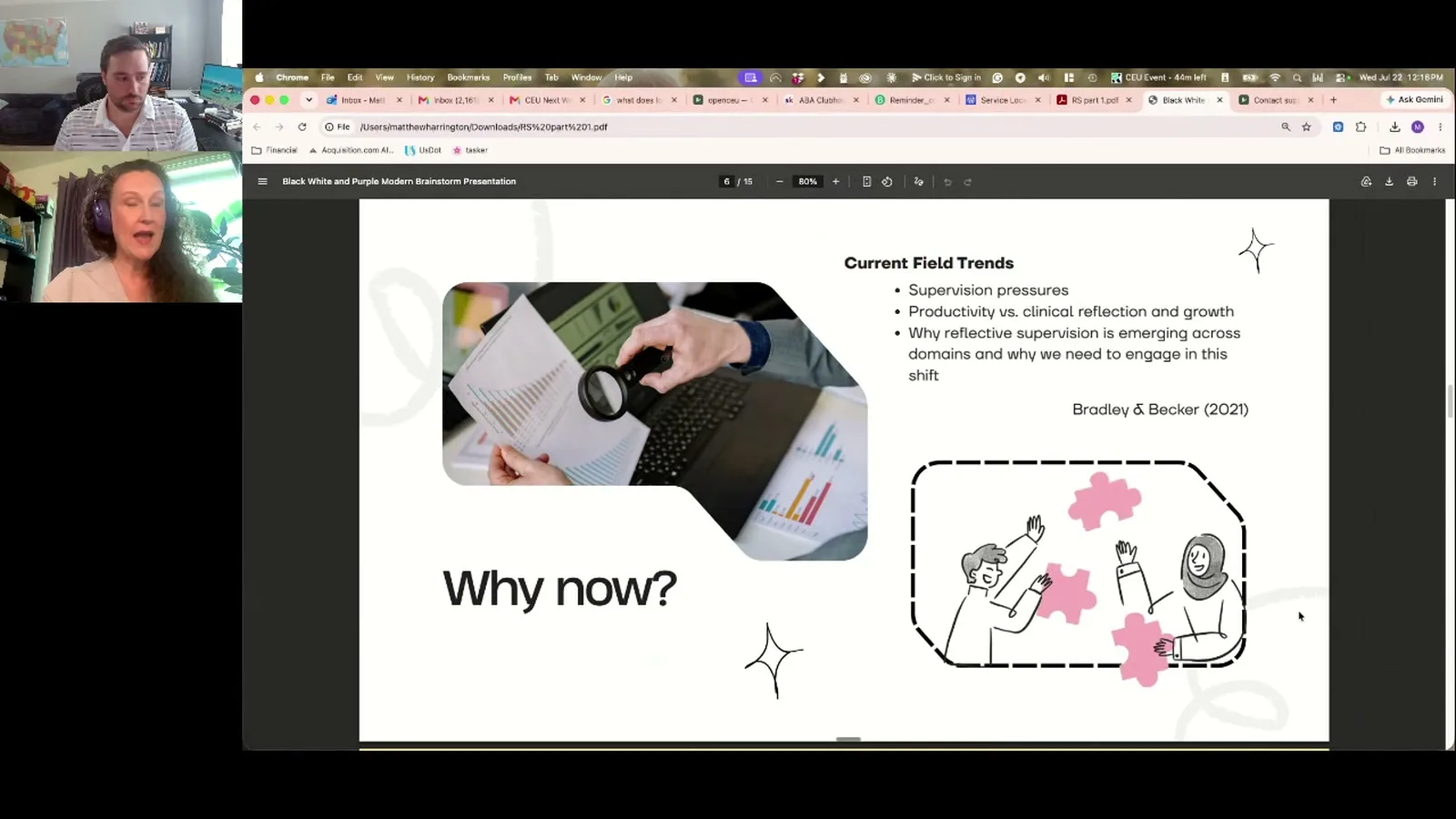
Drawing on Wilkins (2019, 256 studies), effective supervision is described as reliable, supportive, available, knowledgeable, trusted, and respected…
- 1 PDU
Navigating Communication with Clinicians
Anlara HoskinsCandid Contingencies, LLC
Establishing rapport with clients and with supervisors is presented as foundational: it builds trust so clients cooperate and makes it easier for a BCBA to…
- 1 Supervision CEU
Foundations of Reflective Supervision in Behavior Analysis
B. Kuereine GrayThe Behaviorist Bookclub
Gray argues rapport, the well-established prerequisite for therapeutic client relationships, is equally necessary between supervisor and supervisee before…

On this page · 9 sections▾
Rapport in ABA practice is a trusting, positive relationship that has to exist before you ask someone to do hard things. It applies to the learners you serve. It also applies to the people you supervise and the people who supervise you.
Most clinicians first hear about rapport when they start with a new client. Conference speakers now push the idea further. They say the same trust matters between a BCBA (a Board Certified Behavior Analyst) and an RBT (a Registered Behavior Technician). This page pulls together what those speakers said and what the research shows.
Rapport comes before hard demands#
B. Kuereine Gray starts with a simple question. When you begin a therapeutic relationship, what do you need before you move on to tough goals? Her answer is rapport with your provider. She calls this one of the most evidence-based needs in care.
A "therapeutic demand" is any task that asks the learner to stretch. Gray describes these as the difficult parts of care that come after rapport is established. Her point is that these demands land better when trust is already there. Without that trust, progress gets harder.
This idea is not new to most ABA teams. It shapes how many clinicians plan the first weeks with a new learner. They spend time getting to know the child before they push on goals. Gray takes that familiar rule and asks the field to apply it more widely. If it is true for clients, it should be true for staff too. That shift is the core of her argument about supervision.
Rapport belongs in supervision too#
Gray asks supervisors to look at themselves as a kind of client or consumer. In the same way, supervisees are consumers of supervision. So the same rule holds. If rapport matters with learners, it also matters in the supervisor and supervisee relationship.
She describes good supervision as collaborative. It is not one person handing down orders. Gray notes that a simple list of tasks does not promote professional growth. A checklist may get work done, but it does not build a person. Instead, she calls good supervision "curiosity driven." The supervisor asks questions and wants to learn about the supervisee.
Some people use the phrase "supervisory relationship" for this same idea. It means the working bond between a supervisor and the person they train. Gray treats that bond as the ground floor. You need rapport and an established relationship with that person first. Only then can the harder parts of training, like feedback and correction, really take hold.
What a strong supervisory relationship looks like#
In a talk on reflective supervision, Gray draws on a framework from Wilkins. It lists what effective supervision needs to be. She reads the list out loud.
Supervision had to be reliable. Supportive, available, knowledgeable. And not just that, but trusted. and respected. That is, this is. This is a positive working relationship.
From the talk — B. Kuereine Gray
Gray then adds more. If supervision is going to include social and emotional support, it has to be well structured. It should focus on the provider as a human being. Every provider brings a history of punishment and reinforcement into the job. A good supervisor keeps that in mind.
She also calls for "scaffolded support." Scaffolding means giving extra help at first and then pulling it back as skills grow. Supervisors should help staff take on all the parts of their daily jobs. They should also help solve problems when things come up. Each of these traits builds on trust. A supervisor who is never available, or never kind, will struggle to earn it.
How rapport protects staff from burnout#
Gray links good supervision to staff retention. Retention means how long staff stay with an organization. She explains that reflective supervision can raise a provider's sense of psychological safety. That means feeling safe to speak up or make mistakes without fear.
That safety helps in several ways, according to Gray. It helps providers build a professional identity. It helps them engage with their organization and their caseload. Gray says all of these effects "snowball" into better retention.
She also says effective supervision does real protective work.
it provides a a buffer to Unreasonable, unrealistic. or large amounts of work demands.
From the talk — B. Kuereine Gray
Gray says this buffer leads to higher job satisfaction and lower turnover. She adds a hopeful point. We cannot change toxic supervisors or every hard dynamic at work. But we can choose how we engage and what we pass on. A positive history with supervision travels with a person. If they become a supervisor later, they bring that model with them.
Rapport makes feedback land better#
Anlara Hoskins comes at rapport from the RBT side. In her talk on Navigating Communication with Clinicians, she starts with the client example most people already know.
You need to establish rapport, really build that trust so that your client is willing to do things for you.
From the talk — Anlara Hoskins
Hoskins then turns to staff. When she trains BCBAs, rapport with their RBTs is one of the first things she covers. Her reason is practical. Feedback goes a lot better when the RBT feels comfortable, warm, and welcome around the BCBA.
This matches Gray's view from a different angle. Gray talks about what supervisors owe supervisees. Hoskins talks about how both sides make feedback easier. Neither speaker treats rapport as a soft extra. Both treat it as the base that hard conversations stand on. When trust is missing, even fair feedback can feel like an attack. When trust is present, the same words are easier to hear and use.
Rapport helps RBTs speak up#
Hoskins makes a point that many supervision talks skip. Rapport is not only the supervisor's job. RBTs can build it from their end too, and it pays off when they need to self-advocate. Self-advocacy means speaking up for your own needs, such as asking for help or raising a concern.
establishing rapport from your end is really helpful, too, because if you do need to self advocate and you have that rapport as baseline, it will be really easy or much easier, I should say, for your BCBA to accept any feedback that you need to deliver to them
From the talk — Anlara Hoskins
Hoskins adds a second benefit. Rapport helps your BCBA know a little more about you. So when you raise a concern, they already know some of the back story. They can see why a certain issue matters to you. They can also see why you might need extra support in one area.
She places rapport inside a larger set of steps. Before it, she talks about knowing your own limits and boundaries. After it, she talks about explaining your concerns clearly. Rapport sits in the middle as the bridge between knowing yourself and speaking up well.
Rapport with learners and pairing#
On the client side, rapport overlaps with a procedure called pairing. Pairing means linking yourself and the teaching setting with things the learner already enjoys. Many ABA teams use it in early intervention before formal teaching starts. It is a close cousin of rapport, not a separate goal.
Hoskins frames client rapport as trust that makes the learner willing to work with you. Gray frames it as a needed step before difficult therapeutic demands. Both views line up with how pairing is used in practice. You build value and trust first. Then you slowly add demands.
The speakers on this page spend most of their time on adult relationships. Still, their message carries back to the therapy room. The same skills that build trust with a child can build trust with a coworker. Being reliable, warm, and curious works in both places. The research below shows that these skills can also be taught on purpose.
What the research says#
Research supports rapport building as a teachable skill. One study defined clear therapist behaviors for presession pairing. It then trained direct care staff to use them (Lugo et al., 2017).
A later study used behavioral skills training to teach pairing to early interventionists. Staff mastered the skills and mostly kept them with real clients. When staff paired before sessions, children showed fewer interfering behaviors (Ensor et al., 2024).
Caregivers can learn rapport building too. A digital training package used online modules, video models, and live feedback. All four caregivers improved their rapport-building skills (Guinness & Feil, 2025).
Rapport also matters in workplace settings. In one lab study, a rapport-building group was more productive. That group also put in more optional effort than a control group (Curry et al., 2019).
Together, these studies show rapport is not just a feeling. It is a set of behaviors that can be defined, trained, and measured.
FAQ#
What is rapport in ABA? Rapport is a trusting, positive relationship between two people. In ABA, it usually comes before hard teaching demands. It applies to clients and to supervision.
How is rapport different from pairing? Pairing is a procedure used to build rapport. It links the therapist and setting with things a learner already likes. Rapport is the trusting relationship that results.
Why does rapport matter in supervision? Rapport makes feedback easier to give and to hear. It also helps staff speak up for their needs. Speakers link strong supervisory relationships to higher job satisfaction and lower turnover.
Turn this topic into a CEU
You just studied this. Now get credit for it.
Watch Reflective Supervision and Provider Outcomes in ABA with B. Kuereine Gray and earn 1 free BCBA CEU. Detailed certificate, delivered the moment you finish.