Clinical Supervision in ABA: What Makes It Work
Clinical supervision in ABA shapes client outcomes, staff skill, and retention. Learn what effective supervision looks like and when 5% is not enough.
Key takeaway
Clinical supervision in behavior analysis is the ongoing oversight a BCBA gives the people who deliver a client's treatment. A BCBA is a Board Certified Behavior Analyst, the clinician who designs the plan.
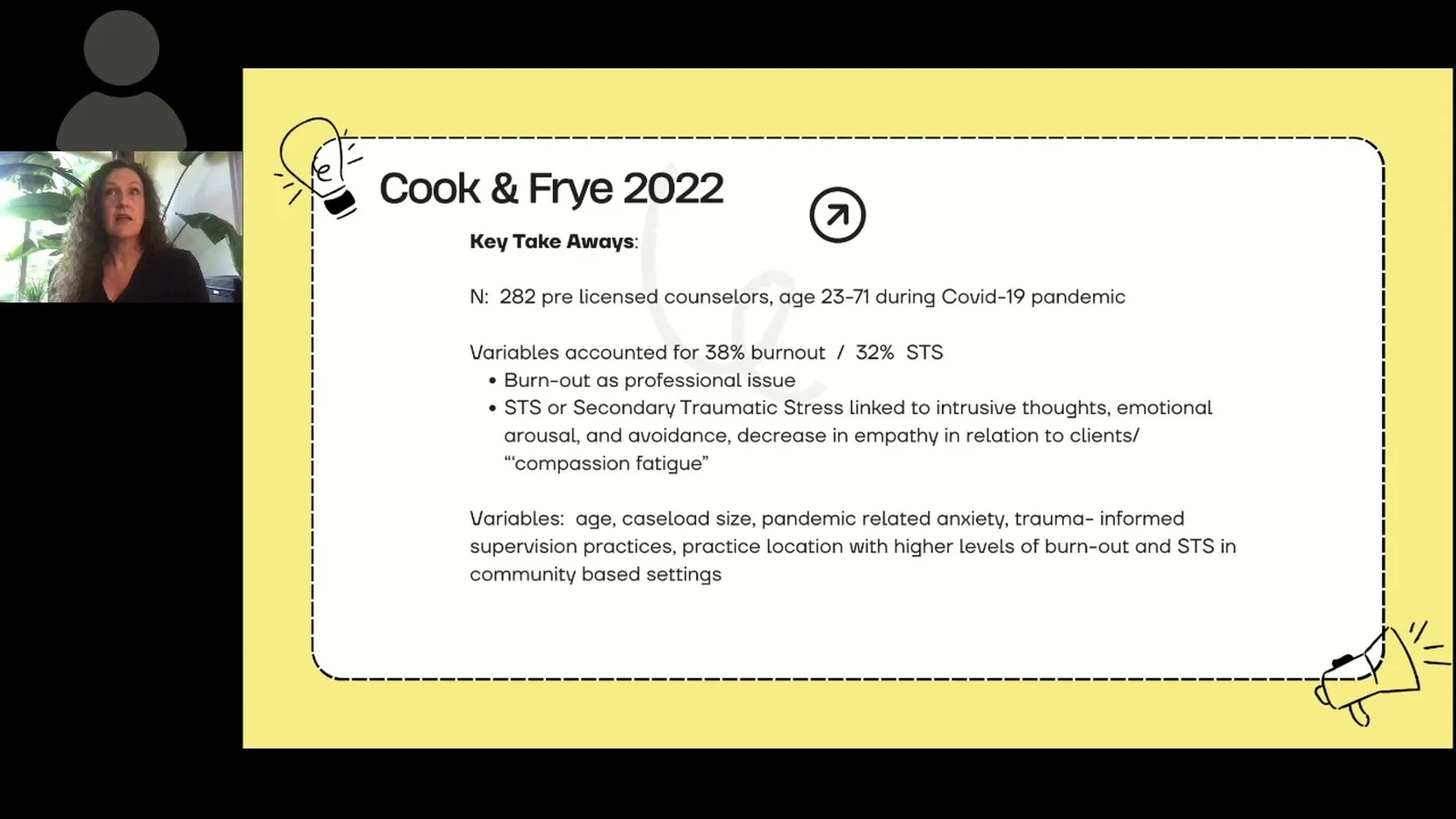
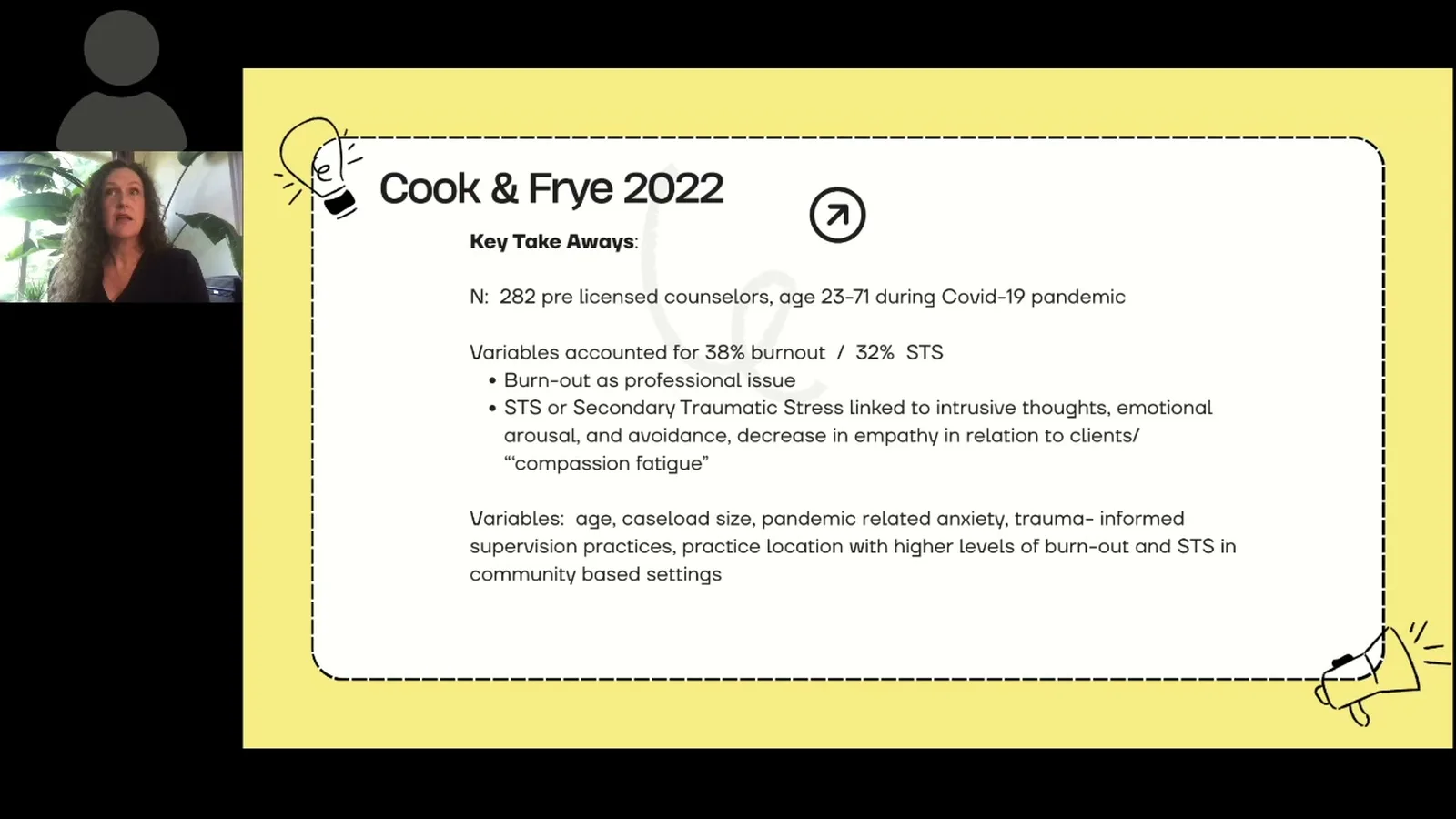
Reflective Supervision and Provider Outcomes in ABA
Experts who cover this
3 recordings on openceu cover clinical supervision in ABA.
- Featured talk1 Supervision CEU
Reflective Supervision and Provider Outcomes in ABA
B. Kuereine GrayThe Behaviorist Bookclub
Citing a Wilkins (2019) review of 256 studies, Gray describes what makes clinical supervision effective for a working alliance: being reliable, supportive…
- 1 PDU
Navigating Communication with Clinicians
Anlara HoskinsCandid Contingencies, LLC
The talk references the RBT supervision requirement (the '5% minimum') as often insufficient, and encourages RBTs to self-advocate for additional supervision…
- 1 CEU
Child Development for BCBAs- Age 9-11
Kelly BrzakThe Behaviorist Bookclub
Kelly reflects on how a supervisor's own skill set directly affects client outcomes, staff performance, and retention, urging BCBAs to check their ego and…


On this page · 9 sections▾
Clinical supervision in behavior analysis is the ongoing oversight a BCBA gives the people who deliver a client's treatment. A BCBA is a Board Certified Behavior Analyst, the clinician who designs the plan. The people they supervise are often RBTs, or Registered Behavior Technicians, who run sessions with the client each day.
Good supervision does more than check boxes. It shapes how well treatment is carried out, how staff grow, and whether they stay in the job. Three conference speakers take on this topic from different seats: the supervisor, the organization, and the technician. Their points add up to one clear message. The quality of supervision is a clinical issue, not just a paperwork issue.
Why supervision quality matters for clients#
It is easy to think of supervision as a rule you meet once a month. Kelly Brzak, a BCBA who teaches child development for behavior analysts, pushes back on that view. She asks supervisors to stop the "blame game" and take ownership of their own skills. When a case goes badly, the first place to look is the supervisor's own practice.
Our supervision skill set can directly lead, directly lead to poor client outcomes, poor staff performance, and poor staff retention.
From the talk — Kelly Brzak
Notice the three outcomes she lists. Client progress is the first. Staff performance is the second. Staff retention, meaning whether people stay, is the third. All three trace back to the person giving supervision. Brzak also flags a growing strain. She expects more supervisors to face oversized caseloads, meaning too many clients per BCBA, given recent changes in the field. A heavy caseload leaves less time and focus for each technician. That makes the supervisor's skill set matter even more.
What effective supervision looks like#
B. Kuereine Gray, who spoke on supervision and provider outcomes, points to a large review from social work. In 2019, Wilkins looked at 256 studies. The goal was to learn what helps supervision work, what hinders it, and in what settings. Gray notes that good supervision is linked to better clinical reasoning, risk assessment, ethical judgment, and treatment planning.
Wilkins also built a simple framework for what a supervisor needs to be.
Supervision had to be reliable. Supportive, available, knowledgeable. And not just that, but trusted. and respected.
From the talk — B. Kuereine Gray
Gray calls these traits the base of a positive working relationship between supervisor and provider. She then adds more layers. Supervision should be well structured. It should include scaffolded support, meaning help that is built up step by step as the person takes on new tasks. It should also make room for problem solving when issues come up. In short, a good supervisor shows up, knows the material, and gives the work a clear shape.
Same rules, very different supervision#
The field already has rules about what supervision should include. Gray points out that this theory exists in behavior analysis too. Yet she observes a gap between the rules and real life. Providers pass board certification, and their supervision still looks vastly different from one to the next.
Her point is about implementation, meaning how a plan is carried out in practice. Two supervisors can follow the same guiding principles and still deliver very different experiences. Gray says this difference does real harm. It shapes how new providers will go on to practice for years.
This is why supervision quality is worth studying on its own. Meeting a requirement on paper does not mean the supervisee got what they needed. A supervisee is the person receiving supervision. Organizations that want consistent care need to look at what actually happens in each supervision meeting. They cannot assume that a signed form means a good experience. The structure has to be visible and repeatable, not left to each supervisor's habits.
The supervisor's own behavior#
Brzak turns the lens on the supervisor. She lists several checks to run before walking into a session. Check your ego. Check your judgments. Check your burnout level. Check your attitude. She notes that earning the BCBA letters took hard work, but that does not mean expecting a red carpet.
One of her most useful shifts is about who holds the expertise. The technician often spends far more time with the child than the BCBA does. Brzak says she has learned to treat the technician as the expert on that child. That changes the tone of every meeting.
How can I help you is a much better approach than how can I fix you.
From the talk — Kelly Brzak
She also speaks honestly about burnout. Brzak says there were times she chose to cancel a session. She knew she could not focus on both her technician and the client that day. Her view is that this field cannot be a "punch the clock" career. A supervisor who is not present gives supervision in name only. Her full talk, Child Development for BCBAs- Age 9-11, places these checks inside a wider look at serving older children.
Is the 5% minimum enough?#
RBTs must receive a minimum amount of supervision. Anlara Hoskins is a BCBA who spoke on how technicians and clinicians communicate. She calls this the "5% minimum." She treats it as a floor, not a goal.
So everybody knows about the 5% minimum, but there really aren't many clients where 5% is sufficient.
From the talk — Anlara Hoskins
Her reasoning centers on competence. Competence means being able to carry out a protocol, or treatment procedure, the way it was designed. If a technician has not been trained to that level, the client is at risk. More hours of oversight may be the only way to close the gap.
This adds a key idea to the structure of supervision. The right amount is set by the client and the technician's skill, not by the minimum rule. A complex case or a newer technician may need far more than the floor. Supervisors who plan only to the minimum may be meeting the rule while missing the need.
When technicians need to ask for more#
Hoskins speaks directly to technicians. If you do not feel trained to competence, she says, it is on you to ask. You can request more training or more supervision. She frames this as self-advocacy, meaning speaking up for what you need to do the job well.
She is honest that this is hard. Asking for more supervision can be a challenging conversation on its own. Still, she ties it to protecting both the technician and the client. Hoskins links this to the Ethics Code, the rule set that guides behavior analysts. She urges technicians to tell their supervisor what they can and cannot do. They should also share what they are or are not comfortable with.
She adds one more practical step. There is no single right way to raise these concerns. What matters is taking the needed steps and documenting them. Writing down what you asked for, and when, protects you if questions come up later. From the supervisor's side, this is a signal to invite these talks rather than wait for them.
Remote supervision and the supervisor relationship#
Many BCBAs now supervise from a distance. Brzak has worked remotely off and on since 2019. She asks remote supervisors in the audience to "tighten up" on pairing. Pairing is a behavior analysis term. It means building a positive link so that your presence becomes rewarding to the other person.
Brzak applies pairing to the adults on the team, not just the client. She urges supervisors to self-monitor and increase their pairing with both caregivers and technicians. Some supervisors even run a quick self-check in the car before each session.
Her reasoning is simple. No matter how strong a relationship is now, building it further helps skills transfer. When a technician trusts the supervisor, feedback lands better. This connects back to Gray's framework. Being trusted and respected is not a bonus. It is part of what makes supervision effective, whether it happens in the room or over a screen.
What the research says#
Published research backs the idea that supervision is central to the field. One review calls supervision "paramount" in applied behavior analysis. It sorted studies of BCBA and trainee supervision by type (Kranak et al., 2023). A trainee is someone earning hours toward becoming a BCBA.
The rules around who can supervise have also grown. Since 2015, BCBAs must complete supervision training before they can supervise trainees. Supervisors also need continuing education related to supervision (Čolić et al., 2025).
Measuring supervision is still a weak spot. One survey found most BCBAs did not know how to measure their own supervisory behaviors. That finding is reported in a study of a new measurement tool (McElroy et al., 2024). The same authors note that many recommended practices have not yet been tested by experiment.
Technicians' views are now being studied too. One study asked RBTs how they see the support they get from BCBAs. It looked for strengths and gaps in relationship-building skills (Kristiansen et al., 2025). This mirrors what the speakers stress about trust and respect.
FAQ#
What is clinical supervision in ABA? It is the ongoing oversight a BCBA gives to treatment staff, such as RBTs. It covers training, feedback, problem solving, and making sure procedures are carried out correctly.
Is the 5% RBT supervision minimum enough? Not always. Anlara Hoskins notes that few clients are well served by only 5%. The right amount depends on the case and on the technician's skill. Technicians who feel unprepared should ask for more and document the request.
What makes a clinical supervisor effective? A 2019 review by Wilkins, shared by B. Kuereine Gray, lists traits like reliable, supportive, available, knowledgeable, trusted, and respected. Kelly Brzak adds that supervisors should check their ego and burnout, and treat technicians as experts on the child.
Turn this topic into a CEU
You just studied this. Now get credit for it.
Watch Reflective Supervision and Provider Outcomes in ABA with B. Kuereine Gray and earn 1 free BCBA CEU. Detailed certificate, delivered the moment you finish.