Post-Crisis Re-Entry Plans for Schools: What to Put on Paper
After a behavior crisis at school, a re-entry plan keeps the next day from being a repeat. Here's what to include and who signs off, from a BCBA-led CEU.
Key takeaway
A post-crisis re-entry plan is the written document that gets a student back into the school building after a serious behavior event, and the clearest example in the Vanderbilt team's CEU is Madden: he came back from a 45-day suspension, sat in a side room three hours a day in protective gear, and within a few weeks the team rewrote the plan and doubled his time on campus from two hours to four.
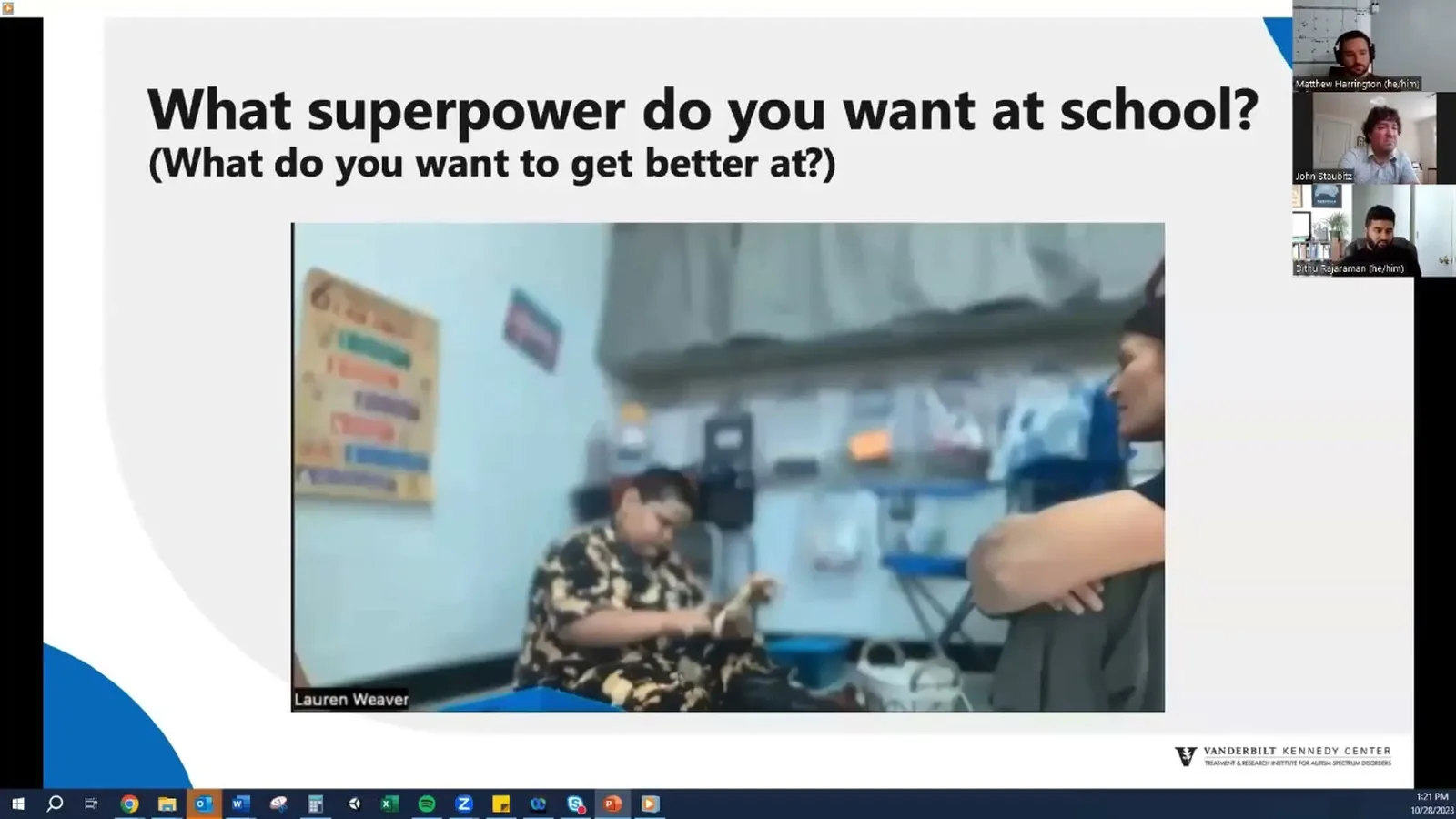
Universal protocols and crisis intervention in schools - Applied 2023
On this page · 8 sections▾
A post-crisis re-entry plan is the written document that gets a student back into the school building after a serious behavior event, and the clearest example in the Vanderbilt team's CEU is Madden: he came back from a 45-day suspension, sat in a side room three hours a day in protective gear, and within a few weeks the team rewrote the plan and doubled his time on campus from two hours to four. That jump from two hours to four hours is the milestone every re-entry plan should be built around. Not a perfect day. Not a normal schedule. A measurable extension, with check-ins, that gets the student back to a full day without setting up the next crisis.
This page is for the Board Certified Behavior Analyst (BCBA), special education teacher, or admin sitting down to draft that document. The goal is to give you the sections, the signers, and the check-in calendar so the paper actually does the work.
What a re-entry plan is (and why a suspension letter isn't one)#
A suspension letter tells the family the student is out. A re-entry plan tells the team how the student comes back. Those are two different documents.
A re-entry plan answers four questions in writing:
- What changed since the incident? New supports, new staffing, new environment.
- What does the student's day look like on day one back? Hour by hour.
- Who is responsible for what? Names, not roles.
- When do we meet again to adjust? Specific dates.
If your district hands you a one-page form that only lists conditions for return, that is not a re-entry plan. That is a compliance document. The plan you actually need is longer, more specific, and signed by more people. It belongs as an addendum to the student's Individualized Education Program (IEP, the legal document that lays out a student's special education services) or behavior intervention plan, not in place of either.
The Vanderbilt team's work with Madden shows what happens when the only document is a suspension letter. He came back to a side room next to the special education classroom. Staff wore protective equipment. He was on campus three hours a day. He was still being restrained more than twice a day. The paperwork said he was back at school. The reality was a crisis pattern that had simply moved indoors.
The 5 sections every school re-entry plan needs#
These are the five sections to write. Keep each one to one page or less. Plans that run twenty pages do not get read.
1. Incident summary and current baseline. Two paragraphs. What happened, what data the team has from the last two weeks before the incident, and what data the team has from any period of in-home or remote service during the suspension. Be honest about gaps. If you do not know the rate of aggression, write that down.
2. Day-one schedule. A literal hour-by-hour schedule for the first day back. Where the student arrives, who greets them, what room they go to, what the first activity is, who is in the room, and where the student can go if they need a break. Include lunch and dismissal.
3. Universal supports in place. The non-negotiable supports the team has agreed to run at all times during re-entry. The Vanderbilt team's list is a strong starting point: continuous positive regard, an enriched environment, following the student's lead where possible, inviting (not requiring) participation in activities, limiting non-essential demands, providing choices, embedding reinforcement, and reinforcing low-level precursors instead of ignoring them.
4. Staffing and training prerequisites. Names of staff assigned, and what training each one has completed. If a staff member has not completed crisis response training or has not been coached on the universal supports above, write down the date by which they will. Do not let the plan launch with untrained staff.
5. Check-in dates and decision rules. Specific dates for three meetings (see the section on built-in check-ins below). For each meeting, write the decision rule in advance: what data would make the team extend the day, what data would make the team pause, and what data would make the team escalate. Decisions made in advance are easier to defend than decisions made in the moment.
Why shortening the school day is the wrong default#
Almost every re-entry plan defaults to a shortened day. Two hours becomes the new normal. Then four hours. Then a year goes by and the student is still on a shortened day.
The Vanderbilt team is direct about this:
From our perspective, we don't think shortening the school day is a good solution and is one of our main goals in working with students to extend back to a typical duration. From the talk — the Vanderbilt team
A shortened day looks like a safety measure. It often functions as the opposite. A student who is only on campus two hours a day spends those two hours with the smallest possible group of staff, in the smallest possible space, doing the fewest possible activities. The environment is impoverished by design. That is the same environment that produced the crisis in the first place.
The re-entry plan should name the shortened day as a temporary bridge with a clear end date, not the destination. If the day-one schedule is two hours, the plan needs to say what would have to be true to move to three hours, then four, then five, then a full day. Without those triggers written down, the shortened day becomes permanent.
How to schedule the first week back without setting up a relapse#
Day one is not the hardest day. Day three is. The honeymoon wears off, the staff get tired, and the schedule has not been adjusted yet. Write the first week with that in mind.
Day one: shortest version of the schedule. The student is on campus for whatever block the team is confident they can stay safe and engaged for. For Madden, that was two hours. Keep demands light. The universal supports are the whole intervention on day one.
Days two and three: same schedule, same supports, same staff. Do not change variables this early. Collect data on precursors and dangerous behavior in 15-minute partial intervals. The Vanderbilt team used this measurement because it picks up patterns that count-based data misses.
Days four and five: small additions. Add one academic task, one transition, or one peer interaction. Not all three. Pick the one that the day-one through day-three data suggest the student can handle. If the data are flat or worsening, do not add anything. Hold the schedule.
End of week one: review meeting. Look at the data, ask the staff how they are doing, and decide whether to extend day-two schedule into week two or hold steady. The review is the point. A week without a review is a week of guessing.
Who has to sign off: family, admin, BCBA, classroom teacher#
The plan needs four signatures, at minimum. If any one of them is missing, the plan will fail at the first hard moment.
- The family signs because they have to live with the schedule and they often have information no one else has about what is going on at home.
- The building administrator signs because they control whether the day-one schedule actually runs. If the principal has not signed, the schedule will be overridden the first time the central office calls.
- The BCBA signs because they are responsible for the behavior intervention components and the data review.
- The classroom teacher signs because they are the person who has to run the schedule and call for help when it stops working. A plan the teacher has not read is a plan that will not survive contact with the school day.
Add signatures for any one-on-one staff, the speech-language pathologist or occupational therapist if relevant, and the district special education director if the student has a history of restraint or seclusion. More signatures means more people who have read the plan.
The Vanderbilt team's Camden case is a useful example of what a multi-signature IEP meeting can look like. The room included a parent, grandparent, family advocate, and family attorney on one side, and a special education teacher, consulting teacher, and district attorney on the other. That is a lot of signatures. It is also a meeting where everyone is hearing the same plan at the same time.
Built-in check-ins: 3 days, 2 weeks, 6 weeks#
A re-entry plan without scheduled check-ins is a one-shot document. Write the dates in before the plan goes live.
Three-day check-in. Quick meeting, fifteen minutes. Just the staff who were in the room with the student. The question is: did the day-one schedule run as written? If not, why not? Adjust before the data get noisy.
Two-week check-in. Full team. Look at the 15-minute partial-interval data on precursors and dangerous behavior. Compare to baseline from before the incident. Decide whether to extend the day, hold steady, or add supports. This is the meeting where Madden's team made the call to go from two hours to four.
Six-week check-in. Full team plus family. Review the trajectory, not just the data. Is the student spending more time with peers? Are staff still using the universal supports, or have they drifted back to baseline practices? Is the family seeing changes at home? Six weeks is enough time to know whether the plan is working.
The Vanderbilt team's posture at the Camden meeting captures the right tone:
We were prepared to make adjustments to procedures based on feedback and prepared to do more work if the team didn't find outcomes satisfied. We were prepared to make adjustments to the family's trajectory. From the talk — the Vanderbilt team
A plan that cannot be adjusted is not a plan. It is a contract.
Frequently asked questions#
Does a re-entry plan replace the manifestation determination? No. The manifestation determination is a separate legal process under federal special education law that decides whether the behavior was a result of the student's disability or a failure to implement the IEP. The re-entry plan is the operational document for what happens after that determination is made. Districts that try to use one for the other end up with neither.
Can a re-entry plan require staff training as a condition of return? Yes, and it should. If the plan calls for universal supports the staff have not been trained on, the plan will not run. Write training dates into the plan as prerequisites, name the trainer, and make completion a signoff item. The Vanderbilt team's approach assumes the consulting BCBA is also coaching and training the in-room staff, not just writing procedures.
What if the family wants a faster re-entry than the team thinks is safe? Put the disagreement in writing and use the check-in schedule to resolve it. Agree to the more cautious version on day one, but build in an earlier check-in (say, three days instead of two weeks) where the data will decide whether to accelerate. Families pushing for speed are usually responding to the cost of a shortened day on the rest of their life. That is a real cost. The plan needs to acknowledge it and commit to moving as fast as the data allow.
Watch the CEU and start a draft#
The Vanderbilt team's full presentation walks through three more students who came back from similar situations and what the universal supports looked like in each case. If you are sitting down to write a re-entry plan this week, watch the talk first and take notes on the section structure. Then open a blank document and start with the day-one schedule. The rest of the sections are easier to write once that one exists.