Child Waking Up at Night With Autism: An ABA Guide for Families
Roughly 50% of autistic kids wake in the middle of the night. Here is the behavior-analytic plan to cut night wakings, from a BCBA-led CEU.
Key takeaway
About 50% of autistic kids wake in the middle of the night, which is roughly double the rate of neurotypical kids, and a working definition from Galleon (2023) calls a "real" night waking one that lasts 30 minutes or more after sleep onset, or more than one shorter waking per night that disrupts the child or the family; the Maserac (2016) study is the reason BCBAs care so much, because of all the sleep problems studied in kids with autism, middle-of-the-night wakings had the most consistently strong link to daytime problem behaviors, even after controlling for age and sex.
Why are they Waking up at 2 AM?
On this page · 8 sections▾
About 50% of autistic kids wake in the middle of the night, which is roughly double the rate of neurotypical kids, and a working definition from Galleon (2023) calls a "real" night waking one that lasts 30 minutes or more after sleep onset, or more than one shorter waking per night that disrupts the child or the family; the Maserac (2016) study is the reason BCBAs care so much, because of all the sleep problems studied in kids with autism, middle-of-the-night wakings had the most consistently strong link to daytime problem behaviors, even after controlling for age and sex. In plain words, the 2 a.m. wakings are not just a tired-parent problem. They are a next-day-behavior problem too. This page is the parent-facing umbrella for the whole topic. Specific plans like graduated extinction, co-sleeping, and 4 a.m. wakings live on their own pages and are linked at the bottom.
Why so many autistic kids wake at 2 AM#
Sleep is not one long block. It runs in cycles, and the second half of the night is mostly light sleep. In light sleep, every kid wakes up a little, often 21 to 42 times a night depending on age. Most of those wakings are quiet. The brain rolls over and falls back into the next cycle without anyone noticing.
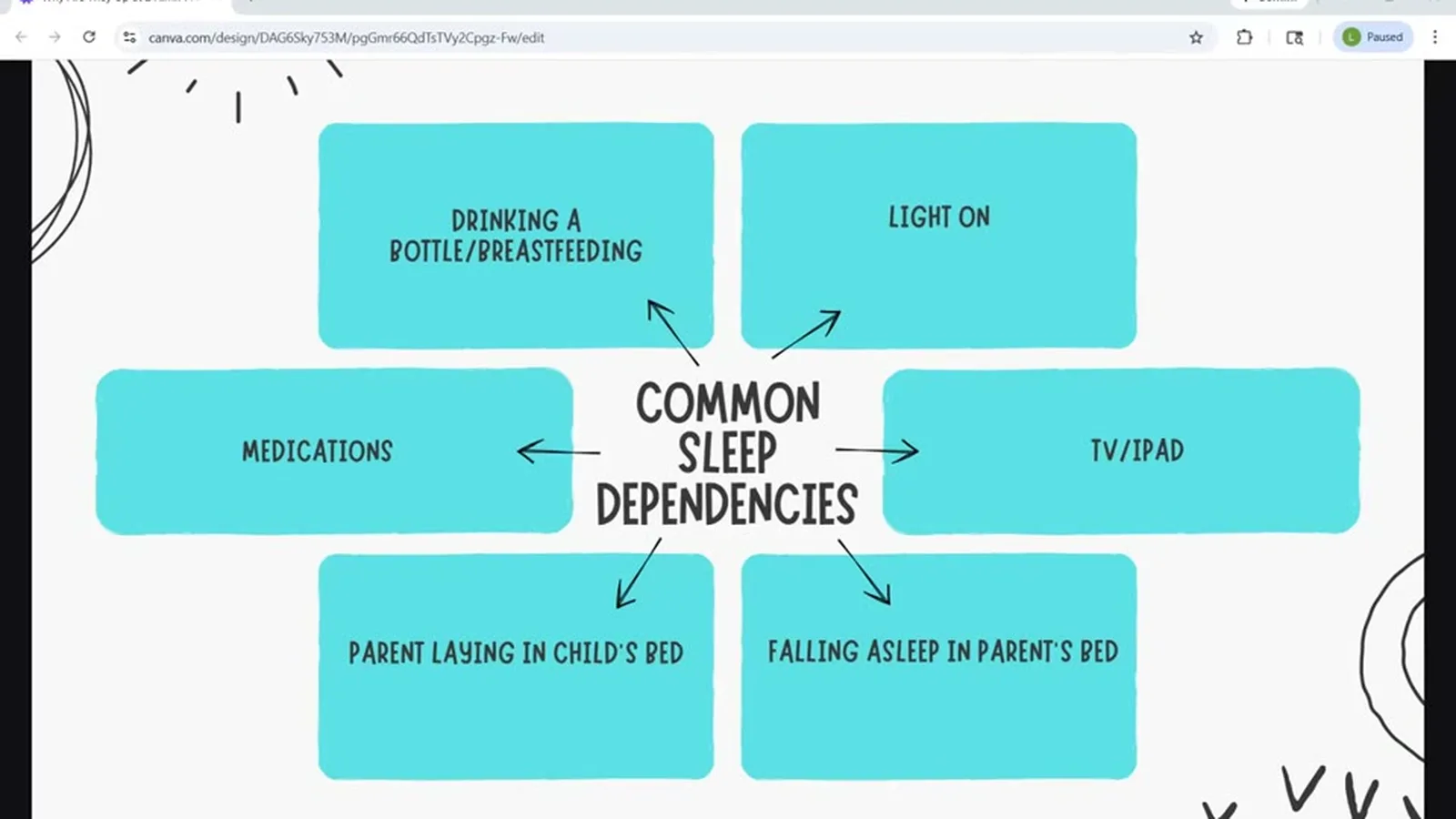
The 2 a.m. waking shows up when something the child needs to fall asleep is gone. If a kid fell asleep with a bottle, a parent in the bed, or a show playing, that thing is the cue. When the cue is gone at 2 a.m., the brain cannot find its way back to sleep on its own, so the child wakes the rest of the way up.
Up to 80% of children with ASD will experience some kind of sleep problem at some point. About 50% of them will experience either occasional or frequent night wakings. That is about double the prevalence found in the neurotypical childhood population. From the talk — Lindsay Anderson
So the 2 a.m. waking is not random. It is the predictable spot in the night where light sleep meets a missing cue. That is also good news, because it means the fix is mostly about the cue, not the kid.
What counts as a real night waking (the 30-minute rule)#
Not every waking is a problem. Parents often feel like every rustle is a crisis at 3 a.m., and the brain is bad at math at that hour. The field needed a clearer line. The 2023 Galleon paper looked at how the research used the term "night waking" and found there was no consistent definition. They proposed one that has held up well in practice.
Night wakings are a waking of 30 minutes or more following sleep onset, or frequent, meaning greater than one per night, shorter night wakings after sleep onset that significantly disrupt the child or their family and caregivers. From the talk — Lindsay Anderson
The 30-minute rule is the one to write on the fridge. If a child wakes up, rolls around, and falls back asleep in a few minutes on their own, that is probably a normal waking in the light-sleep window. If they are awake for 30 minutes or more, or waking up multiple times in ways that pull the whole house out of bed, that is the disruptive kind. That is the kind a BCBA can help with.
This rule also lowers parent stress. Once a parent knows some wakings are normal and short, they stop reacting to every rustle. The reaction itself can stretch a 60-second waking into a 60-minute waking, so calm parents make calm nights.
How night wakings show up in ABA sessions the next day#
If a kid was up from 2 to 4 in the morning, the ABA session at 9 the next morning is going to feel different to the BT. A BT is a behavior technician, the person who runs the daily session. Most often the day will look like one or more of these.
- More irritability and bigger reactions to small frustrations.
- Cancellations, because the family finally got the kid back to sleep at 6 a.m. and does not want to wake them.
- Falling asleep in session, or just being too foggy to learn.
- A drop in attention, which makes it harder to follow directions and stay with programming.
- Skills that looked solid the day before that are gone on the data sheet today, because sleep is when the brain stores what it learned.
The Maserac (2016) finding is the one that pushed sleep into ABA conversations. In a study of 81 kids with autism, night wakings had the strongest link to daytime problem behaviors of any sleep issue studied, and that held up even after accounting for age and sex. Put together, a kid who is waking at 2 a.m. is often the same kid whose programming is stuck. That is why the ethics code language about removing things that interfere with services applies here. Sleep is one of those things.
The first three things a BCBA wants you to check#
Before any sleep training, three checks come first. They sound simple. They handle a surprising share of night wakings on their own.
- Same wake-up time every day, including weekends. The body uses morning light and a steady wake time to anchor the whole sleep clock. Sleeping in on Saturday is like flying two time zones east on Sunday. The body feels it. A steady wake time is the cheapest, most powerful change a family can make.
- A calming bedtime routine in the same order every night. Even 20 minutes is enough. A longer bath, a couple of books, lights low, the same order. The order is the cue. The brain reads the order and starts to settle.
- Sleep dependencies the child cannot keep all night. This is the big one. If the child needs a bottle, a parent, a show, or a light that gets turned off after they fall asleep, that cue is gone at 2 a.m. and the child wakes up looking for it. Swap unsustainable cues for sustainable ones the child can keep all night, like a nightlight that stays on or a white noise machine.
If a family does those three things for about two weeks and night wakings still happen, that is the moment to step up to a real assessment, like the Children's Sleep Habits Questionnaire (CSHQ) or the Sleep Assessment and Treatment Tool (SAT) from Dr. Hanley. Both are free online.
When to call the pediatrician before trying anything else#
There is one waking pattern that skips all behavior steps and goes straight to a doctor. Loud snoring, gasping, or any sign the child is fighting to breathe at night.
The first really important point, if parents do mention any of that possible sleep disordered breathing, like loud snoring or gasping on that BEARS screening tool, then the first thing we want to do is give an immediate referral to a health care professional. From the talk — Lindsay Anderson
That can be a sign of obstructive sleep apnea, where the throat muscles relax too much during sleep and the child briefly stops breathing. The brain wakes the child up to start breathing again, which wrecks sleep quality. Sleep apnea in preschool kids has more than doubled in the last 10 years, from about 9% to about 20%. No behavior plan fixes that. A doctor does.
Other medical reasons to check before sleep training are constipation, acid reflux, restless leg syndrome (often tied to an iron shortage), asthma or allergies that make breathing harder, and eczema or other skin conditions that itch at night. None of these are the BCBA's call to diagnose, but a good BCBA will ask about them on intake so the medical track and the behavior track can run at the same time.
What to expect when night wakings start to fade#
Sleep work is not a one-night fix. The first week of changes is often the loudest, because the child is looking for the old cues that are not there anymore. By weeks two and three, families usually start to see shorter wakings and longer stretches of sleep. By week four, the new bedtime cues are doing the work the parent used to do at 2 a.m.
What parents notice once sleep starts to settle is the part that surprises them. The first thing that changes is rarely the sleep. It is the morning. The child wakes up easier. Meltdowns over breakfast or shoes shrink. By the time the kid hits ABA, the team feels it before the data shows it. Sessions get longer. Skills stick from one day to the next. The family starts to remember what life felt like when everyone slept.
There will still be off nights. A cold, a trip, a time change, a tooth coming in. The sleep plan is not gone the next morning. The same cues that built the habit are still there. Most families find that one rough night is just one rough night, not a reset to the start.
The bigger picture is the one to hold onto. Better sleep does not just mean a quieter house at 2 a.m. It means a kid who can pay attention, hold on to what they learn, and feel okay in their own body the next day. Every other goal on the behavior plan gets easier when sleep gets better.
Frequently asked questions#
Is it normal for my autistic child to wake up at 2 AM every night? Common, yes. Normal in the sense of "nothing to do about it," no. About half of autistic kids have night wakings, which is double the rate in neurotypical kids. The fact that it is common is exactly why it is worth treating. A child who wakes every night at 2 a.m. is paying for it the next day in ABA, school, and mood, even when the family has gotten used to it.
Are night wakings different from trouble falling asleep? Yes. Trouble falling asleep is called long sleep latency. It happens at bedtime. Night wakings happen after the child has already fallen asleep and then wakes up later, usually during the light-sleep half of the night. Both can come from the same root cause, which is the cues the child uses to fall asleep, but the plans look a little different. A separate page covers bedtime resistance and the faded bedtime plan.
Will my child grow out of waking up at night? Some kids do. Many do not on their own, especially when there is a sleep dependency that the family keeps in place because it is the only thing that works. The waking does not fade because the cue does not change. Once the cue changes, the waking usually starts to fade in days, not years.
How long does it take to fix night wakings with ABA? Most families see real change in two to four weeks once they pick a plan and stick with it. The first week is often the loudest. Weeks two and three usually bring shorter wakings. Week four is when families start to forget what the old pattern even felt like. Severe cases or families with medical issues on top can take longer, which is normal and not a sign the plan is failing.
Do I have to sleep train to stop the night wakings? No. Sleep training is one option, and it is not the first one. Fading sleep dependencies, fixing the wake time, and getting a calming routine in place handle a lot of night wakings on their own. Co-sleeping is also a valid choice if the family wants it, as long as the parent stays in the same room all night so the cue does not disappear. A BCBA's job is to lay out the choices, not push one of them.
Watch the full talk#
If any of this sounded like your house, the full one-hour CEU walks through the assessments, the sleep dependencies most families miss, and the three sleep-training options BCBAs can offer when fading is not enough. It is free, and it counts for one general learning credit for BCBAs and BCaBAs.
Watch the full CEU on night wakings in autism
Turn this topic into a CEU
You just studied this. Now get credit for it.
Watch Why are they Waking up at 2 AM? with Lindsay Anderson and earn 1 free BCBA CEU. Detailed certificate, delivered the moment you finish.