MTSS Tier 3 Behavior Crisis Response: What Schools Actually Need
Tier 3 behavior crisis response inside MTSS: what changes when a student is in active crisis, who does what, and where universal protocols fit, from a BCBA-led CEU.
Key takeaway
Four students. Their baseline schedules ran two to three hours a day on campus, with one or two adults locked to their side every minute, and they were still being restrained almost every shift.
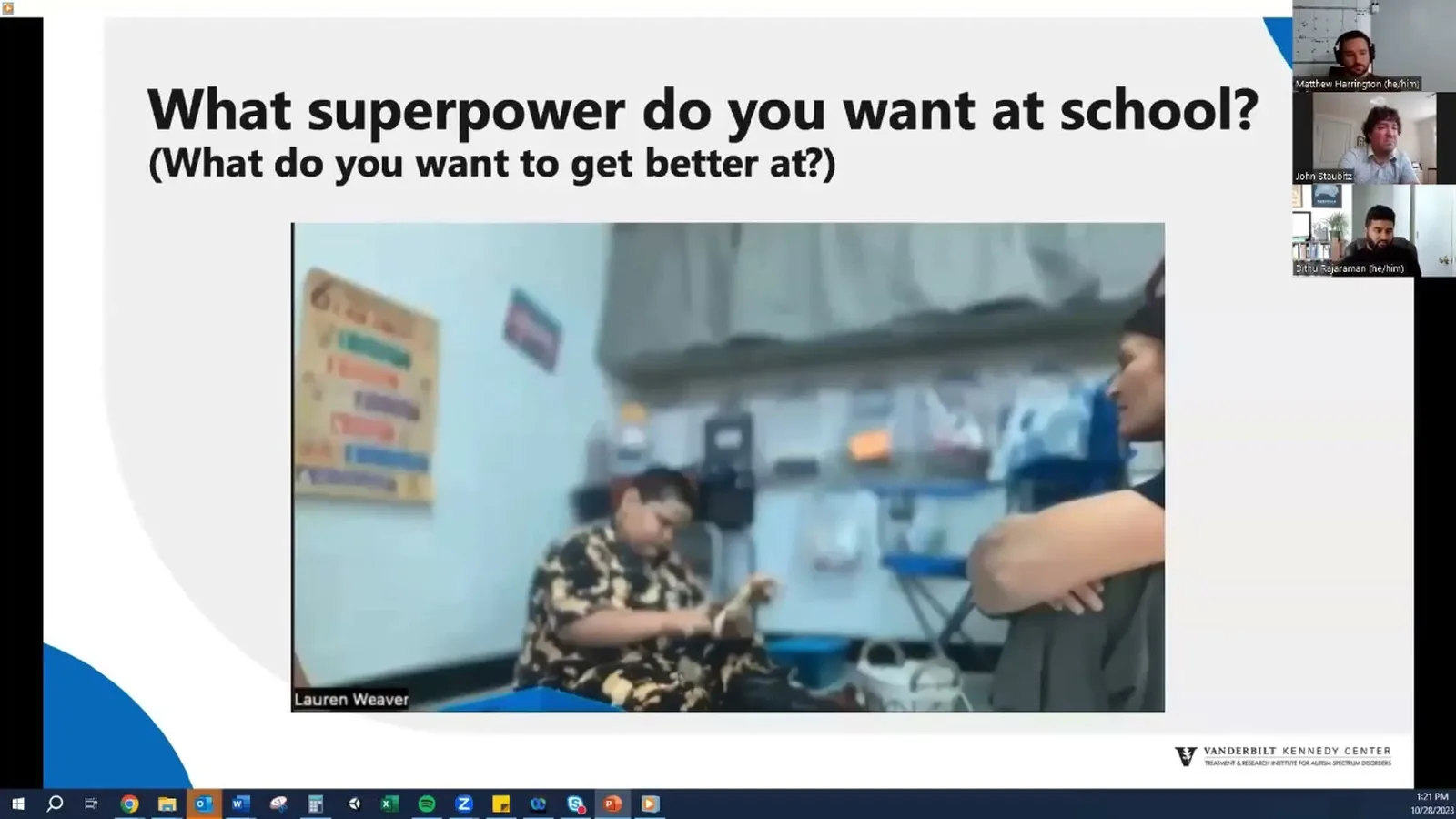
Universal protocols and crisis intervention in schools - Applied 2023
On this page · 8 sections▾
Four students. Their baseline schedules ran two to three hours a day on campus, with one or two adults locked to their side every minute, and they were still being restrained almost every shift. By the end of the work the Vanderbilt team shared at this talk, one of those students (Lewis) had his school day more than doubled, and all four were back in classrooms with peers for at least part of the day. That is the gap this page is about: the gap between how most buildings handle a Tier 3 student in crisis today, and what an MTSS (Multi-Tiered System of Supports) Tier 3 response can actually look like when a Board Certified Behavior Analyst (BCBA) team gets the structure right.
If you teach, lead a school, or sit on a crisis team, this is the short, plain version of what that talk laid out. Tier 3 is the top level of MTSS. It is the part of MTSS for the one student whose behavior is dangerous right now, where Tier 1 (whole-school prevention) and Tier 2 (small-group supports) have already been tried and have not held.
Why Tier 3 behavior needs its own crisis response (not just more Tier 2)#
Tier 2 supports are usually small-group plans, check-in/check-out, or a light behavior plan. They work for a student who is struggling but still safe in the room. A Tier 3 student is different. The behavior is hurting people. The day has shrunk. Staff are tired and scared. More of the same thing, only harder, does not fix this.
The Vanderbilt team is blunt about it:
When students are in crisis related to behavior, a short-term path to safety may be needed, even when skill-based treatment or enhanced choice model treatment that Ditchie was just talking about is going to be applied. From the talk — the Vanderbilt team
Read that twice. Skill-based treatment is still the goal. But you cannot teach a student new skills while they are getting restrained twice an hour. You have to make the day safe first. That is what a real Tier 3 crisis response is for. It is a short bridge to safety so the long work of teaching can start.
What a Tier 3 student's day actually looks like before intervention#
If you have not seen a Tier 3 student up close, the picture is sharper than most people guess. Here is how the Vanderbilt team described it across the four students they worked with:
All four of these students spent diminished time on campus, and in most cases, their interactions were only with the one or two staff members who escorted them at all times to maintain safety. [...] Despite these exclusionary placements with high levels of supervision, these students were still hurting people, and in many cases, still being restrained. From the talk — the Vanderbilt team
So the picture is: shortened day, isolated room, two adults in pads, no peers, and the behavior still happening. That is the version of Tier 3 most buildings know. It is exhausting for staff. It is also not really an education.
One of the students, Lewis, had a two-hour school day. Those two hours, according to the team, were spent eating, lunching, napping, and on extended episodes of self-injury and aggression. That is not a Tier 3 plan. That is a holding pattern. If your building has a student whose day reads like that, you have the right page open.
Who owns what: BCBA, special ed teacher, building admin, family#
A common reason Tier 3 stalls is that no one is clear on roles. Here is a clean version of who owns what when a Tier 3 crisis response is running well:
- BCBA. Writes the plan. Trains the staff. Reads the data each week. Decides when to change the plan. Coaches in the room, not just in the meeting.
- Special education teacher. Runs the day. Holds the schedule. Knows the student's signals better than anyone. Tells the BCBA what is actually happening, not what looks good on paper.
- Building admin. Protects the team's time. Makes sure the schedule changes the plan needs are allowed. Stands between the team and pressure to "just suspend him."
- Family. Sets the top goal. The Vanderbilt team made this part clear with a student named D'Andre.
D'Andre was referred to us by the Department of Education because in the spring of 2022, he was the most restrained student in the entire state. When his mother was asked what her number one goal was, all she wanted was for her son to not be restrained. From the talk — the Vanderbilt team
Read that goal. "I want my son to not be restrained." That goal beats every other goal on the IEP until it is met. A Tier 3 team that does not let the family reorder the priority list is going to spend a year working on the wrong things.
Stabilization first, then skill-based treatment (not the other way around)#
This is the part most teams get backward. They want to start with a skill plan. They want to teach the student to ask for a break, to wait, to follow a token system. All good things. But if the student is in active crisis, none of that lands. The student's day has to be safe first.
The Vanderbilt team uses a set of steps they call a Universal Protocol. The plain-language version of it is this: keep the adult-student bond warm even when behavior is hard, fill the space with things the student likes, follow the student's lead, invite (do not force) them into the schedule, cut demands you can cut, give choices on the ones you cannot cut, and reinforce the small early warning signs instead of ignoring them.
Each of those steps maps to a standard ABA tactic you already know. Non-contingent reinforcement. Enriched environment. Antecedent control. The new part is the order and the commitment. You do all of them, every day, for the same student, before you start asking for work.
Once the day is safe (no restraints for a few days in a row, precursors dropping, the student showing up willing), then skill-based treatment goes on top. Not before. The whole point of stabilization is to give skill-based work a real chance.
Measuring Tier 3 success: minutes on campus, peer time, restraint count#
If your Tier 3 dashboard only tracks "incidents this week," you are missing the metrics that move IEP teams. The Vanderbilt team tracks three that matter at the MTSS level:
- Restraint count. How many restraints per day, per week, per month. This is the family's number. This is also the state's number.
- Minutes on campus. A Tier 3 student often gets a shortened day. When the day grows back, that is recovery. When it does not, the plan is not working yet.
- Peer time. Minutes the student is in a room with other students, not isolated with two paras. This is the inclusion number. It is also the strongest signal that the building trusts the plan.
Here is the outcome line from the talk:
Lewis' team more than doubled his school day over the months we worked together. And at the same time, all four of these students began spending some or all of their time in classrooms with peers during our universal protocol implementation. From the talk — the Vanderbilt team
That is what Tier 3 success looks like on paper. Not "fewer incidents." More day. More peers. Fewer restraints.
When a Tier 3 student steps back down to Tier 2#
Tier 3 is supposed to be temporary. It is the most intense level of MTSS, and no one should live there forever. A student is ready to step back down to Tier 2 when a few things are true at the same time:
- Restraint count has been at or near zero for a stretch you trust (the Vanderbilt team mentions "three to five days with no restraints" as an early checkpoint).
- The student is using a real communication tool (sign, choice board, words) to ask for breaks, items, and help.
- The student can tolerate a short wait when something they want is delayed.
- The student is spending real time in general education or in a shared classroom, not just transitions.
- The team (including family) agrees the plan can shrink.
If even one of those is missing, the student is still a Tier 3 student. That is fine. Pushing the step-down too fast is how you end up back at restraint twice an hour.
Frequently asked questions#
Is universal protocol the same as a Tier 3 intervention?
No, but it fits inside one. Universal protocol is the stabilization piece of a Tier 3 plan. It is what you run first to make the day safe. The full Tier 3 plan also includes a real communication system, skill-based teaching, family voice, and a step-down path. Treat universal protocol as the first chapter, not the whole book.
Can a Tier 3 behavior plan be written without an FBA?
In a true crisis, you may need to start stabilization before a full Functional Behavior Assessment (FBA) is done, because waiting weeks for paperwork while a student is being restrained every day is not safe. But you should still do the FBA in parallel, and the skill-based treatment part of the plan needs the FBA's function data to be any good. So: stabilize fast, FBA at the same time, then teach.
How do you decide a student is ready to move from Tier 3 to Tier 2?
Check the five things above. Restraint count near zero. A working communication tool. Tolerance for short waits. Real time with peers. Team agreement. If the data hold for several weeks, shrink the plan one piece at a time. Do not shrink everything at once. Watch the restraint count like a hawk for the first month after the step-down.
Want the rest of this?#
If you want to hear the Vanderbilt team walk through the actual data, the videos, and the staff training that made these schedules change, the full talk is one CEU.