Flooding in ABA: What It Is and Why It's Risky
Flooding exposes a person to peak fear all at once. Learn how it differs from graduated exposure and why clinicians rarely choose it.
Key takeaway
Flooding is a form of exposure treatment for fear. The person faces the scariest version of the feared thing right away. They stay with it until the fear fades on its own.
Hey, Chillax Man! Understanding the Logic of Anxiety
Experts who cover this
The recording behind this guide covers flooding aba.
- Featured talk1.50 CEUs
Hey, Chillax Man! Understanding the Logic of Anxiety
Dr. Clelia SigaudThe Behaviorist Bookclub
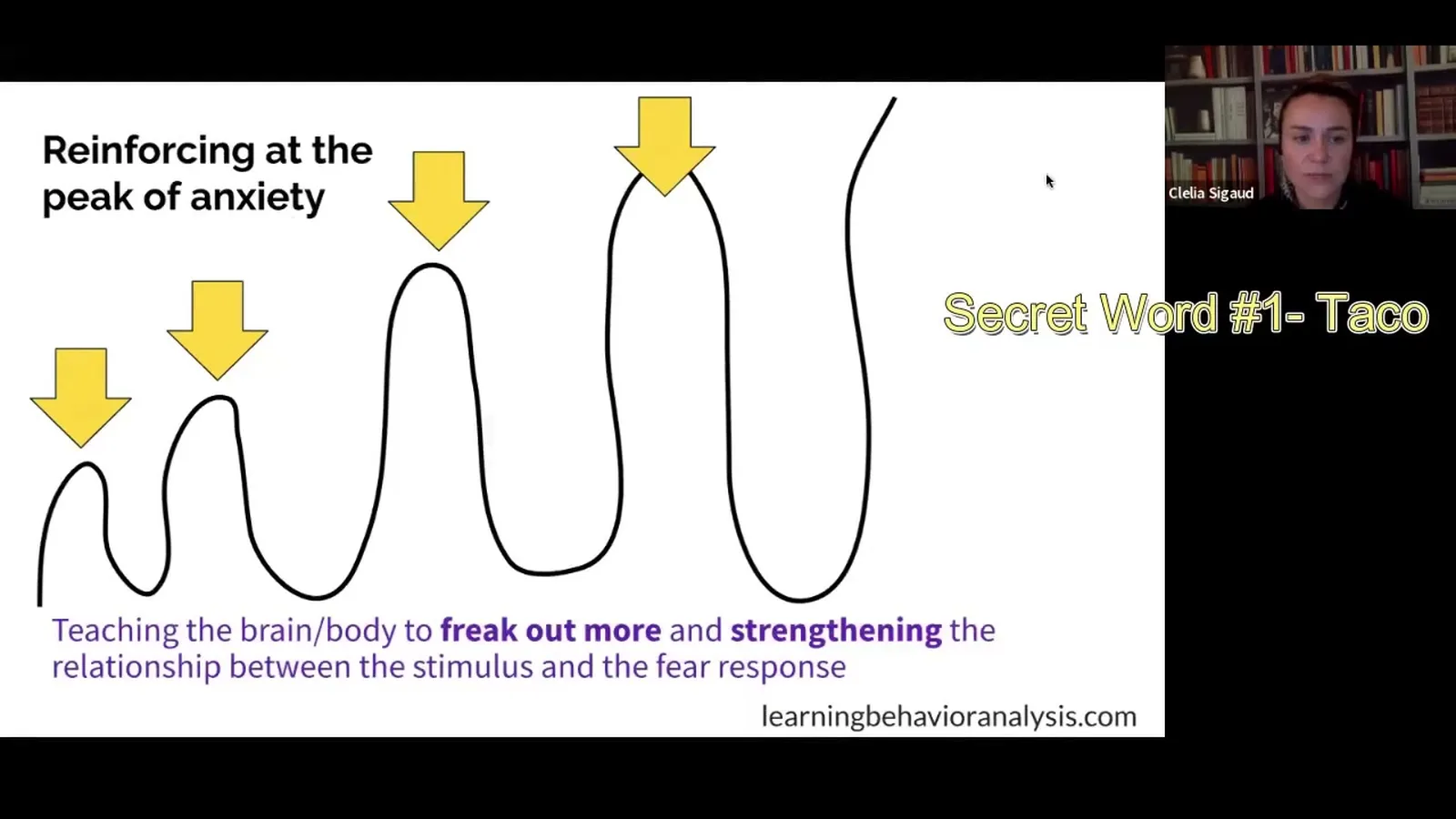
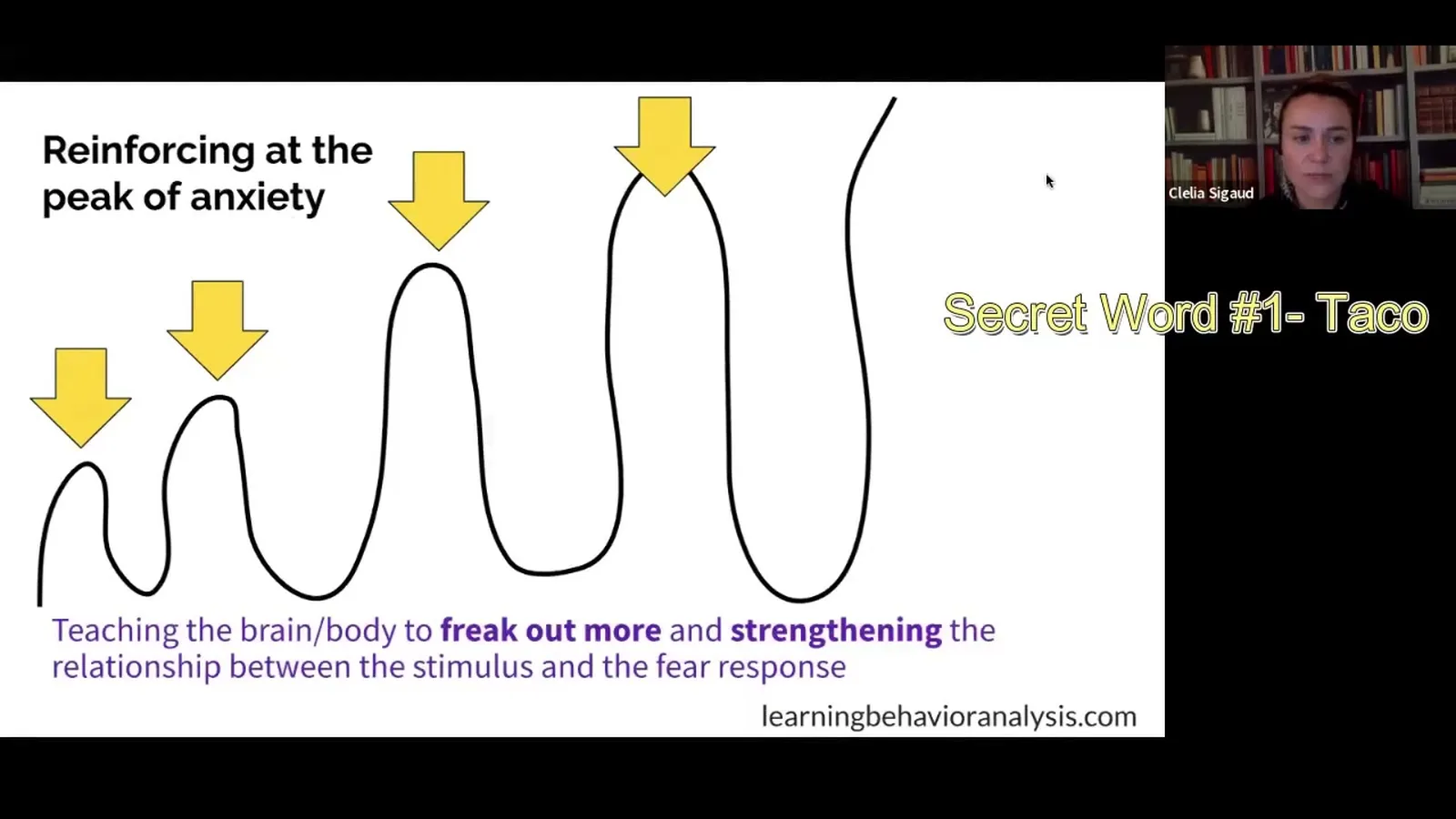
One of two exposure categories described: the client is exposed to the peak anxiety-inducing stimulus and stays until physiologically calm, working on pure…
On this page · 8 sections▾
Flooding is a form of exposure treatment for fear. The person faces the scariest version of the feared thing right away. They stay with it until the fear fades on its own. There are no small steps and no easy warm-up.
This makes flooding fast but harsh. It is very different from a gentle, step-by-step plan. BCBAs, RBTs, and parents should know what it is and its risks. Most clinicians rarely choose it. This page explains why.
Thrown in the deep end#
The name flooding fits what happens. The person is flooded with fear all at once. Dr. Clelia Sigaud paints the picture in a memorable way.
Flooding is pretty well named. It's being thrown in the deep end of anxiety. From the talk — Dr. Clelia Sigaud
Picture a child afraid of dogs. A graduated plan might start with a photo of a dog. Flooding would put the child in a room full of dogs. The fear spikes to its peak with no build-up.
The idea is that the fear cannot last forever. The body calms down if the person stays long enough. But that wait can be very hard to endure. The peak fear feels overwhelming in the moment. Many people want to flee before the fear drops. That urge to escape is exactly what flooding blocks.
How flooding works#
Flooding relies on pure extinction. Extinction means a response fades when its payoff stops. Here, escape is the payoff that keeps fear alive. Flooding blocks escape until the fear burns out.
The person stays with the feared thing until they are calm. Nothing bad happens, so the fear has no fuel. In time the body learns the thing is safe. This is the same lesson gentler exposure teaches, but much faster.
Speed is the one clear upside. There are no weeks of slow steps. But that speed comes at a steep cost in distress. The person must sit in peak fear for a long stretch. That cost is why the method is rarely used. The distress often outweighs the time it saves.
The ethical problem#
The biggest issue with flooding is consent. Peak fear is a lot to ask anyone to feel. Sigaud is honest that people rarely agree to it.
The client and the stakeholders, and often the clinician, are unlikely to agree to do this. It can be seen as abusive, of course, understandably. From the talk — Dr. Clelia Sigaud
This is a serious concern, not a small one. If the client did not choose the distress, the plan crosses a line. Even the clinician may not want to run it. That shared unease is a strong signal to pick another path.
Assent matters here too. Assent means the learner shows they are willing to take part. A person in peak fear may be signaling the opposite. Ignoring that signal risks harm and broken trust. For most cases, a gentler ladder respects the person far better.
Why most clinicians avoid it#
 Advertisement
Graduated exposure reaches the same goal with less pain. It climbs a ladder of small, doable steps. Each step ends in calm and success. The fear fades without a flood of distress.
Because of this, flooding sits on the far edge of practice. It is a known method, but it is rarely the first choice. The risks to comfort, consent, and trust are high. Social significance asks us to help without causing needless harm.
There may be rare cases where speed truly matters. Even then, the person's willingness must come first. A clinician should weigh the distress against any gain. In most settings, the gentler route wins that comparison. Sigaud compares both roads in Hey, Chillax Man! Understanding the Logic of Anxiety.
What the research says#
Flooding has appeared in trauma treatment research. One case study treated a veteran with post-traumatic stress. The clinician used imaginal flooding to the traumatic memory. The person's arousal dropped from before to after treatment, with gains held at follow-up.
Exposure also carries a known risk of self-flooding. Some public speaking studies note that real-life exposure can overwhelm a person by accident. Virtual reality gave therapists tighter control over the fear level. That control cut dropout compared with standard exposure in those trials.
Together, this work shows a common theme. Exposure helps, but too much too fast can backfire. Control and pacing protect the person during treatment. That is a key reason clinicians favor graduated steps over flooding.
Flooding versus a gentle ladder#
It helps to compare flooding with graduated exposure. Both weaken the same fear over time. They just take very different roads. The road you pick shapes the person's experience.
Flooding is one giant leap into peak fear. There is no warm-up and no easy first step. The person must endure the worst until it fades. Speed is the payoff, and distress is the cost.
A graduated ladder climbs one small rung at a time. Each step ends in calm and a small win. The fear fades slowly and with far less pain. Most people can stay the course this way.
For nearly every learner, the ladder wins. It respects comfort, consent, and trust. It reaches the same goal without the flood of fear. That is why flooding stays a rare, last-resort tool.
Keeping the person willing#
Willingness sits at the center of ethical exposure. A person should agree to the steps they face. In flooding, that agreement is hard to secure. Peak fear is a heavy thing to sign up for.
Watch for signs the person wants to stop. Pulling away and rising panic are clear signals. Ignoring them can cause harm and break trust. A gentler plan keeps the person on board and safe.
FAQ#
How is flooding different from graduated exposure?
Flooding starts at peak fear with no warm-up. Graduated exposure climbs a ladder of small, easier steps. Both aim to weaken the fear over time. Graduated exposure does it with far less distress.
Is flooding safe or ethical?
Flooding raises real ethical concerns. It asks a person to sit in peak fear, which many will not consent to. Some view it as abusive when the person did not choose it. Most clinicians pick gentler methods that respect the learner's willingness.
Why would anyone use flooding?
Its main appeal is speed, since there are no slow steps. In rare cases a fast result may seem worth it. Even then, the person's consent and comfort must come first. For most people, graduated exposure is the safer and kinder choice. The small extra time a ladder takes is a fair price for less distress. That trade-off is why flooding stays a rare, last-resort tool.
 Advertisement
Turn this topic into a CEU
You just studied this. Now get credit for it.
Watch Hey, Chillax Man! Understanding the Logic of Anxiety with Dr. Clelia Sigaud and earn 1.5 free BCBA CEUs. Detailed certificate, delivered the moment you finish.