Exposure-Based Treatment for Anxiety in ABA
Exposure-based treatment helps weaken fear by facing it in safe steps. Learn how BCBAs use exposure for anxiety and why timing matters so much.
Key takeaway
Exposure-based treatment helps people face fear in safe steps. The person meets the thing that scares them on purpose. Over time, the fear loses its grip.
Hey, Chillax Man! Understanding the Logic of Anxiety
Experts who cover this
The recording behind this guide covers exposure-based treatment.
- Featured talk1.50 CEUs
Hey, Chillax Man! Understanding the Logic of Anxiety
Dr. Clelia SigaudThe Behaviorist Bookclub
Named as the evidence-based treatment category for anxiety, working by changing the timing of negative reinforcement relative to the anxiety wave so that…
On this page · 8 sections▾
Exposure-based treatment helps people face fear in safe steps. The person meets the thing that scares them on purpose. Over time, the fear loses its grip. This is the main proven way to treat anxiety.
The idea rests on the laws of behavior. Fear is learned, so it can be unlearned. BCBAs, RBTs, teachers, and parents all meet anxious learners. Knowing how exposure works helps you support them well. This page covers the basics and the ethics.
The evidence points to exposure#
When it comes to anxiety, one approach has the most support. Dr. Clelia Sigaud is direct about where the science lands.
So the body of evidence around how we support folks with anxiety is around exposure-based treatment. From the talk — Dr. Clelia Sigaud
This matters because anxiety pulls people toward escape. Avoiding the feared thing feels good for a moment. But that escape teaches the brain that the fear was right. Exposure breaks that loop by letting the person stay and learn.
Sigaud also explains what exposure is really doing. It is not just toughing it out. It is a planned way to change a learned link.
This is a clinical approach to weakening that relationship between a certain stimuli and a fear response. It's rooted in the laws of behavior and a commitment to social significance. From the talk — Dr. Clelia Sigaud
Note the last part about social significance. Exposure is not about pushing people for its own sake. The goal is a life that works better for the person. That aim should guide every step of the plan. Sigaud walks through the full logic in Hey, Chillax Man! Understanding the Logic of Anxiety.
How timing shapes the outcome#
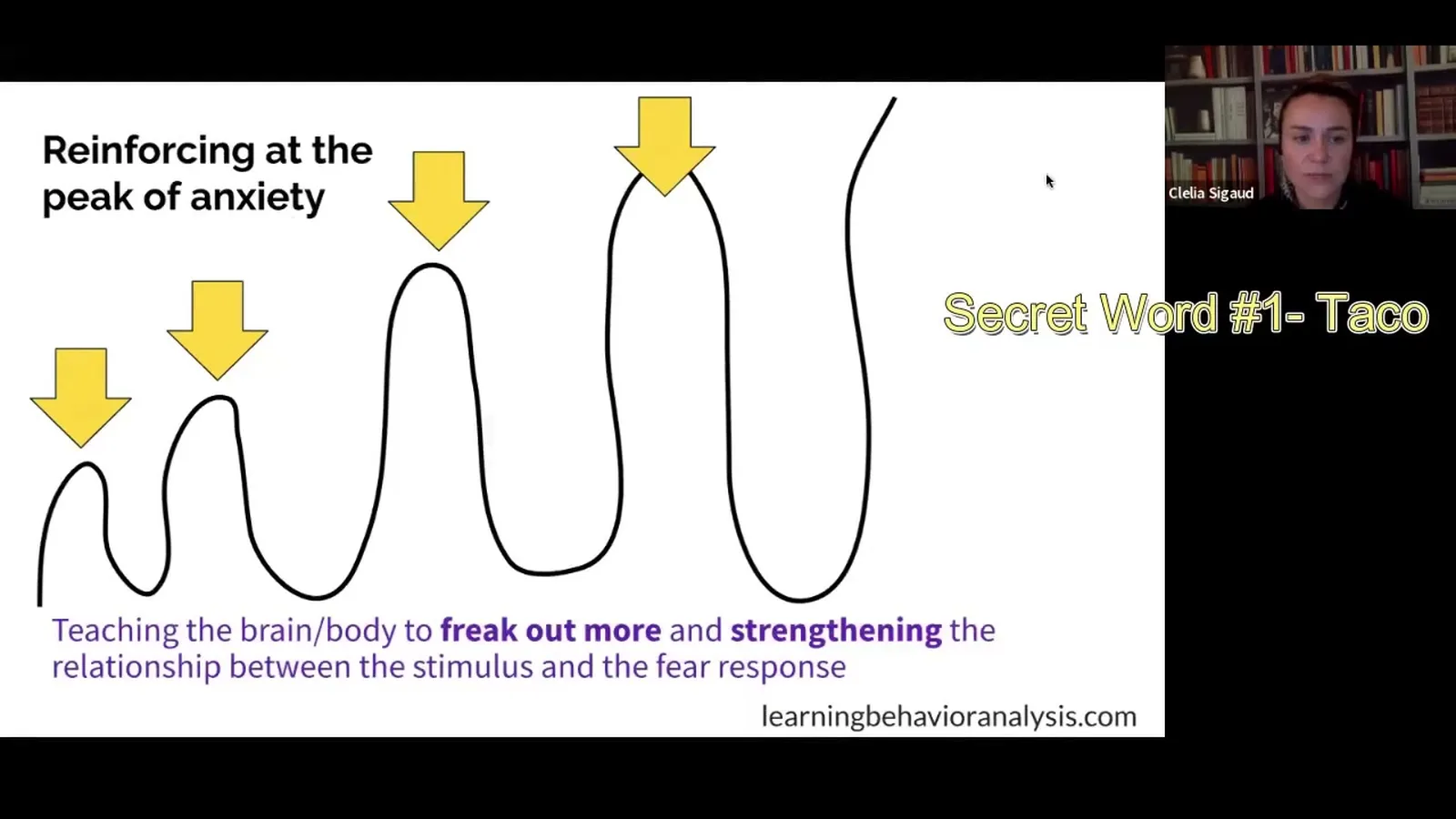
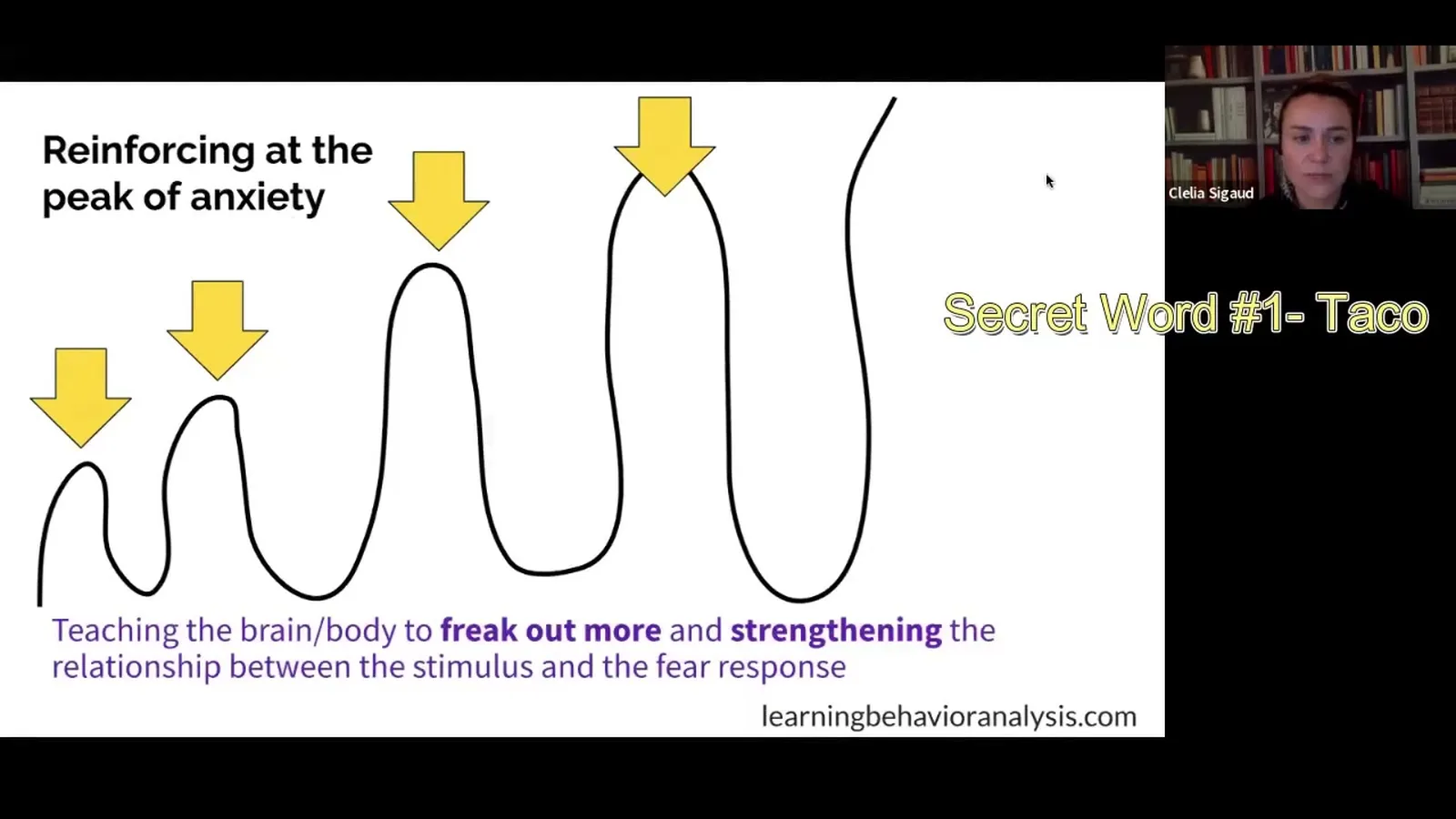
The power of exposure comes down to timing. Anxiety rises and falls in a wave. When escape happens matters a great deal. Escape at peak fear teaches the fear to stay.
The better plan reinforces calm, not panic. You want the person to relax while still near the feared thing. Then escape or relief lines up with the calm, not the spike. This slowly teaches the body that the thing is safe.
That is why a good clinician moves in small steps. You do not throw the person into the worst moment. You climb a ladder of harder and harder tasks. Each step ends in success and calm, not in terror. This slow build teaches the body a new lesson. The feared thing is safe, and the person can cope.
Weakening the fear link#
 Advertisement
Exposure targets a learned connection between a cue and fear. A dog once bit a child, so now all dogs feel scary. The cue is the dog. The response is fear. Exposure loosens that bond over time.
Repeated safe contact does the work. Each calm meeting with a dog chips at the old link. The fear response gets weaker as nothing bad happens. This is the core of why exposure works.
The plan must fit the person and their life. A fear that blocks school needs different steps than a mild worry. Social significance means you target fears that matter. You spend effort where it frees up the person's daily life.
Exposure across many settings#
Exposure is not just for classic phobias. Clinicians have used it for a wide range of fears. It shows up in feeding, in medical worries, and in social anxiety. The same logic drives each version.
The steps also flex to the person. Some people need very small increments. Some do better with play and humor woven in. A skilled clinician reads the learner and adjusts. The method stays the same, but the pace shifts.
What the research says#
Exposure has been tested for many child and teen fears. One study added self-distancing to exposure for anxious youth (Bilek et al., 2023). Youth completed harder exposures during the added sessions. Therapists also rated the youth as more engaged.
Play and humor can make exposure easier for some children. One study used a play- and humor-infused approach with children who have Williams syndrome (Young et al., 2023). Several children improved and grew more comfortable with feared things. The therapists flexed the level of exposure to match each child.
Other work shows exposure can be brief and still help. One pilot used a short, therapist-guided exposure for panic attacks. Most patients improved after only three sessions. This suggests exposure does not always need a long course to work.
Building a fear ladder#
The heart of exposure is a fear ladder. A ladder lists the feared thing from easy to hard. The bottom rung is a small, doable step. The top rung is the full feared situation.
You build the ladder with the person, not for them. You ask what feels mildly scary and what feels huge. Then you rank those steps in order. This shared map keeps the person in control.
Work starts at the bottom rung. The person stays with that step until calm. Only then do you move up one rung. Each success makes the next step easier.
Consent and assent guide the whole climb. Assent means the learner shows they are willing to go on. If distress spikes too high, you slow down. A good pace protects both progress and trust.
Getting the family on board#
Exposure asks a lot of the person and the family. It can look cruel from the outside. A parent may want to rescue the child from any fear. So teaching the family is a key first step.
Explain that avoiding fear makes it stronger. Show how small, safe steps weaken it instead. When families see the logic, they can hold steady. Their calm support helps the plan succeed.
FAQ#
Is exposure-based treatment safe for children?
Yes, when it is planned and done in small steps. A trained clinician builds a ladder from easy to hard. Each step ends in success, not panic. The child faces fear at a pace they can handle.
How is exposure different from just facing your fears?
Facing a fear at random can backfire and make it worse. Exposure is planned and paced with care. It controls the timing so calm gets reinforced, not panic. It also targets fears that truly limit the person's life.
How long does exposure treatment take?
It varies by person and by the size of the fear. Some people need many sessions over months. Others improve fast, and some panic studies show gains in three sessions. A clinician tracks data and adjusts the pace as they go. The right pace is the one the person can handle while still moving up. Steady progress beats a rushed plan that overwhelms the learner.
 Advertisement
Turn this topic into a CEU
You just studied this. Now get credit for it.
Watch Hey, Chillax Man! Understanding the Logic of Anxiety with Dr. Clelia Sigaud and earn 1.5 free BCBA CEUs. Detailed certificate, delivered the moment you finish.