Systematic Desensitization: A Step Ladder for Fear
Systematic desensitization treats fear one small step at a time. Learn how BCBAs build a fear ladder and help clients face anxiety with less escape.
Key takeaway
Systematic desensitization is a way to treat fear in small steps. You break a scary situation into a ranked list. The list runs from mildly scary to very scary.
Hey, Chillax Man! Understanding the Logic of Anxiety
Experts who cover this
The recording behind this guide covers systematic desensitization.
- Featured talk1.50 CEUs
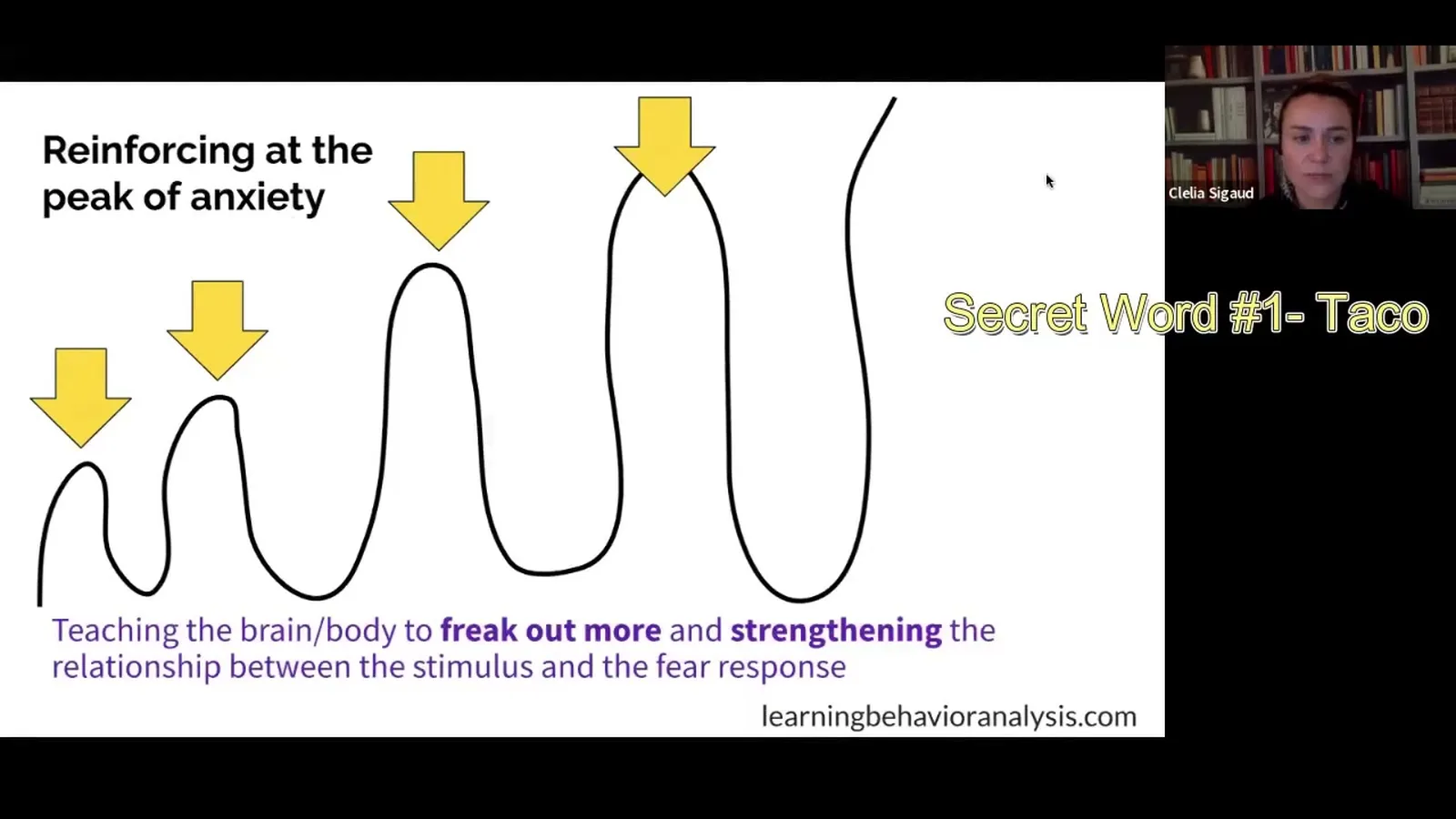
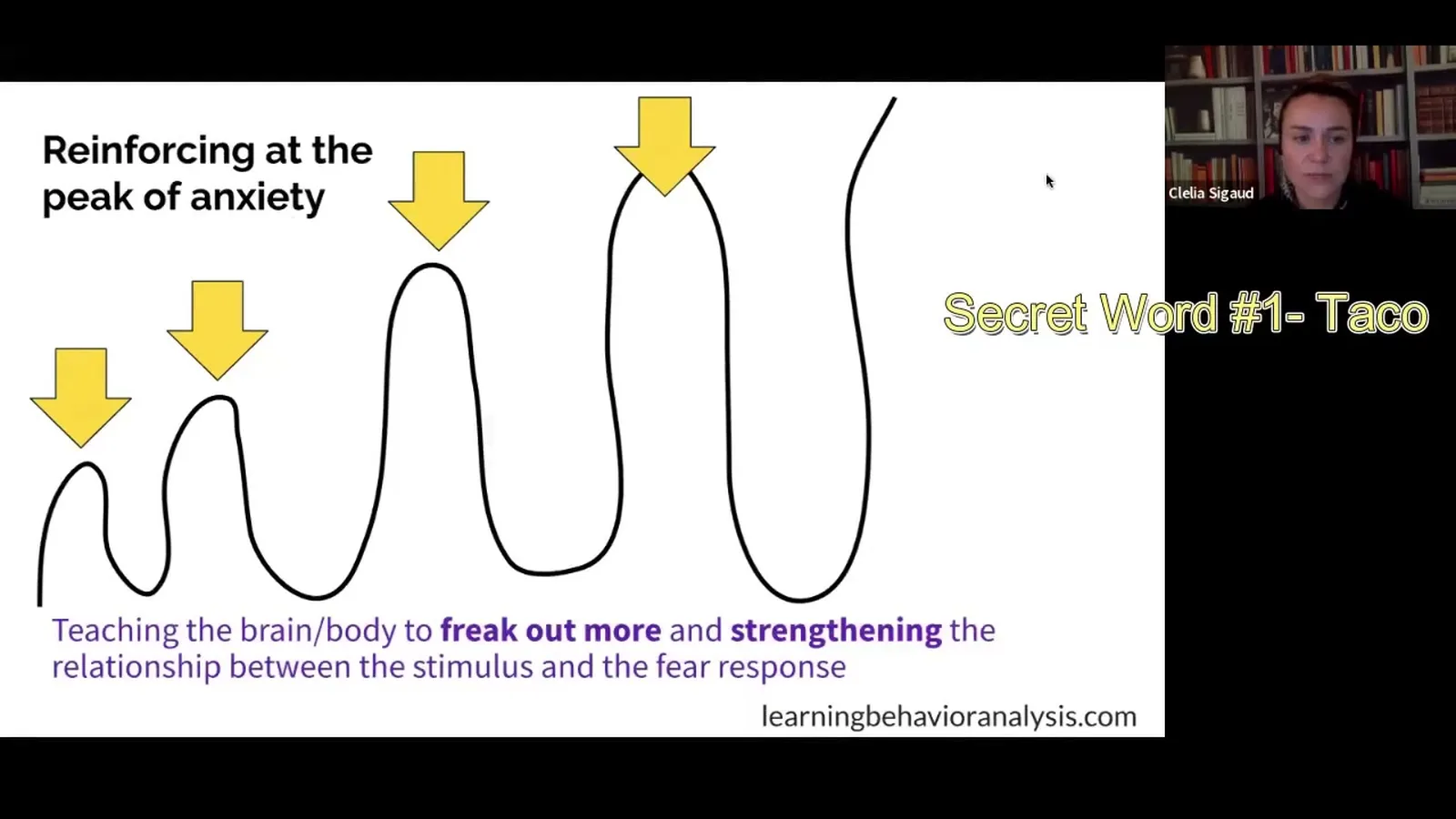
Hey, Chillax Man! Understanding the Logic of Anxiety
Dr. Clelia SigaudThe Behaviorist Bookclub
Building a hierarchy of anxiety-provoking steps and only advancing once each step no longer produces escape behavior; illustrated with a violin-fear case and…
On this page · 7 sections▾
Systematic desensitization is a way to treat fear in small steps. You break a scary situation into a ranked list. The list runs from mildly scary to very scary. Then you work up it one rung at a time.
This tool helps BCBAs, RBTs, teachers, and parents. Anxiety often drives escape behavior and school refusal. A step-by-step plan lets a person face fear slowly. It keeps progress moving without pushing too hard, too fast. The slow pace is a feature, not a flaw. It lets the brain learn that the feared thing is safe.
Building the fear ladder#
The heart of this method is a ranked list of fears. Experts call it a hierarchy. You place each feared step in order, from easy to hard. Dr. Clelia Sigaud describes this first move.
This involves the creation of a hierarchy of anxieties. From the talk — Dr. Clelia Sigaud
Each rung is a small, doable step. A child who fears a violin might first look at it. Later they touch it, then hold it, then play a note. You climb the ladder only as the fear drops.
The order of the rungs is the whole point. You do not jump from the easy step to the hardest one. You fill in the middle with small, steady moves. Each step should feel just a little harder than the last.
You build the ladder with the client, not for them. They help you rank what feels scary and what feels safe. This gives them a sense of control. That shared control makes the whole process feel safer.
Desensitize each rung until it is boring#
You do not rush up the ladder. You stay on a step until it stops feeling scary. The sign of readiness is calm, not courage. Dr. Sigaud uses a plain-English test for this.
Basically, you want to desensitize each rung of the ladder until it's boring. From the talk — Dr. Clelia Sigaud
"Boring" is the goal for each step. When a step no longer triggers escape, you move up. If escape behavior returns, you drop back a rung. This keeps the person inside their comfort range.
Keep making progress on real goals#
 Advertisement
Anxiety can stall a whole treatment plan. A person who escapes every hard task learns little. This method keeps therapy moving while respecting the fear. Matt frames it as a clear, ordered path.
There are clear systematic steps to working through anxiety and still making progress on behavioral targets. And this is how you do it. From the talk — Matt
Take school refusal as one example. A teen who fears school will not fix it in one day. You build a ladder of steps back toward the building. Each step earns reinforcement and lowers the escape.
For that teen, the first rung might be small. Maybe they just drive past the school and go home. The next rung could be walking to the front door. Later steps add time in the building, class by class.
The plan protects real learning goals along the way. You do not pause all teaching until the fear is gone. You weave the fear work into the daily plan. That way the teen keeps growing while facing the fear.
Pairing with a calm response#
Many plans add a calming skill to each step. The calm response competes with the fear. A person cannot be fully relaxed and panicked at once. So you teach a calming skill first, then use it on the ladder.
Slow, deep breathing is a common choice. So is muscle relaxation or a favorite calming image. The learner practices the skill until it is easy. Then they use it while facing each rung of the ladder.
This pairing is the classic form of the method. The calm response slowly replaces the fear response. Over many steps, the scary thing loses its power. That is why the top rung can end up feeling boring.
Where it fits with other tools#
Systematic desensitization is one member of a family of exposure tools. It moves slower than flooding, which faces the top fear right away. The slow pace suits clients who cannot handle a big spike.
It also respects a person's assent and comfort. You do not force a step before the fear drops. This makes it a gentle fit for anxious clients. It keeps trust intact while still moving toward the goal.
What the research says#
Systematic desensitization has a long track record with fears. One case report treated a phobia that lasted 40 years. It paired the ladder with imagery and real-life exposure. The fear dropped even though the person also had PTSD (a review of a former prisoner of war's simple phobia).
It also shows up inside school refusal treatment. One study matched each child's treatment to the cause of their refusal. The plan used desensitization and relaxation for fear-based cases. Six of seven children returned to full-time school attendance (a functional model of assessment and treatment for school refusal behavior).
The method reaches other fears too. A controlled study of public speaking anxiety used a desensitization design. It paired calm breathing with imagined speaking scenes. That group improved more than the comparison groups (a study of Respiratory Relief Therapy for anxiety reduction).
Interest in the classic form did fade among researchers over time. Still, one survey of 171 providers found it stays fairly common in practice (a comment on the status of systematic desensitization). The authors argue it deserves renewed attention.
You can go deeper on this topic in Hey, Chillax Man! Understanding the Logic of Anxiety.
FAQ#
What is systematic desensitization?
It is a step-by-step way to treat fear. You rank feared situations from mild to strong. Then you face each step until it feels calm. You move up the ladder only when escape behavior stops.
How is it different from flooding?
Flooding faces the most feared situation right away. Systematic desensitization builds up slowly through small steps. The slow pace causes far less distress. It suits clients who cannot handle a sudden, large spike in fear.
How do you know when to move up the ladder?
You move up when a step no longer triggers escape or panic. One expert says to stay on a rung until it feels boring. If fear returns, you drop back a step. Calm, not bravery, is the signal to advance.
 Advertisement
Turn this topic into a CEU
You just studied this. Now get credit for it.
Watch Hey, Chillax Man! Understanding the Logic of Anxiety with Dr. Clelia Sigaud and earn 1.5 free BCBA CEUs. Detailed certificate, delivered the moment you finish.