Early Morning Waking in Autism: Why 4 AM Happens and How to Shift It
Early morning waking has a different cause than 2 AM. Sleep pressure, social jet lag, and the fix, from a BCBA-led CEU.
Key takeaway
Early morning waking in autism almost always starts inside sleep architecture itself, because the second half of the night is dominated by light sleep, social jet lag pulls the body clock around on weekends, sleep pressure thins out before sunrise, and a slightly too early bedtime locks the pattern in place.
Why are they Waking up at 2 AM?
On this page · 8 sections▾
Early morning waking in autism almost always starts inside sleep architecture itself, because the second half of the night is dominated by light sleep, social jet lag pulls the body clock around on weekends, sleep pressure thins out before sunrise, and a slightly too early bedtime locks the pattern in place. If your kid is sitting up at 4 or 5 AM with a smile on their face, the clock did not glitch. Their brain finished the deep work hours ago and they are coasting through light sleep until something tips them awake for good.
This page is for parents and the BCBAs sitting with them. The 2 AM problem is usually a sleep dependency. The 4 or 5 AM problem is almost always a circadian and sleep pressure problem. Different cause, different fix.
Why early morning waking is its own problem#
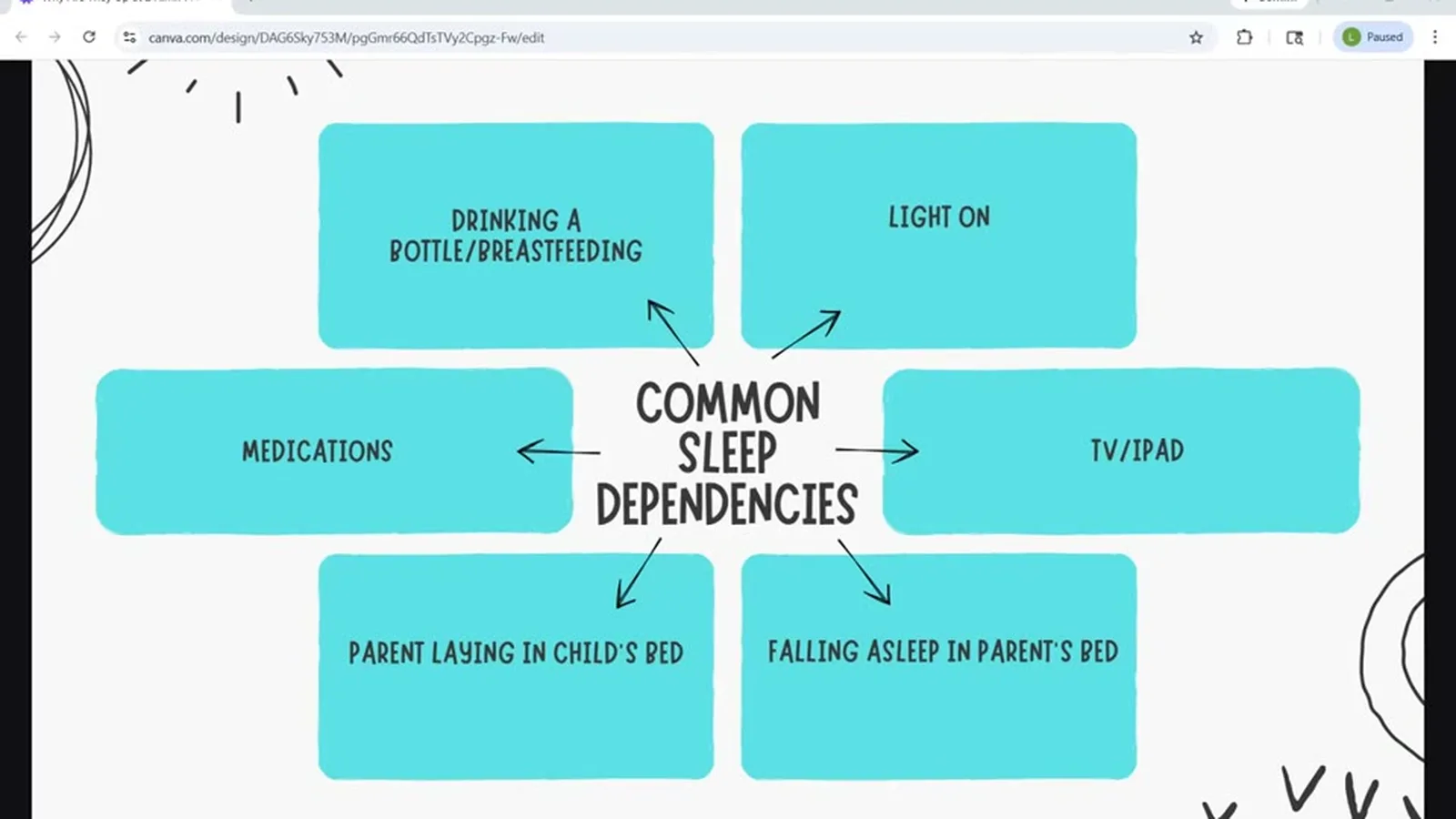
Most night waking advice is written for the kid who wakes at 1 or 2 AM and needs help getting back to sleep. That kid is in the deep part of the night and almost always depends on something (a bottle, a parent, a screen) that disappeared after they first fell asleep. That is a learning problem. We can teach a new skill.
The 4 or 5 AM waker is in a totally different part of the night. By the time the clock hits the early morning, the brain has finished most of the deep, restorative sleep it needed. There is far less sleep pressure left in the tank. If you try to use 2 AM strategies (walking them back to bed, sitting next to them, sticker charts) without fixing the underlying clock and pressure problem, you will spin your wheels for months.
So step one is naming it correctly. Early morning waking is not a stubborn version of night waking. It is a circadian rhythm and sleep pressure problem hiding in a bedroom.
What light sleep does to your child between 2 and 6 AM#
Sleep is not one flat block. It cycles. In the first half of the night the brain spends most of its time in deep, slow wave sleep, which is when growth hormone fires and the body really repairs itself. In the second half of the night, the cycles shift. Deep sleep gets shorter. Light sleep and REM sleep take over.
Lindsay Anderson puts the architecture this way in the CEU:
In the second part of the night, around 2 AM, light sleep increases and deep sleep shrinks. Between phases everyone has tons of awakenings, 21 to 42 per night depending on age, which is normal.
Read that twice. Everyone wakes 21 to 42 times a night. Most adults do not remember it because we roll over and slip back into the next cycle. Kids in light sleep are one tiny nudge away from a full wake up: a passing car, a sibling's footstep, the heater clicking on, a too bright sliver of sunrise under the curtain. Once they are fully up, the sleep pressure that would push them back under is mostly gone, so they stay up.
This is the part parents almost never hear from a pediatrician. Your child is not broken. They are biologically primed to wake easily after 2 AM, and your job is to make those natural micro wakings boring enough that the brain rolls right past them.
The social jet lag trap on weekends#
Here is where most early morning waking plans fall apart. Parents are exhausted. The kid wakes at 5 AM Monday through Friday for school. So on Saturday and Sunday, the parents do what any human would do. They let the kid sleep until 7:30 or 8:00 to catch up.
That extra ninety minutes feels like a gift. It is actually a tax on Monday and Tuesday.
Wake at the same time every day, even on weekends. Variability impacts sleep as much or more than duration. Different weekend wake times cause social jet lag.
Social jet lag is exactly what it sounds like. Two days of a later wake up shifts the body clock two time zones west. Monday morning, the brain thinks it should still be asleep and Sunday night bedtime feels impossible. By Wednesday the clock has dragged itself back, only to be shoved west again on Saturday.
For kids on the spectrum, whose circadian systems are often more sensitive to begin with, this seesaw is brutal. The fix is unglamorous. Wake them up at the same time every single day, weekends included. Yes, even when they finally fell asleep at 11. Yes, even on Sunday. The wake time anchors the clock. Bedtime can flex. Wake time cannot.
Sleep stealers (the car ride home is the worst)#
The other reason kids wake at 4 AM is that they did not actually need a full night of sleep, because they already stole part of it earlier in the day.
Sleep pressure is the biological drive to sleep. It builds the longer you are awake. A toddler builds it fast. A school age kid builds it slower. Any nap, even a 5 minute nap, can blow the bank.
The classic offender is the car ride home from the clinic or school. The motion, the warm seat, the boring window view, and the kid is out cold by mile two. You wake them up at the driveway. They seem fine. But that 8 minute nap reset their sleep pressure. Now bedtime that used to land at 8:00 is going to land at 10:30, and the kid will still be up at 5 AM because their brain logged a normal length sleep window.
If your child crashes in the car, on the bus, or during a 30 second walk to the mailbox, treat it as a sleep stealer. Get curious. Build a no nap window from mid afternoon onward. Pack a fidget, a snack, a cold drink, a special car only toy. Roll the window down. Sing. Whatever it takes to keep them awake until bedtime.
The bedtime fading plan that fixes 5 AM wakings#
Here is the move that surprises every parent and most BCBAs the first time they hear it. If your child is waking at 5 AM, the answer is almost never to put them to bed earlier. The answer is usually to put them to bed a little later.
Long sleep latency? Put the child to bed at or slightly later than when they are actually falling asleep. Once they fall asleep within 15 to 20 minutes, move bedtime up 15 minutes per successful night.
This is called bedtime fading. The logic is sneaky. If a kid is supposed to be asleep at 7:30 but does not actually conk out until 9:00, they are lying in bed for 90 minutes building an association between bed and being awake. Move bedtime to 9:00. Lights out, asleep within 15 minutes. The brain logs bed equals sleep, not bed equals staring at the ceiling.
Then every successful night, move bedtime 15 minutes earlier. 8:45. 8:30. 8:15. After a couple weeks you are back to a normal bedtime, the kid falls asleep fast, and because sleep pressure is high when they hit the pillow, they push deeper into the back half of the night before light sleep takes over. The 5 AM waking either shrinks or disappears.
You can pair this with a hard rule on the wake time. Same wake time every day. Bedtime moves, wake time does not.
When to stop blaming the clock and look at the bedroom#
Sometimes early morning waking is not a circadian or pressure problem at all. It is a bedroom problem.
Walk into the room at 5 AM. Is sunrise pouring through a thin curtain? Is the heater kicking on with a loud bang? Is a sibling's alarm going off down the hall? Is the smart speaker dimly glowing? Is the bladder full because of a 7 PM water bottle?
Run the bedroom audit before you start any behavioral plan. Blackout curtains. White noise machine that runs all night, not just at bedtime. Fluid cutoff 90 minutes before bed. Temperature in the mid 60s. Check for the small medical stuff too: snoring, mouth breathing, restless legs, eczema flares, reflux. Any of those can pull a kid out of light sleep at 4 AM and keep them out.
For BCBAs, a quick BEARS screen at intake (Bedtime problems, Excessive daytime sleepiness, Awakenings, Regularity, Sleep disordered breathing) catches most of the medical stuff parents do not think to mention. If anything on the breathing column lights up, refer out before you touch behavior.
FAQ#
Why does my autistic child wake up at 5 AM ready to go? Because the back half of the night is mostly light sleep, sleep pressure is almost gone, and any small environmental nudge tips them into a full wake. Their brain logged enough deep sleep already, so it does not pull them back under.
Is it okay to let my child sleep in on weekends? Not if early morning waking is the problem you are trying to fix. Variable wake times cause social jet lag, and social jet lag is one of the biggest drivers of stubborn 5 AM wakings. Same wake time, every day, weekends included. Bedtime can flex.
Should I make bedtime earlier or later? For the early morning waker, almost always later, at least temporarily. Use bedtime fading. Push bedtime to when your child is actually falling asleep, get the latency under 20 minutes, then walk bedtime earlier by 15 minutes per successful night.
Why does the car ride home ruin bedtime? A short nap in the car resets sleep pressure. Even 5 to 10 minutes can push bedtime 2 hours later, and the kid still wakes early because their brain already clocked a normal length sleep window. Treat any afternoon micro nap as a sleep stealer and engineer it out.
How long until early morning waking improves? Most families see a real shift in 2 to 4 weeks if they hold the wake time, kill the sleep stealers, and run bedtime fading honestly. Faster if the bedroom audit also flushes out a light leak or noise issue. Slower if there is an unaddressed medical issue (sleep apnea, reflux, restless legs) underneath, which is why the BEARS screen comes first.
Want the full BCBA framework on sleep?#
This page is one slice of a longer CEU on night wakings from Lindsay Anderson. The full hour walks through the screening, the assessment, the dependency framework, and the sleep training options (extinction, time based visiting, camping out) at a depth this page does not have room for. Worth your time if you are a BCBA running this with a family, or a parent who wants the why behind every recommendation.
Turn this topic into a CEU
You just studied this. Now get credit for it.
Watch Why are they Waking up at 2 AM? with Lindsay Anderson and earn 1 free BCBA CEU. Detailed certificate, delivered the moment you finish.