Night Waking Interventions for Autism: A BCBA Decision Tree
Pick the right night waking plan: medical referral, sleep dependency fade, or sleep training. A clear BCBA decision tree, from a BCBA-led CEU.
Key takeaway
When a 7 year old on your caseload has been up at 2 a.m.
Why are they Waking up at 2 AM?
On this page · 8 sections▾
When a 7 year old on your caseload has been up at 2 a.m. for six weeks straight, you need a decision tree, not a checklist: run the BEARS screen first, rule out the medical drivers (sleep apnea, reflux, restless legs, asthma, eczema), give foundational changes two weeks before you assess, then pick between dependency fading and sleep training based on what the parent data shows, and write all of it as goals your funder will actually pay for. This page walks that tree step by step, with the data points you need at each branch.
About half of autistic kids have frequent middle of the night wakings, and night wakings are the sleep problem most tightly tied to daytime aggression, irritability, and lost ABA progress. Your job as the BCBA is not to fix sleep yourself in one move. It is to sort the kid into the right lane: medical, foundational, dependency fade, or sleep training. The rest of this page is that sort.
Step one: rule out medical causes first#
Before you write a single sleep goal, ask the medical question. If a kid wakes at 2 a.m. because they cannot breathe, no behavior plan will fix it. Sleep apnea in preschoolers has more than doubled in the last decade, from about 9 percent to about 20 percent. That is not a rare condition you can skip past on an intake.
The big medical drivers to flag for a pediatric referral:
- Loud snoring, mouth breathing, or gasping at night (possible obstructive sleep apnea)
- Constipation or acid reflux causing nighttime discomfort
- Restless leg syndrome, which can trace back to iron deficiency
- Asthma or allergies that make breathing harder when the kid lies down
- Eczema or skin conditions that itch worst at night
Document the referral, keep your sleep work moving in parallel where it is safe, and note in the chart that you raised the concern. This is also your BACB 2.19 obligation: identify environmental conditions interfering with service delivery, and address them or refer.
The BEARS screen in plain English#
The BEARS screen is the cheapest, fastest tool you can drop into every intake. It is validated in primary care and free online. The acronym walks you through five sleep areas in about five minutes of parent interview.
- B, Bedtime problems: trouble settling, stalling, taking a long time to fall asleep
- E, Excessive daytime sleepiness: hard to wake up, falls asleep in the car or at school
- A, Awakenings during the night: how often, how long, sleepwalking, nightmares
- R, Regularity and duration: same bedtime and wake time, on weekends too
- S, Sleep disordered breathing: snoring, gasping, pauses in breathing
"If parents do mention any of that possible sleep disordered breathing, like loud snoring or gasping on that BEARS screening tool, then the first thing we want to do is give an immediate referral to a health care professional.". Lindsay Anderson
The S branch is the hard stop. The other four feed your treatment planning.
Foundational changes to try for two weeks#
Before any formal assessment or sleep training, run two weeks of foundational changes. These are low effort, parent led, and they often solve the problem on their own. They also clean up the data so that if you do need to assess, you are not measuring a routine problem.
Three foundational moves, in order:
- Same wake time, every day, including weekends. Variable wake times cause social jet lag and make night wakings worse. If a parent is sleeping in with the kid until 10 a.m. on Saturday, expect 2 a.m. wakings to keep going.
- Consistent calming routine, same activities in the same order. Twenty minutes is enough. For kids without strong leisure skills, a longer bath can be the whole routine.
- Right sleep pressure. Older kids need more awake time to build the drive to sleep. Watch for sleep stealers: a quick car nap on the way home from clinic can push bedtime an hour later.
If two weeks of clean foundational work has not made the picture clearer, move to assessment.
When to move to a formal sleep assessment#
You have two solid tools, both free.
- Children's Sleep Habits Questionnaire (CSHQ): 23 items, parents rate each item as rarely, sometimes, or usually, plus whether it is a problem. Send it home ahead of the appointment so you do not burn face to face time on data entry.
- Sleep Assessment and Treatment Tool (SAT) from Dr. Hanley: deeper, covers schedule, contingencies maintaining the problem, and parent goals, with treatment recommendations built in.
Start with the CSHQ to narrow the focus. If it points clearly at night wakings tied to bedtime contingencies, the SAT is worth the time.
Also ask the parent to keep a simple sleep log for one to two weeks: morning wake time, naps, lights out time, time the kid actually fell asleep, any wakings and how long, and whether the kid needed help to fall asleep. Keep the data sheet short. A sleep deprived parent is not going to fill in a 12 column form.
Picking the right intervention based on your data#
This is the actual decision tree. Read the parent data and route the case.
Long sleep latency (more than 20 minutes from lights out to asleep). The kid is learning to lie in bed awake, which is the opposite of the association you want. Push bedtime later, to within 15 minutes of when the kid is actually falling asleep, get fast sleep onset, then shift bedtime earlier by 15 minutes per successful night.
Brief wakings, kid resettles on their own. This is normal sleep architecture. We all wake 21 to 42 times a night between cycles. Tell parents to expect it. Sometimes the only intervention needed is permission to stop worrying.
"In the second part of the night, we're engaged in a lot more light sleep than deep sleep. And in between sleep phases, especially in these lighter phases of sleep, we all have tons of awakenings. So about 21 to 42 times per night, depending on age, can be considered completely normal.". Lindsay Anderson
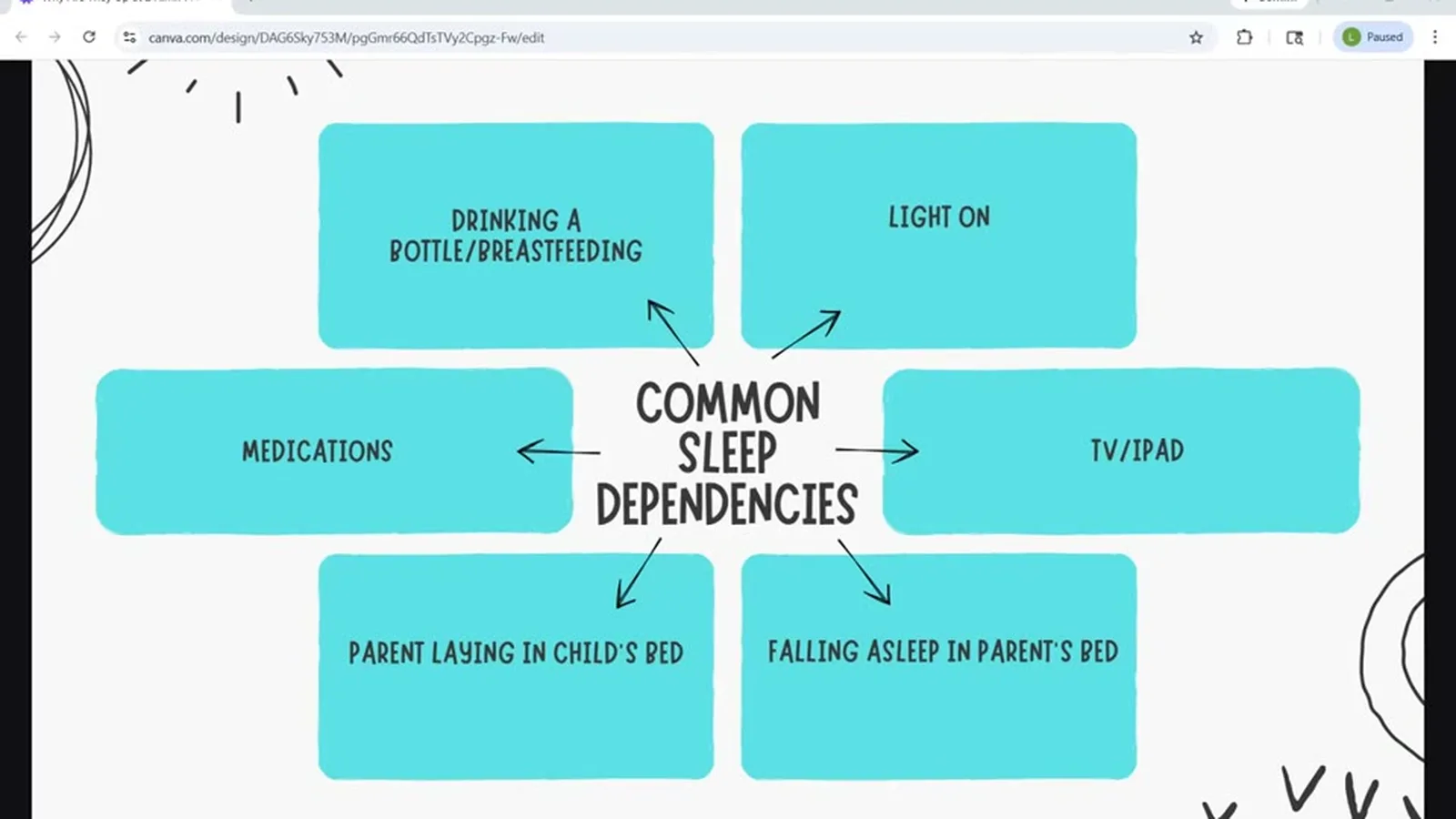
Long or frequent wakings that need a parent. This is a sleep dependency problem. The kid fell asleep with something in the environment (bottle, parent in bed, TV, light, sedative) and that thing is gone at 2 a.m. when they cycle into light sleep. Sort the dependencies into sustainable (white noise, a nightlight that stays on, a pacifier the kid can find) versus unsustainable (parent in bed who then leaves, bottle that empties, sedative that wears off). Fade tangible dependencies first. Then fade the quality of parent presence one step at a time: stop singing, stop rubbing, stop lying down, sit on the edge, sit by the door.
Co-sleeping by choice. If the family wants to co-sleep and the parent is willing to stay in the room all night, the dependency is sustainable. Night wakings should drop. No fading needed. Document the choice in the BIP.
Fading is not enough, and the family wants independent sleep. Move to a sleep training method:
- Time-based visiting: short, scheduled check-ins that get longer as the kid tolerates them, paired with the "I'll be right back" protocol practiced in daylight first.
- Camping out: parent sleeps on the floor in the kid's room, then moves the mattress closer to the door every few nights.
- Extinction: ruled out if there is physical aggression or self injury, and ruled out for chronically sleep deprived parents who are likely to reinforce intermittently.
"Pure extinction without teaching the skills necessary to fall asleep can a lot of times lead to kids who maybe aren't having those big behaviors anymore or aren't coming out of their room. But they also just aren't sleeping any better because they didn't learn those skills.". Lindsay Anderson
A separate branch: night terrors versus nightmares versus nighttime fears. Night terrors happen in the first half of the night, the kid looks scared but is not conscious, do not wake them. Nightmares happen in the second half, comfort the kid back to sleep, refer to a psychologist if they last weeks. Nighttime fears are a daytime pairing problem. Pair the bedroom with happy play during the day, and consider the stuffed protector strategy.
Goals your funder will actually approve#
Most funders will not write a check for "child will sleep through the night." They will pay for the skill chain that gets you there. Frame the goals as tolerance, independence, and caregiver behavior:
- When told "I'll be right back," the learner will tolerate the caregiver leaving the room for up to two minutes by engaging in an alternative play activity.
- Caregivers will target decreasing learner's interfering behaviors at bedtime by pairing the learner's sleep space with reinforcement.
- Caregivers will target decreasing learner's interfering behaviors when denied access to electronics by prompting the learner to relinquish the device and engage with an alternative preferred activity.
These are standard behavioral goals. Funders approve them. The sleep outcomes follow.
FAQ#
What is the first step when an autistic child wakes up at night? Run the BEARS screen and rule out medical drivers before you write any behavior plan. If the parent mentions snoring or gasping, refer out the same day.
Do I need a doctor before starting a night waking plan? Yes for anything that looks medical: sleep disordered breathing, reflux, restless legs, asthma, eczema, or any sedating medication. You can run foundational changes (consistent wake time, calming routine, right sleep pressure) in parallel.
What is the BEARS screening tool? A five item parent interview covering Bedtime problems, Excessive daytime sleepiness, Awakenings, Regularity, and Sleep disordered breathing. It is validated in primary care, free online, and fits in any intake.
Which sleep assessment should a BCBA use? Start with the CSHQ to narrow the focus. Move to Dr. Hanley's Sleep Assessment and Treatment Tool (SAT) when you need a full picture of schedule, contingencies, and parent goals. Both are free.
Will insurance pay for sleep goals? Most funders will not approve a goal that names sleep as the target. They will approve tolerance, independence, and caregiver pairing goals that get you the same outcome. Write the behavior, not the bedtime.
Keep building the plan#
If you want the full hour of clinical decision making, the BEARS walkthrough, the SAT framing, and the dependency fading sequence, watch the CEU it came from. One free general CEU, BCBA led, no signup wall on the recording.
Watch the free CEU: Why are they Waking up at 2 AM?
Turn this topic into a CEU
You just studied this. Now get credit for it.
Watch Why are they Waking up at 2 AM? with Lindsay Anderson and earn 1 free BCBA CEU. Detailed certificate, delivered the moment you finish.