Values-Based Action in ABA: A Plain Guide
Values-based action means moving toward what you deeply care about, not just quick rewards. Learn how BCBAs use ACT values in real ABA work.
Key takeaway
Values-based action means moving toward what you truly care about. It comes from ACT, a therapy model used inside behavior work. A value is a direction, like being a caring parent or a fair coworker.
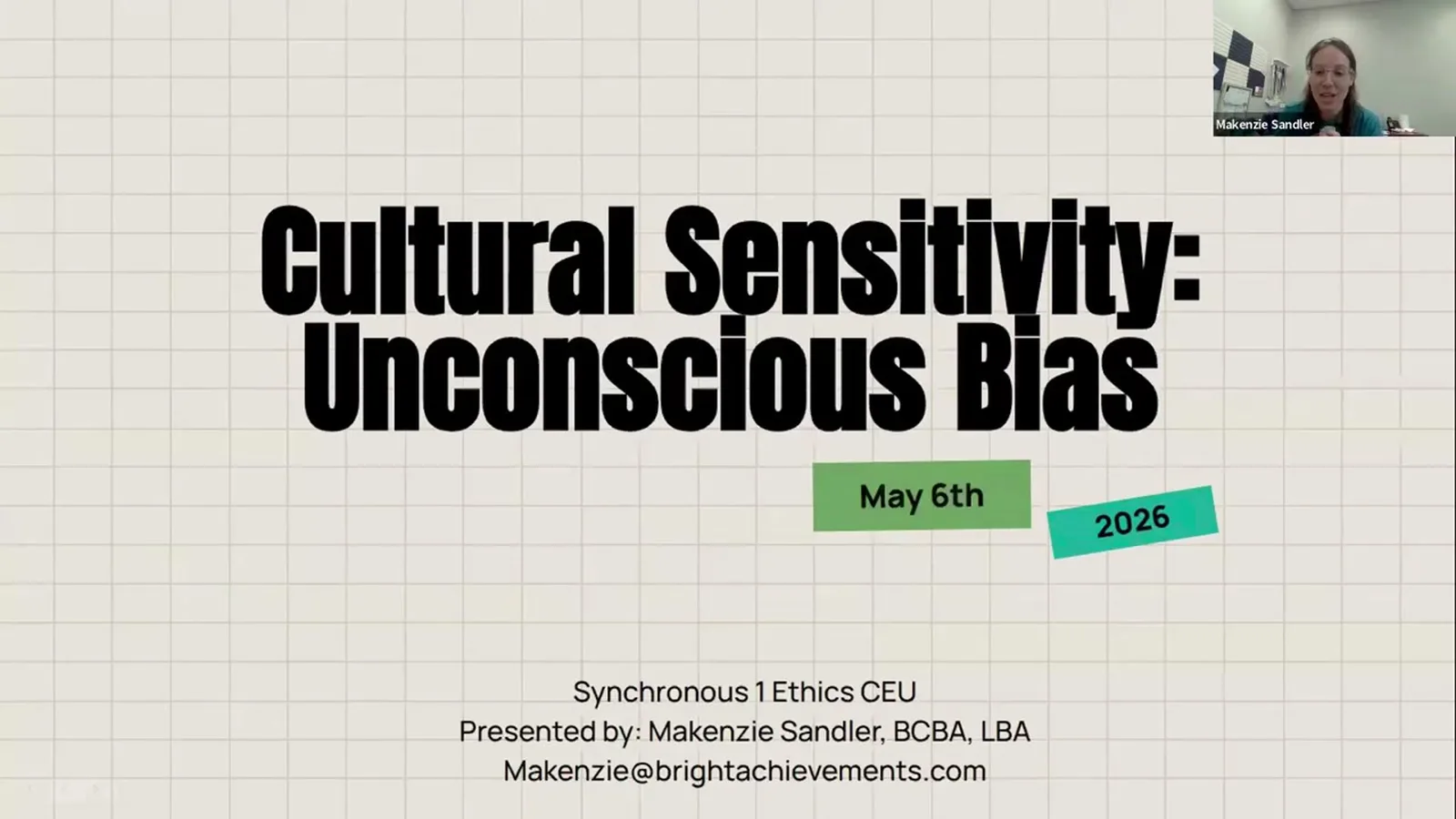
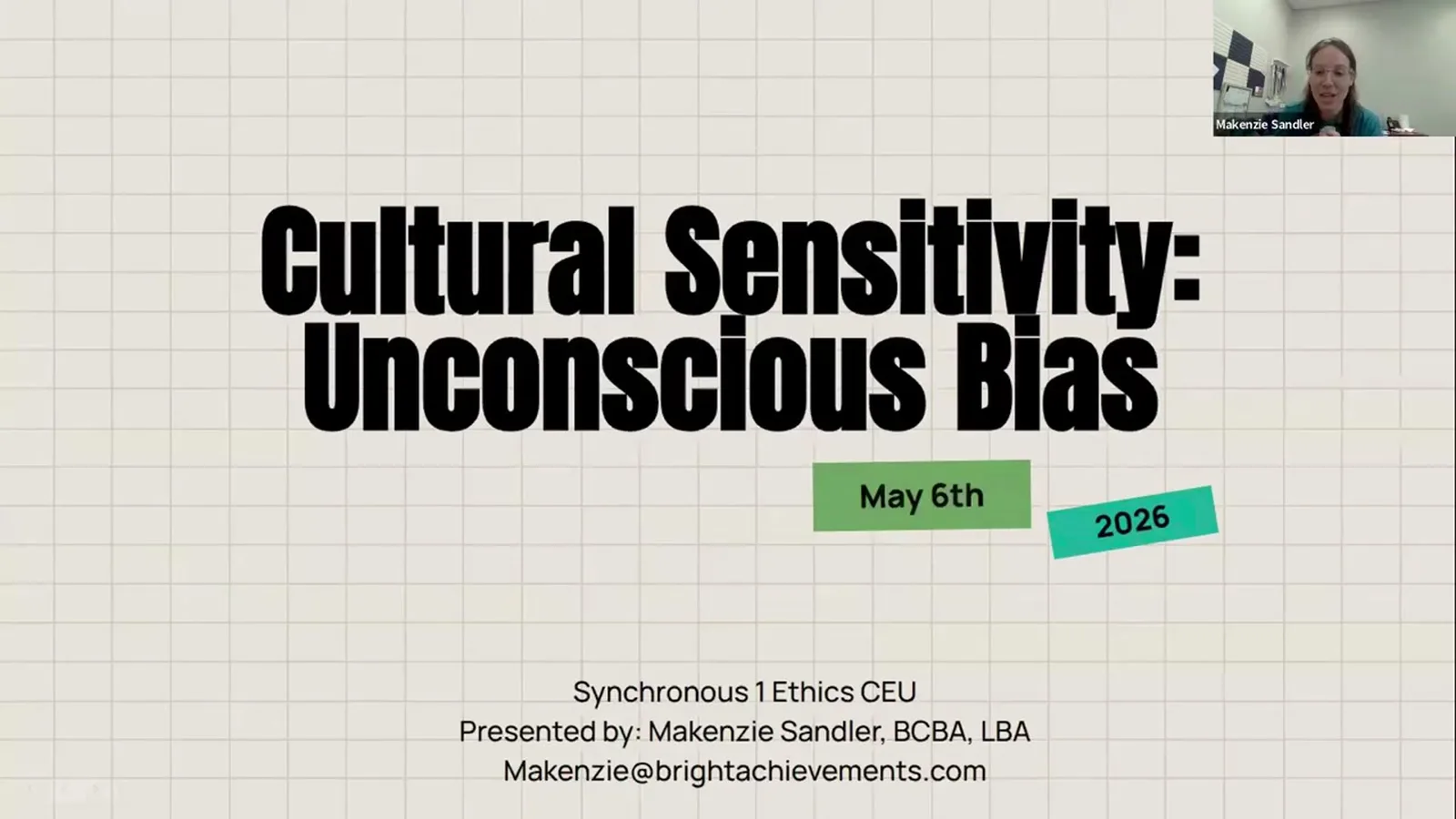
Cultural Sensitivity: Unconscious Bias
Experts who cover this
The recording behind this guide covers values-based action aba.
- Featured talk1 Ethics CEU
Cultural Sensitivity: Unconscious Bias
Mackenzie SandlerThe Behaviorist Bookclub
Sandler operationally defines values (via ACT) as verbally constructed reinforcers that guide long-term behavior patterns rather than goals to complete, and…
On this page · 7 sections▾
Values-based action means moving toward what you truly care about. It comes from ACT, a therapy model used inside behavior work. A value is a direction, like being a caring parent or a fair coworker. Action means the daily steps you take in that direction.
This idea helps BCBAs, RBTs, teachers, and parents. It shifts the focus from quick wins to long-term patterns. Chasing only fast rewards can lead to burnout and conflict. Naming what matters most gives your behavior a clear aim.
What Skinner said about values#
Some critics say values sound too soft for behavior work. They think values are just feelings we cannot measure. But the roots go back to Skinner himself. He wrote about values as things we work to get.
Dr. Tom Szabo grounds the idea in Skinner's own words. Values are not magic. They are simply the things that pull our effort.
What does Skinner say about values? Skinner wrote several chapters in several books about values. For Skinner, values are those things that we work for. What we value is what contacts positive reinforcement. From the talk — Dr. Tom Szabo
So a value is behavioral, not fuzzy. It is tied to reinforcement, the reward that keeps behavior going. This framing lets BCBAs talk about values without leaving the science behind. It fits neatly inside the same rules we already use.
Values are not goals#
People often mix up values and goals. A goal is a task you finish and check off. A value is a direction you keep moving toward. You never fully complete a value.
Mackenzie Sandler draws this line clearly. She defines values in a way that stays behavioral.
values are verbally constructed reinforcers, if you will. They guide long-term patterns of behavior. They're not goals. From the talk — Mackenzie Sandler
Think of the value "be a loving parent." Reading a bedtime story is a goal. Being loving is the direction behind many goals. You can hit a goal today and still keep living the value tomorrow. This is why values guide long stretches of behavior, not single moments.
Values point past the quick win#
 Advertisement
Fast rewards are strong. Scrolling your phone or skipping a hard task feels good right now. But those quick wins do not always match what you care about. Values-based action asks you to look further ahead.
Dr. Szabo describes this pull toward deeper meaning. The aim is to chase what matters, not just what feels easy.
It's about developing a sense of what truly matters, what you cherish, what you yearn for, what you long most deeply for, and orienting your action towards that, not towards what's immediately reinforcing for you to have. From the talk — Dr. Tom Szabo
This does not mean quick rewards are bad. It means you weigh them against the bigger picture. A parent may feel tired and want to rest. Choosing to play with their child still honors the value. The action costs effort now but pays off over time.
Language plays a big role here. We build values with words, not just feelings. Naming a value out loud makes it easier to follow. It turns a vague wish into a clear direction for action.
How aligned action grows reinforcement#
Living your values is not just noble. It also changes the rewards you contact each day. When your actions match your values, good things tend to build. When they clash, stress and conflict tend to grow.
Sandler points to this steady payoff from aligned action.
And when behavior aligns with your value, your natural reinforcement continues to increase. From the talk — Mackenzie Sandler
Picture a clinician who values helping families. Slowing down to really listen fits that value. Over time, families trust them more and progress improves. That trust and progress become natural rewards. The value and the reinforcement start to feed each other.
Why this matters for burnout and stress#
Values-based action is a practical tool, not just theory. Work in ABA can be heavy and draining. Staff who lose sight of their values often burn out fast. Naming what matters can protect energy and focus.
The gap between values and daily action creates strain. A person who values patience but rushes all day feels off. That mismatch can raise burnout risk and family conflict. Closing the gap even a little can ease that strain.
This is why values work shows up in many ABA talks. It helps clinicians stay steady during hard cases. It helps parents keep going through slow progress. It gives everyone a clear reason behind the daily effort.
Values also guide choices when rules run out. No manual covers every hard moment on the job. A clear value acts like a compass in those gaps. It points you toward the action you can stand behind later.
Using values-based action in practice#
Start by helping someone name a value in plain words. Ask what kind of parent, worker, or friend they want to be. Keep it as a direction, not a finish line. Write it down so it stays visible.
Next, tie small actions to that value. Pick one step that moves in the right direction today. Notice when the action matches the value and when it drifts. This builds awareness without harsh judgment.
Finally, expect some pull from quick rewards. That pull is normal and does not mean failure. The skill is choosing the valued path more often over time. Small aligned choices stack up into long-term patterns. Over months, those patterns become the person you want to be.
You can go deeper on the science behind this in ACT in ABA: Quixotic or Pragmatic?.
FAQ#
What is the difference between values and goals in ACT?
A goal is something you can finish and check off. A value is a direction you keep moving toward for life. You might read one book to hit a goal. Being a lifelong learner is the value behind that goal.
Is values-based action really behavioral?
Yes. Skinner wrote that values are the things we work to get. A value is tied to positive reinforcement, the reward that drives behavior. So talking about values does not break from behavior science. It uses the same rules of reinforcement we already know.
How does values-based action help prevent burnout?
Burnout often grows when daily actions clash with what you care about. Naming a value gives your effort a clear purpose. Aligned action also tends to bring more natural rewards over time. That steady payoff helps people keep going through hard work.
 Advertisement
Turn this topic into a CEU
You just studied this. Now get credit for it.
Watch Cultural Sensitivity: Unconscious Bias with Mackenzie Sandler and earn 1 free BCBA CEU. Detailed certificate, delivered the moment you finish.