Televisability: Would You Be Proud of Your Session?
Televisability asks if you would be proud of your ABA session if it aired in public. Learn where the idea comes from and how to use it.
Key takeaway
Televisability is a simple test of session quality: if your therapy session aired in public, would you be proud of it? The term comes from the work of Greg Hanley.
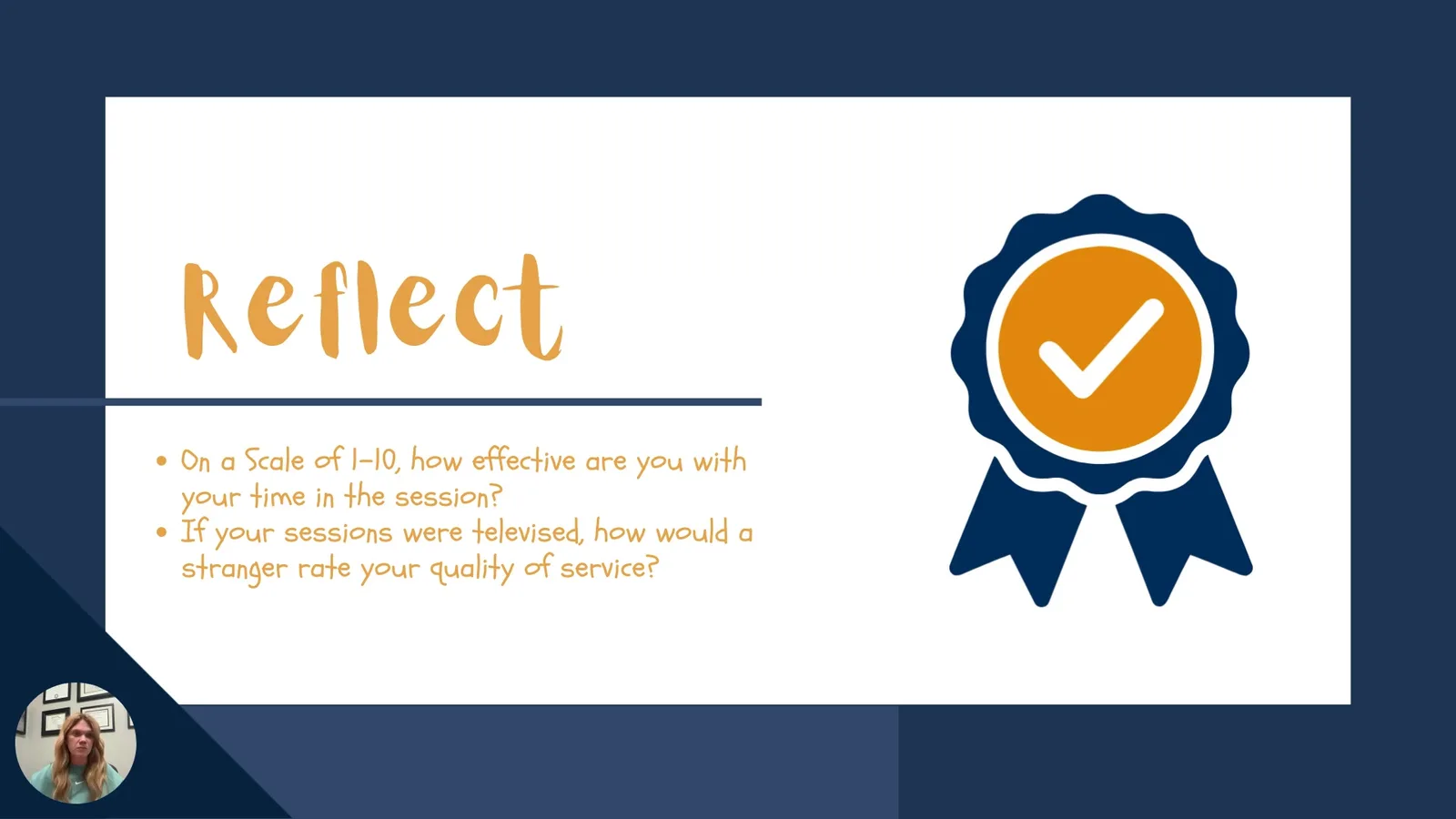
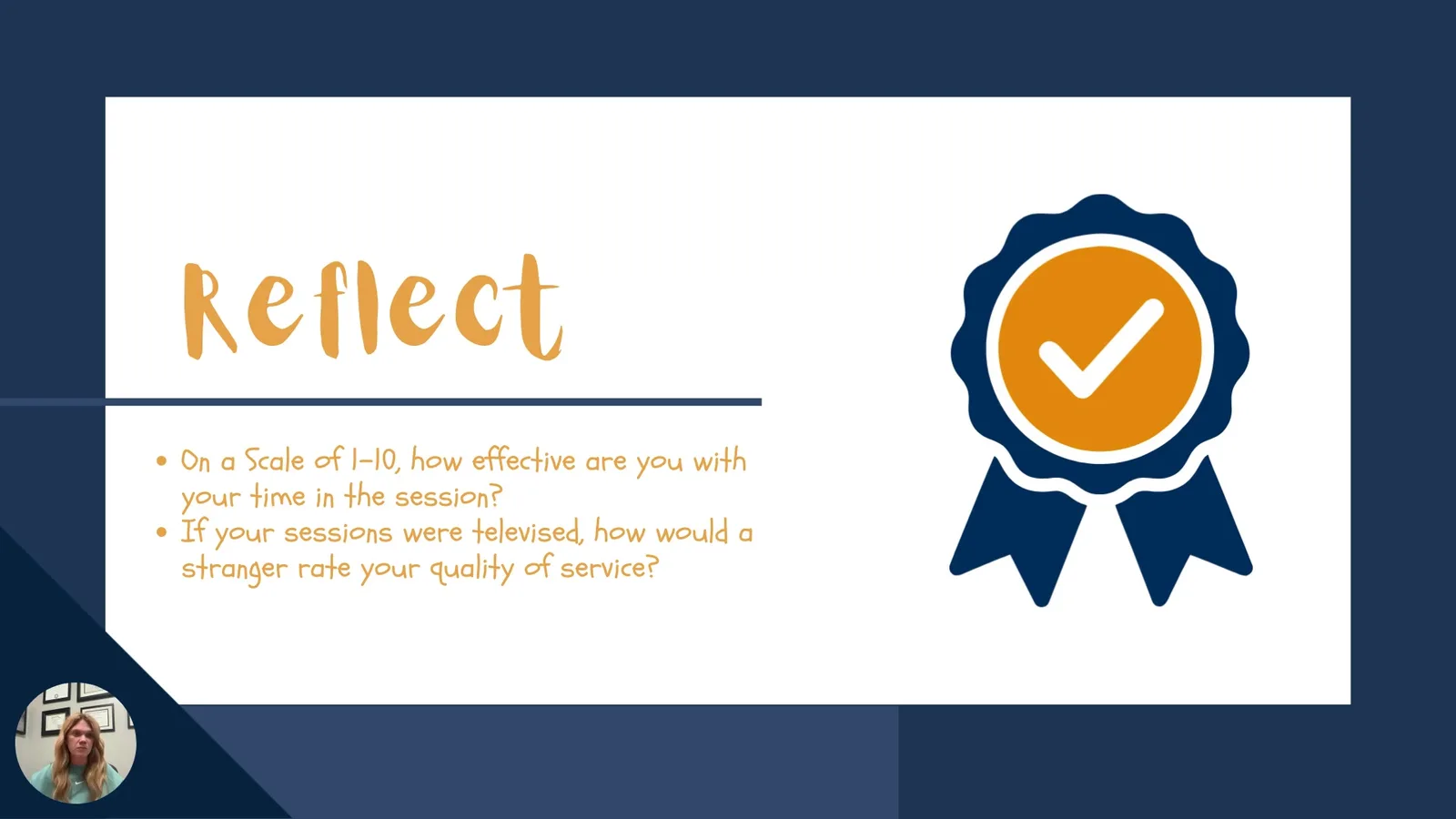
Mastering Your Time: Preparing for Service Delivery
Free learning path on this topic
Assent-Based Practice
Matt Harrington defines assent and shows how to measure it, Danielle Virnelson shows what assent-based care looks like in a real session, and Pauli Catanese frames assent as a child's right. Four courses, six CEUs: three learning and three ethics, all free.
Experts who cover this
2 recordings on openceu cover televisability ABA.
- Featured talk1 PDU
Mastering Your Time: Preparing for Service Delivery
Ashley AndrewInnovative Behavioral Therapy
Andrew explicitly names and attributes the concept of "televisability" to Greg Hanley's work, using it as a standard for whether a practitioner could justify…
- 1 PDU
Mastering Your Time: Preparing for Service Delivery
Ashley AndrewInnovative Behavioral Therapy
Andrew uses the idea of a session being broadcast publicly as a heuristic for evaluating whether a practitioner would be proud of the quality and…

On this page · 10 sections▾
Televisability is a simple test of session quality: if your therapy session aired in public, would you be proud of it? The term comes from the work of Greg Hanley. People in behavior analysis use it as a quick gut check on how well a session is going.
Ashley Andrew teaches the idea in her talk on preparing for service delivery. She uses it to help technicians and clinicians step back and look honestly at their own sessions. This page walks through how she explains the idea and how you can put it to work.
Where the term comes from#
Andrew is clear that the idea is not her own. She credits it to Greg Hanley. She says it stuck with her because it gave her a clear picture of what good work looks like. The word itself is built from "television." A televisable session is one you could put on TV and feel good about.
And we're going to call this televisability. It comes from Greg Hanley's work, but it really resonated well with me
From the talk — Ashley Andrew
Andrew presents televisability as a standard, not a formal procedure. There is no score sheet or data form tied to it. Instead, it is a question you ask yourself. That makes it easy to use in the moment. You do not need extra tools or training to try it. You just need to picture your session through someone else's eyes. That simple picture can show you what is working and what is not.
The Times Square test#
To make the idea concrete, Andrew asks you to imagine a big public screen. She picks Times Square in New York. Picture your session playing there for anyone walking by. Then ask how a stranger would rate the quality of your service.
Andrew asks it directly: if your sessions were broadcast in Times Square, New York, would you feel good about the quality of service you were providing?
The stranger part matters. A stranger has no inside knowledge. They do not know your learner's history or your plan. They only see what is happening on the screen. If the session looks aimless to them, that is worth thinking about. Andrew says that when she pictures her own session on that screen, she wants to be proud of it. She says she would want her name written on it. That sense of ownership is what the test is built on. It turns a vague goal like "do good work" into a picture you can check against.
Every minute has a purpose#
Andrew's first suggestion for a televisable session is that every minute should have a purpose. She wants practitioners to provide active treatment they are proud of. "Active treatment" means the learner is engaged in real therapy, not just waiting or passing time.
In one recording, she ties this to planning. She says you should think about what your individual learner needs. You should have viewed the plan, prepared, and planned for the session. Then you are ready to provide what she calls an active therapy session.
This does not mean every minute has to look like a drill. It means each part of the session connects to something. Downtime that has no link to the learner's goals is the kind of thing a stranger would notice. A purposeful minute might be play, a break, or a skill task. What makes it purposeful is that you chose it for a reason tied to the learner.
Meaningful practice, not practice for its own sake#
Andrew describes what televisability looks like for her. She wants frequent chances for skill practice and skill building. "Skill acquisition" is a term for learning new skills. She wants those chances to be meaningful and intentional.
She adds an important distinction here. It is not just practicing to practice. It is practicing because it means something to that learner. She lists three things good practice should do:
- It should be meaningful to the learner.
- It should help bring joy to them.
- It should be part of their treatment plan.
That list keeps the focus on the person, not just the task count. A session could have lots of practice and still miss the mark. If the practice does not matter to the learner, it may not pass the Times Square test. The goal is practice that serves the learner's real life and their written plan at the same time.
Explain your activity at any moment#
One of the clearest parts of Andrew's message is about explaining your work. She says you should always be able to say how your current activity connects to the plan.
Now, at any moment, you should be able to explain how your current activity supports that learner's treatment goals.
From the talk — Ashley Andrew
Andrew gives an example from her own clinic. Her clinic has a hallway with treatment rooms along it. Say she walks into a room and sees a technician with barn animals. The learner is playing with a toy barn. She asks, "What are you working on?"
She expects her staff to have a ready answer. A good answer might be that the learner showed interest in the barn animals. So today they are using those animals to work on feature, function, and class. That is a skill area where learners describe what things look like, what they do, and what group they belong to.
This example shows something important. The activity looks like play from the doorway. But the technician can tie it straight to a goal. That is what makes it televisable. The learner's interest led the choice, and the goal shaped what happened next. If you cannot explain why you are doing something, that is a sign to pause and rethink.
Preparation makes it possible#
Televisability does not start when the session starts. Andrew places it inside a larger talk about preparing for service delivery. In her view, a strong session comes from work done ahead of time.
She describes a few steps. You view the learner's plan. You prepare and plan for the session. You clarify any questions you have. Then you are ready to run an active session.
The "clarify" step stands out. Andrew responds to a viewer who said it is hard to run something with a client for the first time. That is especially true if you have never seen it done or never had a chance to shadow someone. Shadowing means watching a more skilled person do the work. Andrew says this is when you should ask for help. She suggests saying something like, "I need some help. I need you to show this to me."
Asking for help is part of a televisable session, not a sign of weakness. A technician who asks good questions ahead of time is more likely to run a session they would feel good about on screen.
Owning the session as a technician#
Andrew points out something true of daily practice: technicians lead the session more often than their supervisors do. The supervisor may visit, but the technician is the one in the room most of the time.
Because of that, she encourages technicians to take ownership of their time. When you own the session, you can give the learner the setting they need to learn and grow. You help them build skills. In her words, you can also help bring joy to that client.
This is why televisability is useful for technicians in particular. It does not depend on a supervisor watching. It is a check you can run on yourself, any time. Andrew asks you to think about whether you would be proud of the quality of service if your session were televised. Or would you see some room for growth? Either answer is useful. Both point you toward your next step.
Fun, joy, and avoiding burnout#
Andrew links session quality to how the practitioner feels, too. She says that if you are having fun, your kids probably are too. If you are not having fun, they probably are not either. A televisable session is not stiff or joyless. It has energy that both people share.
If my session was televised, would I be proud of the quality of service?
From the talk — Ashley Andrew
She also acknowledges something difficult about the field: behavior analysis has high burnout. She says the work calls for a specific skill set and a special level of patience. Because of that, she wants practitioners to watch out for themselves.
Andrew says she tries to keep her clients happy, relaxed, and engaged. But she also asks how she can keep herself happy, relaxed, and engaged. This matters for televisability. A worn-out practitioner will have a harder time running purposeful, joyful sessions. Caring for yourself is part of caring for the quality of your work.
Using televisability as a growth tool#
Andrew frames the test in a kind way. She says there are amazing technicians out there, and she employs many of them. But there is always room for growth. The point is not to shame anyone. It is to ask what you could make just a little bit better.
She invites a few honest questions. Would you be proud of your session? What are some areas where you could grow? What could you do to improve the quality of service you give?
She is also clear that it is fine if you feel you are already doing well. If your honest answer is "I'm rocking it," that is great too. The test works either way. It helps you see your strengths and spot small changes worth making. Used often, it becomes a habit of looking at your sessions with care.
FAQ#
What does televisability mean in ABA?
Televisability is a way to judge session quality. You picture your session being shown in public, like on a big screen in Times Square. Then you ask if you would be proud of what people see. Ashley Andrew credits the idea to Greg Hanley's work.
How can I tell if my session is televisable?
Ask yourself whether every minute has a purpose. Check that practice is meaningful to the learner and tied to the treatment plan. Andrew also says you should be able to explain, at any moment, how your current activity supports the learner's goals.
Is televisability only for supervisors?
No. Andrew points out that technicians lead sessions more often than supervisors do. That makes televisability a useful self-check for anyone in the room. You can use it on your own, without someone watching, to find small ways to improve.
Turn this topic into a CEU
You just studied this. Now get credit for it.
Watch Mastering Your Time: Preparing for Service Delivery with Ashley Andrew and earn 1 free BCBA CEU. Detailed certificate, delivered the moment you finish.
Keep going with a free learning path
Assent-Based Practice
Matt Harrington defines assent and shows how to measure it, Danielle Virnelson shows what assent-based care looks like in a real session, and Pauli Catanese frames assent as a child's right. Four courses, six CEUs: three learning and three ethics, all free.