Preference Assessment in ABA: A Practical Guide
Learn how BCBAs use preference assessments to find real reinforcers. Compare MSWO, paired stimulus, and free operant methods with clear, practical steps.
Key takeaway
A preference assessment is a simple way to find out what someone likes. You watch a person's choices and rank the items they pick most.
5 Days of Manding Mastery
Free learning path on this topic
Verbal Behavior: Beyond WH-Questions
Dana Pettus's three-part series on building generative verbal behavior. Why WH-question programs stall, how to establish speaker-listener repertoires, and how to scaffold advanced verbal skills like recall and simple inference. Three hours, three CEUs.
Experts who cover this
4 recordings on openceu cover preference assessment.
- Featured talk2.50 CEUs
5 Days of Manding Mastery
Matt HarringtonThe Behaviorist Bookclub
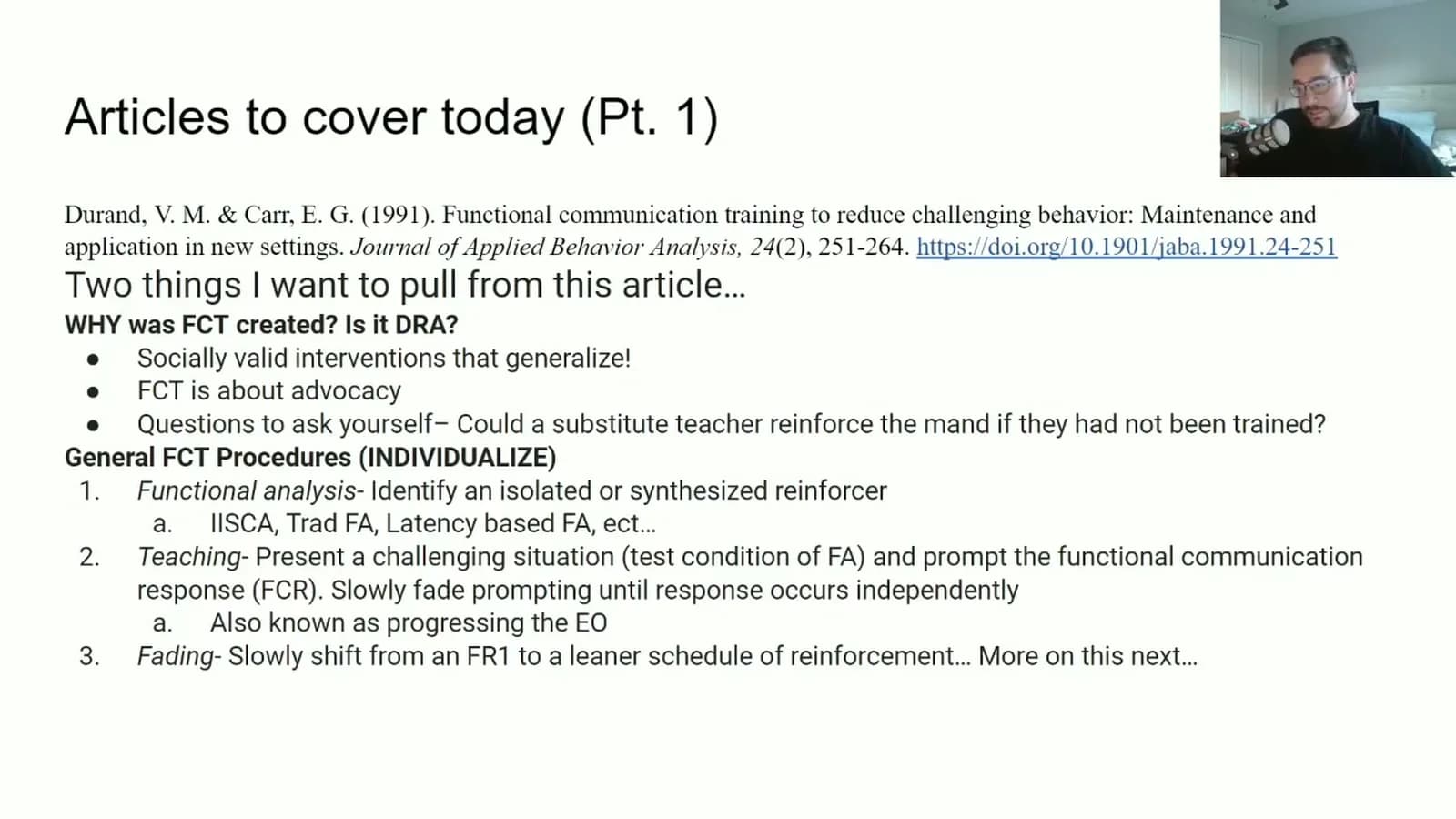
The presenter's practical workflow: start with a free-operant preference assessment (tallying engaged items every 5 minutes for an hour) to build a rough…
- 1 Supervision CEU
Delegating with Confidence: Training and Supervising RBTs to Support Assessments
Dr. Jessica OsosCopper Consulting Group
Preference assessments (paired choice, multiple stimulus) are given as a prototypical example of an RBT-appropriate activity billable under 97152, since the…
- 1 Supervision CEU
Dunder Mifflin’s Guide to Training and Onboarding: Lessons from The Office
Mellanie PageThe Behaviorist Bookclub
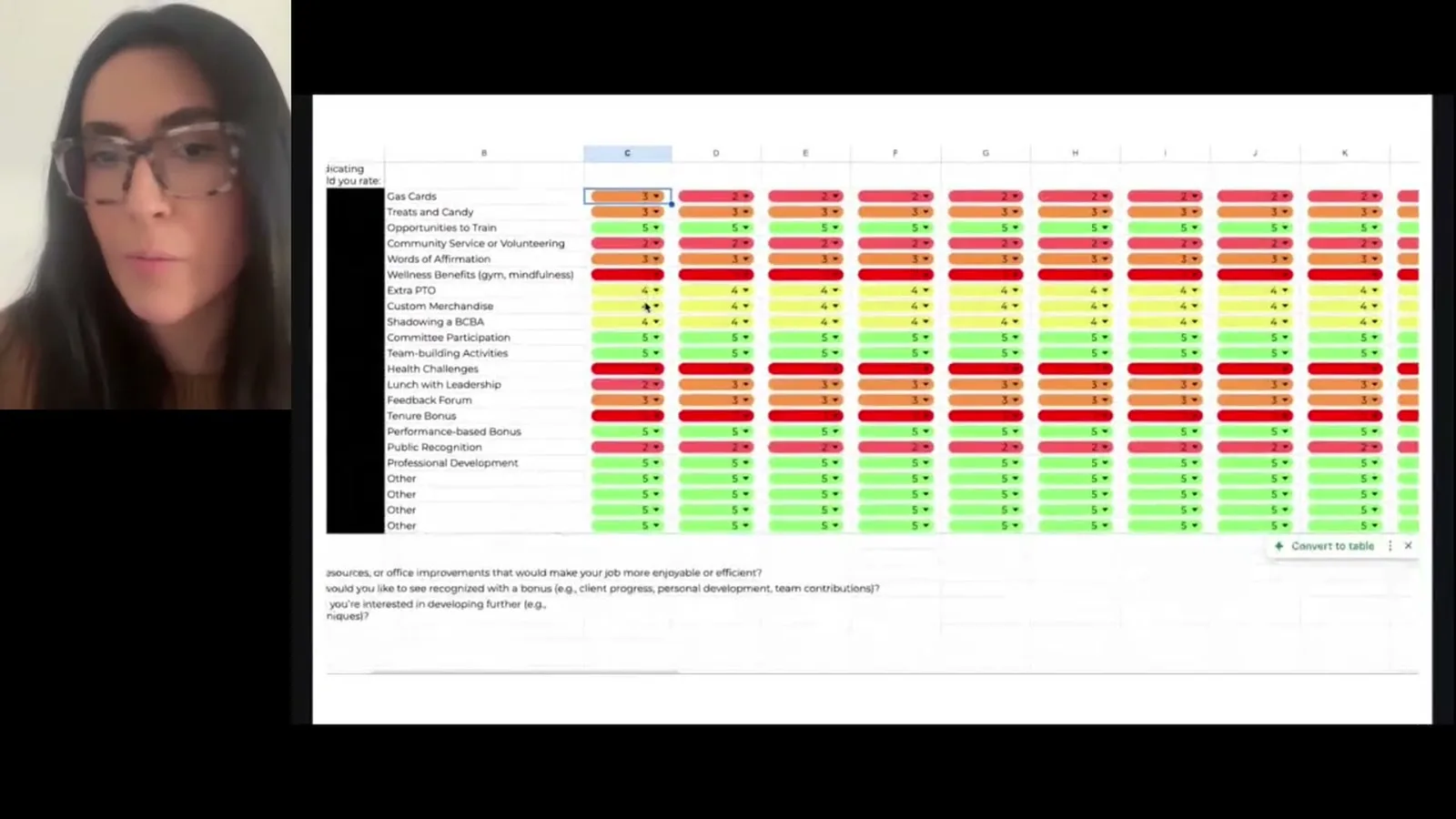
Page recommends assessing staff preferences early and often, using a tracked spreadsheet, to identify what reinforces individual team members beyond just…
- 1 Supervision CEU
Toward an Evidence-based Supervision Model: Training Students in Independent Fieldwork
Dr. Allison Bowhers-PeutinWillow Mentorship & Consulting, LLC
Before baseline, supervisors completed a preference assessment ranking items like food or gift cards, which were then delivered contingent on their supervisory…

On this page · 6 sections▾
A preference assessment is a simple way to find out what someone likes. You watch a person's choices and rank the items they pick most. Those top items become good candidates for reinforcers.
This matters because reinforcement drives learning. A reward only works if the learner actually wants it. BCBAs, RBTs, teachers, and parents all get better results when they check preferences first. Guessing what a child likes wastes time and stalls progress.
The common types of preference assessment#
There are a few well-known ways to run a preference assessment. Each one fits a different situation. Matt Harrington lists the main options this way.
Now for preference assessments, we can use things like the multiple stimulus without replacement, the paired stimulus preference assessment, the free operant preference assessment... Concurrent chains preference assessment. From the talk — Matt Harrington
A free operant assessment lets the learner roam and play with items freely. You just watch and tally what they engage with. A paired stimulus assessment shows two items at a time and records each pick. A multiple stimulus without replacement, or MSWO, lays out several items and removes each one after it is chosen.
A workflow that saves time#
You do not have to pick just one method. Many clinicians blend them. Matt Harrington starts loose, then narrows down. He says he likes to begin with a free operant preference assessment almost every time.
In the free operant phase, you let the learner play in a rich space. You tally which items they engage with, checking in every five minutes across about an hour. That running count builds a rough ranking of favorites. Then he confirms the strongest items with a quick MSWO.
I take the ones that occurred in the top four, top five, and I put them, if possible, into a multiple stimulus without replacement preference assessment. From the talk — Matt Harrington
This two-step flow gives you a solid short list. The loose phase surfaces many options with little pressure. The tight phase then ranks the true winners. You spend less time testing items the learner ignores.
Why it fixes motivation problems#
 Advertisement
Sometimes a learner will not sit for a task. It is easy to blame a skill gap. But the real problem is often weak reinforcement. In that case, the fix is clear.
The intervention for motivation is going to be a preference assessment. From the talk — Matthew Harrington
A token board can also fall flat if the payoff is dull. When the backup reward is boring, the whole system loses power. A fresh preference assessment finds items the learner truly wants right now.
This is why you screen motivation before you blame a skill gap. A learner who will not start a task may simply lack a strong reason to try. Check the reinforcer first. If the reward is weak, no amount of prompting will fix it. A quick preference check often solves the problem faster than a new teaching plan.
Preference assessments beyond the child#
This tool works with more than kids and tangible toys. It helps in feeding therapy, schools, and even staff training. In feeding work, teams assess preferred and non-preferred foods at intake. Children often enjoy the process because it hands them control.
Kids actually really end up liking the preference assessment because you're, like, would you like an M&M? And they're, like, yes. From the talk — Dr. Holly Gover
Schools can sort choices into categories like adult approval, peer approval, and consumables. A student who always picks food may be signaling a deeper need. That pattern can prompt a closer look at snack time or hunger.
Managers can use the same idea with their teams. Knowing what motivates each staff member improves training and morale.
it's so important to assess preferences early and often and be clear about what reinforces team members. From the talk — Mellanie Page
What the research says#
Different formats can produce different amounts of stress for the learner. One study compared a response-restriction free operant assessment with a paired-stimulus assessment. Both found similar preference rankings. The free operant version led to less challenging behavior for four of six children, though it took longer (Herbek et al., 2026).
The method also adapts to older adults. Researchers built adapted preference assessments for four people with dementia. The adapted version raised signs of happiness and kept results valid (Bigwood, Staples, & Sharp, 2026).
Teachers, however, may not use this tool much. A study of special education preschool teachers found little understanding of preference assessments. Most saw them as helpful but rarely ran them in class (Miranda et al., 2025).
FAQ#
How often should I run a preference assessment?
Preferences change fast, so check them often. Many teams run a brief version at the start of each session. A quick free operant or MSWO takes only a few minutes.
What is the difference between MSWO and paired stimulus?
MSWO shows several items at once and removes each chosen item. Paired stimulus shows only two items at a time. MSWO is usually faster, while paired stimulus gives clean two-way comparisons.
Does a preferred item always work as a reinforcer?
Not always. A preference assessment predicts a likely reinforcer, but it is not a guarantee. You confirm true reinforcing value by testing if the item increases the target behavior.
Feeding teams lean on this tool heavily, as shown in Feeding Face Off. The same logic even scales to staff, a theme in Dunder Mifflin's Guide to Training and Onboarding: Lessons from The Office.
 Advertisement
Turn this topic into a CEU
You just studied this. Now get credit for it.
Watch 5 Days of Manding Mastery with Matt Harrington and earn 2.5 free BCBA CEUs. Detailed certificate, delivered the moment you finish.
Keep going with a free learning path
Verbal Behavior: Beyond WH-Questions
Dana Pettus's three-part series on building generative verbal behavior. Why WH-question programs stall, how to establish speaker-listener repertoires, and how to scaffold advanced verbal skills like recall and simple inference. Three hours, three CEUs.
Want the primary literature? Read the Preference Assessment in ABA research roundup on our sister site, Behaviorist Book Club.