Discriminated Manding: Teaching Real Requests, Not Echoes
A discriminated mand is a request that matches what a learner wants right now. Learn how to test for it and what the research shows.
Key takeaway
A mand is a request. A learner mands when they ask for something they want. A discriminated mand is a request that fits the moment.
5 Days of Manding Mastery
Free learning path on this topic
Verbal Behavior: Beyond WH-Questions
Dana Pettus's three-part series on building generative verbal behavior. Why WH-question programs stall, how to establish speaker-listener repertoires, and how to scaffold advanced verbal skills like recall and simple inference. Three hours, three CEUs.
Experts who cover this
The recording behind this guide covers discriminated manding.
- Featured talk2.50 CEUs
5 Days of Manding Mastery
Matt HarringtonThe Behaviorist Bookclub
Day 3's core topic drawn from a Vollmer-lab EO-manipulation study: a mand only counts as truly discriminated if it tracks the current establishing operation…
On this page · 6 sections▾
A mand is a request. A learner mands when they ask for something they want. A discriminated mand is a request that fits the moment. It matches what the learner truly wants right now.
This idea matters because not every "request" is real. A learner might just repeat the last words they heard. BCBAs, RBTs, and parents want true requests, not echoes. A real mand shows the learner knows what they are asking for.
What a discriminated mand is#
Manding is one of the first skills we teach in ABA. A learner learns to ask for food, toys, or a break. But asking is not always the same as wanting.
A discriminated mand tracks the current motivation. The learner asks for the thing they actually want. They do not just grab any card or copy a sound. The want and the request line up.
Matt Harrington frames the test in a simple way. He asks whether the request follows the motivation in the room.
However, if they hand over the Skittle, then that means that they're requesting in line with the establishing operations that are in place, which means a discriminated mand occurred. From the talk — Matt Harrington
That last part is the key. The mand only counts when it matches the setup. If the learner is hungry and asks for the snack, that is real. If they ask for a random card, it is not.
The echo problem#
Many young learners echo what they hear. A technician says a word, and the learner repeats it. This can look like a request, but it may not be one.
Matt warns against treating an echo as a true mand. Repeating the last word is not the same as wanting something.
We don't just want kiddos echoing. We don't just want kiddos imitating the last word of the sentence. We want them to respond with a discriminated mand that leads to a function without prompting. From the talk — Matt Harrington
The phrase "without prompting" matters here. A real mand comes from the learner, not from a hint. The goal is a request that stands on its own.
Matt gives a clear scene to test this. A child says "tablet please" right after the technician says it. Was that a real request?
But the question is, was that a discriminated mand? Were they manding for tablet please or were they just echoing the last two words that the technician said? From the talk — Matt Harrington
The answer changes how you teach. If it was an echo, you have more work to do. If it was a real mand, you can build on it.
Using the establishing operation to check#
 Advertisement
An establishing operation is what makes something worth wanting. It is a plain way to say the learner is motivated right now. Hunger, thirst, and boredom all create motivation.
You can use this to test a mand. Give the learner free access to one item. Now that item is not motivating. Keep the other item out of reach so it stays wanted.
If the learner asks only for the wanted item, the mand is discriminated. They are tracking the real motivation, not guessing. This simple check tells you what the learner truly understands.
This is why timing matters so much in mand training. A satiated learner has no reason to ask. A motivated learner shows you a true request.
Why it matters for FCT and schedule thinning#
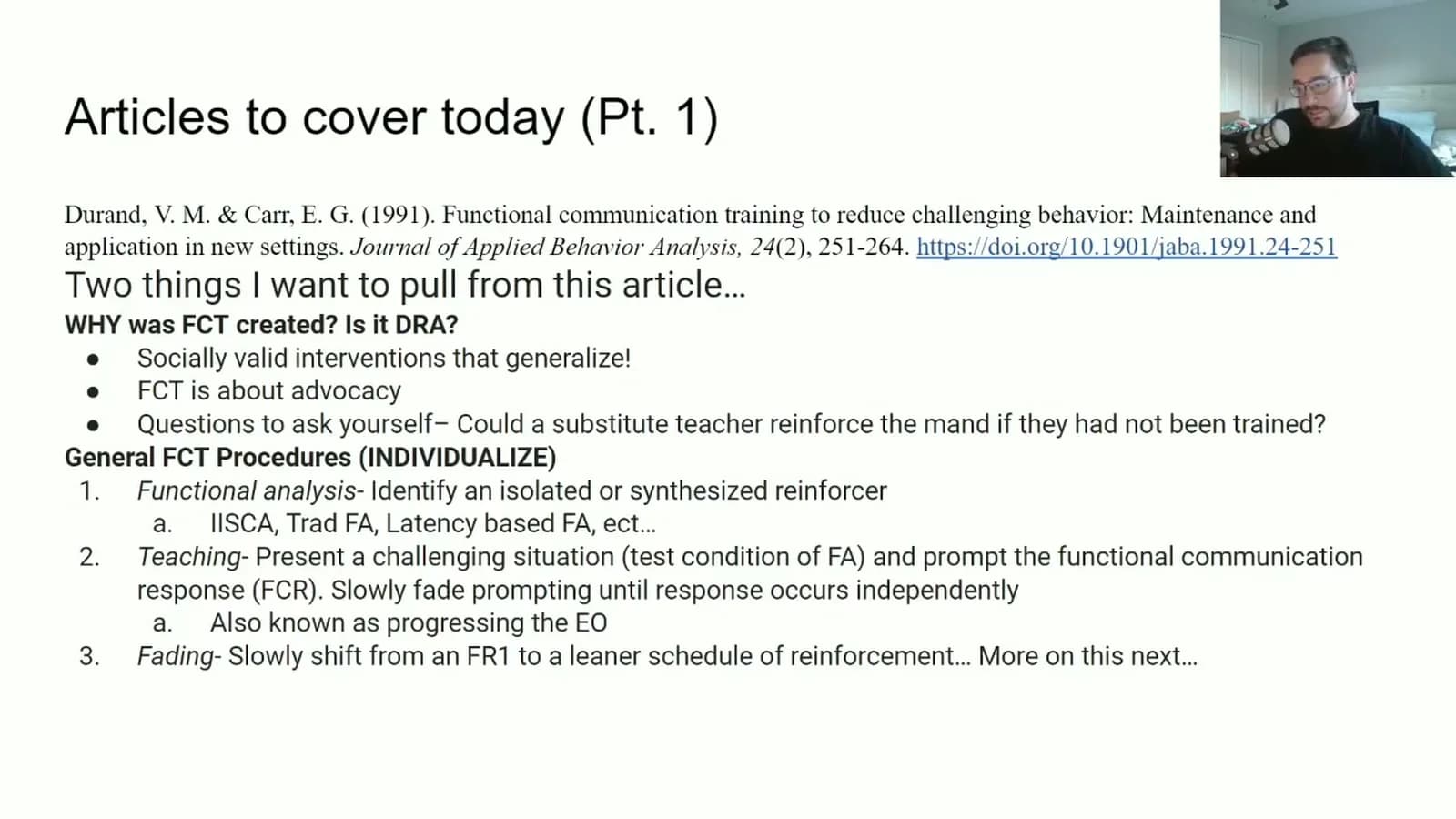
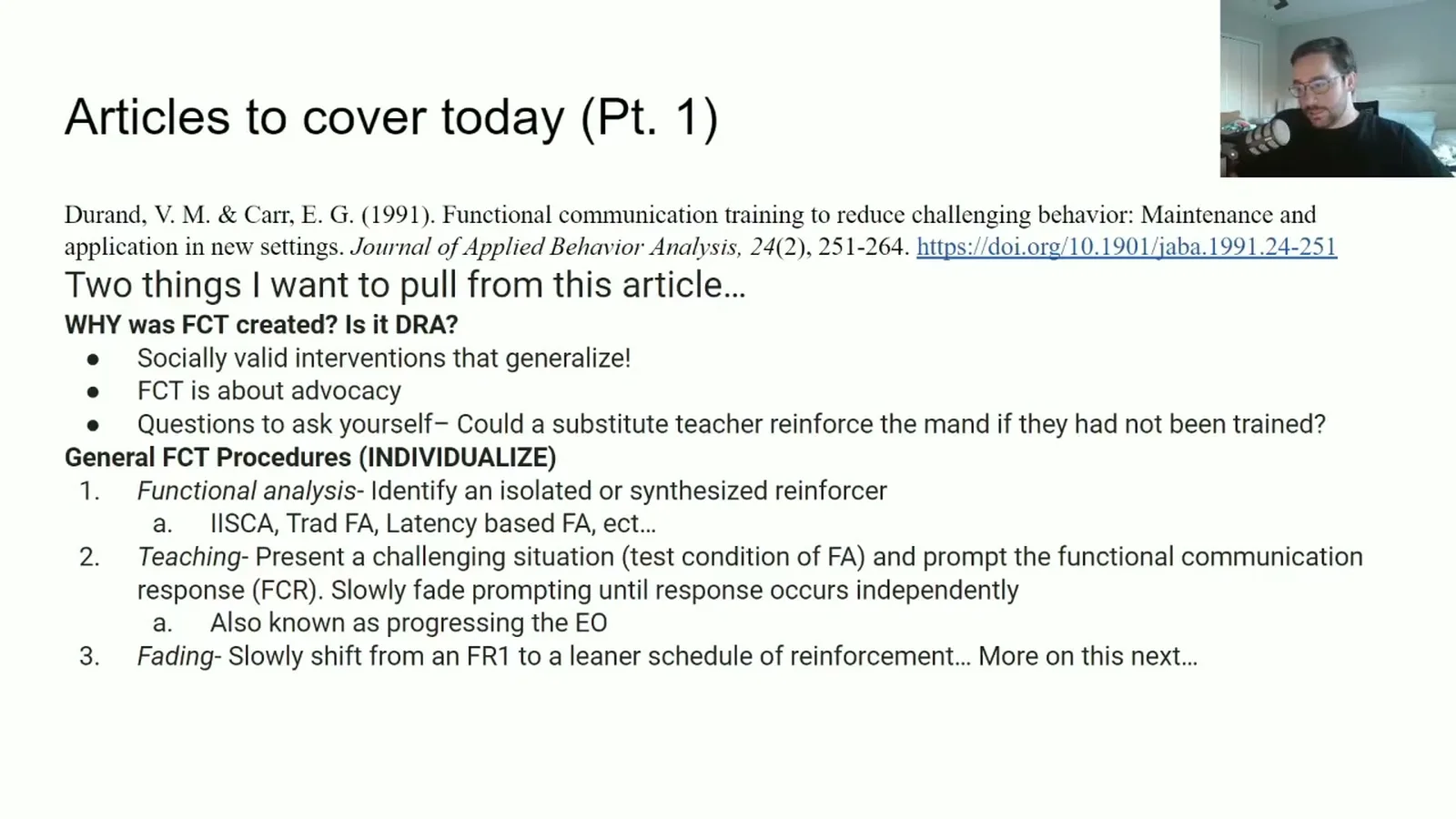
Functional communication training teaches a learner to ask instead of act out. The learner trades problem behavior for a request. A discriminated mand is the sign that this teaching worked.
Later, teams thin the schedule of reinforcement. This means the learner cannot get the item every single time. A signal, like a card or a light, shows when asking will work. The learner must read that signal and ask at the right moment.
This is hard for many learners. A real discriminated mand shows they can read the signal. It tells the team the learner is ready for less support.
The signal itself can be as simple as a colored card. When the card is up, asking pays off. When it is down, asking does not work right now. A discriminated mand means the learner asks only at the right time.
Not every learner reaches this level with a signal alone. Some need extra teaching before the mand tracks the signal. This is why teams watch the mand so closely. The quality of the mand guides the whole plan.
What the research says#
Research shows that teaching a real mand takes more than one card on a table. One study used a four-part signal system to teach a boy with autism. He learned to ask only for what each signal made available (Shamlian et al., 2016). This showed conditional, discriminated manding across changing setups.
Establishing operations can also test a mand directly. In one study, learners got free access to one item and stayed motivated for another. Three of four learners then showed a true discriminated mand. One learner needed two very different response types before it worked.
Signals matter too. One study compared still pictures with moving ones during schedule thinning. For three of four children, both signal types led to discriminated manding (Campos et al., 2023). Only one child needed the moving signal.
These findings can move to the home. One study coached caregivers over video to run multiple schedules. Both children learned discriminated manding, then followed natural home signals instead of set-up ones (Exline et al., 2024).
A signal alone is not always enough. One study used a multiple schedule for escape-maintained behavior. Problem behavior stayed low, but the schedule alone did not produce discriminated manding. Some learners need more than a signal to get there.
FAQ#
What is the difference between a mand and a discriminated mand?
A mand is any request for something a learner wants. A discriminated mand is a request that matches the real motivation. It is not an echo or a random guess. The want and the request line up.
How do you know if a mand is discriminated or just echoed?
Test it with motivation. Give free access to one item so it loses value. If the learner asks only for the still-wanted item, the mand is real. If they repeat words with no clear want, it may be an echo.
Why is discriminated manding important in ABA?
It shows the learner truly understands their own requests. This skill supports functional communication training and schedule thinning. It also builds real independence, since the learner asks without prompts.
You can learn the full teaching sequence in 5 Days of Manding Mastery.
 Advertisement
Turn this topic into a CEU
You just studied this. Now get credit for it.
Watch 5 Days of Manding Mastery with Matt Harrington and earn 2.5 free BCBA CEUs. Detailed certificate, delivered the moment you finish.
Keep going with a free learning path
Verbal Behavior: Beyond WH-Questions
Dana Pettus's three-part series on building generative verbal behavior. Why WH-question programs stall, how to establish speaker-listener repertoires, and how to scaffold advanced verbal skills like recall and simple inference. Three hours, three CEUs.