Multiple Schedules in ABA: FCT & Schedule Thinning
A multiple schedule signals when a request pays off and when it does not. Learn how BCBAs use red and green cues to thin FCT reinforcement.
Key takeaway
A multiple schedule uses signals to show when a behavior will pay off. One signal means the reward is on. Another signal means it is off.
5 Days of Manding Mastery
Free learning path on this topic
Verbal Behavior: Beyond WH-Questions
Dana Pettus's three-part series on building generative verbal behavior. Why WH-question programs stall, how to establish speaker-listener repertoires, and how to scaffold advanced verbal skills like recall and simple inference. Three hours, three CEUs.
Experts who cover this
2 recordings on openceu cover multiple schedule aba.
- Featured talk2.50 CEUs
5 Days of Manding Mastery
Matt HarringtonThe Behaviorist Bookclub
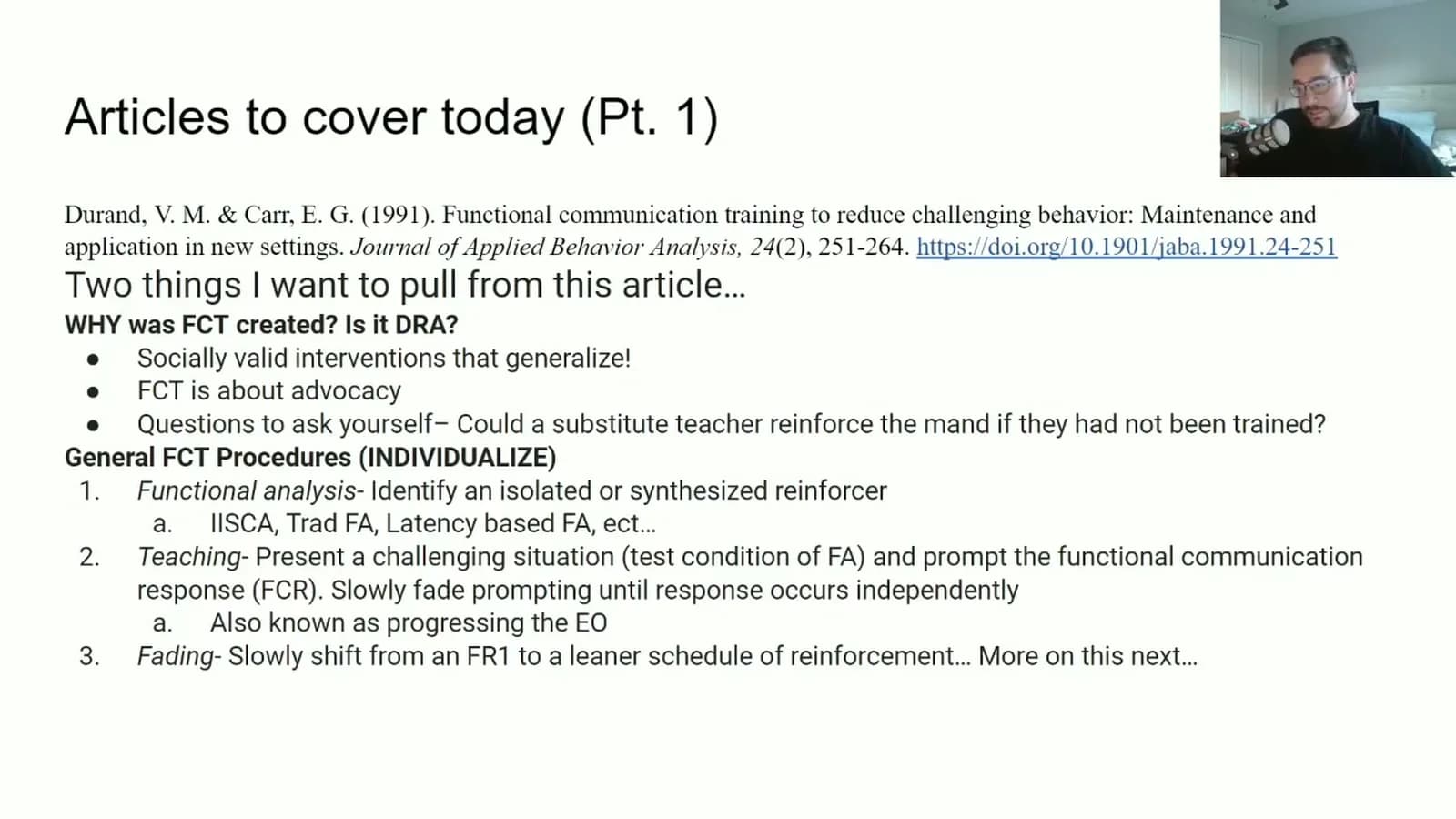
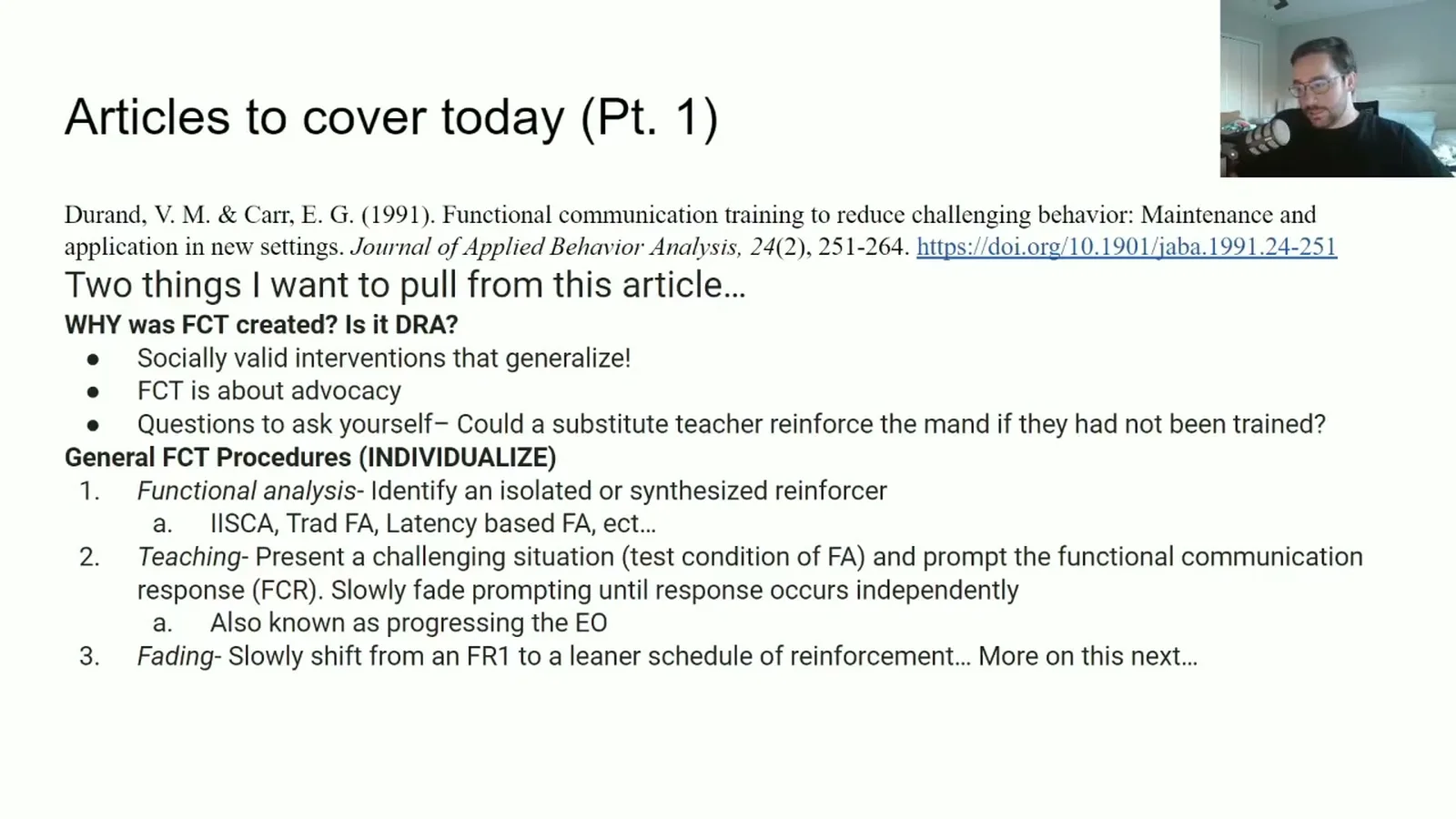
Explained as a red/green stimulus-signaled schedule where FR1 reinforcement is available on the 'green' side and extinction on the 'red' side, faded by slowly…
- 1 CEU
Research to practice - extending past the pages
Matt HarringtonThe Behaviorist Bookclub
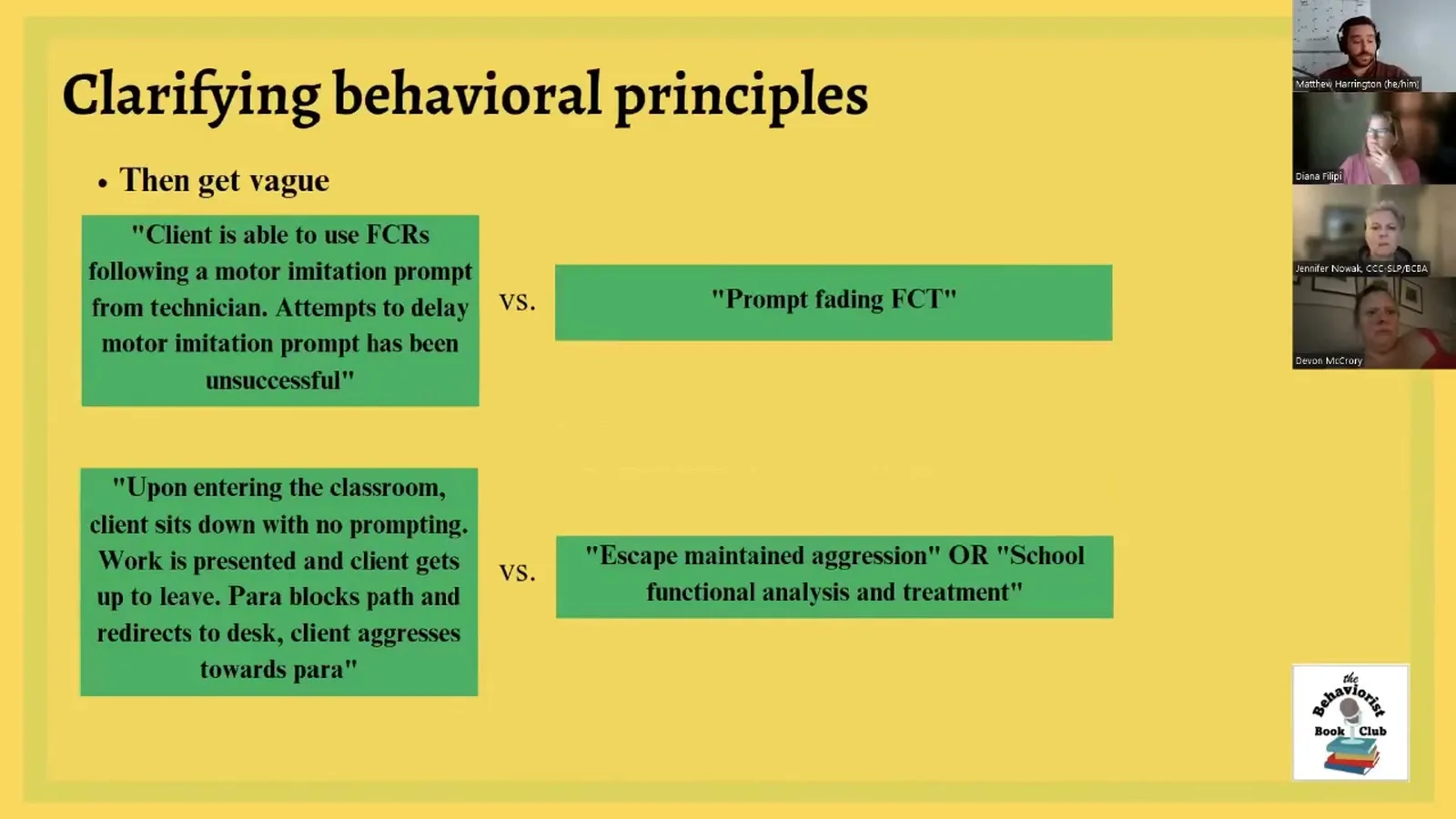
Combined with extinction and FR1 components to build a church-tolerance intervention for a three-year-old, using signaled availability to make the primary…
On this page · 6 sections▾
A multiple schedule uses signals to show when a behavior will pay off. One signal means the reward is on. Another signal means it is off. The learner sees the cue and knows what to expect.
This tool is common in functional communication training, or FCT. FCT teaches a person a better way to ask for what they want. Early on, every request earns a response. That works in the clinic but not in real life. A multiple schedule helps teams fade that constant reward in a fair, clear way. BCBAs, RBTs, teachers, and parents all use it.
Red means stop, green means go#
The simplest version uses two colors. Green signals that the request will work. Red signals that it will not, for now. This clear cue is what makes the whole system fair.
That's a mult schedule arrangement. And it's really pretty common in the FCT world. From the talk — Matt Harrington
During green, the plan uses FR1. FR1 means one request earns one reward, every single time. During red, the plan uses extinction. Extinction means the request gets no reward right now. The signal tells the learner which rule is live.
So, 10 minutes go by, tablet is being provided every communication response, every time, every time for 10 minutes. And then for 5 seconds, it's on the extinction side. From the talk — Matt Harrington
Notice the balance in that example. Green lasts a long time at first. Red lasts only a few seconds. That gentle start sets the learner up to succeed.
Thinning the schedule over time#
Constant reward cannot last forever. No parent can hand over a tablet after every single request. The goal is to stretch the wait slowly. This is called schedule thinning.
Teams lengthen the red interval bit by bit. Red might start at five seconds. Over sessions, it grows to a minute, then longer. Green shrinks as the learner can handle more waiting. Done slowly, this keeps calm behavior in place.
The signal does the heavy lifting here. Because red is clear, the learner is not confused. They learn to wait during red and ask during green. That is far kinder than random denials with no warning.
Using it in the real world#
 Advertisement
Multiple schedules shine outside the clinic too. Matt Harrington describes a plan for a three-year-old at church. The child kept running around during the service. The team needed a way to make that behavior pause on cue.
what we're looking at here is multiple schedules. From the talk — Matt Harrington
The core reward was running around in the back. The plan made that reward available only at set times. A clear signal marked when it was on and off.
Signaled availability would lend itself to making the primary reinforcer unavailable on a predictable schedule. From the talk — Matt Harrington
The design paired two rules again. FR1 at one point, extinction at the other. But the team had to watch for a common trap. Pure extinction on a strong behavior can trigger an outburst.
essentially what we're applying here is extinction at one point and FR1 at the other, right? And we can't have screaming. And of course, if we put extinction onto running around in the back of the church, we're going to get screaming. From the talk — Matt Harrington
That is why the red periods start short. The team builds tolerance gently. They avoid pushing the learner into a meltdown.
Skills that make it work#
A multiple schedule only works if the learner reads the signal. This is called stimulus control. The signal must reliably guide the behavior. If the cues blur together, the plan falls apart.
Some learners pick this up fast. Others need the signals to be very clear and distinct. Teams often test whether the person can tell the colors apart. That simple check can predict how smoothly the plan will go.
You can strengthen the signal in a few ways. Make the red and green very different to see. Keep the rule for each color the same every time. Stay consistent across every person on the team. Mixed messages from staff can undo the learning fast.
Fidelity is the quiet key to success. Everyone must run the plan the same way. A parent who slips a reward during red confuses the learner. Clear training and coaching keep the whole team on track.
What the research says#
Research backs both the power and the limits of this tool. One study moved FCT into the home over telehealth. Caregivers ran multiple schedules and reduced challenging behavior. The teams then shifted the signal from an arranged cue to a natural one. Both caregivers used the plan with strong fidelity (Exline et al., 2024).
The learner's language skills seem to matter too. One study looked at what predicts clean discrimination between red and green. Expressive color naming was linked to better discriminated responding. Broader language skills showed an even stronger link (Brown, Franzmann, Hurd, & Lavin, 2025). This helps teams know who may need extra support.
Thinning method matters as well. Researchers tested a terminal schedule probe to guide thinning. Compared with the usual dense-to-lean approach, it produced leaner, more workable schedules. It also led to less return of challenging behavior (Strohmeier, Cengher, Chin, & Falligant, 2024).
FAQ#
What is a multiple schedule in ABA?
It is an arrangement with two or more signaled rules. Each signal marks a different schedule of reinforcement. For example, green means a request works and red means it does not. The learner responds based on the cue that is showing.
How does a multiple schedule help with FCT?
FCT starts by rewarding every request, which is not realistic. A multiple schedule fades that reward in a clear way. The red signal teaches the learner when to wait. This keeps communication strong while easing the reward down.
What is schedule thinning?
Schedule thinning means slowly stretching the time between rewards. In a multiple schedule, the red interval grows over sessions. Green shrinks as the learner handles longer waits. Doing this gradually keeps behavior calm and steady.
The same principles show up in real cases, like the church example in Research to practice - extending past the pages.
 Advertisement
Turn this topic into a CEU
You just studied this. Now get credit for it.
Watch 5 Days of Manding Mastery with Matt Harrington and earn 2.5 free BCBA CEUs. Detailed certificate, delivered the moment you finish.
Keep going with a free learning path
Verbal Behavior: Beyond WH-Questions
Dana Pettus's three-part series on building generative verbal behavior. Why WH-question programs stall, how to establish speaker-listener repertoires, and how to scaffold advanced verbal skills like recall and simple inference. Three hours, three CEUs.