Caregiver Training in ABA: A Practical Guide
Caregiver training helps skills carry over to home. Learn how BCBAs coach parents with simple checklists, bill the hours, and handle low follow-through.
Key takeaway
Caregiver training is when you teach a parent or family member how to use ABA strategies at home. It is also called parent coaching. The goal is simple.
5 Days of Manding Mastery
Free learning path on this topic
Verbal Behavior: Beyond WH-Questions
Dana Pettus's three-part series on building generative verbal behavior. Why WH-question programs stall, how to establish speaker-listener repertoires, and how to scaffold advanced verbal skills like recall and simple inference. Three hours, three CEUs.
Experts who cover this
3 recordings on openceu cover caregiver training.
- Featured talk2.50 CEUs
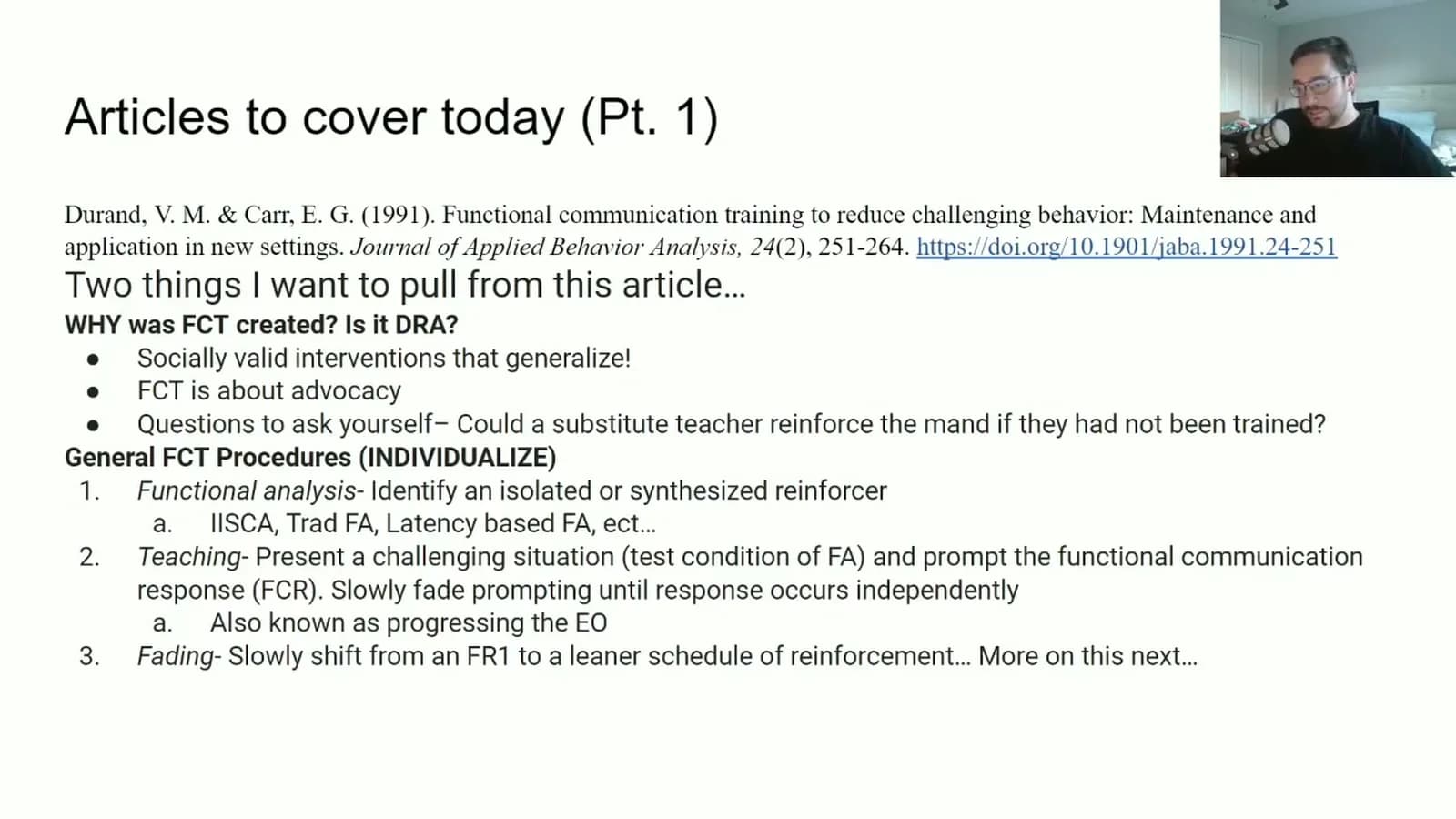
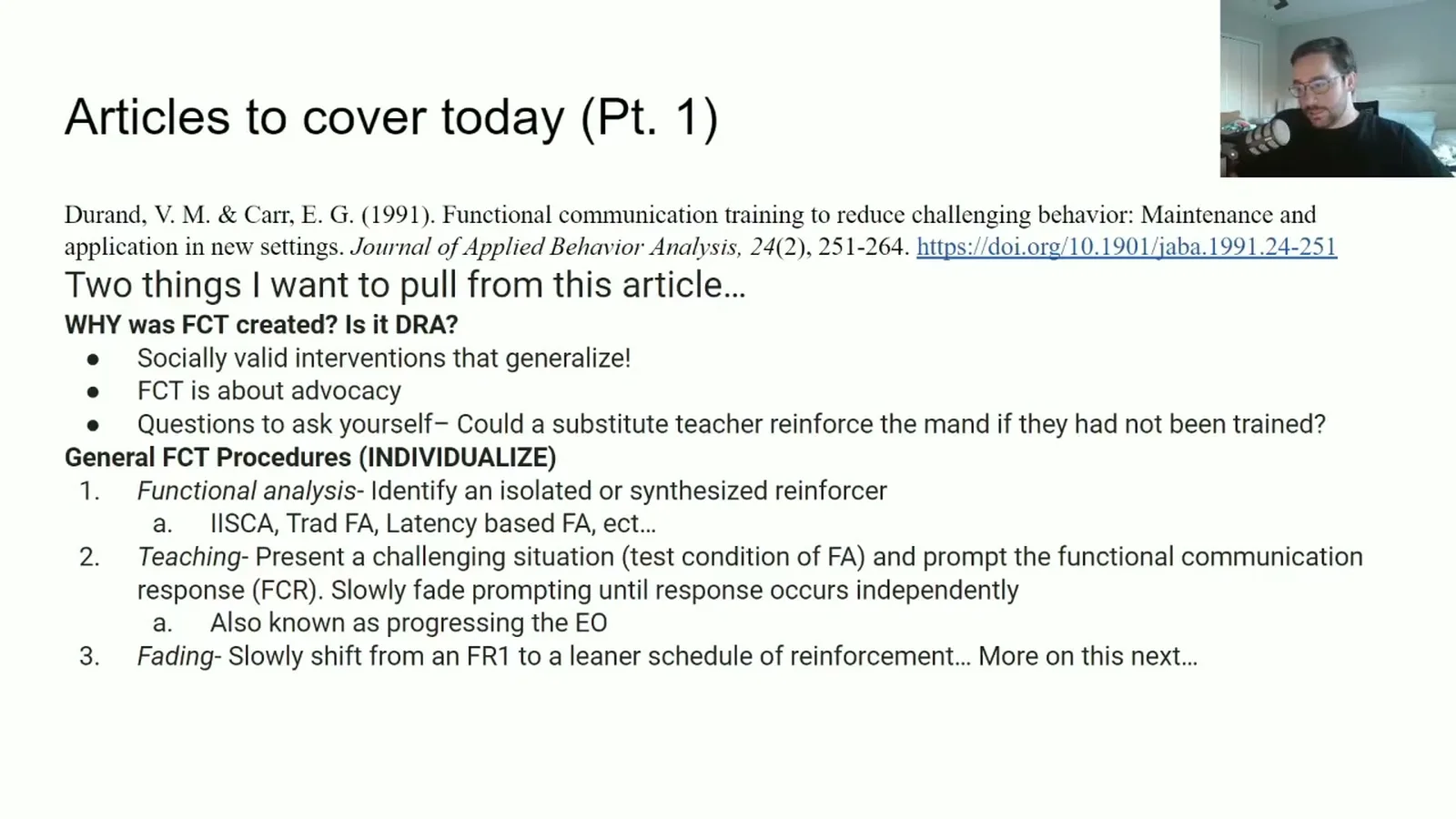
5 Days of Manding Mastery
Matt HarringtonThe Behaviorist Bookclub
A telehealth caregiver-coaching study (conducted during COVID) is used to argue for training caregivers from day one with simple behavioral-skills-training…
- 1 CEU
Child Development for BCBAs- Age 9-11
Kelly BrzakThe Behaviorist Bookclub
Kelly gives concrete tips for increasing billed caregiver training (CPT 97156), including dropping the term 'parent training' as patronizing and instead…
- 1 CEU
Child Development Deep Dive: Middle Childhood (6-8 year olds)
Kelly BrzakThe Behaviorist Bookclub
Kelly urges clinicians to log real caregiver-training hours (billed under CPT 97156) and not take it personally when parents are unresponsive, since this is…


On this page · 7 sections▾
Caregiver training is when you teach a parent or family member how to use ABA strategies at home. It is also called parent coaching. The goal is simple. The skills a child learns in session should keep working outside of session too.
This matters because most of a child's day happens away from you. BCBAs, RBTs, and teachers only see the child for a slice of the week. When caregivers know the plan, progress carries over. When they do not, gains often fade at home.
Start training from day one#
You do not need to wait for a perfect moment to begin. Many clinicians train caregivers early, even in the first meeting. Matt Harrington runs parents through a basic skill right away.
Sometimes the first things I do with my parents when they come in or meet over telehealth now is I run them through basic man training... just so they get some type of basic background on what we're going to be doing in session and hopefully them carrying it over. From the talk — Matt Harrington
Early training sets a shared language. The parent sees what a request looks like. They learn what to reward and when. This makes later coaching much smoother.
Keep the checklist simple#
Parents do not need an ABA degree to help their child. They need clear, short steps they can follow. Simple fidelity checklists work well for skills like requesting, labeling, and back-and-forth talk.
Harrington points out that this basic training can beat what is common in the field. In his view, a plain checklist like this is better than most of the material you see out there.
A checklist gives the parent a way to check their own work. It also gives you clean data on how the training is going. Keep each step plain and easy to score.
Match the training to the goal#
 Advertisement
Not every program needs the parent to run the whole thing. Sometimes you only want them to support a small piece. That choice depends on the child and the skill.
In one feeding program, parents were brought in late and given light guidance. Dr. Holly Gover describes bringing parents in near the end of treatment. The team made sure the child would eat the foods with the parents there. Then they gave the family some basic ideas to try at home. The intent was never a full handoff.
It was never the intention to have parents completely run this entire process. From the talk — Dr. Holly Gover
So decide up front how much you want the caregiver to own. A full communication program may need deep training. A tricky feeding protocol may only need the parent to be present and steady.
Bill and log the hours#
Caregiver training is real clinical work. In the United States, it often bills under CPT code 97156. Kelly Brzak urges teams to log these hours and use small windows of time.
Start to meet with caregivers for the last five minutes of each session. From the talk — Kelly Brzak
She also warns against language that talks down to families. The words you pick shape trust.
Stop using parent training, if you're using it. It can sound patronizing and condescending. From the talk — Kelly Brzak
Brzak frames these hours as the true path to skills lasting at home. Without them, session gains stay stuck in the clinic.
Do not take low follow-through personally#
Parents are busy and tired. Some will miss meetings or go quiet for a while. That is not a sign your work failed.
Don't get mad if they ghost you. Again, let's intentionally not let the parent's response or lack of response punish our effort. From the talk — Kelly Brzak
Keep offering the training anyway. Stay warm and keep the door open. Consistency from you builds trust over time, even when a parent is slow to engage.
What the research says#
Caregiver training is treated as evidence-based, but its structure varies a lot. One scoping review notes that behavior plans are often a mix of many strategies at once. That complexity can make it hard for parents to run programs correctly at home (O’Neill & Koudys, 2024).
Culture and language also shape how well training lands. In one telehealth study, three Latino caregivers learned faster when trained in their first language. They also rated that training as more enjoyable and useful (Vargas Londono et al., 2024).
Home life adds real barriers too. One study trained caregivers to keep good fidelity even with siblings around and a meal to eat. Their accuracy dipped at first but recovered with practice in those messy conditions (McDevitt et al., 2026).
FAQ#
What is caregiver training in ABA?
It is teaching a parent or family member to use ABA strategies at home. The aim is to help learned skills carry over beyond session. It often uses simple checklists and behavioral skills training.
How do you bill for caregiver training?
In the United States, caregiver training often bills under CPT code 97156. Log the real hours you spend coaching. Even five minutes at the end of a session can count.
What if parents will not follow through?
Do not take it as a personal failure. Keep the training simple and keep offering it. Trust and follow-through often grow slowly over time.
Simple, in-the-moment coaching works well for daily routines, a theme in Child Development for BCBAs- Age 9-11. The same patient mindset helps when parents step in near the end of care, as in Feeding Face Off.
 Advertisement
Turn this topic into a CEU
You just studied this. Now get credit for it.
Watch 5 Days of Manding Mastery with Matt Harrington and earn 2.5 free BCBA CEUs. Detailed certificate, delivered the moment you finish.
Keep going with a free learning path
Verbal Behavior: Beyond WH-Questions
Dana Pettus's three-part series on building generative verbal behavior. Why WH-question programs stall, how to establish speaker-listener repertoires, and how to scaffold advanced verbal skills like recall and simple inference. Three hours, three CEUs.
Parent or caregiver? Find a vetted ABA provider near you on ProviderSpark.