Progressive Prompt Delay in ABA: A Plain Guide
Progressive prompt delay starts with an instant prompt, then slowly adds wait time so learners respond on their own. Learn how to use it well.
Key takeaway
Progressive prompt delay is a way to fade help slowly. You start by giving the prompt right away. Then you add a short wait before helping.
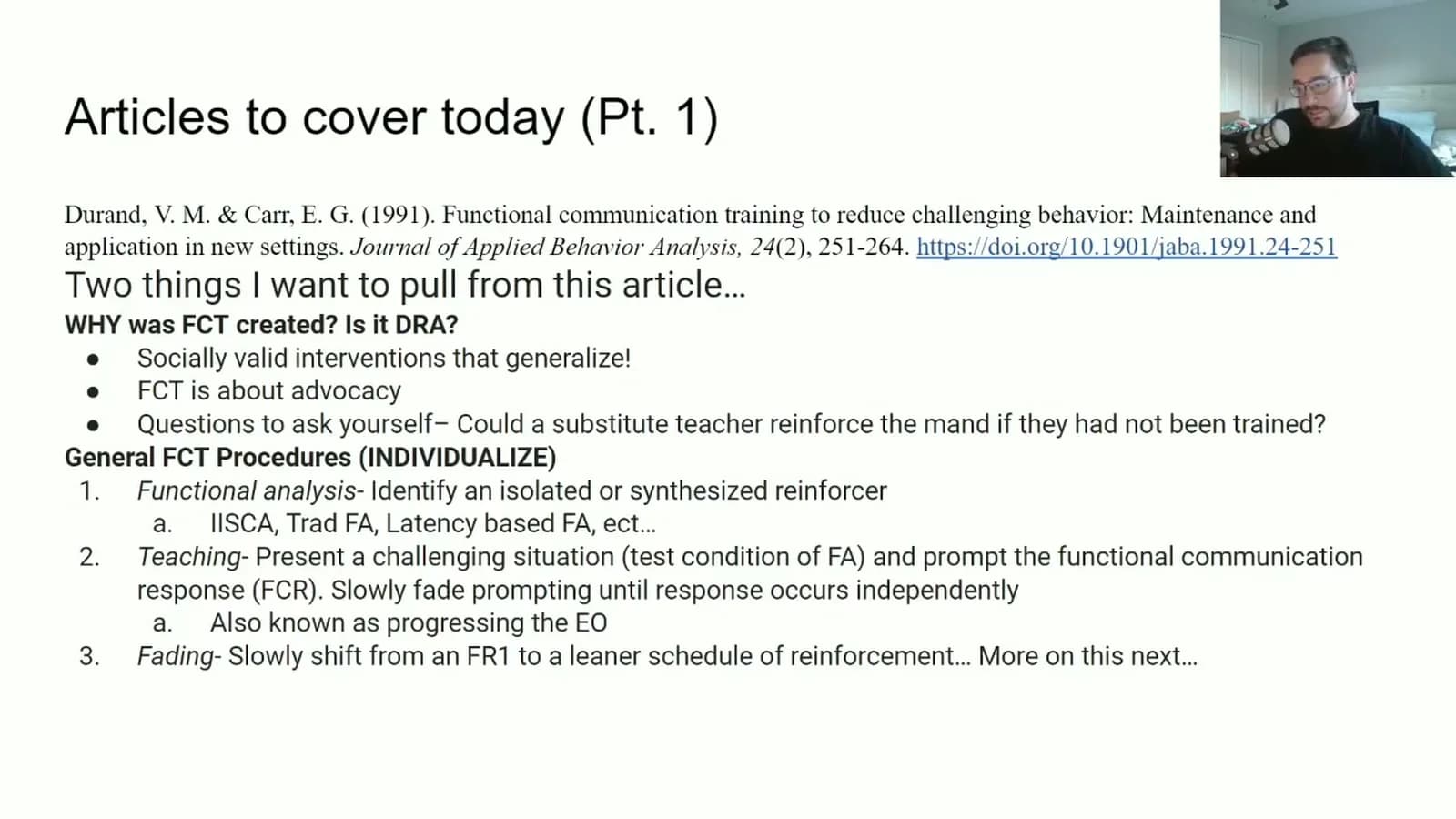
5 Days of Manding Mastery
Free learning path on this topic
Verbal Behavior: Beyond WH-Questions
Dana Pettus's three-part series on building generative verbal behavior. Why WH-question programs stall, how to establish speaker-listener repertoires, and how to scaffold advanced verbal skills like recall and simple inference. Three hours, three CEUs.
Experts who cover this
The recording behind this guide covers progressive prompt delay.
- Featured talk2.50 CEUs
5 Days of Manding Mastery
Matt HarringtonThe Behaviorist Bookclub
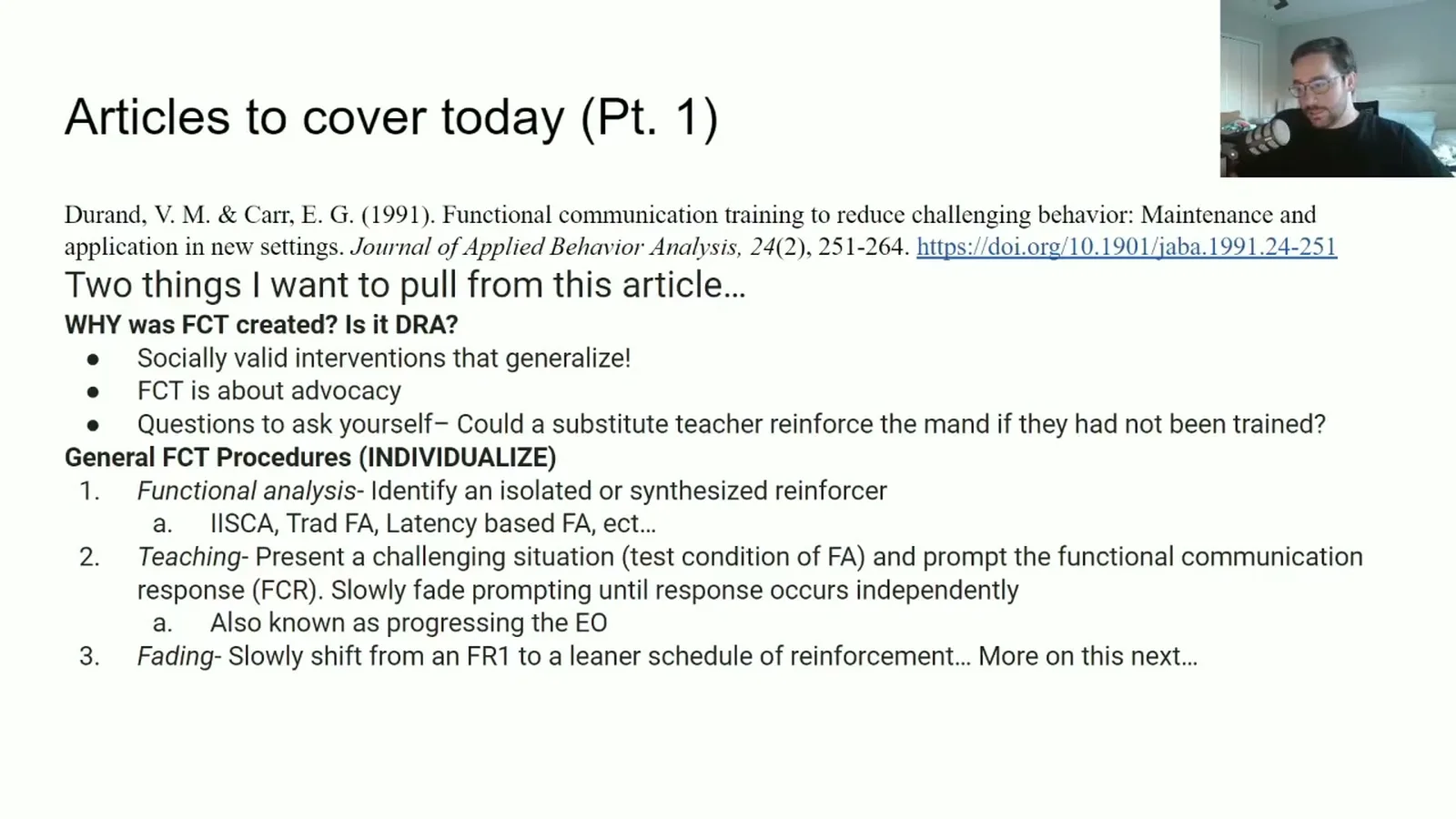
Day 2's central teaching tool: starting at a zero-second (immediate) model prompt and stretching the delay in increments (e.g. 2s, then 6s) as independent…
On this page · 9 sections▾
Progressive prompt delay is a way to fade help slowly. You start by giving the prompt right away. Then you add a short wait before helping. Over time, the learner responds on their own.
This tool matters to BCBAs, RBTs, teachers, and parents. It lowers errors while a skill is new. It also builds real independence, not prompt dependence. The trick is stretching the wait at the right pace.
How the delay grows#
The method starts at zero seconds. That means you prompt the moment the chance appears. There is no wait, so there is little room for error. As the learner succeeds, you add small delays.
Matt Harrington describes this in manding work. Manding means asking for something you want.
their basic man training arrangement consisted of using a progressive prompt delay that started at zero seconds, which would be an immediate prompt and progressed to two seconds and then eventually to six seconds as independent manning began to occur. From the talk — Matt Harrington
Notice the pattern. Zero seconds, then two, then six. The delay grows only as independence appears. You do not jump ahead on a clock. You move when the learner is ready.
Why it works so well#
Errors early in learning can slow a person down. A history of mistakes can hurt later progress. Progressive prompt delay limits early errors on purpose. The instant prompt makes success likely from the start.
Harrington pairs the delay with a model prompt. A model prompt shows the learner what to do. Together they form a strong teaching pair.
the idea of the progressive prompt delay and the model prompt is a really powerful teaching combination. From the talk — Matt Harrington
The delay then hands control back to the learner. Each added second is a chance to respond alone. Success at a delay means the skill is growing. That is the whole point.
Individualize the pace#
The delay is not tied to a fixed schedule. It is tied to the learner in front of you. One child may reach six seconds fast. Another may need more time at two seconds.
So you watch the data, not the calendar. Move up when independent responses appear. Hold steady when they do not. Drop back if errors start to climb.
This keeps the method gentle and fair. You never rush a learner past their skill. You never hold back one who is ready. The pace fits the person every time.
Train your team clearly#
 Advertisement
A plan is only as good as the people running it. Technicians must know exactly what to do. Vague instructions lead to messy prompting. Harrington learned to teach the method in detail.
I found that a better strategy and one that works better for me is really diving in and educating the technicians on exactly what I mean when I want them to progressively fade prompting strategy when I want them to progressively prompt. From the talk — Matt Harrington
So do not just say fade the prompt. Show the exact steps and the timing. Explain when to move up and when to wait. Clear training keeps every session consistent.
Where you will use it#
Progressive prompt delay fits many teaching goals. It works for manding, labeling, and matching tasks. It also helps with harder skills like reading words. The core steps stay the same across all of them.
You can use it with picture cards or spoken words. You can use it in a clinic, home, or classroom. The setting changes, but the logic holds. Start with full help, then stretch the wait.
You can watch the full manding method in 5 Days of Manding Mastery.
Pick the right prompt to fade#
The prompt you fade should match the skill. A model prompt shows the learner what to do. A physical prompt gently guides their hands. The goal is to give just enough help to succeed.
Start with the level of help the learner needs. Some learners need a full model at first. Others need only a small hint. Match the starting prompt to the person in front of you.
Then fade that help across the delay. Each added second lets the learner try alone. Over time, the prompt fades out completely. What is left is a skill the person owns.
Watch for common mistakes#
A few slip-ups can stall this method. One is moving up the delay too fast. If errors climb, you have likely jumped ahead. Step back and rebuild success first.
Another mistake is inconsistent timing across staff. One tech waits two seconds, another waits ten. That mix confuses the learner and muddies the data. Clear team training keeps the timing steady.
A third pitfall is fading help before the skill is solid. A shaky skill needs more support, not less. Let the data show real independence first. Then stretch the wait with confidence.
One more tip is to reinforce the right response. Independent answers should earn strong reinforcement. Prompted answers can earn a little less. That gap gives the learner a reason to try alone.
What the research says#
Progressive prompt delay often beats other prompting methods. One study compared it with fixed delays on a labeling task. All methods worked, but progressive delay was usually the most efficient. It also produced lower error rates (O'Neill, McDowell, & Leslie, 2022).
It also helps teach language across settings. One study taught a foreign vocabulary using a progressive prompt delay. Children learned new words as speakers and listeners. Teaching them to name items led to even more untrained language (Cortez, da Silva, Cengher, Mazzoca, & Miguel, 2022).
The method reaches beyond young children too. One study used it in brain injury rehabilitation. Adults relearned verbal skills like requesting after their injury. Teaching requests led to the widest gains in other language (Magat, Heinicke, & Buckley, 2022).
FAQ#
What is progressive prompt delay?
It is a prompt fading method that starts at zero seconds. You prompt right away at first, so errors stay low. Then you add small waits, like two seconds, then six. The learner slowly responds on their own.
How is it different from constant prompt delay?
Constant delay uses one fixed wait, like a steady five seconds. Progressive delay grows the wait in steps as the learner succeeds. Research often finds progressive delay more efficient. It keeps early errors low while building independence.
How do I decide when to increase the delay?
Watch for independent, correct responses at the current wait. When those appear steadily, move to a longer delay. If errors rise, hold or step back to a shorter wait. The learner's data sets the pace, not the clock.
 Advertisement
Turn this topic into a CEU
You just studied this. Now get credit for it.
Watch 5 Days of Manding Mastery with Matt Harrington and earn 2.5 free BCBA CEUs. Detailed certificate, delivered the moment you finish.
Keep going with a free learning path
Verbal Behavior: Beyond WH-Questions
Dana Pettus's three-part series on building generative verbal behavior. Why WH-question programs stall, how to establish speaker-listener repertoires, and how to scaffold advanced verbal skills like recall and simple inference. Three hours, three CEUs.